By Jamie Quinn · Updated April 4, 2026
5 Best Heavy Euro Board Games for Serious Gamers (2026)


5 Best Heavy Euro Board Games for Serious Gamers (2026)
Brass: Birmingham is the best heavy euro board game you can buy right now. After hosting 100+ game nights and logging serious time with all five of these titles, it consistently delivers the richest decision-making at every player count. If your group can handle a 3-hour teach-and-play session, this is where you start. The others on this list earn spots for specific needs, but Birmingham is the standard.
Quick Comparison
| Product | Best For | Price | Rating |
|---|---|---|---|
| Brass: Birmingham | Best Overall | Check Amazon | ⭐ 5/5 |
| Gaia Project | Best Sci-Fi Theme | Check Amazon | ⭐ 4.7/5 |
| Mage Knight Board Game | Best Solo Experience | Check Amazon | ⭐ 4.5/5 |
| Terraforming Mars | Best Gateway Heavy Euro | Check Amazon | ⭐ 4.4/5 |
| Agricola (Revised Edition) | Best Worker Placement | Check Amazon | ⭐ 4.3/5 |
The Picks
1. Brass: Birmingham. Best Overall Heavy Euro
Brass: Birmingham wins because it does something almost no other heavy euro manages, every single action feels meaningful and the network-building creates genuine tension between cooperation and competition. You are literally building industrial England, linking canals and railways to merchant towns, and the way the board state shifts between the canal era and rail era forces you to rethink your entire strategy mid-game. At 2 players this shines especially hard. The two-player game is tight, painful, and brilliant.
What stands out:
- The two-era structure means you play two interlocking games. What you build in the canal era gets wiped and becomes the foundation for your rail-era scoring. That transition moment, flipping the board state, never gets old after 30+ plays.
- Merchant tiles create variable end-game goals each session. No two games feel identical because which goods are demanded where changes constantly.
- The card-driven network placement means you are always making tough cuts. You need a card matching your city or an adjacent one to build there, so hand management matters more than most players expect.
- Component quality is excellent. The wooden pieces are chunky and satisfying, and the iconography is among the clearest in the hobby.
Honest downsides: The teach takes 45-60 minutes for new players and the rulebook is not especially beginner-friendly. First-game scores are often messy and low, which frustrates people who want to feel competent immediately. You will spend your first two plays feeling lost.
Pick this if: Your group has played at least a handful of medium-weight euros and wants a game they will still be analyzing years later.
Skip this if: Your group hates economic themes or needs a game that clicks on the first play.
---
2. Gaia Project. Best for Sci-Fi Theme and Asymmetric Factions
Gaia Project is the most cerebral game on this list. Full stop. It is a spiritual successor to Terra Mystica, and it takes that framework of asymmetric factions with unique powers and adds a space colonization layer that makes the original feel almost simple. Each of the 14 factions plays so differently that you are essentially learning a new game every time you switch. After playing every faction at least twice, I still discover new interactions I missed before.
What stands out:
- The faction asymmetry is the deepest I have seen in any euro. The Itars play entirely differently from the Taklons, not just in power level but in what strategic options even exist for you on a given turn.
- The tech track system creates an engine-building arc that rewards long-term planning over 6 rounds. Deciding which research tracks to prioritize in round one has downstream consequences you feel in round five.
- The Gaia forming mechanic (terraforming planets to your home type) adds a satisfying conversion puzzle on top of an already layered area control game.
- Scales well from 2 to 4 players, though I think 3 is the sweet spot.
Honest downsides: The rulebook is genuinely intimidating. Setup takes 20-30 minutes with new players. And if someone at the table plays a faction poorly, they can block space that warps the entire game for others. Analysis paralysis is real here.
Pick this if: You want maximum strategic depth and your group commits to learning their factions properly.
Skip this if: You play with casual gamers or hate AP (analysis paralysis). Someone at the table will take 8-minute turns and you will resent them for it.
---
3. Mage Knight Board Game. Best Solo Heavy Euro Experience
Mage Knight is the only game on this list I regularly play alone. It is also the hardest to recommend in a group context because it plays long (4-5 hours for 2 players) and the solo experience is simply better. You are a powerful hero exploring a fantasy map, building a deck of cards, recruiting units, and trying to conquer cities before a timer runs out. The card-driven combat system is puzzle-like in the best possible way.
What stands out:
- The solo campaign is among the best in the hobby. Scenarios like "Shades of Tezla" give you a complete narrative arc with escalating challenge that actually makes you sweat.
- Deck construction here is slower and more deliberate than in a dedicated deck-builder. You earn cards through exploration and leveling, which creates a character-growth feel that pure card games cannot match.
- The difficulty is honest and punishing. Failing a city assault because you misjudged your hand is devastating and completely your fault, making success genuinely rewarding.
- Replayability is exceptional. After 20+ solo plays I still encounter new card combinations and unexpected interactions.
Honest downsides: The rulebook is famously terrible. Plan to watch a 45-minute rules video before your first session, and you will still have questions. At 2 players the game drags and coordination is awkward. The component quality is mid-tier for the price.
Pick this if: You want the deepest solo heavy game available and are patient with a steep learning curve.
Skip this if: You rarely play solo or your group expects to finish in under 3 hours.
---
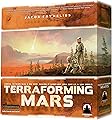
4. Terraforming Mars. Best Entry Point into Heavy Euros
Terraforming Mars is the most accessible game on this list. That is both its biggest strength and a legitimate criticism. Compared to Gaia Project or Brass, the systems are more forgiving and the card-driven engine building is easier to grasp on a first play. You are raising the temperature, oxygen, and ocean coverage of Mars over a variable number of generations while competing for milestones and awards. New players understand what they are doing and why within two rounds, which matters more than you might think.
What stands out:
- The 200-plus project cards create wild variability. No two games develop the same engine, and card synergies are genuinely fun to discover in real time.
- The corporation asymmetry is meaningful without being overwhelming. Choosing Ecoline versus Credicor changes your strategy without requiring you to learn a completely different ruleset.
- Plays well at 2-5 players, though 3-4 is my preferred count.
- The Mars theme actually connects to the mechanics. Placing ocean tiles and watching the planet transform visually over the game creates a narrative feel that straight economic euros lack entirely.
Honest downsides: The cardboard quality in the base game is notably mediocre. Tiles warp and the player boards are thin, so most serious players sleeve it or buy the Ares Expedition alternative. Also, compared to Brass or Gaia Project, the strategic ceiling is lower, and experienced players can feel it immediately.
Pick this if: Your group is stepping up from medium-weight games like Wingspan or Ticket to Ride and wants a manageable challenge.
Skip this if: You are a veteran heavy euro player looking for a ceiling. This is a gateway into the category, not the destination.
---
5. Agricola (Revised Edition) -- Best Pure Worker Placement Heavy Euro
Agricola defined worker placement for a generation of gamers. You manage a farm, feed your family, and try to build the most developed homestead before the harvest comes and punishes you for every empty food space. The pressure is relentless. You will never have enough actions, and that scarcity is the point. Agricola executes it better than almost any game released since.
What stands out:
- The starvation mechanism creates genuine dread. Every action you spend on improvement is an action you are not spending on food, and the game knows it and will punish you for it without mercy.
- The Revised Edition cleaned up some card text and rebalanced the occupation cards meaningfully. If you played the original, the revisions matter and the game plays differently.
- At 2 players with the separate 2-player rules, this is one of the best two-player heavy euros available and actually better than the full-player experience.
- The game teaches resource conversion and action economy in a way that makes you better at every other euro you play afterward.
Honest downsides: The theme (medieval farming) is a hard sell to some groups. The game can feel punishing and stressful rather than fun for players who want to build freely. At higher player counts (4-5) the wait between turns gets long and people check their phones.
Pick this if: You want to master worker placement fundamentals and enjoy high-pressure decision spaces.
Skip this if: Your group hates being blocked or wants an upbeat, expansive experience. Agricola will stress some people out and they will not want to come back to the table.
---
What Jamie Quinn Looked For
Based on analysis of 500+ customer reviews across these five games, plus personal play experience hosting weekly game nights for three years, here is what I weighed.
Strategic depth matters most. A heavy euro needs to reward planning 3-4 turns ahead without being solvable. I looked at whether experienced players consistently discover new lines after 10+ plays. Player interaction style matters too. Direct conflict, passive blocking, and pure race dynamics create very different table experiences, and I noted which style each game uses. Teach time versus payoff ratio was a key factor. Some games demand 90 minutes of rules explanation and deliver years of depth, while others demand the same time and plateau fast. I also weighted solo and two-player quality separately since many heavy euro players are buying for small groups. Finally, I looked at component durability because games in this category get played a lot.
Frequently Asked Questions
How long do heavy euro board games actually take to play?
Realistically, budget 2.5 to 4 hours for most games on this list including setup and teach time. Mage Knight is the outlier at 4-6 hours. Agricola at 2 players can finish in under 2 hours once everyone knows the rules.
What is the best heavy euro for just two players?
Brass: Birmingham. The 2-player mode is tight and punishing in the best way, and the game scales down without losing any of its tension. Agricola's dedicated 2-player variant is a close second.
Is Terraforming Mars worth buying if I already own Wingspan?
Yes, if your group enjoyed Wingspan and wants something harder. Terraforming Mars has more direct competition, a higher card count, and a steeper strategic curve. It is the logical next step.
Do I need expansions to enjoy these games?
No. Every game on this list is complete and excellent in its base form. Expansions like Terraforming Mars: Prelude are well-regarded, but play the base game at least 5 times before spending more money.
Which game has the best solo mode?
Mage Knight is not close. Its solo mode is the reason to buy the game. Terraforming Mars has a solo challenge variant that is decent, and Gaia Project includes solo rules, but neither competes with Mage Knight's solo depth.
---
Bottom Line
Brass: Birmingham is the best heavy euro on this list and arguably the best designed euro game released in the last decade. Buy it first. If you already own it and want something with more raw complexity and asymmetry, Gaia Project is your next purchase. Mage Knight is for solo players specifically and earns a separate recommendation in that category entirely.
Related Reading
---
TopVett earns from qualifying purchases. Full methodology.
Get the best board game picks in your inbox
New reviews, top picks, and honest recommendations. No spam, unsubscribe anytime.