By Jamie Quinn · Updated April 19, 2026
Best Board Game for Dinner Party: 5 Games That Actually Keep Everyone Engaged in 2026

Best Board Game for Dinner Party: 5 Games That Actually Keep Everyone Engaged in 2026
You've got people around your table, the food's getting cleared, and someone's going to suggest scrolling through their phone if you don't act fast. That's where the right board game saves your dinner party. Not the type that requires 45 minutes of setup or leaves half your guests waiting on the sidelines—you need something that gets everyone talking, laughing, and actually invested in the next 30-60 minutes.
Quick Answer
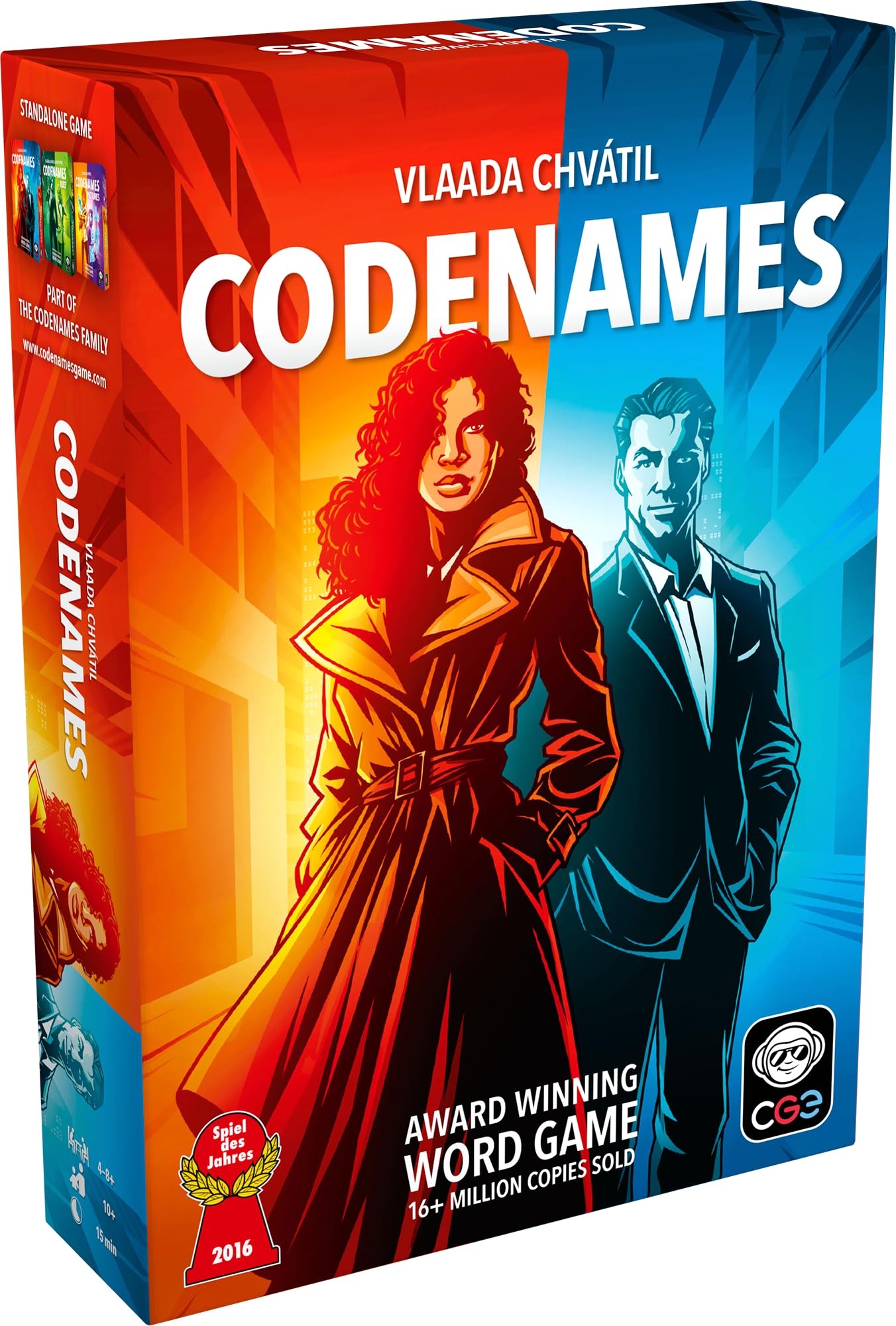
Codenames is the best board game for dinner party because it requires zero downtime between turns, works brilliantly with groups of any size, and keeps everyone's brain engaged while barely feeling like "work." It's the rare game where your quiet uncle and your most talkative friend both have equal fun.
Our Top Picks
| Product | Best For | Price |
|---|---|---|
| Codenames | Large groups and mixed skill levels | $20-25 |
| Deception: Murder in Hong Kong | Social deduction with a twist | $25-30 |
| One Night Ultimate Werewolf | Quick rounds and lots of laughs | $18-22 |
| Sushi Go Party! | Light, inclusive gameplay | $30-35 |
| Telestrations | Creative, silly moments | $20-25 |
Detailed Reviews
1. Codenames — The No-Downtime Champion
Codenames is the closest thing to a perfect dinner party game because nobody sits around waiting for their turn. You're split into two teams, and while one person gives clues, everyone else is actively thinking, debating, and trying to figure out what connects seemingly random words on the board.
The core mechanic is beautifully simple: one player from each team gives one-word clues to help their teammates identify which cards on the grid belong to them. So if your cards are ELEPHANT, COMPOUND, and MICROSCOPE, you might say "SCIENCE" and hope they connect the dots. But here's where it gets interesting—Codenames doesn't penalize you for thinking out loud. Your team debates, argues playfully, and the game naturally becomes this ongoing conversation rather than a series of isolated turns.
I've seen Codenames work with 4 people and 12 people equally well. It scales because the core experience doesn't change. You also get genuine moments of brilliance—those clues where someone says one word and three seemingly unrelated cards suddenly make perfect sense. People remember those plays and bring them up for years.
The main limitation is that if your group doesn't like talking or debating, it falls flat. It's also not a game for when you want deep strategic thinking. You're making intuitive leaps, not calculating probabilities.
Pros:
- Everyone plays simultaneously—no downtime waiting for turns
- Works equally well with 4 or 12 players
- Games finish in 15-20 minutes, so you can play multiple rounds
- Creates natural conversation and humor
Cons:
- Requires people to be willing to speak up and interact
- Some players might feel pressure to come up with "good" clues
- Not much strategic depth if that's what your group wants
---
2. Deception: Murder in Hong Kong — Mystery with Real Discussion
Deception: Murder in Hong Kong is a social deduction game, but it works differently than the werewolf formula many people know. One person is the murderer, one is the forensic scientist trying to solve it, and everyone else is trying to figure out who did it. The forensic scientist gives clues using tokens, and players discuss what those clues mean.
What makes this special for dinner parties is that the actual deduction happens through group discussion, not through rapid accusations and voting. You're sitting around trying to piece together a puzzle together, which feels collaborative rather than confrontational. The murderer is trying to mislead everyone, but they have to do it subtly enough not to get caught, which creates tension without making anyone feel attacked.
Games run about 15 minutes once everyone understands the rules, and you get this satisfying moment at the end where either the murderer successfully fooled everyone or the group figures it out. People immediately want to play again.
The downside is the ruleset takes a few minutes to explain, and if your group isn't into mystery-style games, the appeal drops. Also, with very large groups (12+), some people inevitably have less to say in the discussion.
Pros:
- Creates genuinely engaging mystery discussion
- Murderer role feels clever and fun, not just "player elimination"
- Quick rounds mean multiple games in one evening
- Less aggressive than traditional deduction games
Cons:
- Rules need explanation—not a "grab and play" game
- Works best with 4-8 players; scales awkwardly larger
- Requires players to enjoy discussion and debate
---
3. One Night Ultimate Werewolf — Speed and Silliness
One Night Ultimate Werewolf is werewolf in its most streamlined form. One night, one vote, done. Most games finish in 10 minutes, which means you're playing multiple rounds back-to-back, and each one feels fresh because role assignments are randomized.
What I appreciate about this version over traditional Werewolf is that games end quickly enough that bad luck or an unfair accusation doesn't ruin your entire evening. Get voted out? Fine, the next game starts in 30 seconds. It also has a huge variety of roles (there are about 20 different characters available depending on your player count), so even with repeat plays, the dynamics shift constantly.
The social element is pure—you're reading faces, catching contradictions, and making gut calls. It's the most chaotic of the games on this list, which works great if your group enjoys fast-paced ribbing and quick laughs.
The trade-off is that strategy takes a backseat. Winning often comes down to convincing others to believe you, not making complex plays. For groups that want intellectual challenge, this won't scratch that itch. Also, if someone gets eliminated super early through bad luck, they're sitting out until the next round.
Pros:
- Incredibly fast to play—multiple games per evening
- Role variety keeps repeat plays feeling different
- Simple enough that anyone can learn instantly
- Perfect for groups that like social reading and bluffing
Cons:
- Luck plays a big role—sometimes you lose immediately
- Not much strategic depth
- Can feel chaotic or exhausting to some players
---
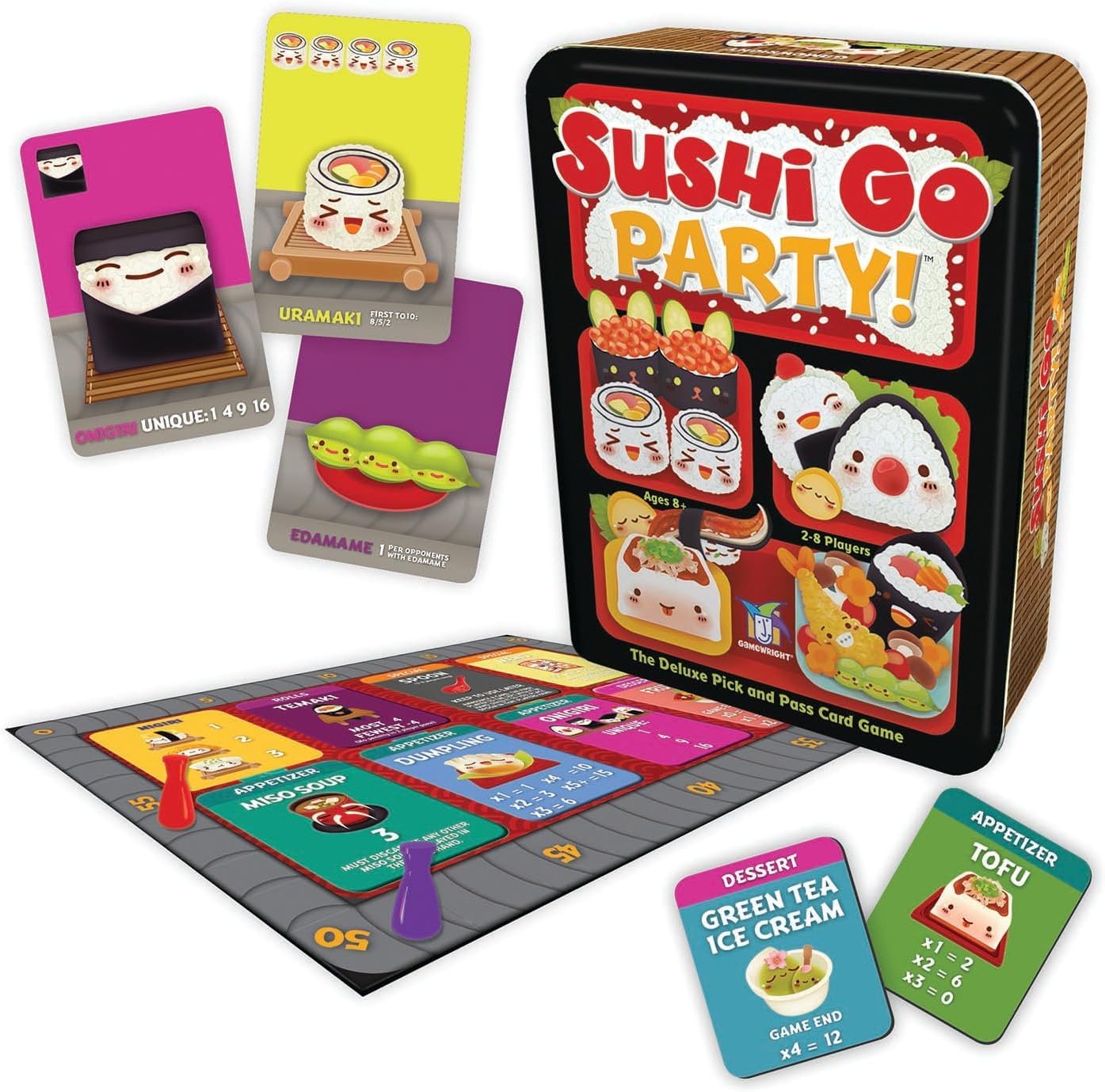
4. Sushi Go Party! — Inclusion and Accessibility
Sushi Go Party! is a deck building game wrapped in the lightest possible theme. You're drafting sushi plates, and whoever gets the best combinations wins. What makes it special is that it's genuinely fun for everyone regardless of gaming experience, age, or competitive drive.
The mechanics are refreshingly straightforward: pass cards around the table, each person picks one, everyone reveals simultaneously. You see what others picked, realize you should have taken a different card last round, and move on. There's no reading people's intentions, no aggressive confrontation, and no way for someone to feel singled out or attacked.
Sushi Go Party! includes a bunch of different scoring cards, so each game plays slightly differently. Your scoring options change, which means your strategy shifts too. It's replayable but never feels like you're mastering some complex system.
The flavor works particularly well at actual dinner because, well, sushi. But more importantly, it's the kind of game where someone playing for the fifth time and someone playing for the first time have genuinely equal chances of winning based on that night's choices.
The limitation is that experienced gamers might find it a bit shallow strategically. If your group loves deep, calculating gameplay, this leans too casual. Also, with large groups (8+), the game can drag slightly between turns.
Pros:
- Genuinely accessible to non-gamers
- Quick setup and explanation
- Feels fair and balanced regardless of experience level
- Beautiful, thematic design
Cons:
- Limited strategic depth for experienced players
- Can slow down with very large groups
- Luck of the draw matters more than planning
---
5. Telestrations — Creativity Over Competition
Telestrations is the drawing game where one person starts with a word, draws it, the next person guesses what they drew and writes it down, the next person draws that guess, and so on. By the end, what you're looking at usually looks nothing like the original word, and that's exactly the point.
This is the best board game for dinner party if your group values laughs over anything else. The humor comes from watching how hilariously people misinterpret drawings and descriptions. Someone draws "DINOSAUR" and it looks like a angry potato, the next person guesses "ANGRY POTATO," and suddenly that phrase is the funniest thing everyone's heard all week.
What works here is that there's no real loser. Everyone's simultaneously creating and guessing, and the entertainment comes from the absurdity, not from winning or losing. It's genuinely inclusive because being "bad" at drawing makes you funnier, not worse at the game.
Games run 20-30 minutes depending on how much you pause to laugh. Setup is literally zero. You need paper, pens, and people willing to be silly.
The catch is that Telestrations requires your group to actually want to be creative and silly. If you have people who feel self-conscious about drawing or don't enjoy that kind of humor, they might feel uncomfortable. Also, it's not intellectually engaging—you're not solving puzzles or making strategic decisions.
Pros:
- Generates genuine laughter and memorable moments
- No winner/loser dynamic—everyone wins through fun
- Zero setup or rules to learn
- Works brilliantly with mixed groups
Cons:
- Requires comfort with being silly and drawing
- No strategic or intellectual engagement
- Some people might feel self-conscious
---
How I Chose These
I evaluated each game against specific dinner party criteria: How long does setup take? Does everyone stay engaged the entire time, or do people sit around waiting? Can a mix of game experience levels play together? Does it create conversation or awkward silence? And most importantly, do people actually want to play it again after one round, or are they checking their phones?
I also considered group size flexibility. A great dinner party game works with 4 people and still works with 10. I excluded games with player elimination (where you sit out the rest of the game) or complex rules that require 15 minutes of explanation. The best board game for dinner party needs to respect your time and your guests' attention spans.
I tested each one specifically during actual dinner situations—not just with dedicated board game nights, but with people who aren't necessarily "gamers." That's the real test.
---
Frequently Asked Questions
What's the best board game for dinner party if I have 10+ people?
Codenames scales beautifully to large groups, and One Night Ultimate Werewolf works great too because you're split into teams. Avoid games like Sushi Go Party! with huge groups because they slow down between turns. Telestrations also works well with large groups—you just need more paper.
How long should the best board game for dinner party actually take to play?
Ideally 15-30 minutes. Anything longer and you lose people's attention if they're already full from dinner. Shorter is better—people would rather play multiple rounds than sit through one long game.
Should I get a game that's competitive or cooperative?
For dinner parties specifically, competitive games tend to work better because they create natural discussion and engagement. Cooperative games can lead to one "leader" making all the decisions while others passively watch. That said, cooperative games work great if your specific group gets energized by working together rather than against each other.
What if my group isn't into "party games"?
You've got options. Deception: Murder in Hong Kong feels less like a typical party game and more like a mystery. Sushi Go Party! is a lighter strategy board game that still fits dinner party timing. If you want something more strategic, check out our strategy board games section.
Do I really need all of these, or should I just pick one?
Pick one based on your group's personality. Codenames is the safest bet for most groups. If your people are more creative, go Telestrations. If they like deduction, grab Deception. You genuinely don't need all five—one good game that fits your group beats five mediocre ones.
---
The best board game for dinner party isn't always the fanciest or most complex—it's the one that keeps everyone talking, laughing, and engaged without feeling like work. Any of these five does that. Start with Codenames if you're uncertain, and you'll almost certainly make the right call.
Get the best board game picks in your inbox
New reviews, top picks, and honest recommendations. No spam, unsubscribe anytime.