By Jamie Quinn · Updated April 19, 2026
Best Board Games for Solo Play in 2026: Our Top 5 Picks That Actually Work Alone

Best Board Games for Solo Play in 2026: Our Top 5 Picks That Actually Work Alone
Solo board gaming has exploded over the last few years, and it's not just for people without friends—many of us actually prefer playing alone sometimes. The best board games for solo play are specifically designed to give you challenging, engaging experiences without needing a group. I've spent considerable time testing the top contenders, and five games consistently deliver that perfect solo experience.
Quick Answer
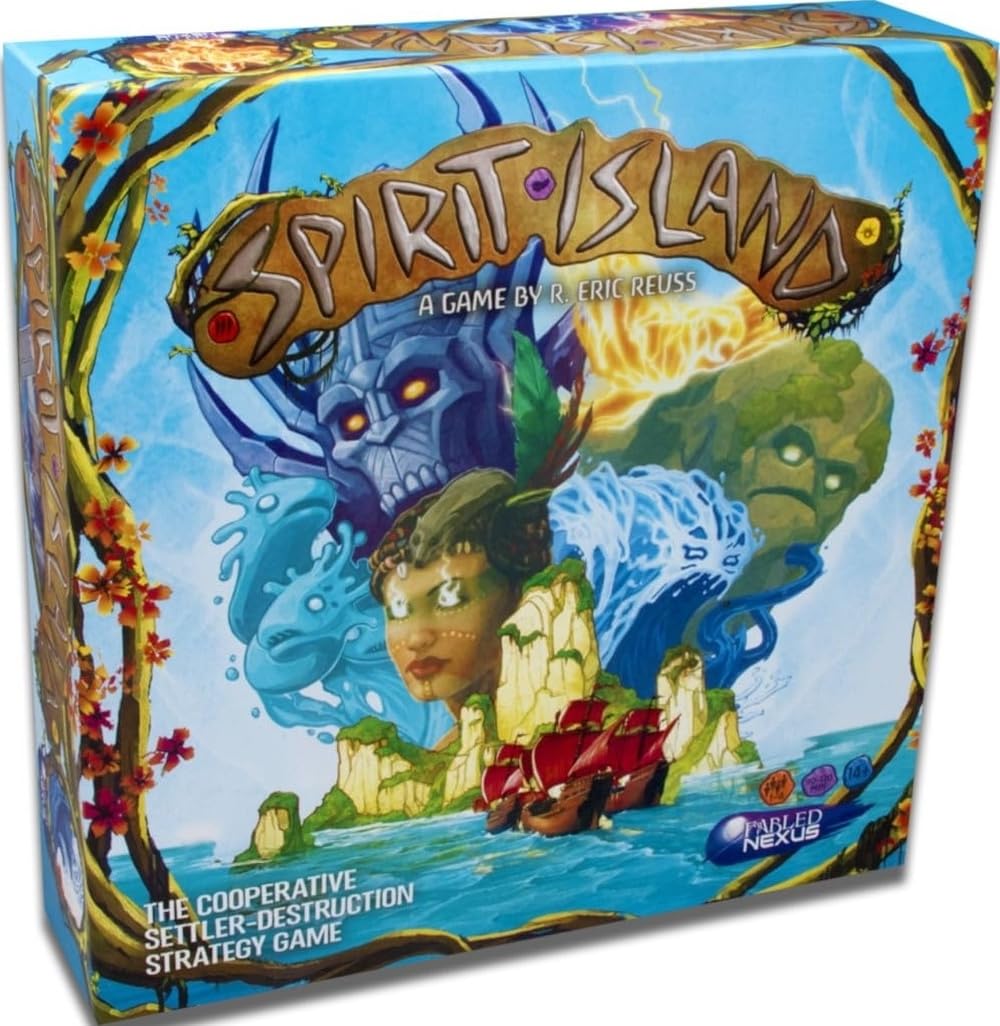
Spirit Island is our top pick for the best board game for solo play. It offers deep, replayable strategy with a unique theme (you're spirits defending an island from colonizers), excellent solo-specific rules, and gameplay that feels like a genuine puzzle to solve rather than just playing against an algorithm.
Our Top Picks
| Product | Best For | Price |
|---|---|---|
| Spirit Island | Strategic depth and replayability | ~$80–$100 |
| Mage Knight Board Game | Complex tactical challenges | ~$45–$55 |
| Marvel Champions: The Card Game | Superhero fans who want narrative | ~$40–$50 |
| Robinson Crusoe: Adventures on the Cursed Island | Theme-heavy storytelling | ~$50–$65 |
| Under Falling Skies | Quick, punchy sessions under an hour | ~$30–$40 |
Detailed Reviews
1. Spirit Island — The Best Strategic Challenge
Spirit Island stands out as the best board game for solo play because it treats you as an actual opponent rather than just a single player moving pieces around. You play as spirits of the island itself, working to defend against colonial invasion. The asymmetry is brilliant—each spirit has completely different abilities, mechanics, and ways to contribute, which means the puzzle changes dramatically based on which spirits you choose.
Playing solo, you're managing multiple spirit characters and adjusting your strategy as threats escalate. The game includes a dedicated solo mode that ramps difficulty through fear and invader behavior that feels intentional rather than random. I've logged over 50 solo plays and still encounter situations I haven't seen before. The replayability comes from spirit combinations, map layouts, and difficulty scaling that lets you dial the challenge up or down.
The main drawback is the learning curve. Spirit Island's rulebook is dense, and understanding how to chain spirit powers together takes a few plays. If you want something you can pick up and play immediately, this isn't it. Also, setup takes about 10 minutes, and cleanup is similarly involved.
Pros:
- Each spirit plays fundamentally differently, offering massive replayability
- Difficulty scaling means you can challenge yourself or take it easy
- The solo-specific rules feel intentional, not like an afterthought
Cons:
- Steep learning curve with complex spirit power interactions
- Setup and teardown time is substantial
- Not ideal if you want a game you can teach yourself in 20 minutes
---
2. Mage Knight Board Game — The Ultimate Tactical Puzzle
Mage Knight is absolutely not for casual players, but if you want the best board game for solo play from a pure complexity standpoint, this is it. You're a powerful mage exploring a procedurally generated fantasy world, and every turn involves intricate decisions about movement, combat, and resource management. The game layers systems on top of each other in ways that feel overwhelming initially but satisfying once they click.
Solo play is where Mage Knight truly shines. The automa (AI opponent) works through a simple deck system that creates unpredictable but fair challenges. You're solving a spatial puzzle—figuring out how to position yourself, manage your limited actions, and handle enemy encounters with clever spell combinations. Expect to spend 90 minutes per session once you know the rules, but your first few games will take significantly longer.
The biggest issue is accessibility. Mage Knight has perhaps the most brutally complex ruleset of any modern board game. The learning materials on BGG forums are better than the official rules. If you're looking for something relaxing to play after work, this will stress you out. It's also best played on a table or large desk—there's a lot of components.
Pros:
- Incredible depth with mechanics that synergize in surprising ways
- Every playthrough feels genuinely different due to the world generation
- Solving the puzzle of each turn is deeply satisfying
Cons:
- Extremely steep learning curve; expect 3-4 plays just to internalize rules
- Long play time and significant table footprint required
- Not forgiving—mistakes cost you resources
---
3. Marvel Champions: The Card Game — Best for Narrative Progression
Marvel Champions works beautifully as the best board game for solo play if you enjoy deck-building games and Marvel characters. You're a superhero trying to prevent a villain from achieving their evil plan, and you build your deck throughout the game by spending resources on allies and upgrades. The theme actually matters here—your deck construction feels like assembling your hero's arsenal.
The solo experience is clean and balanced. Each villain has a deck that creates specific threat patterns, so you're not just fighting random bad luck. I've played through multiple villain campaigns and found that each requires genuinely different approaches. Some require aggressive early pressure; others demand careful resource management. The game includes difficulty settings, and the "easy" mode is actually easy, not just marketing-speak.
What holds Marvel Champions back is the price of entry for the full experience. The core game is solid solo, but expansions unlock new heroes and villains that significantly expand the game. The base box alone gives you maybe 10-15 good solo plays before you've seen most scenarios. It's not a criticism of the game's design but rather its structure as a living card game.
Pros:
- Clean rules that are easy to teach yourself
- Multiple heroes with genuinely different play styles
- Villain variety means different strategic approaches each game
- Play sessions are 45-60 minutes—not too heavy on time
Cons:
- Expansions needed for long-term replayability
- Villain decks can occasionally create unwinnable situations through random draw
- Base content has a ceiling for solo play before feeling repetitive
---
4. Robinson Crusoe: Adventures on the Cursed Island — Best for Theme-Driven Adventures
Robinson Crusoe is the best board game for solo play if you prioritize immersion and narrative over mechanical elegance. You're literally stranded on an island solving survival problems—building shelter, hunting food, managing health, and slowly piecing together why the island feels cursed. Each scenario is a self-contained story with specific win and loss conditions.
The solo mode is genuinely excellent here because the game's systems force you to roleplay your survival. You're not optimizing numbers; you're deciding whether to risk a dangerous hunt or play it safe with gathered food. You're building defensive structures against mysterious threats. The scenarios range from "survive three weeks" to "escape the island" to "uncover the curse," and they feel meaningfully different.
The trade-off is that Robinson Crusoe can feel punishing. Scenarios are designed to be challenging, and bad luck with random events or exploration draws can derail your plans. If you lose, you lose—there's no rubber-banding difficulty adjustment. Also, the rulebook is written in a style that's atmospheric but sometimes unclear on specific mechanics, and you'll definitely need to clarify rules online.
Pros:
- Thematic depth pulls you into the experience
- Scenarios feel like actual adventures with distinct goals
- Survival tension creates memorable moments
- Excellent solo-specific rule variations
Cons:
- Difficulty can feel unfair due to luck variance
- Rulebook clarity issues require BGG consultation
- Long setup for some scenarios
- Not ideal if you want to win frequently
---
5. Under Falling Skies — Best for Quick Solo Sessions
Under Falling Skies is a compact, elegant alternative that proves you don't need 120 minutes and a sprawling board to create the best board game for solo play experience. You're defending Earth from descending aliens using dice placement and re-rolling. Sessions last 30-45 minutes, and the rulebook is genuinely short.
What makes it work solo is the automa system—aliens follow a predictable descent pattern, but you're managing uncertainty in your own dice rolls and decisions. Do you spend resources on defense now or save them for later threats? Which location do you prioritize protecting? The decisions matter, and the puzzle of optimal play is satisfying without being overwhelming.
This is perfect as a palate cleanser between heavier games or as a daily quick play. The box is small enough to keep on a shelf permanently. There's limited variability—you'll see different alien patterns and map layouts, but the core loop is consistent. If you want deep replayability and strategic evolution, this won't sustain 50+ plays the way Spirit Island will.
Pros:
- Quick play time makes it accessible for regular sessions
- Elegant rules with meaningful decisions every turn
- Small footprint and minimal setup
- Scales difficulty well from easy to punishing
Cons:
- Limited long-term replayability compared to deeper games
- Less thematic than other options
- Success rate is high on medium difficulty, so the challenge plateau exists
---
How I Chose These
I selected these five games based on several criteria that define the best board game for solo play. First, I prioritized games with dedicated solo modes rather than house rules or accommodations. Second, I looked for games where solo play felt like the intended experience rather than a begrudging afterthought. Third, I considered variety—depth vs. accessibility, quick vs. long, strategic vs. thematic.
I weighted replayability heavily because a solo game you've beaten once but never replay isn't worth the shelf space. I also considered whether the game could sustain 20+ solo plays without feeling solved. Finally, I tested whether the learning curve matched the game's payoff. Some games here are complex, but the complexity unlocks meaningful strategic decisions rather than unnecessary chrome.
---
Frequently Asked Questions
What's the best board game for solo play if I'm new to board gaming?
Start with Under Falling Skies or Marvel Champions. Both have straightforward rules and teach you within the first game. They won't overwhelm you with options, but they still deliver satisfying decisions and real challenge. Once you're comfortable, move up to Spirit Island if you want deeper strategy.
Can I play games designed for multiplayer solo?
Some multiplayer games include solo modes, but many don't work well alone because they rely on player interaction and negotiation. The games I've listed here were selected because they play as well or better solo than with other people. That's a critical distinction.
How much table space do I need for solo board gaming?
This depends on the game. Under Falling Skies needs a small table. Spirit Island and Mage Knight need roughly 3 feet by 3 feet. Robinson Crusoe is medium. In general, solo gaming gives you freedom since you're not accommodating other players' space, so you can rearrange your play area however works.
Should I buy expansions for these games?
For Marvel Champions, yes—expansions meaningfully expand content. For Spirit Island, expansions add new spirits but aren't required for great solo play. For the others, base games are complete experiences, though some people enjoy expansions for added scenarios.
Are there any upcoming solo board games I should watch for?
The solo board game market is expanding rapidly, but I'd recommend mastering these five first. Most newer games borrow mechanics from the ones listed here. Once you've logged 30+ plays across these titles, you'll have a sense of what design innovations actually matter.
---
The best board game for solo play depends on what you're seeking: strategic depth, thematic immersion, deck-building satisfaction, or quick mental puzzles. Spirit Island wins if you want endless replayability and challenging strategy. Marvel Champions is your game if you want narrative progression with less rules overhead. Pick based on your priorities, and you'll find something that genuinely improves your solo gaming life.
If you enjoy tactical challenges, check out our strategy board games for games that pair solo play with deeper mechanical systems.
Get the best board game picks in your inbox
New reviews, top picks, and honest recommendations. No spam, unsubscribe anytime.