By Jamie Quinn · Updated April 11, 2026
Best Board Game Solo Mode in 2026: 5 Games That Actually Shine When Playing Alone


Best Board Game Solo Mode in 2026: 5 Games That Actually Shine When Playing Alone
Playing board games solo used to mean either adapting rules meant for multiplayer or settling for something that felt incomplete. That's changed dramatically. The best board game solo mode options now treat solo play as a legitimate game experience, not an afterthought. Whether you want to spend an evening solving complex puzzles or testing your strategy against a difficult AI opponent, there are genuinely excellent games designed specifically for that challenge.
Quick Answer
Spirit Island is my top pick for best board game solo mode. It's elegantly designed so that solo play feels like the intended experience rather than a compromise—you play as a spirit defending your island against colonizers, and the game's AI-driven invader system creates meaningful challenges every time. At $58.12, it's also reasonably priced for the depth and replay value you get.
Our Top Picks
| Product | Best For | Price |
|---|---|---|
| Spirit Island | Solo-first design and endless replayability | $58.12 |
| Mage Knight Board Game | Complex puzzle solving and mastery | $149.95 |
| Robinson Crusoe: Adventures on the Cursed Island | Narrative-driven survival scenarios | $54.55 |
| Under Falling Skies | Quick solo sessions with high tension | $56.07 |
| Marvel Champions: The Card Game | Superhero deck building and customization | $55.99 |
Detailed Reviews
1. Spirit Island — The Gold Standard for Solo Play
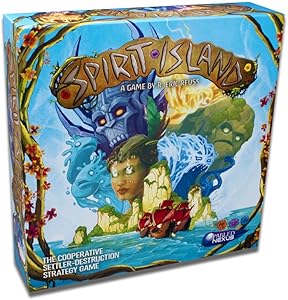
Spirit Island fundamentally changed how I think about solo board gaming. Unlike games that tolerate solo play, this one embraces it. You take on the role of a spirit protecting your island from colonial invaders, and every turn you're managing energy, playing power cards, and watching the invaders spread through an elegant, predetermined system.
The genius is in how the invaders move. You're not battling a randomized AI—you're strategically manipulating a system where each island region tracks invader presence, and growth happens in phases you can anticipate but not fully control. The game scales difficulty through invader powers and spirit combinations, so whether you're new or experienced, there's a challenge waiting. I've played this 40+ times solo and still discover new strategic angles.
One thing to know: Spirit Island has a learning curve. The rulebook requires real engagement, and turns can stretch to 20-30 minutes once you understand the system. But that complexity is exactly why the solo experience works—you're solving a puzzle, not grinding through mechanics.
Pros:
- Game is literally designed for solo play first
- Incredible replayability through spirit combinations and difficulty scaling
- Strategic depth that rewards learning and experimentation
- Beautiful thematic integration of mechanics and narrative
Cons:
- Rules are dense and require careful learning
- Components can be fiddly (tracking invaders across multiple markers)
- Turn length increases significantly as you master the game
2. Mage Knight Board Game — Maximum Complexity and Mastery

Mage Knight Board Game is honestly one of the most intricate board games ever designed, and the solo experience showcases exactly why. You're moving across a modular map, clearing hexes, acquiring spells, and managing a hand of cards that do different things depending on how you use them. That card system alone—where cards can be played as movement, attacks, or mana—creates a puzzle that evolves every turn.
The solo game puts you against enemy cities that defend themselves with predictable (but complex) rules. You're not outsmarting an AI so much as solving an elaborate mathematics problem where your decisions ripple through multiple systems. Some people find that deeply satisfying. Others find it exhausting. I'm firmly in the first camp, but I'll be honest: this isn't for everyone.
The $149.95 price tag reflects the component quality and design depth, but you need to value mechanical puzzle-solving to justify it. If you like games where victory comes from understanding every rule interaction and optimizing your play, Mage Knight Board Game delivers that in spades.
Pros:
- Unmatched mechanical depth and complexity
- Solo mode feels mechanically complete and challenging
- High-quality components and modular map system
- Satisfying moment when you finally grasp how everything interlocks
Cons:
- Steep learning curve—rules are genuinely complicated
- Turns can exceed 45 minutes easily
- Best played if you love systems and optimization, not if you want narrative-driven gameplay
- High price point requires commitment to the hobby
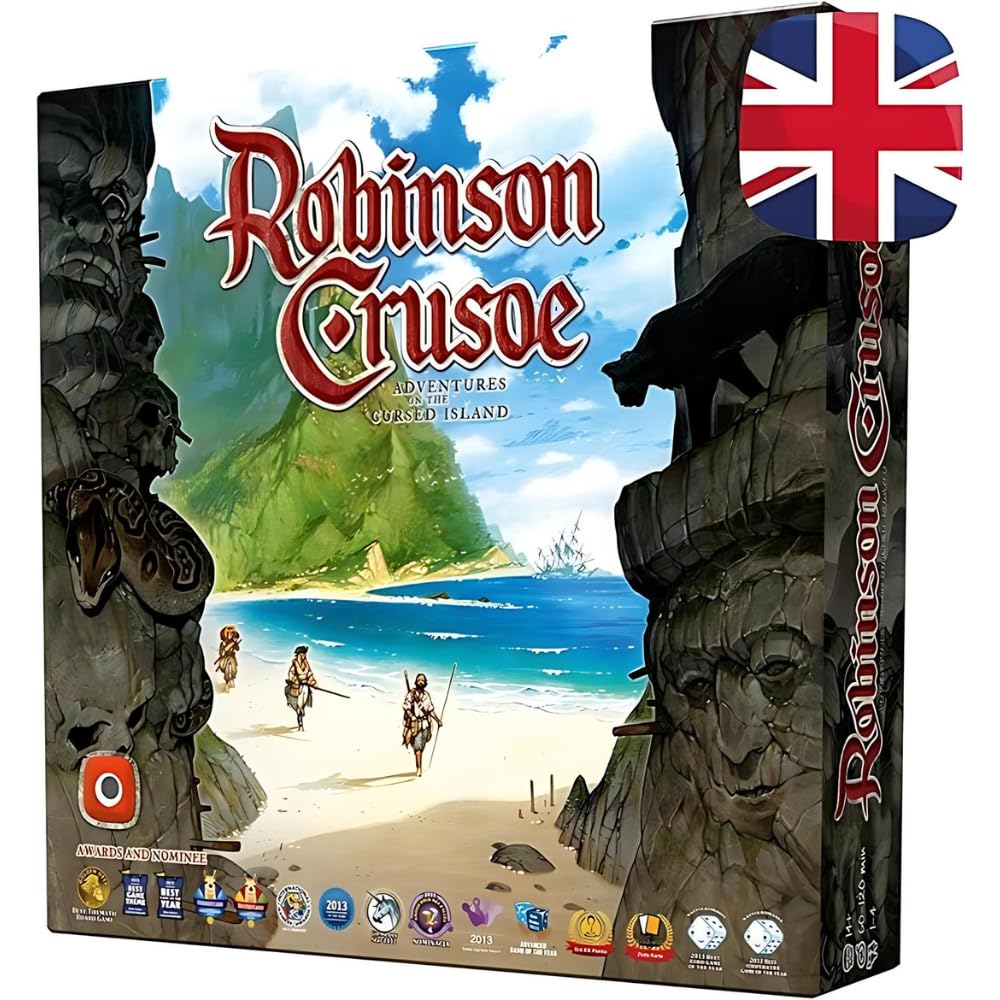
3. Robinson Crusoe: Adventures on the Cursed Island — Survival Through Storytelling
Robinson Crusoe puts you on an island where you're managing resources, building shelter, and surviving escalating disasters. Unlike Spirit Island's elegant system, Robinson Crusoe is messier and more brutal—which is kind of the point. Each scenario is a narrative setup: rescue a prisoner, survive the winter, escape the island. The solo game throws obstacles at you through event cards and survival requirements, and winning often feels legitimately precarious.
What makes this work for solo play is that the game doesn't pretend you're playing against someone else. Instead, it presents a series of challenges specific to each scenario. You're hunting for food, building fires, and managing your character's health against a turn-by-turn pressure system. It's thematic in a way that pure puzzle games aren't—you feel like you're actually surviving, not just moving pieces.
The trade-off is that Robinson Crusoe can feel harsh to the point of frustration. You might make optimal decisions and still lose because the scenario is genuinely difficult. For some players that's perfect. For others, it creates a frustrating tug-of-war where you're not sure if you lost to bad luck or bad play.
Pros:
- Genuinely immersive survival narrative
- Each scenario feels like a unique story rather than a replay
- Mechanics support the theme without feeling arbitrary
- Good difficulty scaling across different scenarios
Cons:
- High variance means skilled play doesn't guarantee victory
- Rulebook organization could be clearer
- More luck-dependent than strategy-dependent
- Some scenarios feel unbalanced or frustratingly difficult
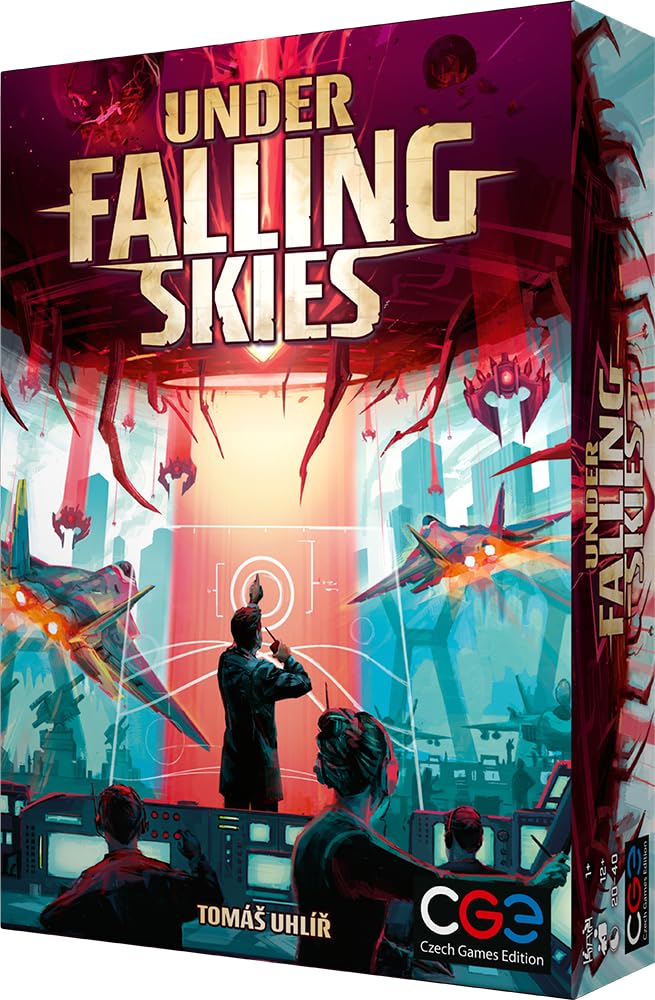
4. Under Falling Skies — Smart Strategy in Under an Hour
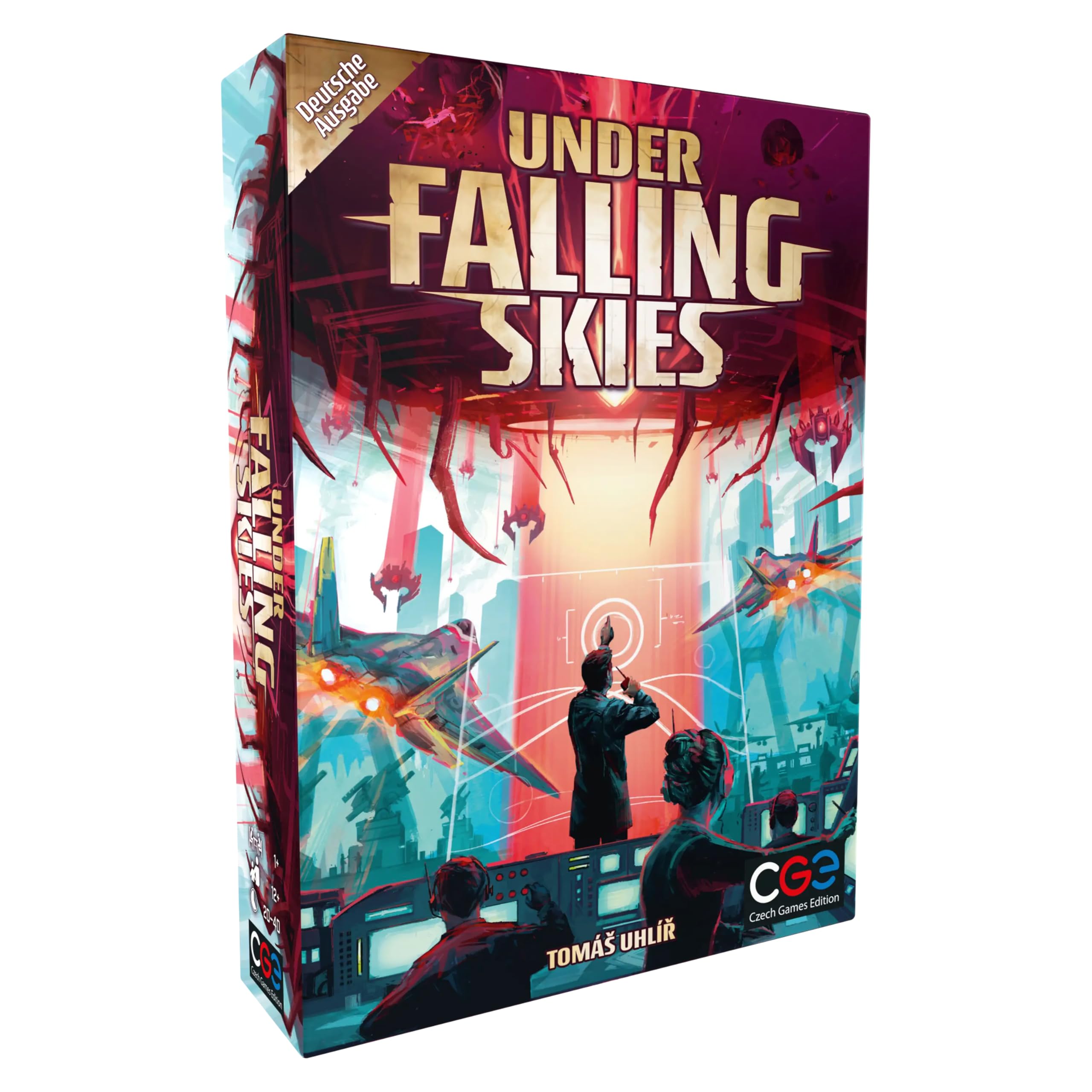
Under Falling Skies is a dice-placement game where you're defending three cities against falling invaders. Every turn you roll dice, place them on your board to activate defenses and generate resources, then watch as enemies advance closer. The pressure builds elegantly—you start with breathing room, but by turn six or seven, you're scrambling to prevent invasion.
What I love about this for solo play is how it respects your time. A full game takes 30-45 minutes, but you're making meaningful decisions throughout. The dice give you random resource constraints, but you're not helpless—you can reroll at specific spots, bank dice, or pivot your strategy. It's tight without feeling impossible, and the difficulty modes let you scale the challenge.
The best board game solo mode sometimes isn't the most complex—it's the one that delivers its full experience without burning you out. Under Falling Skies does that. You can play a quick game at lunch or a longer campaign across several plays without the mental load of something like Mage Knight Board Game.
Pros:
- Fast play time with no downtime
- Tense decision-making without excessive rules overhead
- Multiple difficulty levels and campaign mode
- Excellent components and clear presentation
Cons:
- Shorter replayability window than deeper games on this list
- Dice luck can occasionally feel frustrating
- Lighter theme means less narrative immersion
- Best for 1-2 plays per sitting rather than deep campaign mode
5. Marvel Champions: The Card Game — Deck Building and Superhero Fantasy
Marvel Champions is a living card game where you build a custom deck as a specific Marvel hero and face off against themed villains. The solo experience lets you test different hero and deck combinations against increasingly difficult villains with their own deck-driven abilities.
The appeal here is customization and variety. Want to play Spider-Man as a web-weaver control deck? You can. Prefer Iron Man as a tech-focused damage dealer? Build that. Each villain plays differently—some are aggressive, others control the board, and you're adapting your strategy accordingly. With the base game alone, you have dozens of viable deck combinations, and the system supports expansions.
For best board game solo mode selection, Marvel Champions serves a specific niche: you want thematic superhero gameplay with sandbox-level deck building freedom. It's not as deep mechanically as Mage Knight Board Game, but it's more accessible and the theme genuinely enhances rather than layers over the mechanics. If you're also into deck building games, you'll recognize the DNA here, but Marvel Champions streamlines the system for focus and clarity.
One caveat: the base game includes four heroes and three villains, which means replayability is moderate unless you're really exploring different deck archetypes.
Pros:
- Excellent thematic hero representation
- Deck building is intuitive and rewarding
- Villain variety creates different tactical challenges
- Quick play time (40-60 minutes)
- Supports expansions for long-term investment
Cons:
- Base game has limited villain variety for repeated plays
- Some heroes feel stronger than others (balance concerns)
- Requires deck construction knowledge to optimize
- Less mechanical depth than pure puzzle games
How I Chose These
These picks represent different approaches to solo gaming because the best board game solo mode depends on what you want from the experience. I evaluated each game on three core criteria:
Solo Design Philosophy: Games where solo play was intentional design, not retrofit rules. Spirit Island leads here because it literally had solo play in mind from the start. Mage Knight Board Game includes a specific solo enemy system rather than generic AI.
Mechanical Coherence: Whether the mechanics create meaningful decisions rather than deterministic grinding. Under Falling Skies and Marvel Champions both succeed despite simpler rule sets because every choice matters. Robinson Crusoe's narrative scenarios give you different problems to solve.
Replayability and Scaling: Most of these games need to feel different across multiple plays. Spirit Island and Marvel Champions achieve this through variable setups and deck options. Robinson Crusoe uses scenario variety. Mage Knight Board Game rewards mastery and optimization across campaigns.
I skipped otherwise excellent games like Arkham Horror: The Card Game because the best board game solo mode should feel intentionally designed, not adapted.
Frequently Asked Questions
What's the difference between playing solo and cooperative games solo?
Cooperative games are built for multiplayer but work solo because you control all players. The best board game solo mode games are specifically designed where solo is the primary or intended experience. You're facing a system or preset challenge rather than pretending to be multiple people. Spirit Island and Mage Knight Board Game exemplify this distinction.
Do I need to own expansions to get long-term value?
Not necessarily. Spirit Island and Under Falling Skies have strong solo experiences from the base game alone. Mage Knight Board Game similarly works as a complete experience. Marvel Champions is the exception—it's designed as a living game, and expansions significantly expand villain and hero variety. Robinson Crusoe's scenarios are sufficient for the base game.
Which of these is best for a first-time solo board gamer?
Start with Under Falling Skies or Marvel Champions. Both have approachable rules and immediate satisfaction. Under Falling Skies is faster, Marvel Champions is more thematic. Move to Spirit Island once you're comfortable with deeper systems. Mage Knight Board Game and Robinson Crusoe are for players who want to specialize in solo gaming.
Can I really play these games without downtime?
Yes, but context matters. Under Falling Skies and Marvel Champions are you making decisions for 45-60 minutes with no waiting. Spirit Island has longer turns but no downtime between them. Mage Knight Board Game can exceed two hours, but every minute is your turn. Robinson Crusoe has variable pacing depending on scenario difficulty.
Finding the right best board game solo mode game is about matching mechanics to what you want from gaming. Spirit Island offers elegant systems and replayability. Mage Knight Board Game rewards optimization and complexity. Robinson Crusoe delivers narrative immersion. Under Falling Skies respects your time. Marvel Champions brings thematic customization. Each is excellent at what it does—you just need to decide which appeals to how you want to spend your gaming time.
Get the best board game picks in your inbox
New reviews, top picks, and honest recommendations. No spam, unsubscribe anytime.