By Jamie Quinn · Updated May 13, 2026
The Best Board Games for Adults Solo in 2026

The Best Board Games for Adults Solo in 2026
If you're looking for a quality gaming experience that doesn't require a table full of friends, solo board gaming has become something special. These aren't just games you can technically play alone—they're designed from the ground up with solo campaigns, asymmetrical challenges, and mechanics that actually make playing by yourself engaging and rewarding.
Quick Answer
Spirit Island is the standout pick for serious solo players. It offers a campaign-driven experience with genuine decision-making complexity, variable difficulty scaling, and dozens of hours of replayability without ever feeling like you're playing a game balanced for multiplayer and awkwardly adapted for one person.
Our Top Picks
| Product | Best For | Price |
|---|---|---|
| Mage Knight Board Game | Complex puzzle-solving and long gaming sessions | $54.99 |
| Marvel Champions: The Card Game | Superhero fans wanting accessible solo card play | $39.99 |
| Robinson Crusoe: Adventures on the Cursed Island | Narrative-driven survival challenges | $49.99 |
| Spirit Island | Campaign depth and strategic replayability | $99.99 |
| Under Falling Skies | Quick, intense tactical gameplay | $29.99 |
Detailed Reviews
1. Mage Knight Board Game — The Complexity Champion
Mage Knight stands out as one of the most ambitious solo experiences available. This isn't a game that was designed for groups and tacked on solo rules—it's a genuine puzzle where you're managing a mage exploring a fantasy landscape, dealing with enemies, terrain, and time progression. Every turn involves figuring out how to chain abilities together, map efficiently, and make meaningful choices about where to expand your influence.
The core appeal lies in how the game's systems interact. You'll spend time optimizing your spell cards, deciding whether to fight enemies or avoid them, and balancing exploration against crystallization (essentially converting your actions into permanent power). It's deeply satisfying when you pull off a complex turn where everything clicks together. The difficulty can be tuned dramatically—scaling from "learning the ropes" all the way to scenarios that genuinely challenge experienced players.
This is absolutely the game for someone who wants to sink hours into strategic depth. However, Mage Knight has a serious learning curve. The rulebook is dense, and your first few plays will feel clunky as you reference the manual constantly. Setup takes 10-15 minutes, and sessions run 60-120 minutes depending on how quickly you play. If you want something you can pick up and play in 15 minutes, this isn't it.
Pros:
- Incredible strategic depth with meaningful decisions every turn
- Difficulty scaling that genuinely challenges experienced players
- Extensive replayability through scenario variation
- Satisfying when complex card chains come together
Cons:
- Steep learning curve with a complex rulebook
- Lengthy setup and play time
- Can feel overwhelming for casual players
- Some rules interactions require referee judgment
2. Marvel Champions: The Card Game — The Accessible Superhero Experience
Marvel Champions takes a different approach to solo gaming. Rather than complex optimization puzzles, it's a cooperative card game where you play as a Marvel character battling villains. You're building a deck, managing your hero's health and resources, and executing a strategy to defeat increasingly powerful adversaries.
What makes Marvel Champions work so well for solo play is the design philosophy. It's genuinely fun to play one character at a time—you're not awkwardly controlling multiple heroes like you might in a multiplayer game. The villains have specific mechanics and attack patterns that create distinct challenges. Playing against Rhino feels completely different from battling Klaw, and adapting your strategy to each villain's particular threat keeps things fresh.
The game also has smart pacing. A standard game runs 30-45 minutes, and you can play multiple sessions in an evening if you want. The core box gives you solid variety, though like most card games, expansion packs add more heroes and villains. If you're already a Marvel fan, the character authenticity (heroes feel like their MCU/comic counterparts) adds genuine enjoyment beyond the mechanical game.
The trade-off is that Marvel Champions is lighter than Mage Knight. It's more about executing your strategy than solving complex optimization puzzles. Some players find this refreshing; others want more brain-burning depth. Also, buying the core game gets you started, but the hobby can get expensive if you want to explore all the available content.
Pros:
- Accessible rules that you'll grasp within one play
- Each villain creates distinct tactical challenges
- Reasonable play time (30-45 minutes)
- Character variety makes replaying feel fresh
- Perfect entry point for new solo gamers
Cons:
- Lighter on strategic depth compared to heavier games
- Expansion content can get pricey
- Deck building becomes important for higher difficulties
- Some villain matchups feel unbalanced out of the box
3. Robinson Crusoe: Adventures on the Cursed Island — The Survival Storyteller
Robinson Crusoe throws you onto an island where you're managing survival, crafting resources, and dealing with hazards. It's structured around scenarios—each one presents a different survival challenge with its own objectives and unique mechanics. One scenario has you building a shelter and gathering supplies; another focuses on escaping the island before a storm arrives.
What sets Robinson Crusoe apart is how much narrative tension it creates. You're not just playing a game—you're living through a survival story where things regularly go wrong. You'll make difficult decisions about resource allocation, wonder if you've prepared enough, and experience genuine relief when you pull off a successful escape. The game mechanics reinforce the survival theme; managing hunger, fatigue, and injuries feels consequential rather than arbitrary.
The scenarios are substantial. Each one takes 60-90 minutes and tells its own story within the larger framework. After completing the core scenarios, you can revisit them at higher difficulties or create custom combinations. There's real replayability here, partly because the game includes randomized events that keep familiar scenarios from becoming predictable.
Robinson Crusoe does have some friction. The rules involve a lot of specific interactions, and it's easy to reference the manual during your first few plays. The game also has a setup/teardown time of about 20 minutes. If you want pure mechanical elegance, you might find the rulebook frustrating. Additionally, the difficulty balancing in the base game skews harder than some players prefer—some scenarios can feel punishing rather than challenging.
Pros:
- Scenarios feel like genuine survival stories
- Each scenario has unique mechanics and objectives
- Solid replayability through scenario variation and difficulty scaling
- Resource management creates real tension
- Strong thematic integration
Cons:
- Rulebook is dense with specific interactions
- Lengthy setup and teardown
- Difficulty balancing can be punishing
- Not ideal if you want quick 20-minute sessions
- Base game has limited content (only a few scenarios)
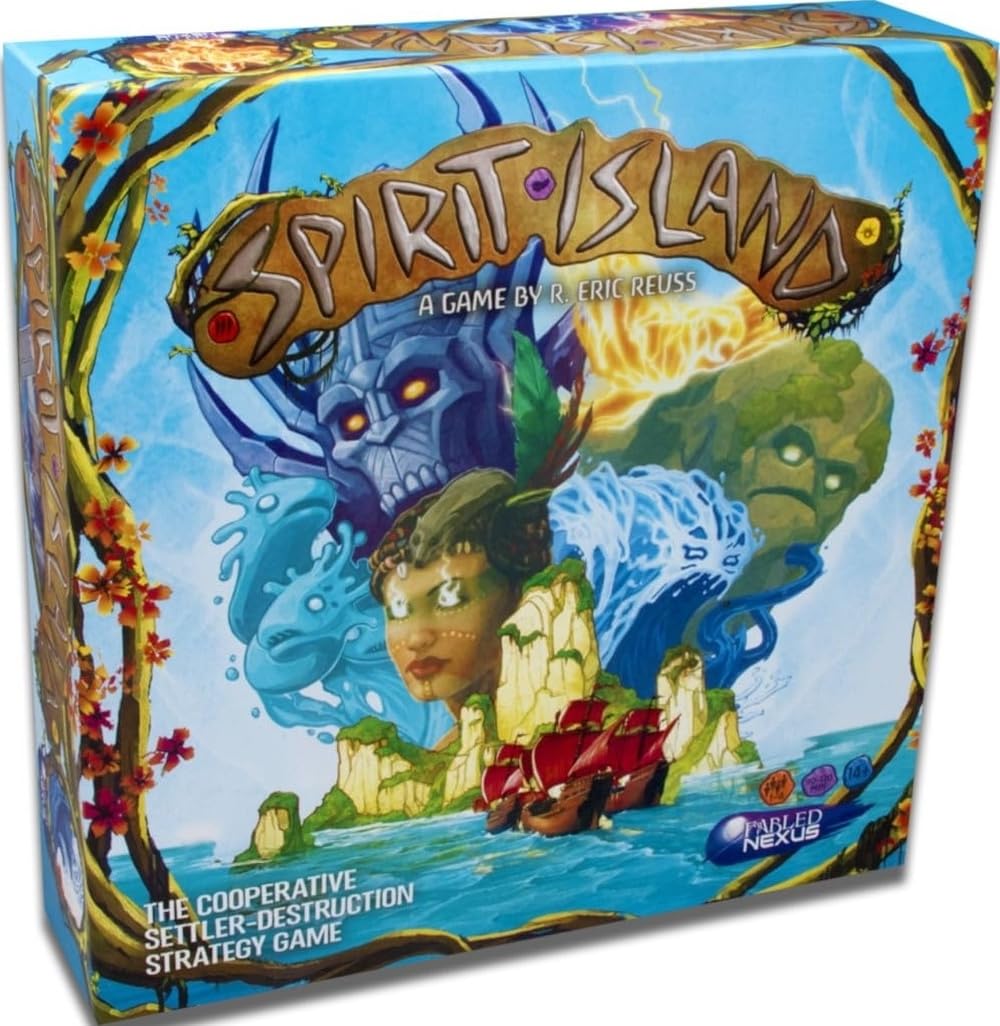
4. Spirit Island — The Replayability Masterpiece
Spirit Island positions you as supernatural spirits defending an island from colonization. Unlike other games on this list, it's genuinely designed as a cooperative experience where you're working together—but solo, you're just controlling all the spirits. The game's architecture makes this feel natural rather than awkward.
Each spirit has a completely different playstyle. One might focus on creating terrain; another manipulates time or focuses on direct offense. You're composing a strategy by choosing which spirits to control, how they interact, and executing their powers in sequence. The invaders (controlled by a simple AI flowchart) escalate in power, creating mounting pressure that forces you to optimize your turns.
The campaign system is exceptional. You can play individual games, but the campaign mode lets you unlock new spirits, modify the difficulty, and experience a progression arc across 10+ sessions. Between games, you'll make permanent decisions that affect how future games play out. This creates a sense of investment that goes beyond single-session experiences.
What I appreciate most about Spirit Island for solo play: it never feels like you're playing a multiplayer game alone. The mechanics, difficulty curves, and strategic options all feel genuinely tailored to the solo experience. The game respects your intelligence—higher difficulties don't just add more enemies; they change how the AI functions, creating fundamentally different puzzles.
The barrier is cost. Spirit Island runs nearly $100, which is steep. There's also complexity—not quite Mage Knight level, but you'll need to read the rulebook carefully. The game also plays best when you understand the spirits' interactions, so your first few games might feel less satisfying as you're still learning.
Pros:
- Spirits feel mechanically distinct and genuinely asymmetrical
- Campaign system creates long-term investment
- Difficulty scaling is sophisticated and genuinely changes gameplay
- Replayability is exceptional
- Zero awkwardness in solo adaptation
Cons:
- Expensive entry point at nearly $100
- Learning curve on spirit abilities and interactions
- First few plays won't reveal the full strategic depth
- Setup/teardown takes time
- Campaign requires commitment to multiple sessions
5. Under Falling Skies — The Quick Tactical Puzzle
Under Falling Skies is the sprinter on this list—designed for quick, intense sessions where you're managing a limited hand of dice and deciding how to deploy them against an alien invasion. Each turn, you roll dice and allocate them to different actions: removing aliens, powering your base, advancing research. Sounds simple, but the puzzle of optimizing limited resources against ascending difficulty creates surprising depth.
What makes this special for solo play is the brutal pacing. Games run 20-30 minutes, and you can chain multiple sessions together if you want. It's also the most forgiving entry point for new solo gamers. The rules fit on a few pages, setup takes five minutes, and you'll understand the full strategy within one play. There's no rulebook archaeology required.
The difficulty scaling is elegant. You start easy and the game gradually ramps the alien threat level, which changes how the invasion works and creates new challenges. There's a campaign mode where you progress through increasing threats, and classic "one-shot" games where you're just trying to survive against a preset difficulty. Both work well.
The trade-off is that Under Falling Skies is light compared to Mage Knight or Spirit Island. Strategic depth exists, but it's not sprawling. If you want to sink six hours into a single game, this isn't it. It's also purely mechanical—there's no narrative or thematic flavor beyond "aliens are invading." You're solving a puzzle, not experiencing a story.
Pros:
- Fast play time (20-30 minutes)
- Minimal rules with quick learning curve
- Elegant difficulty scaling
- Perfect for multiple quick sessions
- Excellent entry point for solo gaming
Cons:
- Limited strategic depth
- Light on theme and narrative
- Replayability is good but not exceptional
- Some dice luck moments can feel frustrating
- Less content than heavier alternatives
How I Chose These
Selecting the best board games for adults solo required weighing several factors. First, I prioritized games genuinely designed with solo play in mind rather than games awkwardly adapted for one player. This matters because it changes how satisfying and balanced the experience feels. Second, I evaluated strategic depth—how much decision-making matters and how much replayability the mechanical systems actually support. Third, I considered accessibility. The best game in the world doesn't help if you spend 40 minutes reading rules. I also factored in variety: you'll want different experiences depending on your mood, so the list includes everything from 20-minute tactical puzzles to 90-minute strategic adventures. Finally, I looked at value. Quality solo games are an investment, and each pick on this list delivers genuine hours of entertainment relative to its cost.
Frequently Asked Questions
What's the difference between these and regular multiplayer board games?
Games designed for solo play build their mechanics around single-player decision-making. They have AI opponents that follow predictable patterns, difficulty scaling that adjusts to one person's capabilities, and pacing that works for solo sessions. Multiplayer games adapted for solo often feel clunky because they weren't built with this experience in mind.
Which of these best board games for adults solo should I start with if I'm new to the hobby?
Start with Under Falling Skies or Marvel Champions. Both have minimal rules, quick play times, and they'll teach you the core concepts of solo gaming without overwhelming you. Once you're comfortable, move toward Robinson Crusoe or Spirit Island for more strategic depth.
Do I need to buy expansions?
Not immediately. Each core game stands alone with substantial content. Expansions add variety over time, but they're optional. Spirit Island and Robinson Crusoe benefit most from expansions, while Marvel Champions practically requires them if you want long-term variety.
How much table space do these best board games for adults solo need?
Mage Knight and Robinson Crusoe are spacious—you'll want at least a dining table. Spirit Island is moderate. Marvel Champions and Under Falling Skies are compact and play fine on a small desk. If space is limited, prioritize the card games.
Can I play these with other people too?
Yes. All five games support multiplayer, though some work better than others. Marvel Champions and Spirit Island transition smoothly between solo and multiplayer. Mage Knight becomes chaotic with multiple people. Robinson Crusoe and Under Falling Skies work cooperatively with groups, but the solo experience is often more satisfying.
Solo board gaming has evolved from "games you can technically play alone" to "experiences specifically crafted for one player." The best board games for adults solo on this list represent that evolution—each one respects your time and your brain. Whether you want an hour-long tactical puzzle or a campaign that spans weeks, there's something here worth exploring.
Get the best board game picks in your inbox
New reviews, top picks, and honest recommendations. No spam, unsubscribe anytime.