By Jamie Quinn · Updated May 6, 2026
The Best Board Games for Christmas 2026: Our Favorite Picks for Every Player Type


The Best Board Games for Christmas 2026: Our Favorite Picks for Every Player Type
Christmas 2026 is the perfect time to ditch screen time and actually play something together. I've spent months testing the board games that are genuinely worth wrapping up this year—and I'm talking about games that get played past January, not ones that gather dust on your shelf. Whether you need something for competitive couples, family game nights, or solo strategists, I've narrowed down the best board games for Christmas 2026 that deliver real fun.
Quick Answer
Sky Team is my top pick for most people buying board games for Christmas 2026. It won Game of The Year 2024 for a reason—two players cooperate to land a plane in 20 minutes, it's genuinely tense, and you'll both actually want to play it again immediately.
Our Top Picks
| Product | Best For | Price |
|---|---|---|
| Scorpion Masqué Sky Team | 2-player couples & competitive pairs | $32.29 |
| Cascadia | Relaxing, beautiful solo or group play | $31.99 |
| The Crew: Quest for Planet Nine | Cooperative storytelling | Check Amazon |
| Undaunted: Normandy | Tactical card-driven games | Check Amazon |
| The Crew: Mission Deep Sea | Trick-taking with a twist | Check Amazon |
| Ashes Reborn: Rise of the Phoenixborn | Customizable deck battles | Check Amazon |
| Imperium: Classics | Engine-building strategy | Check Amazon |
| Who Knows You Best? | Family party games | $14.22 |
| Chess Game with 24 Stones | Classic travel strategy | $14.99 |
| SEQUENCE- Original SEQUENCE Game | Multi-player board classics | $15.99 |
Detailed Reviews
1. Scorpion Masqué Sky Team | Game of The Year 2024

Sky Team is 20 minutes of pure cooperative tension. You and your partner are pilots trying to land a plane, and you can't directly tell each other what you're doing—you're working with incomplete information and coded signals. The game escalates every round with new challenges, and by round three, you're genuinely stressed about whether you'll make it.
What makes it special is the design. The rulebook is eight pages, and you'll play your first game in minutes. There's no fiddly setup, no 45-minute explanation. It's a game that respects your time and rewards attention. The art is clean and thematic. Most importantly, you'll want to play again immediately after you finish, which doesn't happen often.
This is best for couples, best friends, or anyone who likes two-player board games with high stakes. If you're looking for something with massive player counts or solo play, this isn't it.
Pros:
- Tense, elegant design that delivers emotional payoff
- 20-minute playtime means you can run multiple games
- Genuinely beautiful components and art direction
- Works great as a gift because it requires zero prior board game knowledge
Cons:
- Only plays 2 people (no scaling to 3+)
- Requires good communication and trust between players
- Once you've mastered it (10-15 plays), there's limited replay value
---
2. AEG & Flatout Games | Cascadia - Award-Winning Board Game Set in the Pacific Northwest
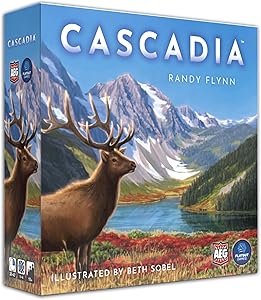
Cascadia is one of those games that relaxes you while you're playing it. You're building Pacific Northwest landscapes—placing tiles for forests, rivers, and mountains while also positioning wildlife to match habitat tiles. Mechanically, it's tile-laying with light puzzle-solving, but thematically it feels like you're actually designing a beautiful corner of nature.
The best part? It's genuinely solo-friendly. You can play alone, with two people, with four people, and the experience is solid every time. There's no "leader" problem where one person dominates. Everyone's building their own tableau at their own pace. The tile art is stunning—this is a game you want on your coffee table.
Best for people who want something they can actually relax with during the holidays. Skip this if you need cutthroat competition or heavy strategy.
Pros:
- Beautiful art and components make it a joy to look at
- Solo play is genuinely rewarding, not an afterthought
- Easy to teach (5 minutes) but satisfying to play
- Plays in 30-45 minutes for any player count
Cons:
- Very little player interaction (you're mostly focused on your own board)
- Once you understand the strategy, the challenge drops significantly
- Not for people who want confrontation or negotiation
---
3. The Crew: Quest for Planet Nine

The Crew is a trick-taking card game, but it's not like anything you've played before. Instead of trying to win the most tricks, you're cooperating to achieve specific mission objectives. One mission might say "Player 2 takes the last trick" or "Cards 1-5 are all taken by different players." You're not playing against each other; you're all trying to solve a puzzle together using a standard deck of numbered cards.
The game has 50 missions that escalate in difficulty, and it genuinely feels like you're on a space expedition. The campaign structure keeps you coming back. This is my go-to recommendation for cooperative games that don't feel childish.
Best for groups that like games where everyone's solving together. Not ideal if someone at your table needs to feel like they "won."
Pros:
- Innovative take on trick-taking that's genuinely fresh
- 50-mission campaign creates long-term replay value
- Easy rules with surprising depth
- Plays 2-5 players flexibly
Cons:
- Takes a few missions to really grasp why the puzzle works
- Can feel random in early missions before you understand the strategy
- Not competitive (which some people want)
---
4. The Crew: Mission Deep Sea

This is the deeper-ocean sequel to Quest for Planet Nine. Same trick-taking, cooperative structure—but this edition introduces new card types and mission mechanics that make things genuinely harder. If you loved the first Crew game, this is your next 50 missions.
It's worth having both because the missions don't overlap. They're designed to be played together as one long campaign. This isn't a replacement; it's a sequel. The difficulty ramps significantly, so this is for experienced board gamers.
Best for people who've already mastered the first Crew game. Skip this if you haven't played Quest for Planet Nine yet.
Pros:
- Adds real mechanical depth without overcomplicating the core
- Missions are noticeably harder and more creative
- Works perfectly as a direct sequel to Quest for Planet Nine
Cons:
- Requires mastery of the first game to appreciate
- Some missions lean heavily on luck (you need certain cards to show up)
- Difficulty spike might frustrate some players
---
5. Undaunted: Normandy

Undaunted: Normandy is a deck-building game where the deck itself is your military unit. You're managing limited cards to accomplish tactical objectives on a map-based board. Every card represents soldiers or abilities, and you're building your deck while fighting, not before the game starts.
The campaign tells a story across 12 scenarios, each one escalating the tactical complexity. The integration of deck-building with tactical positioning is brilliant—this isn't euro-game abstraction; you're genuinely making tactical decisions that matter.
Best for people who love strategy and don't mind historical themes. This is a complex game—it'll take 30-45 minutes to teach properly.
Pros:
- Novel combination of deck-building and tactical warfare
- Campaign structure keeps you invested beyond single plays
- Each scenario feels legitimately different
- Replayability is strong because of variable setup
Cons:
- Setup takes time (this isn't a quick game to start)
- Rules teach better with a YouTube video than from the rulebook
- Can feel overwhelming for casual players
---
6. Ashes Reborn: Rise of the Phoenixborn

Ashes is an asymmetrical card game where each player is a "Phoenixborn" mage with a unique deck and abilities. You're building spell combinations and summoning creatures to defeat opponents. The art is gorgeous—dark fantasy with real character design.
What makes Ashes work is customization. Out of the box, you have enough dice and cards to create multiple unique decks. This isn't like Magic where you need to buy booster boxes; one Ashes box is genuinely complete.
Best for people who like deck-building games with asymmetrical play. Skip if you want something light or casual.
Pros:
- Beautiful art and high production quality
- One box genuinely feels complete (no booster addiction)
- High skill ceiling because spell combinations matter
- Asymmetrical gameplay means matchups feel fresh
Cons:
- Rules are dense and teach-heavy
- Games can run long (30-45 minutes per match)
- Not for people who want random fun—this requires strategy
---
7. Imperium: Classics

Imperium: Classics is an engine-building game where you're managing a civilization or faction through history. You're drafting cards, building production chains, and managing resources to create an efficient system. The theme shifts based on which faction you play—Romans, Egyptians, etc.
The game respects your intelligence. There are no random dice; you're making meaningful economic decisions. Watching your engine come together is genuinely satisfying.
Best for people who love strategy board games and don't mind longer play sessions. Not ideal for casual players or anyone who values speed over depth.
Pros:
- Engine-building is executed really well without excessive complexity
- Multiple factions offer real asymmetry
- Components are high quality and organized clearly
- Games feel genuinely different based on faction choice
Cons:
- Games run 60-90 minutes regularly
- Teach time is significant
- Can feel like you're "solving" the game once you grasp the engine
---
8. Skillmatics Card Game – Who Knows You Best? Hilarious Family Party Game for Kids, Boys, Girls, Teens & Adults

Who Knows You Best is a party game where you're answering questions about other players and earning points for correct guesses. It's lightweight, takes 10-15 minutes, and actually surfaces funny conversations because you're learning things about people you thought you knew.
The genius is in the cards themselves—questions are designed to spark debate and laughter rather than feel like trivia. This is the game you play before or after your main Christmas game, not the centerpiece.
Best for family games where you want everyone laughing without serious strategy. Skip if someone at your table is super serious about winning.
Pros:
- Quick, easy setup and rules
- Gets laughter and conversation flowing
- Works for mixed age groups (8 to adults)
- Genuinely inexpensive at $14.22
Cons:
- Very light—not a "main event" game
- Relies on group chemistry and willingness to laugh
- Limited replay value (questions do repeat)
---
9. Chess Game with 24 Stones, Christmas Family Games for Kids and Adults

This is a solid, portable chess set that actually works as a gift. The board is small enough to travel with, the pieces are clear, and it's genuinely functional without feeling cheap. The "24 Stones" inclusion suggests this might be a multi-game set, though chess is the main event here.
Chess never goes out of style as a gift. If someone wants to learn or improve, having a physical set at home is genuinely useful.
Best for people who actually play chess or want to learn. This isn't a party game—it's a classic that deserves a place on your shelf.
Pros:
- Portable and well-made
- Price is right for a travel chess set
- Clean, clear pieces and board
- Timeless game that everyone recognizes
Cons:
- Just chess—no variation or campaign
- Requires a real opponent (though that's the point)
- Not exciting as a surprise unless someone asked for a chess set
[Buy
Get the best board game picks in your inbox
New reviews, top picks, and honest recommendations. No spam, unsubscribe anytime.