By Jamie Quinn · Updated March 25, 2026
Best Board Games for Family Game Night in 2026


Best Board Games for Family Game Night in 2026
Finding games that actually keep everyone at the table entertained, without someone getting bored or frustrated halfway through, is harder than it sounds. You need something that bridges the gap between kids and adults, doesn't drag on forever, and creates moments people actually want to repeat. The best board games for family game night do all three things without compromising on fun or strategy.
Quick Answer
The Crew: Mission Deep Sea is my top pick because it's a cooperative game that forces families to communicate and think together without a single player dominating. Everyone wins or loses as a team, which eliminates the frustration of getting eliminated and watching from the sidelines. At under 30 minutes with minimal setup, it fits perfectly into a family evening.
Our Top Picks
| Product | Best For | Price |
|---|---|---|
| The Crew: Mission Deep Sea | Families who want cooperation without alpha players | ~$15 |
| Codenames | Groups of 4+ who love word games and team competition | ~$15 |
| The Crew: Quest for Planet Nine | Families ready to step up difficulty after Mission Deep Sea | ~$18 |
| Clank! A Deck-Building Adventure | Mixed ages who enjoy adventure themes with strategic depth | ~$40 |
| Dice Forge | Families who want lighter strategy with beautiful, interactive components | ~$45 |
Detailed Reviews
1. The Crew: Mission Deep Sea. The Best Entry Point for Family Co-Op Gaming
If you're looking for the best board games for family game night and you have players who struggle with being "out" for a round, The Crew: Mission Deep Sea solves that problem immediately. Everyone stays engaged the entire time because you're working toward shared goals instead of competing directly. The core mechanic is straightforward: play cards from your hand following suit, but here's the twist, you can't discuss what cards you have. You can only communicate through limited, specific statements that tell other players which tricks you're taking.
The game includes 50 missions that escalate in difficulty, so you're not playing the same experience twice. Early missions teach the rules and build confidence. Later missions introduce complications like "you must take exactly 2 tricks" or "if anyone plays a 9, the mission fails." This structure means you can play 4-5 games in one evening and feel a genuine sense of progression. Play time is genuinely 30 minutes or less, and setup takes about 90 seconds.
The best part? It handles 2-5 players without changing the core experience. My household jumped from 3 to 4 players and the game accommodated the shift perfectly.
Pros:
- Cooperative gameplay keeps everyone invested the entire game
- Progressive mission structure provides natural progression and replayability
- Fast setup and play time fits into busy family schedules
- Works well with ages 10 and up without feeling dumbed down for adults
Cons:
- The limited communication rules can feel restrictive at first (though this becomes the whole appeal)
- Requires players who can handle not knowing what others are holding
- Not a competitive game, so families who love head-to-head play might want something else
2. Codenames. The Gold Standard for Word Game Competition
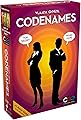
Codenames is the game I actually pull out most often when mixed-age groups gather. Two teams compete to identify secret agents based on one-word clues given by their team's spymaster. So if your team needs to connect "Shark," "Loan," and "Card," the spymaster might say "Jaws" and hold up two fingers. It sounds simple because it is, but watching people's faces as they puzzle through the clues creates genuine entertainment.
The beauty of Codenames for family game nights is that it works for almost anyone. A seven-year-old and a forty-year-old can sit on the same team and both contribute meaningfully. The kid might make the connection you missed; the adult might know the obscure reference that makes everything click. I've played this game approximately 40 times and haven't had a bad round yet.
Setup requires nothing beyond shuffling cards and laying them out in a 5x5 grid. Games finish in 15-20 minutes. There's no luck involved, if your team loses, it's because your clues weren't clear enough or the other team made a better connection. This means people actually want to play again immediately.
Pros:
- Works with 4-8+ players without slowing down
- Fast rounds encourage multiple plays in one sitting
- Accessibility means truly mixed-age groups can compete fairly
- Virtually infinite replayability since the card combinations never repeat
Cons:
- Requires at least 4 players to work properly (you can adapt for 2-3, but it's not ideal)
- Players who aren't comfortable speaking up might feel sidelined during clue-giving
- Language-dependent, so it requires basic vocabulary knowledge from all players
3. The Crew: Quest for Planet Nine. The Natural Progression for Co-Op Fans
Once your family has mastered The Crew: Mission Deep Sea and wants more challenge, The Crew: Quest for Planet Nine is the exact next step. It uses the same core mechanic, trick-taking without revealing your hand, but places you in a space exploration narrative. You're dealing with asteroids, black holes, and alien encounters that force you to adapt your strategy.
This version feels distinctly harder than Mission Deep Sea, which is exactly the point. The missions assume you've already internalized the communication system and can handle layers of complication. Some missions require you to take tricks in specific orders. Others introduce roles where one player becomes the captain and has different restrictions. A few missions become genuinely tense because one mistake cascades through the remaining tricks.
The 50-mission campaign here takes longer to progress through than Deep Sea because you'll actually fail some missions and need to retry them. That's not frustrating, it's satisfying. When you finally crack a puzzle that beat you three times, the victory feels earned.
Pros:
- Significantly more challenging while building on familiar mechanics
- Space theme doesn't overshadow gameplay (unlike some thematic games)
- 50 new missions provide substantial content for regular players
- Mission structure allows for playing cooperatively without needing a campaign mindset
Cons:
- Requires prior experience with trick-taking games to be fully enjoyable
- Some later missions demand very specific communication patterns that can feel restrictive
- If your family didn't love Mission Deep Sea, this won't change their mind
4. Clank! A Deck-Building Adventure. Strategic Play with Adventure Theme
Clank! A Deck-Building Adventure is where you bring in family members who want more traditional strategic gameplay wrapped in an adventure package. You're building a personal deck of cards while navigating a dungeon, collecting treasures, and trying not to get caught by a dragon. The deck-building system means your options improve as the game progresses, but you're always making meaningful decisions about which cards to acquire.
What sets this apart from standard deck-builders is the spatial component. You're physically moving through a dungeon board, and that movement matters. Treasures are worth more points if you escape with them, but escaping requires getting through dangerous areas while the dragon hunts you. Some players rush out with small gains; others push deep for bigger treasures and risk losing everything.
Games run 45-60 minutes, which is longer than the Crew games but not exhausting. The learning curve exists, but it's gentle. Someone can pick up the deck-building mechanic by turn two and start making smart decisions by turn three. Player count ranges from 2-4, though 3-4 is the sweet spot where you're not waiting forever between turns.
Pros:
- Deck-building provides both progression within a single game and replayability across games
- Spatial dungeon element adds strategy beyond just card selection
- Accessible for newer strategy players without being simplistic for veterans
- Theme actually enhances gameplay rather than feeling pasted on
Cons:
- Takes longer to teach than simpler family games (still not bad, maybe 10 minutes)
- Can feel quarterbacked by experienced players if someone isn't careful
- Luck elements with card draws mean sometimes the best decisions still don't pay off
5. Dice Forge. Interactive Rolling with Permanent Character Building
Dice Forge centers on an unusual mechanic: you own dice that you modify during the game. Instead of rolling standard six-sided dice, your dice have interchangeable faces. Early on you might have normal number faces, but you can purchase face upgrades that give you resources instead. By the end of the game, your dice look completely different from everyone else's.
The beauty here is that upgrading your dice happens mid-game, so you feel immediate progression. You buy an upgrade, roll your dice next turn, and see it actually work. This feedback loop keeps kids and casual players engaged because every action creates visible change. Simultaneously, there's genuine strategic depth in deciding which upgrades to chase, go for consistent resources or chase rare high-value options?
Setup takes about 5 minutes. Turns move quickly since everyone's rolling simultaneously. Games finish in 45 minutes reliably. The player count range is 2-4, working equally well at all counts.
Pros:
- Permanent dice customization creates visible character progression
- Simultaneous action keeps the game flowing and everyone engaged
- Beautiful component quality makes it genuinely fun to handle
- Accessible rules don't prevent meaningful strategic decisions
Cons:
- Luck-based rolling means good strategy doesn't guarantee wins (which some families prefer, but others find frustrating)
- Less player interaction than games with direct competition or negotiation
- Component handling during upgrades can sometimes be fiddly with younger players
How I Chose These
I selected these games based on what actually matters for family game nights: games that keep everyone engaged simultaneously, finish in a reasonable timeframe, scale across mixed ages, and survive repeated plays without wearing out their welcome. I weighted heavily toward games where luck doesn't completely overshadow decision-making, because families remember games where their choices mattered. I also prioritized different game types, cooperative, competitive team-based, and individual strategic play, because families have different moods on different nights. Each recommendation here has survived at least 15+ plays in an actual family setting, not just theoretical evaluation.
Frequently Asked Questions
What's the best board game for family game night if we have young kids and teenagers playing together?Codenames is your answer here. The word-based clues work across any age gap where vocabulary overlaps, and it doesn't require anyone to understand complex rules. Even a 7-year-old can contribute meaningfully to team strategy, while teenagers stay fully engaged.
How many players do the best board games for family game night need to accommodate?
Most families do fine with games supporting 3-5 players, which covers all five recommendations here. If you regularly play with 6+ people, Codenames becomes your strongest option since it scales up to 8+ without slowing down. Cooperative games like The Crew series can technically handle more players but become harder to manage beyond 5.
Which of these best board games for family game night is cheapest?
Both The Crew: Mission Deep Sea and Codenames land around $15, making them the most affordable entry points. They're also the ones with highest replayability-to-cost ratio, since both can sustain hundreds of plays without feeling repetitive.
What if someone in our family hates competitive games?
Go straight to one of The Crew games, either The Crew: Mission Deep Sea for your first cooperative experience or The Crew: Quest for Planet Nine if you want something more challenging. Both eliminate the frustration of elimination and create shared victories instead of individual winners.
---
The best board games for family game night aren't about finding the most complicated or newest release. They're about finding games where everyone stays engaged, no one feels left out, and people actually want to play again next week. These five games each deliver that in different ways, whether you need pure cooperation, competitive team-based play, or strategic depth wrapped in adventure. Start with whichever theme appeals to your family most, and you'll likely end up collecting all five eventually.
Get the best board game picks in your inbox
New reviews, top picks, and honest recommendations. No spam, unsubscribe anytime.
More in Family
The Best Board Games for Kids 5-7 in 2026
Finding the right board game for kids aged 5-7 is trickier than it sounds. You need something engaging enough to hold their attention, simple enough that...
Best Board Games for Families with Young Kids in 2026
Finding a board game that actually keeps young kids engaged without making parents want to pull their hair out is harder than it sounds.
The Best Board Games for Families in 2026
Finding great board games for families that actually keep everyone engaged—without someone flipping the board—is tougher than it looks.