By Jamie Quinn · Updated April 7, 2026
Best Board Games for Game Night with Friends in 2026

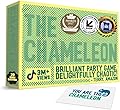

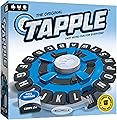

Best Board Games for Game Night with Friends in 2026
Game night with friends is about more than rolling dice or moving pieces around a board—it's about laughter, competition, and those moments when someone makes a wild guess that somehow works. The right game can turn an ordinary evening into something everyone talks about for weeks. I've tested dozens of options, and the five picks below deliver on what actually matters: they're easy to learn, fun for groups, and they keep the energy high for the entire night.
Quick Answer
CGE Codenames Board Game (2nd Edition) The Top Secret Word Association Party Game for Friends & Family Game Nights, 4+ Players is the strongest choice for most groups. It scales beautifully from 4 to 20+ players, requires zero setup beyond shuffling cards, and creates the exact kind of collaborative tension that defines great game nights with friends.
Our Top Picks
| Product | Best For | Price | ||
|---|---|---|---|---|
| CGE Codenames Board Game (2nd Edition) The Top Secret Word Association Party Game for Friends & Family Game Nights, 4+ Players | Large groups and team play | $24.98 | ||
| The Chameleon: Award-Winning Bluffing Board Game for Family, Adults & Friends \ | Includes 80 Extra Secret Words \ | Who is The Imposter? | Social deduction and bluffing | $18.99 |
| Herd Mentality: Udderly Fun Family Board Game \ | Easy & Fun for Big Groups of 4-20 Players \ | Includes 20 Extra Exclusive Questions | Big groups (10+ players) | $19.99 |
| USAOPOLY The Original TAPPLE, The Fast-Paced Family Board Game,Choose a Category & Race Against The Timer to be The Last Player,Learning Word Game for Ages 8 & Up, 2-8 Players, 15-20 Minute Play Time | Fast-paced word speed | $19.98 | ||
| I should have known that! - A Trivia Game About Things You Oughta Know, Green | Casual trivia nights | $19.82 |
Detailed Reviews
1. CGE Codenames Board Game (2nd Edition) The Top Secret Word Association Party Game for Friends & Family Game Nights, 4+ Players
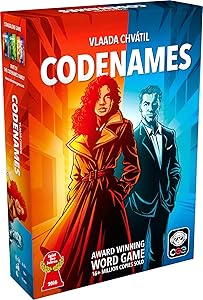
Codenames dominates game night conversations for good reason. The premise is simple: two teams compete to find their agents by decoding one-word clues given by their spymaster. What makes this brilliant is how it forces creative thinking. You're not just playing the game—you're constantly evaluating how words connect, what your teammates will understand, and what might trip up the other side.
The 2nd edition includes updated cards and the same mechanical elegance that's made Codenames a staple since 2015. Setup takes 60 seconds. Each round runs 15-20 minutes, so you can easily play multiple games in one evening. The player count flexibility is genuinely impressive. I've played it with exactly four people and with a group of eighteen, and it works both ways. Larger groups mean longer thinking time between turns, but it also means more voices debating clues.
What sets this apart for game night with friends is the lack of elimination. Everyone stays engaged the entire time because team dynamics matter more than individual turns. There's also meaningful strategic depth without requiring a manual to explain. Most people grasp it within one round.
Pros:
- Scales perfectly from 4 to 20+ players
- Quick rounds (15-20 minutes) let you play multiple games
- Creates collaborative problem-solving moments
- Zero downtime—players stay engaged between turns
- Elegant rule set teaches in under two minutes
Cons:
- Requires a flat surface to arrange cards (tables matter)
- Some players find the competitive team dynamic less fun if they dislike being on uneven skill teams
- The physical card deck doesn't include a timer (though most phones do)
---
2. The Chameleon: Award-Winning Bluffing Board Game for Family, Adults & Friends | Includes 80 Extra Secret Words | Who is The Imposter?
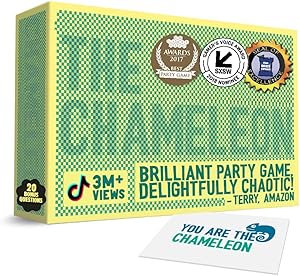
The Chameleon takes social deduction in a refreshing direction. Everyone receives a secret category card with a specific word on it—except one player gets a blank. That player is the chameleon and has no idea what everyone's thinking. Through discussion, players try to identify the chameleon while the chameleon tries to guess the word.
What I appreciate here is how quickly the game moves. Unlike some deduction games that drag, Chameleon finishes in under 15 minutes per round. It's also genuinely funny because players are constantly trying to sound confident about their own knowledge while assessing everyone else's reactions. The included 80 extra secret words extend replay value significantly—you won't exhaust the word list after a few plays.
The game works best with 3-8 players, though you can stretch to more. It's one of the best board games for game night with friends who enjoy reading the room and light bluffing without heavy strategic thinking. The barrier to entry is low, but the social dynamics can be surprisingly complex.
One note: this game rewards observational skills and reading body language more than raw knowledge. If your group enjoys pure luck or doesn't engage in table talk, it won't land as well.
Pros:
- Fast rounds keep momentum high
- 80 extra words included extend longevity
- Emphasizes social observation over complex rules
- Creates authentic funny moments
- Minimal setup and explanation needed
Cons:
- Requires engaged players who'll participate in discussion
- Less appealing to groups that prefer quieter gameplay
- Works best with 4-6 players; performance drops slightly at lower or higher counts
---
3. Herd Mentality: Udderly Funny Family Board Game | Easy & Fun for Big Groups of 4-20 Players | Includes 20 Extra Exclusive Questions

Herd Mentality is specifically designed for the "big group" game night scenario, and it delivers. The concept: everyone writes down answers to absurd prompts simultaneously, then reveals. You score points by matching answers with other players. The goal is to think like your friends.
This is one of the few best board games for game night with friends that actually accommodates 15, 18, or even 20 people without bogging down. Everyone plays every round—no downtime, no elimination. The included 20 extra questions prevent the game from becoming predictable even if you own it for years.
The humor comes from both the prompts themselves and your friends' answers. Questions range from straightforward ("What's the most romantic thing to do on a date?") to bizarre ("What food would you become if you were turned into food?"). The scoring rewards consensus thinking without punishing originality too heavily.
However, this game thrives on a specific energy level. Your group needs to be engaged and willing to laugh at dumb answers. If everyone's in a competitive, strategic headspace, Herd Mentality feels less fun. It also plays slower with bigger groups simply because more answers need to be read aloud.
Pros:
- Genuinely designed for large groups (4-20 players)
- No elimination or downtime
- 20 extra questions included for extended play
- Teaches in 30 seconds
- Creates consistent laughter
Cons:
- Requires a willing, upbeat group
- Larger groups mean longer rounds (though this isn't always bad)
- Less appealing to competitive players focused on winning
- Writing and revealing answers takes time with 15+ players
---
4. USAOPOLY The Original TAPPLE, The Fast-Paced Family Board Game, Choose a Category & Race Against The Timer to be The Last Player, Learning Word Game for Ages 8 & Up, 2-8 Players, 15-20 Minute Play Time
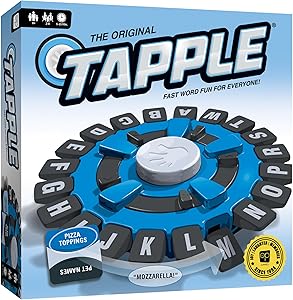
TAPPLE is word speed at its purest. A category appears. A timer starts. You rapidly tap a letter on the wheel and shout an answer. If your answer's valid and hasn't been used this round, you're safe. If you hesitate or repeat, you're out. Last player remaining wins the round.
This scratches a different itch than the collaborative games listed above. TAPPLE is competitive, physical (you're tapping), and relentless. Each game runs only 15-20 minutes, which means short, intense bursts of gameplay. It's exceptional as a warmup game before longer titles or as a standalone activity for groups that want pure speed-based competition.
The 2-8 player range is accurate. Below 3 players it feels thin. Above 8, people spend too much time waiting. The physical wheel mechanism feels satisfying, and the variety of pre-set categories prevents the game from becoming stale. If you've played the original TAPPLE, this plays identically—no surprises here, which is either good (proven design) or boring (same old game) depending on your perspective.
TAPPLE works as part of a larger game night with friends rotation, but it's not a standout for groups that prioritize narrative or collaborative moments. It's pure mechanics.
Pros:
- Fast rounds keep energy high
- Physical wheel adds tactile appeal
- Works well as a quick warmup or cooldown game
- Simple rules, endless variety through categories
- Plays in exactly the time promised (15-20 minutes)
Cons:
- Purely competitive—no teamwork elements
- Less appealing to players who dislike being eliminated mid-game
- Requires a table surface (the wheel needs space)
- Category pool is finite; devoted players might exhaust it
---
5. I should have known that! - A Trivia Game About Things You Oughta Know, Green

I should have known that! approaches trivia differently. Instead of obscure facts, questions focus on things that feel like they should be common knowledge—hence the name. "How many strings does a standard guitar have?" "What year was the Titanic sunk?" The category is "Things You Oughta Know."
This is genuinely one of the better board games for game night with friends because it doesn't create knowledge gaps as brutally as traditional trivia. You won't get slaughtered if you're not a movie encyclopedia or sports fanatic. The questions feel fair. If you miss one, you're genuinely frustrated with yourself rather than annoyed at the game for asking something unreasonable.
The game plays 2-6 players, though smaller groups work better. Setup is minimal. Gameplay moves steadily. It's the kind of game that works after dinner when everyone's relaxed and wants something low-stress but engaging.
The downside: if trivia isn't your group's strength or interest, this won't convert skeptics. It's a solid, conventional trivia game with a smart question focus—nothing revolutionary. It also works best with groups of similar knowledge levels rather than mixing experts with casual players.
Pros:
- Questions feel fair and achievable
- "Things You Oughta Know" prevents obscure rabbit holes
- Appropriate difficulty for mixed-skill groups
- Quick setup and straightforward rules
- Works well for relaxed, post-dinner gameplay
Cons:
- Traditional trivia format won't appeal to everyone
- Less effective if knowledge levels are extremely varied
- Shorter player count range (2-6 vs. larger games' flexibility)
- No mechanical innovation—it's solid but familiar
---
How I Chose These
Selecting the best board games for game night with friends meant prioritizing certain criteria. First, scalability: the games needed to work with realistic friend groups, whether that's 4 people or 15. Second, setup and explanation time—great game night games teach themselves quickly. Third, play duration. If a game runs 90+ minutes, fewer games happen in a single night.
I also weighted social engagement heavily. These aren't solitary experiences. They require table talk, laughter, and genuine interaction. Finally, I considered variety. No group wants five versions of the same game type. These five span competitive team play, bluffing, consensus thinking, word speed, and trivia—different enough that you can own multiple without redundancy, but similar enough that they all excel in the same scenario: friends gathering for an evening.
---
Frequently Asked Questions
What's the best board game for game night with friends if we have limited table space?
The Chameleon or Herd Mentality work best in tight quarters since they require only paper and pens beyond the game itself. Avoid TAPPLE if you lack space for the wheel mechanism. Codenames needs room to spread cards but less than some alternatives.
How long does a typical game night with friends take?
Expect 2-3 hours if playing multiple rounds. Most of these games run 15-25 minutes individually, so you'll typically play 6-10 rounds in an evening depending on setup time, bathroom breaks, and conversation. This makes game nights feel substantial without overwhelming time commitments.
Can these board games for game night with friends work if some players are newcomers?
Absolutely. All five have minimal rule complexity. Codenames, The Chameleon, and Herd Mentality teach in under two minutes. TAPPLE requires maybe one example round. I should have known that! is pure trivia with no learning curve. Newcomers should feel comfortable immediately.
Which game works best for very competitive groups?
TAPPLE and I should have known that! lean most heavily into competitive mechanics. Codenames offers team competition without harsh elimination. If your group thrives on ranking and scoring, these three are your best bets.
Do I need to own all five, or should I start with one?
Start with Codenames if you've got 6+ friends. It's the most versatile. Add The Chameleon or Herd Mentality next depending on whether your group prefers bluffing or consensus. TAPPLE and I should have known that! are excellent second or third additions but not essential starters.
The best board games for game night with friends share a common trait: they disappear into the background, letting friendships and laughter take center stage. Pick the one that fits your group's personality, grab some snacks, and you'll have an evening worth repeating.
Get the best board game picks in your inbox
New reviews, top picks, and honest recommendations. No spam, unsubscribe anytime.