By Jamie Quinn · Updated May 5, 2026
Best Board Games for Replayability in 2026

Best Board Games for Replayability in 2026
If you've ever bought a board game only to shelve it after three plays, you know the frustration. The best board games for replayability are the ones that feel fresh every single time you open the box—whether that's because the rules create wild new situations or because the strategic depth keeps pulling you back. I've tested dozens of games over the years, and the ones I keep coming back to share something specific: they reward different approaches and don't punish you for trying new tactics.
Quick Answer
Ashes Reborn: Rise of the Phoenixborn is the replayability champion here. It's a deck-building card game where your starting character and card pool stay the same, but the combinations you build vary dramatically across games. You'll find yourself experimenting with entirely different strategies session after session, and it plays completely differently at two players versus multiplayer.
Our Top Picks
| Product | Best For | Price | |||||
|---|---|---|---|---|---|---|---|
| Ashes Reborn: Rise of the Phoenixborn | Unlimited strategic variety | Check Amazon | |||||
| Imperium: Classics | Solo and multiplayer deck-building evolution | Check Amazon | |||||
| The Crew: Mission Deep Sea | Cooperative replayability with 50 scripted missions | Check Amazon | |||||
| The Crew: Quest for Planet Nine | Sci-fi trick-taking with 50 unique challenges | Check Amazon | |||||
| Undaunted: Normandy | Campaign mode with permanent card decisions | Check Amazon | |||||
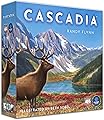
| Cascadia - Award-Winning Board Game Set in the Pacific Northwest | Quick tile-placement with satisfying variety | $31.99 | |||||
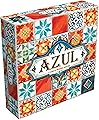
| Azul Board Game - Award-Winning Tile-Placement Strategy Game, Beautiful Mosaic Art, Family Fun for Kids & Adults, Ages 8+, 2-4 Players, 30-45 Minute Playtime | Elegant simplicity that rewards mastery | $34.39 | |||||
| Thames & Kosmos \ | Targi \ | Two Player Game \ | Strategy Board Game \ | Golden Geek Award Nominee \ | Kennerspiel Des Jahres Award Finalist | Two-player depth without bloat | $19.99 |
| CGE Codenames Board Game (2nd Edition) The Top Secret Word Association Party Game for Friends & Family Game Nights, 4+ Players | Endlessly replayable party moments | $24.98 | |||||
| Asmodee Splendor Board Game - Master The Art of Wealth and Prestige! - Engaging Gem Mining Strategy Game for Kids & Adults, Ages 10+, 2-4 Players, 30 Min Playtime | Accessible engine-building with 100+ plays | $31.99 |
Detailed Reviews
1. Ashes Reborn: Rise of the Phoenixborn — Deck-Building That Never Gets Old

Ashes Reborn is probably the most underrated answer to "best board games for replayability" because it does something most games don't: it respects experimentation. You pick a Phoenixborn character (like Saria or Rin) and you get the same card pool every time. But the deck you build from that pool shifts completely based on what you're trying to do. One session you're building a control-heavy magic setup. The next, you're going all-in on summons. The next, you're mixing allies with combat tricks.
The genius is that there's no "solved" meta. You'll play the same matchup dozens of times and find new angles because the game rewards positioning, timing, and adaptability. It plays differently with two players versus three or four, which multiplies the replayability. Once you're comfortable with the base mechanics, expansions add even more character variety without ever feeling overwhelming.
The one real caveat: this is a game for people who like thinking about deck building. If you want something simpler, it's not the pick.
Pros:
- Unlimited strategic variety within a tight cardpool
- Plays completely differently at different player counts
- Shallow learning curve but genuinely deep mastery ceiling
- Community is still active and balanced
Cons:
- Requires comfort with deck-building concepts
- Can feel abstract if you're not engaged with the theme
- Setup takes longer than lighter games
---
2. Imperium: Classics — Engine Building That Evolves

Imperium: Classics is built for the person who plays the same game 50 times and still finds new combos. It's a historical deck-building game where you're building an ancient empire, but the real magic is that your civilization evolves differently every single campaign. You'll prioritize completely different technologies, units, and strategies based on what cards show up and what your opponents are doing.
What makes this incredible for replayability is the campaign mode. Your decisions in one era ripple into the next, but you're never locked into a doomed path. I've had radically different winning strategies in back-to-back plays—one where I went military-heavy, another where I focused on infrastructure and tech. The solo mode is genuinely challenging, too, so even if you're playing alone, you get that drive to improve.
Pros:
- Meaningful decisions that change how your civilization develops
- Excellent solo mode with adjustable difficulty
- Campaign mode encourages multiple playthroughs
- Cards synergize in organic, discoverable ways
Cons:
- Setup can be fiddly with all the card sorting
- Campaign play takes real commitment (multiple sessions)
- Not ideal for casual one-off plays
---
3. The Crew: Mission Deep Sea — Cooperative Replayability Done Right

The Crew series is perfect if you want best board games for replayability without the competitive drama. Mission Deep Sea is a trick-taking cooperative game with 50 specific missions that escalate in difficulty and introduce new rules gradually. Each mission is a puzzle you solve together, and you can't openly discuss your cards, which forces clever communication.
The replayability is structured but satisfying. You'll hit a mission that feels impossible, then unlock something on the third attempt, then move forward. Each mission fundamentally changes how the trick-taking works—sometimes you need to lose tricks, sometimes you need everyone to take exactly one, sometimes you're racing against a timer. I keep coming back because the puzzle-solving aspect feels fresh even though the core mechanic stays the same.
Pros:
- 50 missions offer progressive difficulty and novelty
- Perfect for couples or small groups
- Quick playtime (30-45 minutes per mission)
- Communication system is clever without being gimmicky
Cons:
- Cooperative games can create analysis paralysis
- Once you've solved all 50 missions, there's less reason to replay
- Not ideal for large groups or very casual players
---
4. The Crew: Quest for Planet Nine — Sci-Fi Trick-Taking With Replayable Chaos

Quest for Planet Nine is the spiritual predecessor to Mission Deep Sea, and it trades the underwater theme for space exploration. This one has the same 50-mission structure, but the puzzle design feels slightly different—you're hunting for a hidden planet, and each mission adds constraints and goals that shift how you approach trick-taking.
The replayability factor here is identical to Deep Sea (50 unique missions), but the flavor is entirely different, and the mission designs occasionally diverge in interesting ways. If you love the Crew formula and want two versions with different puzzle philosophies, both work. If you're picking one, I'd lean Mission Deep Sea for the tighter mission progression, but Quest for Planet Nine is equally valid.
Pros:
- 50 varied cooperative puzzles
- Excellent production quality
- Space theme resonates with certain groups
- Rules teach intuitively across missions
Cons:
- Similar structure to Mission Deep Sea (redundant if you own both)
- Limited replayability once missions are solved
- Requires cooperative-minded players
---
5. Undaunted: Normandy — Campaign Play With Permanent Choices

Undaunted: Normandy is a World War II deck-building game where you're managing a squad through a campaign. The genius is that cards you lose stay lost, and units you deploy affect what you have access to in future scenarios. You're making permanent strategic choices that feel real.
This creates incredible replayability because your second playthrough will look completely different. You might go conservative and preserve troops, or aggressive and sacrifice soldiers to win early scenarios faster. The campaign forces you to think long-term, and there's no "correct" way to build your forces. I've replayed the campaign probably a dozen times with wildly different outcomes.
Pros:
- Permanent card loss creates genuine strategic weight
- Campaign mode encourages multiple playthroughs
- Excellent narrative pacing across scenarios
- Solo and two-player modes both work
Cons:
- Requires commitment to a full campaign (5-6 scenarios)
- Thematic elements around war aren't for everyone
- Setup takes time with unit tracking
---
6. Cascadia - Award-Winning Board Game Set in the Pacific Northwest — Tile-Placement Zen
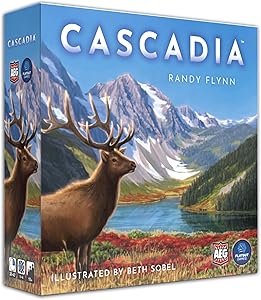
Cascadia is a quiet game about building ecosystems in the Pacific Northwest. You're placing tiles to create habitats and attracting wildlife, and on the surface it sounds zen and simple. But the replayability comes from the fact that the optimal board layout changes completely based on what tiles appear and what other players prioritize.
Every game of Cascadia feels like you're solving a unique puzzle. You might focus on creating a dense forest, or spread out to build larger grasslands, or corner all the water tiles. The scoring rewards variety, which pushes you to explore different patterns. At $31.99, it's an excellent value for a game you'll want to play 30+ times. It's perfect for groups that enjoy gentler strategy.
Pros:
- Beautiful component design and art
- Quick playtime keeps you coming back
- Scoring system rewards different approaches
- Easy to teach, genuinely strategic to play
Cons:
- Relatively light strategy (not for heavy thinkers)
- Game is best with 2-3 players
- Limited player interaction
---
7. Azul Board Game - Award-Winning Tile-Placement Strategy Game, Beautiful Mosaic Art, Family Fun for Kids & Adults, Ages 8+, 2-4 Players, 30-45 Minute Playtime — Elegant Depth
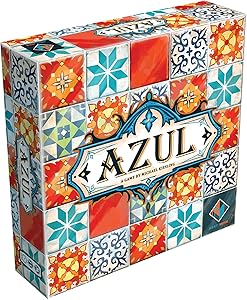
Azul is one of the most replayed games on my shelf, and that's because the rules are simple but the decisions matter enormously. You're collecting tiles to build a mosaic pattern, and every turn you're blocking opponents while advancing your own position. The tile selection system creates constant strategic tension—do you take what you need, or take something bad just to deny it to your opponent?
The replayability comes from player interaction being completely unpredictable. The same player count and starting position will play totally differently based on player personality and table dynamics. I've had aggressive games where everyone's blocking each other ruthlessly, and collaborative games where people prioritize their own boards. At $34.39, it's one of the best values for a game that hits the table 50+ times.
Pros:
- Rules teach in 5 minutes, depth emerges immediately
- Plays in under 45 minutes consistently
- Beautiful components justify keeping it on display
- Scales well from 2 to 4 players
Cons:
- Light strategy (not for people who want deep decision trees)
- Player count matters—2-player plays differently than 4-player
- Can feel repetitive if you play 10 times in a row
---
8. Thames & Kosmos | Targi | Two Player Game | Strategy Board Game | Golden Geek Award Nominee | Kennerspiel Des Jahres Award Finalist — Two-Player Mastery

Targi is a two-player grid-building game where you're controlling merchants in the Sahara, and the board itself acts as a shared resource. You place your pieces on the outer edges of a grid, and where your pieces intersect determines what cards you get access to. The asymmetry of power based on placement makes every turn a spatial puzzle.
What makes this endlessly replayable is that blocking is constant but fair—when you block your opponent, you're also limiting your own options. The economy of the game forces you to make tough calls every single turn. I've played this game 40+ times with the same opponent, and we still find new strategies. For two-player games, this is top-tier replayability at just $19.99.
Pros:
- Brilliant spatial design creates constant decision-making
- Plays in 20-30 minutes consistently
- No luck factor—skill difference is real
- Excellent value at this price point
Cons:
- Strictly two-player (no scaling)
- Can feel tense or frustrating if you don't enjoy blocking mechanics
- Sparse theme might not appeal to everyone
---
9. CGE Codenames Board Game (2nd Edition) The Top Secret Word Association Party Game
Get the best board game picks in your inbox
New reviews, top picks, and honest recommendations. No spam, unsubscribe anytime.