By Jamie Quinn · Updated April 13, 2026
Best Board Games for Two Players in 2026



Best Board Games for Two Players in 2026
If you're looking to scratch that gaming itch with just one other person, you're in luck—the board game world has exploded with genuinely excellent two-player experiences. Whether you've got 20 minutes or three hours, there's something that'll work. I've spent enough time with these games to know which ones actually hold up after the novelty wears off.
Quick Answer
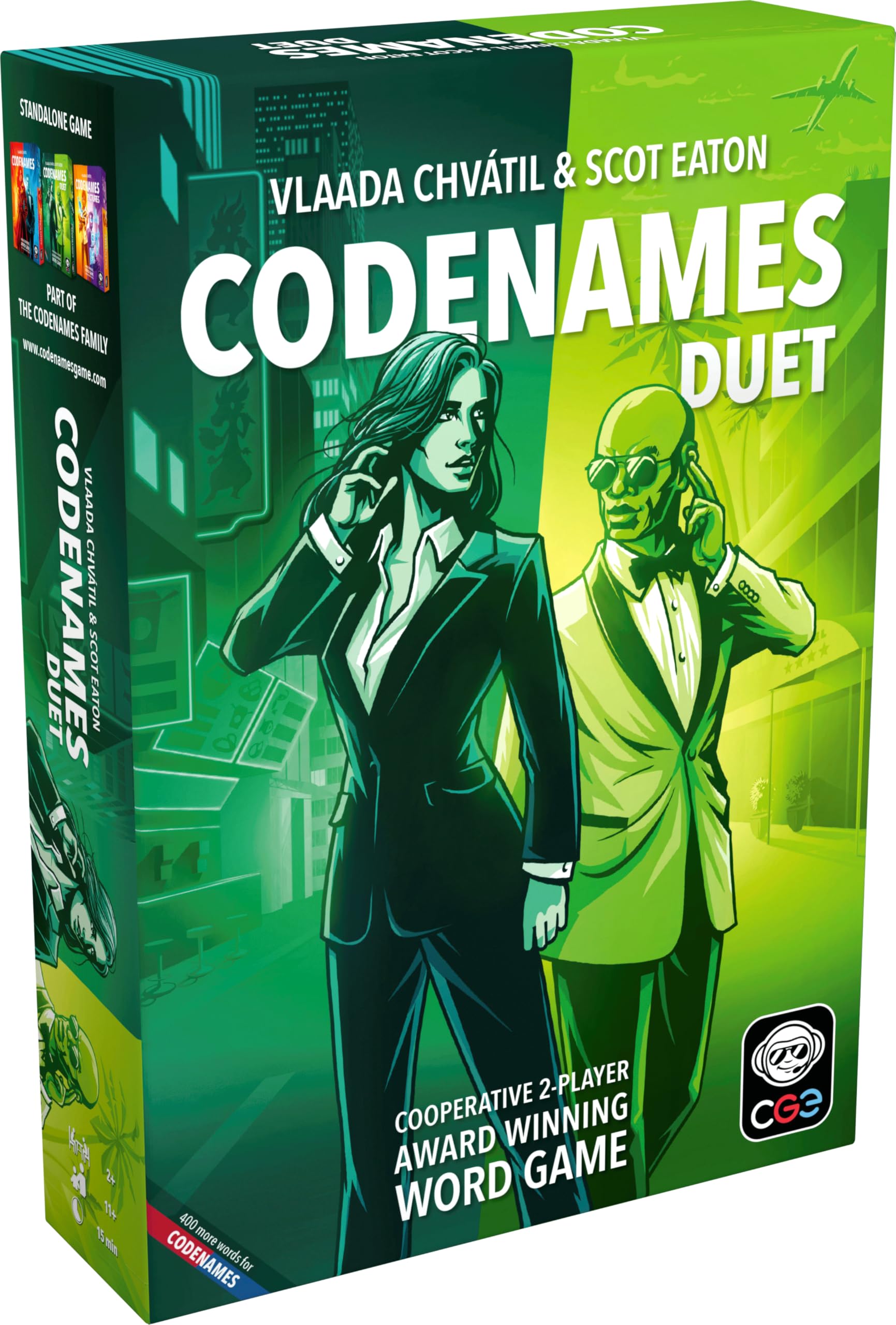
Codenames: Duet is your best all-around pick for two-player gaming. It's affordable at $24.99, plays in under 15 minutes, and works brilliantly as a cooperative game where you're both on the same side trying to win together—no competition, just teamwork and communication.
Our Top Picks
| Product | Best For | Price |
|---|---|---|
| Codenames: Duet | Quick, cooperative word games | $24.99 |
| Ashes Reborn: Rise of the Phoenixborn | Competitive card-driven duels | $28.01 |
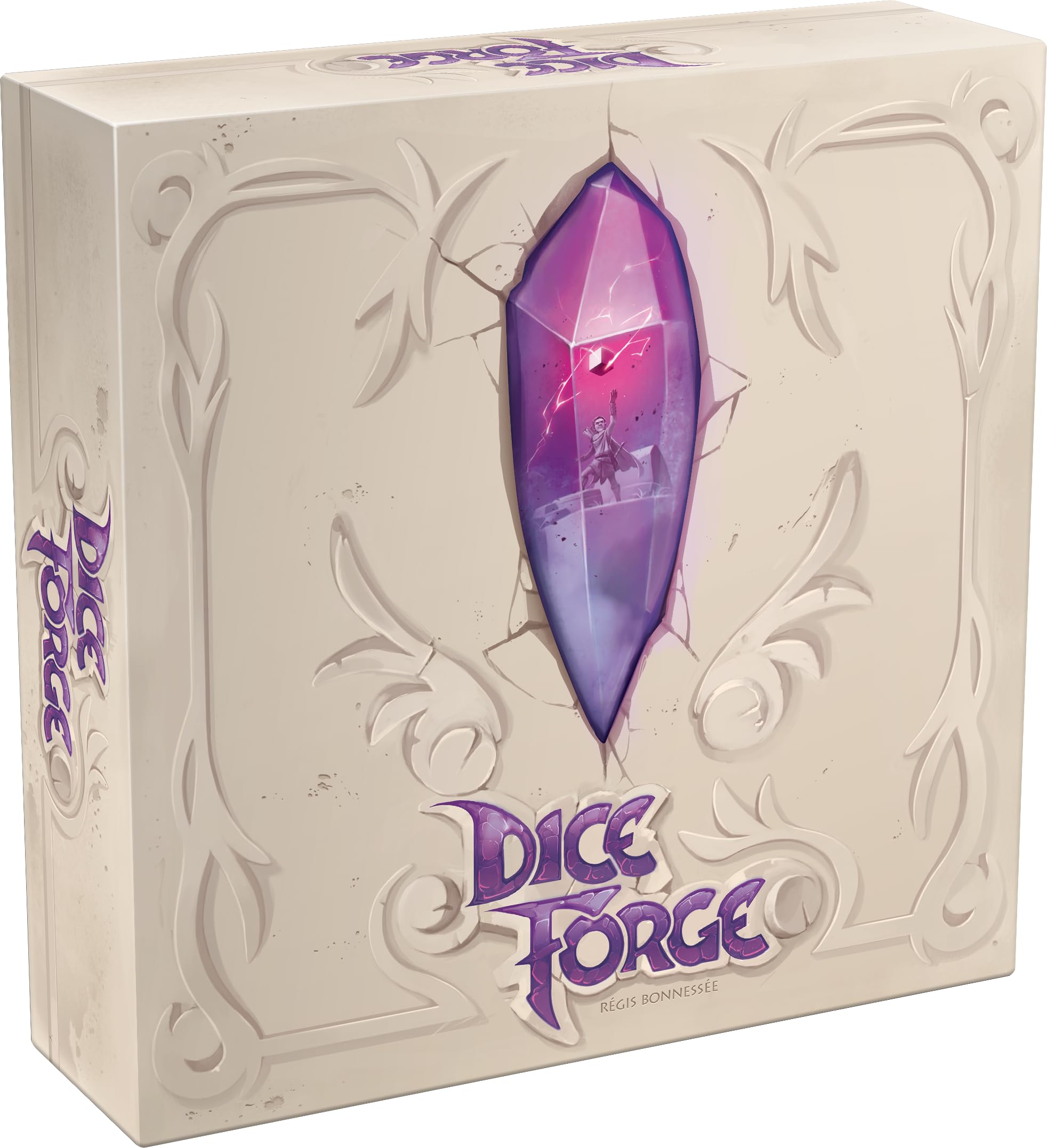
| Dice Forge | Strategic resource-building for two | $48.99 |
| Star Wars: Rebellion | Deep, asymmetrical cat-and-mouse gameplay | $107.99 |
| Undaunted: Normandy | Tactical deck-building with historical depth | $44.52 |
Detailed Reviews
1. Codenames: Duet — Cooperative Word Deduction That Works
Codenames: Duet flips the original Codenames concept by putting both players on the same team. Instead of competing teams trying to identify secret agents, you're both working against the game itself. One person gives clues (like "Medieval: 3" or "Liquid: 2"), and the other has to identify which words on the board match those hints. You've got a limited number of turns to find all your target words before the game wins.
What makes this special is the pressure. Unlike regular Codenames, you can't just make vague clues and hope for the best—you need actual coordination and understanding of how your partner's brain works. After a few rounds, you start developing this weird telepathy where you just know what they're thinking. The game takes about 10-15 minutes, so it's perfect for a quick game night or something you can play multiple times in one sitting.
The catch? If you're the type who wants to compete and trash-talk, this won't scratch that itch. It's pure cooperation, which some people find less exciting than head-to-head play. Also, the game quality depends entirely on the word list—if you play it 20 times with the same cards, it gets stale.
Pros:
- Genuinely clever cooperative mechanic that forces communication
- Super quick—you can play 3-4 rounds in 45 minutes
- Affordable and takes up minimal shelf space
- Works great as an ice-breaker game before heavier stuff
Cons:
- No competitive element if that's what you're after
- Can become repetitive if you don't rotate the card decks
- Requires both players to actually engage (no carrying a quiet partner)
---
2. Ashes Reborn: Rise of the Phoenixborn — Tactical Card Dueling
Ashes Reborn is a competitive card game where you play as Phoenixborns—basically magic-wielding characters—and duel one-on-one. Think of it as a more tactical, less random version of Magic: The Gathering designed specifically for two players. You're managing a hand of spells, summoning units, and trying to reduce your opponent's life total to zero.
What I appreciate about Ashes Reborn is the dice mechanism. You roll dice to generate resources that fuel your spells, so there's randomness, but not in a frustrating way. You're still making meaningful decisions even when the dice don't cooperate. The game rewards planning ahead and understanding your opponent's options. Each Phoenixborn plays differently enough that deck variety matters.
At $28.01, it's a steal for a legitimate two-player card game. Games run about 45-60 minutes, which is solid without being a commitment. The main drawback is the learning curve—this isn't something you'll teach in five minutes. New players need 20 minutes just to understand the flow.
Pros:
- Excellent competitive depth for the price
- Dice mechanic is intuitive but creates interesting decisions
- Multiple Phoenixborns with distinct playstyles
- Doesn't feel as random as traditional CCGs
Cons:
- Steeper learning curve than casual games
- Takes longer than best board games for two that are meant for quick plays
- Card-heavy gameplay might overwhelm pure board game fans
- Limited expansion support compared to other card games
---
3. Dice Forge — Building Your Engine Through Die Customization
Dice Forge is wild—you literally customize your own dice as the game progresses. You start with basic dice, and every turn you're buying upgrades that change which faces appear on those dice. Need more lightning bolts? Buy a new die face. Want gold instead? Swap it in. By game's end, your dice are completely unique to your strategy.
The core loop is elegant: roll your custom dice, spend the results to purchase more die upgrades and cards, then watch your engine get stronger. It's satisfying in a way that most dice games aren't because you're not just rolling and hoping—you're actively shaping what you can roll. Games run about 45 minutes, and honestly, the first 10 minutes are a bit slow as people figure out the upgrade paths, but it clicks quickly.
For two players, Dice Forge works great because you're not really directly fighting each other. You're competing on points, sure, but you're mostly focused on building your own engine. That means there's less player elimination frustration and more "I'm excited to see what I can build next turn."
The downside? At $48.99, it's not cheap, and some people find the theme (Greek mythology) thin. If you're looking for something with rich narrative or deep interaction, this prioritizes mechanical elegance over story.
Pros:
- Unique die-customization mechanic feels fresh
- Satisfying progression system
- Beautiful, chunky components
- Quick enough to play back-to-back games
Cons:
- Theme feels pasted on
- First game requires a learning round
- Less direct player interaction than confrontational games
- Competitive without being cutthroat, which some find less engaging
---
4. Star Wars: Rebellion — Asymmetrical Cat-and-Mouse Across a Galaxy
Star Wars: Rebellion is the heavyweight of this list. One player controls the Rebel Alliance trying to escape the Empire, while the other is the Empire hunting them down. The asymmetry is the whole point—you're playing completely different games that happen to intersect.
The Rebel player is moving across the board, gathering resources, recruiting heroes, and trying to find a safe haven. The Empire player is deploying units, destroying rebel bases, and using Darth Vader to apply pressure. The mind games are incredible because you never fully know the other player's position or strength. It's Cat and Mouse as a board game, and it absolutely nails that tension.
This is a best board games for two pick if you want something that'll keep you thinking for hours. Games run 2-3 hours, so plan accordingly. The rulebook is dense, but once you're moving, it flows smoothly. At $107.99, it's an investment, but the replayability is massive because the asymmetry means every game tells a different story.
The caveat? If you want everyone to have equal chances or enjoy equal playtime, this isn't it. One player will likely dominate depending on draw luck. Also, if someone hates losing, the Empire player might feel frustrated if the Rebels slip away.
Pros:
- Genuinely asymmetrical design creates completely different experiences
- Incredible tension and theme
- High replayability
- Production quality is phenomenal
- Deep enough for multiple plays without staleness
Cons:
- Expensive at $107.99
- 2-3 hour playtime is a commitment
- Complex rulebook needs careful reading
- One player can feel disadvantaged based on draw luck
- Not suitable if someone wants quick games
---
5. Undaunted: Normandy — Tactical Deck-Building Through History
Undaunted: Normandy combines deck-building with tactical combat, and it works. You're a squad leader on D-Day, managing a hand of soldiers and equipment cards. You play cards to move units, order attacks, and complete objectives. Your deck evolves as you gain veteran soldiers and better equipment, creating this neat progression where your early-game scrappy squad becomes a cohesive fighting force.
What makes this stand out for two-player gaming is the pacing and the decisions. Each card you play does something concrete on the board—you're not just accumulating resources, you're actively engaging in skirmishes. Games run about 60 minutes, and the historical scenarios add flavor without bogging things down. There are multiple missions, so you get different objectives and board layouts.
For best board games for two, Undaunted deserves consideration if you like tactics with a historical edge. The WWII theme isn't gratuitous—it genuinely matters to the gameplay. You're managing limited soldiers and ammo, making tense calls about whether to advance or consolidate.
The trade-off? If you want a lighter game, this lands squarely in medium-weight territory. Also, the deck-building portion is limited compared to pure deck-building games—you're buying maybe 5-10 new cards per mission, not 50. That's by design, but if you want deck variety every game, look elsewhere.
Pros:
- Smart combination of deck-building and tactical positioning
- Excellent scenario design with clear objectives
- Historical theme feels integrated, not cosmetic
- Engaging decisions every turn
- Good length without overstaying its welcome
Cons:
- Limited deck customization compared to dedicated deck-builders
- Learning curve steeper than lighter games
- WWII theme won't appeal to everyone
- Board space requirements are larger than card-only games
---
How I Chose These
I evaluated games across several dimensions: depth versus playtime ratio, actual two-player balance (many games are "playable" with two but designed for four), and replayability. I weighted how much a game respects your time—great two-player games don't have downtime or feel like they drag. I also considered value; some expensive games deliver hundreds of hours, while others feel bloated. Finally, I tested how well each game engages both players equally. Games where one person dominates or someone has nothing to do rank lower. The five above all genuinely shine with exactly two players.
Frequently Asked Questions
What makes a board game good for exactly two players?
The best games for two don't have downtime, have meaningful interaction, and avoid runaway leaders. Games designed for two handle turn structure differently—there's no third player's turn to give you a break. The balance also matters; games designed for four players often need house rules to work well at two.
Do all these games work for complete beginners?
Codenames: Duet and Dice Forge are beginner-friendly. Ashes Reborn, Undaunted, and Star Wars: Rebellion have learning curves—expect 30-60 minutes to really understand the flow. None are impossible to teach, but they're not party games.
Can I play these with a non-gamer partner?
Codenames: Duet definitely. Dice Forge, probably—it looks intimidating but mechanics are intuitive. Ashes Reborn and Undaunted require someone willing to engage with strategy. Star Wars: Rebellion is for people who want to play a big game. Start with Codenames: Duet if you're unsure.
How much replay value do these have?
Codenames: Duet needs expanded card decks to stay fresh. Ashes Reborn and Dice Forge have good variety through strategy shifts. Undaunted has multiple scenarios with different setups. Star Wars: Rebellion's asymmetry means every game feels different.
---
The board game market has matured enough that best board games for two aren't just "the two-player variant of a four-player game." These five cover the spectrum from quick word games to elaborate strategic experiences. Start with Codenames: Duet if you want something easy and social, jump to Ashes Reborn if you want competitive card play, or go all-in with Star Wars: Rebellion if you're ready for a legendary game night. Whatever you pick, you're getting something designed to respect the unique dynamic of two players sitting across from each other.
Get the best board game picks in your inbox
New reviews, top picks, and honest recommendations. No spam, unsubscribe anytime.
More in Two-Player
Best Party Games for Two People in 2026
Finding party games that actually work with just two players is trickier than it sounds.
Best 2 Player Board Games for Husband and Wife in 2026
Finding board games you both actually want to play is harder than it sounds. Most games feel designed for either competitive cutthroat players or families...
Best 2 Player Board Games with Replayability in 2026
Finding a great two-player board game that stays fresh after dozens of plays is harder than it sounds.