By Jamie Quinn · Updated April 29, 2026
Best Card Game for 2 People in 2026: Our Top Picks for Head-to-Head Play



Best Card Game for 2 People in 2026: Our Top Picks for Head-to-Head Play
Playing a card game with just one other person hits differently than multiplayer chaos. You need something with real strategic depth, good back-and-forth tension, and enough replayability that you won't get bored after three rounds. The best card game for 2 people isn't about complexity for complexity's sake—it's about games that actually feel different each time and keep both players engaged the entire time.
Quick Answer
Dominion (2nd Edition) is your best card game for 2 people if you want something that rewards strategy, plays differently every session, and has won countless awards for good reason. It's the deck-building game that started the whole genre, and it scales perfectly to two players with zero downtime between your turns.
Our Top Picks
| Product | Best For | Price |
|---|---|---|
| Dominion (2nd Edition) | Strategic depth and infinite replayability | Check Amazon |
| Ashes Reborn: Rise of the Phoenixborn | Head-to-head dueling with asymmetric powers | Check Amazon |
| Aeon's End | Cooperative 2-player gameplay against a shared threat | Check Amazon |
| Clank! A Deck-Building Adventure | Competitive adventure with a pressure-filled finale | Check Amazon |
| Imperium: Classics | Streamlined card battling with historical themes | Check Amazon |
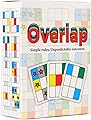
| Niche Nation Games Overlap | Award-winning strategy in minimal packaging | $12.95 |
| Dutch Blitz: The Original Fast Paced Card Game | Speed-focused action for players who hate downtime | $12.97 |
| Grandpa Beck's Games Cover Your Assets Card Game | Silly bluffing fun that doesn't take itself seriously | $19.99 |
| Spin Master Games, Dumb Ways to Die, The Viral Meme Card Game from YouTube and TikTok | Meme-based humor mixed with survival mechanics | $8.09 |
| Five Crowns – Card Game for Kids and Adults | Classic rummy-style play with a unique 5-suit deck | $9.99 |
Detailed Reviews
1. Dominion (2nd Edition) — The Strategic Masterpiece

Dominion basically invented the deck-building genre, and the 2nd Edition proves the core concept hasn't aged a day. You start with a small hand of weak cards and gradually buy better ones, building your deck from the center supply. The genius is that every card you buy goes into your deck, making future draws more powerful but also potentially clogged with weak cards if you're not careful.
For two players, this is nearly perfect. There's literally zero downtime—while your opponent plays, you're already planning your next turn. Each game uses a different combination of card sets from the box, so you're essentially getting dozens of different games in one purchase. My first play taught me the fundamentals, but my tenth play revealed entirely new strategies I'd completely missed.
The 2nd Edition cleaned up some balancing issues from the original, making the core experience tighter. Games run about 30-45 minutes once you know the rules, and the decision space on each turn stays engaging from start to finish. You're constantly asking yourself: "Do I buy this powerful card, or do I buy something that helps me buy better cards next turn?"
Pros:
- Infinite replayability through different card combinations
- Minimal downtime for a two-player game
- Strategic depth that rewards planning and card synergy
- Quick setup and elegant ruleset
Cons:
- Takes 20-30 minutes to teach to someone who's never played deck builders
- Can feel dry or abstract if you prefer thematic games
- Some card sets are more interesting than others
---
2. Ashes Reborn: Rise of the Phoenixborn — Asymmetric Wizard Duels

Ashes Reborn is built specifically for two players, which immediately sets it apart. You're playing as Phoenixborns—essentially powerful wizards—and you've got asymmetric abilities that make every matchup feel fresh. One character might specialize in spell damage while another excels at summoning creatures.
The card play is clever. You don't spend cards to cast spells; instead, you assign them to "channels" and ready them for future turns. This creates this interesting puzzle where you're setting traps multiple turns in advance, wondering if your opponent will walk into them or disrupt your plans. The game moves quickly once both players understand the flow, usually finishing in 45-60 minutes.
What really stands out is how balanced the different Phoenixborn matchups feel. The game doesn't have a clear "best character"—your choice changes how the entire match plays out. If you want a best card game for 2 people that feels like you're both playing fundamentally different games, this scratches that itch better than anything else I've played.
Pros:
- Asymmetric character powers create genuinely different playstyles
- Elegant channeling system that rewards planning ahead
- Great component quality and beautiful card art
- Excellent for players who want something new each match
Cons:
- Steeper learning curve than Dominion
- Out-of-print expansions make the card pool limited compared to deck builders
- Some characters feel slightly stronger than others despite attempts at balance
---
3. Aeon's End — Cooperative Card Play

Here's something different: what if the best card game for 2 people was actually about working together instead of tearing each other apart? Aeon's End is a cooperative deck-builder where you're both mages fighting an invading alien nemesis. You buy cards during your turns to strengthen your deck, and you absolutely need each other to win.
The nemesis system is fantastic. Your opponent doesn't control an AI—instead, they reveal nemesis cards that deal damage to both of you and impose ongoing threats. This means you're constantly communicating about strategy: "Should I buy healing cards, or should you focus on damage?" Games run about 45 minutes and you either both win or you both lose, which creates a completely different dynamic than competitive play.
If you and your partner get tired of trying to beat each other, this is the perfect pivot. It's strategic enough to stay interesting across multiple plays, and the different nemesis cards change what tactics work. You can't just autopilot a winning strategy from last time—you need to adapt.
Pros:
- Excellent cooperative gameplay for couples or friends who like team games
- Nemesis variety keeps replays fresh
- Smart balance between player agency and difficulty scaling
- Plays great at different difficulty levels
Cons:
- Doesn't have the endless replayability of pure competitive decking building games
- Requires communication and joint decision-making (might frustrate players who want solo agency)
- Takes longer to teach than Dominion
---
4. Clank! A Deck-Building Adventure — Dungeon Heisting

Clank takes deck-building and adds a genuinely thrilling endgame. You're thieves in a dragon's dungeon, buying cards to move through the board and steal treasure. The kicker? Every card you play makes noise (represented by tokens falling into a bag), and when the dragon emerges, it attacks based on how much noise you made. If you're still in the dungeon, you take damage. If you escape, you're safe.
This creates beautiful tension that builds across the entire game. Early on, you're buying powerful cards that make tons of noise, but you're also accelerating your own path to escape. Eventually you reach a point where you have to leave, even if you haven't optimized your turn. This pressure-filled finale makes Clank different from other deck-builders that feel like they're just "whoever optimizes better wins."
Two-player games particularly shine because you're both facing the same dragon threat, but you're escaping on your own terms. Your decisions don't directly block your opponent (aside from who grabs treasure first), so you're competing more indirectly through board position and escape timing.
Pros:
- Unique tension between building your deck and the escape timer
- Board exploration adds spatial strategy missing from abstract deck-builders
- Excellent theme integration (the theme actually matters mechanically)
- Games feel satisfying in a way "pure optimization" games sometimes don't
Cons:
- Randomness in dragon card draws can occasionally feel unfair
- Takes longer than Dominion (60+ minutes)
- The board space can feel cramped with multiple players competing for treasure
---
5. Imperium: Classics — Streamlined Card Battling

Imperium brings historical card battling into a sleeker package than traditional CCGs. You're building armies and attacking your opponent directly, but the system is smart enough that luck doesn't overshadow skill. Card draws matter, but your decisions matter more.
The genius of Imperium is that it's easier to teach than Dominion but still offers real strategic depth. You're not managing a supply area—you're just playing cards from your hand into a battle line, and when you attack, you're comparing your line strength to your opponent's defenses. It's visual, immediate, and feels fair.
For two players specifically, this works beautifully. Games end in 20-30 minutes, so it's perfect for quick duels. The card pool is deep enough that different armies (Romans, Egyptians, Persians, etc.) play completely differently. You genuinely feel like you're commanding different civilizations with different strengths and weaknesses.
Pros:
- Fast to teach and faster to play than heavyweight deck-builders
- Multiple asymmetric civilizations create variety
- Beautiful historical art and components
- Fair balance between strategy and card luck
Cons:
- Some civilizations feel stronger than others (though newer sets address this)
- Doesn't have the "infinite combinations" replayability of Dominion
- Might feel too light for players wanting maximum complexity
---
6. Niche Nation Games Overlap — Award-Winning Strategy

Overlap proves you don't need complexity to create strategy. This Mensa-recommended game is genuinely simple—you're placing colored cards to overlap previous cards and score points—but the tactical depth is surprising. It scales from 2 to 8 players, but it's designed to shine with two.
At $12.95, this is the best value for a best card game for 2 people that actually rewards serious strategy. Games take 15-20 minutes, making it perfect for quick duels or tournament-style multiple plays. The rules fit on a single page, but the decision space on each turn is deceptively complex. You're constantly thinking: "If I place here, will my opponent block me? Can I set up a bigger play next turn?"
The fact that it won multiple awards despite its simplicity speaks volumes. This is a game that doesn't waste your time with unnecessary chrome—it's pure strategy in a tiny box.
Pros:
- Incredible value at under $13
- Minimal setup and fast playtime
- Award-winning design that proves complexity ≠ quality
- Easy to explain but challenging to master
Cons:
- Lacks theme or narrative (purely abstract strategy)
- Small components might be annoying for players with vision difficulties
- Limited table footprint means less "game board" feel
---
7. Dutch Blitz: The Original Fast Paced Card Game — Speed-Focused Action
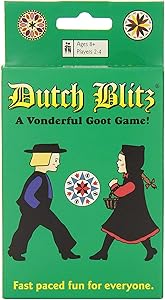
If you hate downtime, Dutch Blitz is the best card game for 2 people. Everyone plays simultaneously. You're building sequences on a shared play area, trying to get your cards down faster than your opponent. There's literally zero waiting—you're both constantly playing, which creates this frenetic, engaging experience.
The game's been around since the 1950s for good reason. At $12.97, you're getting a proven design that's stood the test of time. Games run quick (10-15 minutes), and the speed creates natural rematch energy. You'll play five games in the time most strategy games take for one.
This is different from every other game on this list—it's not about optimization or building something; it's about reflexes, spatial awareness, and finding plays faster than your opponent. If you want something that feels energetic and keeps you engaged every single second, Dutch Blitz delivers.
Pros:
- Zero downtime—simultaneous play keeps both players engaged
- Lightning-fast games perfect for multiple rounds
- Simple rules, immediate playability
- Excellent for players who find other card games too slow
Cons:
- Downside if one player is significantly faster (can feel unfair)
- Not strategic in the deep-thinking sense (more about pattern recognition and speed)
- Competitive nature might wear you out if you prefer relaxed gaming
---
8. Grandpa Beck's Games Cover Your Assets Card Game — Bluffing and Negotiation

Cover Your Assets leans hard into the chaos and bluffing side of card gaming. You're trying to collect assets while other players
Get the best board game picks in your inbox
New reviews, top picks, and honest recommendations. No spam, unsubscribe anytime.
More in Deck Building
The Best Card Games Under $30 in 2026: Fast Fun Without Breaking the Bank
Finding a genuinely good card game shouldn't mean spending $50 or more. I've tested dozens of options, and the best card games under $30 deliver real...
Best Card Games Under $15 for 2026: Fast Fun That Won't Break the Bank
Finding a genuinely fun card game that costs less than $15 feels rarer than it should be.
Best Card Games Under 10: Hidden Gems for 2026 That Won't Break the Bank
Finding quality card games under $10 feels impossible until you know where to look.