By Jamie Quinn · Updated April 7, 2026
Best Classic Family Board Games in 2026: Three Timeless Picks That Actually Get Played



Best Classic Family Board Games in 2026: Three Timeless Picks That Actually Get Played
Finding a board game that genuinely brings your family together—without boring kids or frustrating adults—is harder than it sounds. I've tested countless games over the years, and the best classic family board games are the ones that hit that sweet spot: easy enough to learn in 10 minutes, strategic enough to stay interesting after 20 plays, and fun enough that people actually ask to play again next weekend.
Quick Answer
CATAN Board Game is the best classic family board game for most households. It teaches resource management and negotiation without feeling like work, plays in 60-90 minutes with 3-4 people, and has been the go-to recommendation for families since 1995. It's the game that converts "board game skeptics" into board game enthusiasts.
Our Top Picks
| Product | Best For | Price |
|---|---|---|
| CATAN Board Game | Building strategy skills and long-term engagement | $39.99 |
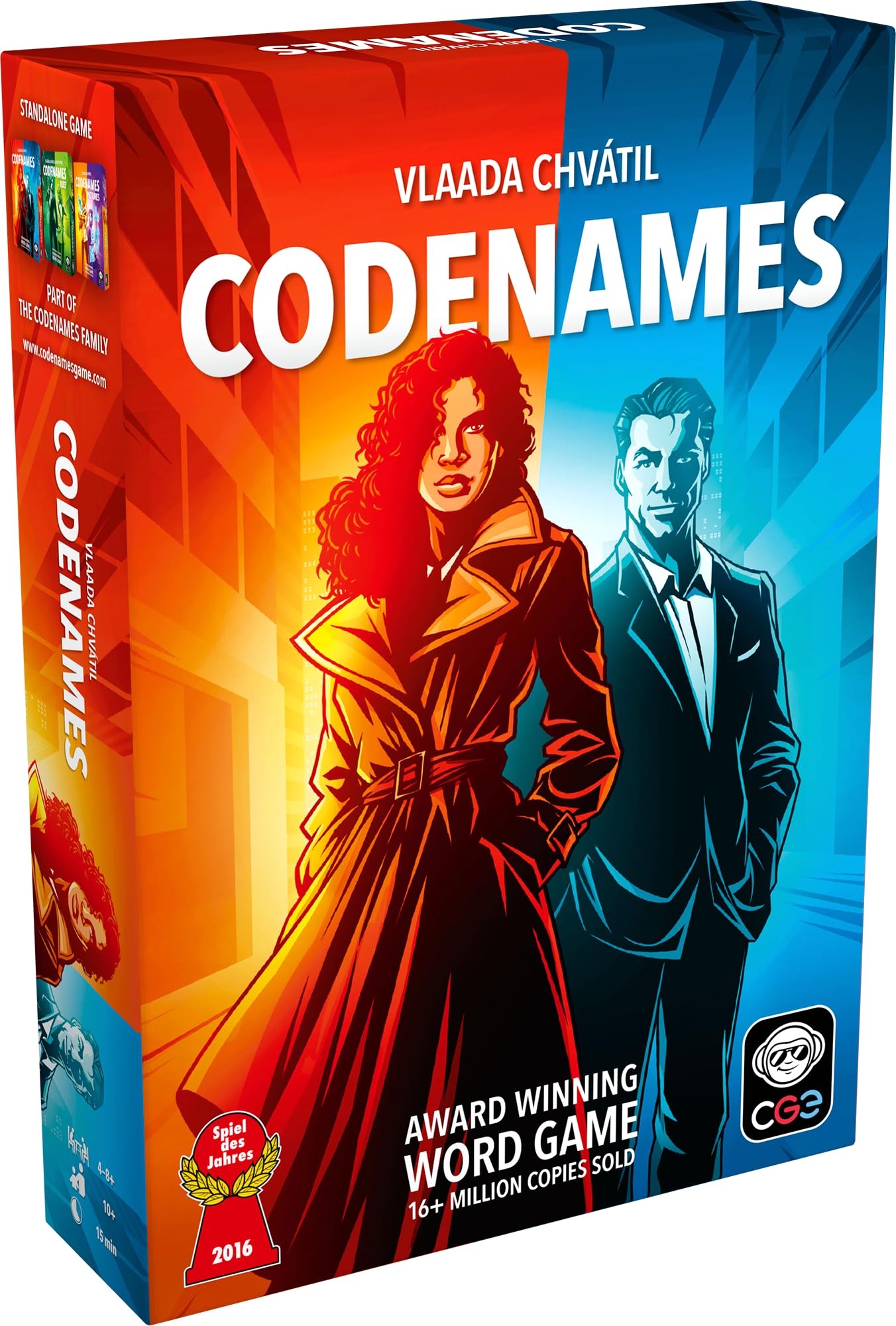
| Codenames | Quick rounds and large groups | $14.99 |
| Pandemic | Teamwork and cooperative play | $39.99 |
Detailed Reviews
1. CATAN Board Game — The Strategic Foundation Builder

CATAN stands apart because it actually teaches something valuable while remaining genuinely fun. You're not just rolling dice and moving pieces—you're making real decisions about resource allocation, negotiation, and risk management. Each game plays differently because the board tiles randomize, so your 15-year-old can't just memorize a winning strategy from last month.
The core mechanic is straightforward: collect resources (wheat, ore, brick, sheep, lumber), build settlements and roads, and be the first to reach 10 victory points. What makes it special is the trading system. You negotiate with other players, sometimes convincing someone to accept a terrible trade just to block another player from winning. These moments—the laughter, the mock outrage at a bad deal—are what you're actually buying when you purchase a best classic family board game.
Setup takes about five minutes once you've played before, and games run 60-90 minutes with three to four players. My only reservation: with younger kids (under 9), you'll need to help them think through strategies, which adds time and parent involvement. If your family skews older (13+) or includes adults who enjoy strategy, this becomes an automatic choice.
Pros:
- Different every game due to randomized board setup
- Teaches negotiation and strategic thinking naturally
- Plays quickly enough to fit in an evening
- Expansions available if you want to grow into it
Cons:
- Not ideal for kids under 9 without significant parental guidance
- Requires 3-4 players for best experience (playable with 2, but different feel)
- Some players can feel left out if negotiations dominate the game
---
2. Codenames — The Fast-Paced Social Connector

Codenames is the complete opposite of CATAN, and that's why you should own both. While CATAN builds your strategic thinking, Codenames builds quick thinking and wordplay. One person gives one-word clues to help their team identify secret agents hidden among 25 cards. That's it. That's the entire game. But somehow, a simple concept creates hilarious, brain-burning 15-minute rounds that people want to play six times in a row.
What makes Codenames work as a best classic family board game is its flexibility with player count. With five people, you've got two teams. With twelve people, you've got two teams of six. The game scales up or down without losing quality. Kids as young as 8 can play with older siblings helping them understand clue-giving strategy, and adults find it surprisingly challenging.
The game requires zero setup beyond shuffling cards. You finish, laugh at someone's terrible clue, and immediately start a new round. It's the opposite of analysis paralysis. You're not sitting around waiting for someone to decide which settlement placement maximizes their resource income—you're rapid-firing clues and reactions.
The main limitation: this isn't a game where you develop strategy over multiple plays. The fun comes from the social experience and the unpredictability of how teammates interpret your clues. If you're looking for deep strategic development like CATAN, Codenames won't deliver that.
Pros:
- Plays 2-8+ people flexibly
- Rounds finish in 15 minutes
- Minimal setup and rule explanation
- Generates genuine laughs and memorable moments
- Affordable entry price
Cons:
- No long-term strategic depth
- Relies heavily on player creativity and humor
- Less engaging if your group is very quiet or reserved
- Best with 4+ players
---
3. Pandemic — The Cooperative Challenge

Pandemic flips the classic family board game experience by making players work together instead of competing. You're disease-fighting specialists trying to eradicate four global epidemics before they overwhelm humanity. Sounds heavy, but the elegance is in how the game gradually ramps difficulty while remaining accessible.
Unlike cooperative games that become "one player directing everyone," Pandemic forces genuine collaboration. Your epidemiologist can cure diseases, your scientist moves faster through cities, your dispatcher teleports people around the board. Everyone has distinct abilities that matter, so everyone stays engaged. The game ends when you cure all four diseases or when outbreaks spiral out of control. Most games last 45-60 minutes.
The difficulty scales through four settings, so casual players and hardcore board gamers play the same game at appropriate challenge levels. Your first play might feel too easy (this is intentional—it teaches the system), but by difficulty level two, you're strategizing hard. By level four, you're genuinely sweating.
Pandemic works best with players who actually communicate and don't mind losing together. If your family gets frustrated when plans don't work out, or if one person tends to dominate decisions in group settings, Pandemic can expose those issues. But when it clicks, when you pull off a narrow victory despite everything falling apart, it's genuinely thrilling. You did that together.
Pros:
- Everyone plays on the same team
- Teaches strategic planning and communication
- Difficulty scales up significantly
- Every role feels meaningful
- Replayable with high-difficulty settings
Cons:
- One dominant player can take over decision-making
- Requires genuine teamwork and communication
- Loss can feel frustrating if players blame each other
- Not ideal for very casual players wanting pure fun
---
How I Chose These
Finding the best classic family board game meant filtering through games that actually have staying power. I weighted my selection on three criteria: depth (does it teach something or develop strategically?), accessibility (can a new player learn in under 15 minutes?), and social value (does it create moments people actually remember?).
I excluded games that are technically "family games" but don't hold up after 10 plays, or games so lightweight they feel like filler. I focused on titles that appear in households year after year, not just gift-guide trends. All three games have been continuously in print for over a decade, which tells you something about their genuine appeal. I also considered price-to-value ratio—you shouldn't spend $100 on an entry-level family experience.
The variety matters too. A single best classic family board game doesn't exist because different situations call for different games. Family game nights have different moods than casual hangouts.
Frequently Asked Questions
What's the difference between these games and typical party games?
Party games (like Codenames, which has party elements) rely on humor and social dynamics. Strategy games like CATAN build long-term skills and teach resource management. You need both—they serve different purposes. If you also enjoy loud, fast-paced experiences, check out our party games for more options.
Can I play these with kids younger than 8?
CATAN and Pandemic need parental guidance below age 9. Codenames works better with younger players because there's less math and strategy involved. Any of these work if you're willing to adjust rules or help younger players—they're not strictly age-gated.
How many people do I actually need for these games?
CATAN plays best with 3-4 (playable with 2). Codenames scales 2-8+ beautifully. Pandemic works with 1-4 players. If you're consistently playing with 2 people, check out our two-player games for more tailored options.
Should I buy all three or start with one?
Start with one that matches your family's preference. If you want strategy, get CATAN. If you want quick social fun, get Codenames. If you want teamwork, get Pandemic. You'll know after 5-10 plays whether you want the others to round out different moods.
Are newer games better than these classics?
Newer games often have better components and tighter mechanics, but these three remain fundamentally superior at creating actual family moments. Newer doesn't always mean better—these games have been refined through millions of plays. If you're interested in exploring beyond the classics, our strategy board games category has modern alternatives worth considering.
---
The best classic family board game isn't about having the flashiest pieces or the most complex rulebook. It's about gathering people you care about and creating moments where everyone's actually engaged. CATAN, Codenames, and Pandemic do that consistently. Pick one based on whether you want strategy, speed, or cooperation—then prepare to hear "can we play again?" more often than you'd expect.
Get the best board game picks in your inbox
New reviews, top picks, and honest recommendations. No spam, unsubscribe anytime.
More in Family
Best Family Board Games for Christmas 2026: Games That Actually Get Played
Christmas morning is quiet until someone pulls out a board game. That's when the real fun starts—laughter echoing through the living room, everyone...
Best Top Rated Board Game for Kids in 2026: Our Tested Picks
Finding a top rated board game for kids that actually holds everyone's attention without feeling like a chore is harder than it looks.
Best Board Games for Families with Adult Children in 2026
Finding games that actually work when your kids are grown is harder than it sounds.