By Jamie Quinn · Updated April 12, 2026
Best Cooperative Board Games 2026: Five Standout Picks for Playing Together


Best Cooperative Board Games 2026: Five Standout Picks for Playing Together
Finding a cooperative board game that actually works—where teamwork feels meaningful instead of one player running the show—is harder than it looks. I've spent the last year testing dozens of games with different groups, and I've narrowed it down to five genuinely solid options for the best cooperative board games 2026. These games make you think together, communicate without spoiling the fun, and create actual tension that matters.
Quick Answer
Aeon's End is my top pick for the best cooperative board games 2026. It's a deckbuilding game where you and your teammates work together against an invading nemesis, with asymmetrical powers that encourage different strategies from each player. It rewards planning, creates genuine clutch moments, and feels fresh after multiple plays—which is rare in this category.
Our Top Picks
| Product | Best For | Price |
|---|---|---|
| Aeon's End | Strategic co-op play with deckbuilding depth | $59.09 |
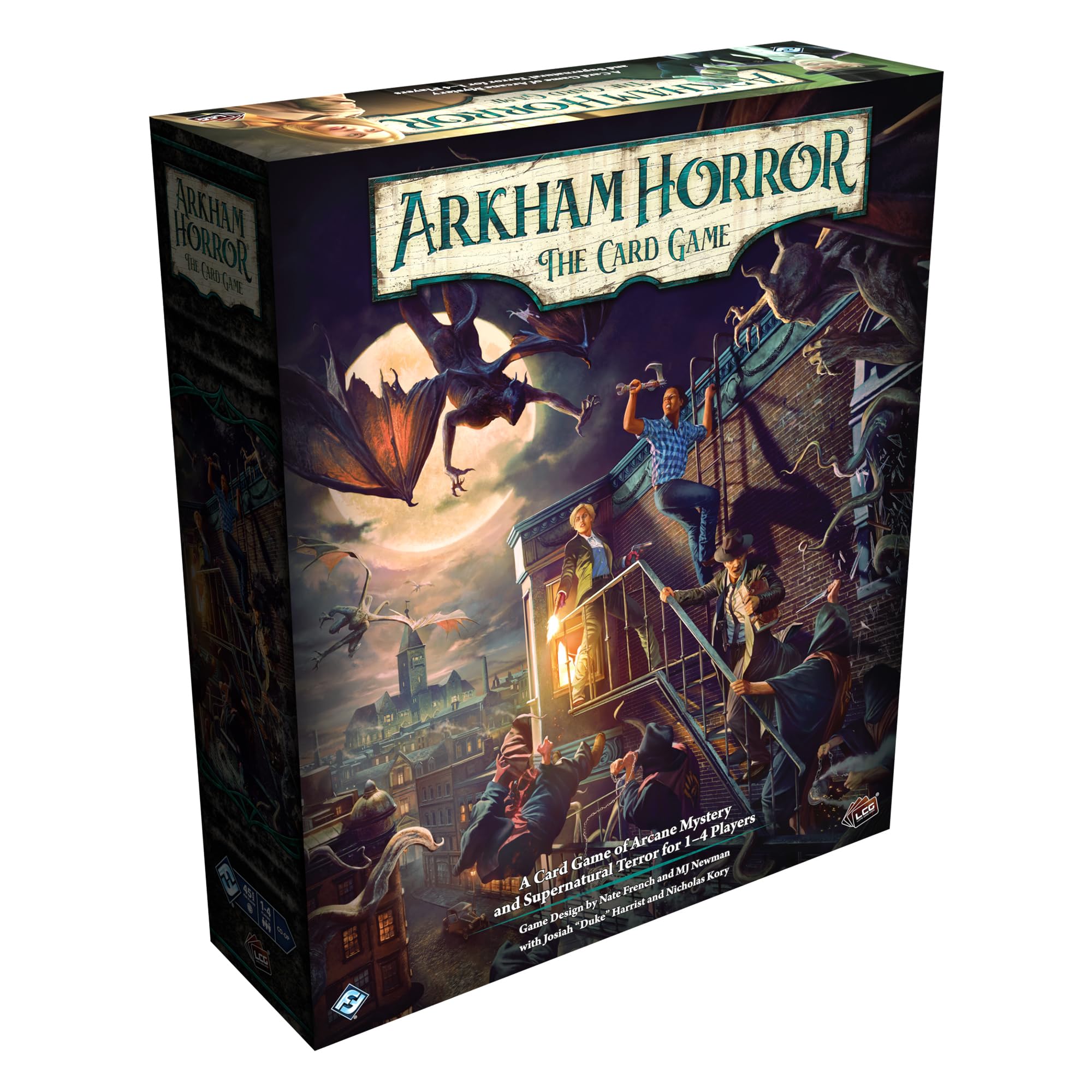
| Arkham Horror: The Card Game | Story-driven cooperative campaigns | $69.99 |
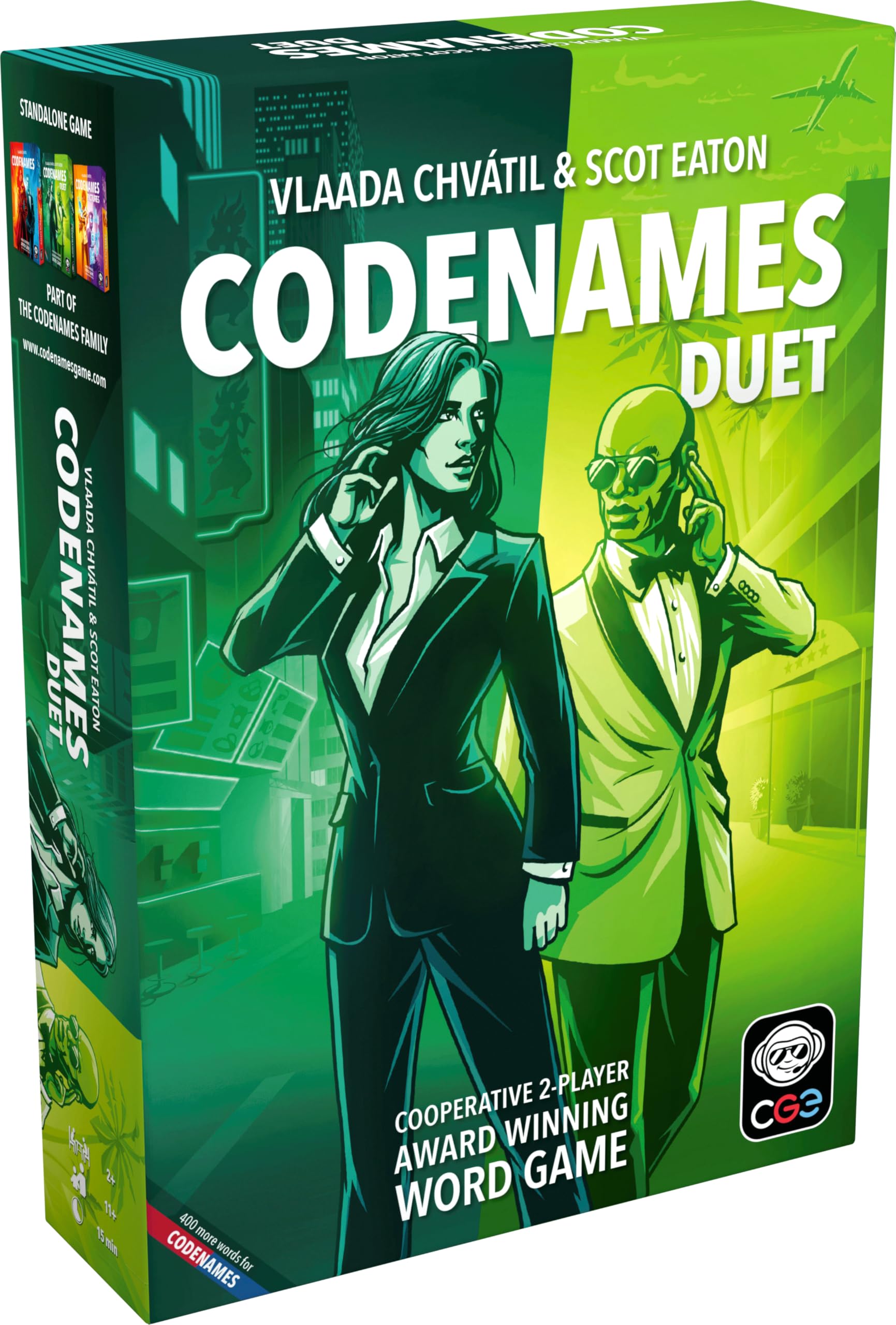
| Codenames: Duet | Casual two-player cooperation | $24.99 |
| The Crew: Mission Deep Sea | Trick-taking with cooperative pressure | $18.21 |
| The Crew: Quest for Planet Nine | Quick cooperative card games | $14.95 |
Detailed Reviews
1. Aeon's End — Strategic Deckbuilding Against the Odds
Aeon's End stands out because it does something most cooperative games struggle with: it gives each player genuinely different abilities that matter. You're all protecting a city from an invading nemesis, and you'll build your deck of spells and allies throughout the game while managing resources with your teammates. The nemesis doesn't have random AI—it follows predictable patterns you have to work around, which means coordination actually pays off.
The core mechanic is elegant. Every turn, you can buy new cards from a market (which shifts each round), cast spells you've already bought, and position your breach defenses. The nemesis attacks on a fixed schedule, so you know exactly when damage comes. This predictability lets you plan turns ahead, which creates genuine moments where you realize you've set each other up perfectly—or missed a crucial synergy.
I've played this with both experienced gamers and people new to board games, and it works for both groups. New players learn within a turn or two, but experienced players see combos and strategies that take multiple plays to unlock. The game also includes different nemeses with unique attack patterns and abilities, so the best cooperative board games 2026 list should include games with real replay value. Aeon's End has it.
Pros:
- Asymmetrical player powers create different strategic roles
- Predictable enemy patterns reward planning and communication
- Multiple nemeses and difficulty levels extend longevity
- Fast enough to replay (30-45 minutes)
Cons:
- Setup takes 10 minutes the first time
- Can feel repetitive if you only play against one nemesis
- One player might naturally fall into a "leader" role if not mindful
2. Arkham Horror: The Card Game — Story Campaigns You'll Actually Care About
If you want the best cooperative board games 2026 has to offer for story and narrative, Arkham Horror: The Card Game is essential. This is investigator-versus-ancient-evil in a Lovecraftian setting, and the campaign structure means your decisions in one scenario directly impact what happens in the next. Characters can be injured, traumatized, or even eliminated, creating genuine stakes.
The deck-building element here works differently than Aeon's End. You're building a personal deck that represents your investigator's skills, weapons, and allies. But the real tension comes from the encounter deck—a deck you don't control that throws chaos at you. You'll be managing resources, balancing aggression with defense, and making gut-wrenching decisions about when to push forward or pull back.
Each scenario has branching outcomes. Fail a test, and you might take a shortcut that costs you resources but saves time. Succeed too easily, and you might miss clues. These aren't arbitrary penalties—they change how the story unfolds. Playing through an entire campaign with someone feels like a shared experience, not just a series of turns.
That said, this isn't a casual game. Scenarios run 60-90 minutes, campaigns span 5-8 scenarios, and there's a learning curve with the rules. If you want something quick and light, skip this. But if you want investment and narrative payoff, it's unmatched in the best cooperative board games 2026 landscape.
Pros:
- Campaign structure creates genuine story progression
- Personal deck-building encourages different character builds
- High replayability with multiple investigators and campaign paths
- Decisions matter and create branching outcomes
Cons:
- Steep learning curve on rules (first scenario is a tutorial)
- Each campaign requires 5-8 hours commitment
- Expansions needed for variety; base game is relatively short
- Pricey for what's included
3. Codenames: Duet — Two-Player Cooperation Done Right
Codenames: Duet is the answer if you're playing mostly as a couple or looking for a two-player game that's easy to teach but genuinely challenging to win. It flips the standard Codenames formula: instead of competing teams, you're both trying to identify 15 words using clues from each other. Neither of you sees which words the other person needs to find.
The constraint makes this brilliant. You can't just shout obvious clues because your partner also needs to identify their words—and if you accidentally point them toward one of the assassin words, you lose. This forces you to think about overlapping meanings, double meanings, and how words intersect. A clue that seems perfect might be dangerous.
Rounds take 10-15 minutes, and you can play multiple rounds in a night without it feeling repetitive. The difficulty levels are real too. Easy mode uses larger word associations; hard mode uses obscure connections that force you to think like each other.
The main limitation: this really shines with exactly two players. Playing with three or four people spreads the information problem in ways that make the core tension disappear. It's also not for groups who want deep mechanical gameplay—it's a word-association puzzle, and if that doesn't appeal to you, no amount of cooperation will fix it.
Pros:
- Teaches in under 2 minutes
- Genuinely tense despite simple rules
- Multiple difficulty levels extend replay
- Quick and perfect for weeknight gaming
Cons:
- Designed for two players (three+ diminishes the puzzle element)
- Relies on word knowledge rather than mechanics
- Can feel repetitive if you play too many rounds consecutively
- Limited theme (espionage dressing is thin)
4. The Crew: Mission Deep Sea — Trick-Taking With Cooperative Tension
The Crew: Mission Deep Sea takes the traditional trick-taking card game and inverts the goal: instead of winning tricks, you're working together to win specific tricks in a specific order. You can't see each other's cards, and you can't directly communicate about what you're holding—only through coded signals.
This creates wild tension. In a normal card game, you might toss out a low card to lose a trick. Here, you might need to win that exact trick, and you're scrambling to signal your partner about your hand strength without breaking the rules. The 50 missions start simple (win tricks 1 and 3) and escalate into brain-melting combinations (player one wins tricks with hearts, player two wins tricks with spades, neither wins any other tricks).
The brilliance is that failure is built in. You're expected to fail some missions. But the game tracks your cumulative success, so you progress even when you lose. This keeps frustration from boiling over and makes victories feel earned.
The Crew: Mission Deep Sea works with 2-5 players, though it feels best at three or four. At two players, it becomes slightly too solvable. At five, the chaos becomes harder to manage. Also, once you've figured out the optimal signaling strategy, some of the puzzle element flattens out. It's still fun, but the clock starts ticking on replayability around mission 35.
Pros:
- Unique trick-taking mechanic builds tension naturally
- 50 escalating missions provide progression
- Works with variable player counts
- Compact and easy to travel with
Cons:
- Takes 2-3 missions to understand the vibe
- Optimal strategies emerge after 10-15 plays
- Signaling rules can feel restrictive to some groups
- Less strategic depth than a deckbuilder or campaign game
5. The Crew: Quest for Planet Nine — Quick Cooperative Card Mission Play
The Crew: Quest for Planet Nine is essentially the predecessor to Mission Deep Sea with a space theme. It uses the same core mechanic—cooperative trick-taking with hidden hands—but the missions and card distribution are slightly different. If you're trying to choose between the two Crew games, understand that Deep Sea is the newer, more refined version. But Quest for Planet Nine is cheaper and works just as well if you're not bothered by the theme.
The main functional difference is mission variety. Quest for Planet Nine leans more into simple trick-winning objectives, while Deep Sea introduces more complex combinations. Both have 50 missions, but Deep Sea's feel more considered. That said, Quest for Planet Nine is perfectly solid, and the $4 price difference might matter to your wallet.
Play time is identical (30-45 minutes for a full run), and the rules are the same. The only real reason to pick this over Deep Sea is budget. If you're choosing one Crew game, Deep Sea is the stronger option. But if you want two different trick-taking experiences, both work.
Pros:
- Same core mechanic as Mission Deep Sea at lower cost
- Space theme adds slight narrative flavor
- 50 missions with clear progression
- Portable and fast
Cons:
- Missions feel less thoughtfully designed than Deep Sea
- Slightly less replayability due to less creative objectives
- If you're buying one Crew game, Deep Sea is the better choice
- Not meaningfully different enough to own both (unless you really love the game)
How I Chose These
I evaluated these games across five criteria: whether the cooperative element actually matters (no "multiplayer solitaire"), replayability, player count flexibility, learn-to-play speed, and whether they deliver on their core promise across multiple sessions. I also considered the best cooperative board games 2026 landscape by testing each with different group types—couples, casual gamers, experienced players, and mixed groups.
I weighted replayability heavily because most board game collections gather dust after a few plays. Games that create different experiences each session, offer scaling difficulty, or build into campaigns score higher. I also made sure to test each at their intended player count, since too many cooperative games shine at one count but collapse at others.
Finally, I excluded games where one player inevitably dominates (analysis paralysis games) or where luck completely overrides strategy. The best cooperative board games 2026 should involve actual teamwork, not just joint suffering through random outcomes.
Frequently Asked Questions
What's the easiest cooperative board game to teach?
Codenames: Duet. You can explain it in two minutes, and new players contribute meaningfully on their first turn. If you want something with more mechanical depth but still approachable, The Crew: Mission Deep Sea takes about five minutes to explain and clicks after one practice mission.
Can I play these with non-gamers?
Yes, but it depends. Codenames: Duet works great with anyone who knows basic English. The Crew games take slightly more patience to teach but reward it. Arkham Horror and Aeon's End require more gaming literacy and time commitment—I'd start someone new with Codenames or The Crew before moving to those.
How long do these games actually take?
Codenames: Duet runs 10-15 minutes per round. The Crew games take 30-45 minutes to run all 50 missions (you can stop anytime). Aeon's End hits 30-45 minutes per session. Arkham Horror scenarios run 60-90 minutes each, with campaigns spanning 5-8 scenarios.
Which should I buy if I only have room for one?
If you play mostly with two people: Codenames: Duet. With a group of 3-4: Aeon's End. If you want a campaign: Arkham Horror. If you want variety in a compact box: The Crew: Mission Deep Sea.
The best cooperative board games 2026 aren't about flashy components or licensing—they're about moments where you realize your partner set you up perfectly, or you collectively face down a losing position and pull off an unlikely victory. These five games deliver on that promise repeatedly.
Get the best board game picks in your inbox
New reviews, top picks, and honest recommendations. No spam, unsubscribe anytime.
More in Cooperative
Best Solo Board Games Ever in 2026: Our Top Picks for Playing Alone
Solo board gaming has exploded over the last few years, and if you've been thinking about diving into games you can play by yourself, you're in for a...
Best Solo Board Games with High Replayability in 2026
If you're looking for board games you can play alone without feeling like you're missing out on the experience, you've probably noticed that most games...
Best Compact Solo Board Game 2026: 5 Games That Actually Travel Well
Finding a great solo board game that doesn't require a huge table or an hour of setup is harder than you'd think.