By Jamie Quinn · Updated April 15, 2026
The Best Deck Building Games in 2026: Our Top 5 Picks



The Best Deck Building Games in 2026: Our Top 5 Picks
Deck building games have become my go-to recommendation when someone asks what board games actually scratch that strategic itch. Unlike traditional card games where your deck is fixed before play starts, deck builders let you evolve and customize your deck throughout the game—which means every playthrough feels genuinely different. I've spent the last few years testing the best deck building game options available, and I'm ready to share what actually works.
Quick Answer
Dominion (2nd Edition) is the best deck building game for most people. It's the game that basically invented the modern deck building mechanic, it's straightforward enough to teach in 10 minutes, and it has enough depth to stay interesting after dozens of plays. If you want something with more thematic flavor or cooperative play, the other picks below are absolutely worth considering—but Dominion is where you should start if you're new to the genre.
Our Top Picks
| Product | Best For | Price |
|---|---|---|
| Dominion (2nd Edition) | Best overall & beginners | $38.35 |
| Clank! A Deck-Building Adventure | Action-adventure gameplay | $64.99 |
| Aeon's End | Cooperative play & theme | $59.09 |
| Imperium: Classics | Campaign progression | $34.85 |
| Ashes Reborn: Rise of the Phoenixborn | Asymmetrical duels | $28.01 |
Detailed Reviews
1. Dominion (2nd Edition) — The Foundation of Modern Deck Building
Dominion didn't just pioneer the deck building mechanic—it's still the clearest, most elegant expression of the genre's core appeal. The base game gives you a medieval kingdom-building theme (which, honestly, is just window dressing), but what matters is that every decision you make directly impacts your deck's strength.
Here's what makes it special: You start with ten identical, weak cards. Each turn, you play cards to generate money, then use that money to buy better cards for your deck. Those cards then shuffle into your draw pile and become available later. It sounds simple because it is, but the tactical depth comes from deciding which cards to buy. Buy too many expensive cards and you'll clog your deck with cards you can't play. Buy too many cheap ones and you'll never generate the money needed for the really powerful cards. This tension between greed and stability is the heart of every best deck building game.
The 2nd Edition cleaned up the rules, added a few new card options, and remains incredibly teachable. I've introduced Dominion to casual board game players and hardcore strategy gamers, and both groups immediately understand what's happening and why their choices matter.
Pros:
- Teaches the deck building system clearly—perfect for beginners
- Fast gameplay (30-45 minutes) keeps pacing tight
- Randomized card selection means each game feels fresh
- Incredibly easy to expand with expansions if you want more variety
Cons:
- Theme is minimal and doesn't add much flavor
- Repetitive if you only play the base game dozens of times
- Requires good shuffling habits or you'll frustrate yourself
- Less exciting for players who want narrative or cooperative elements
---
2. Clank! A Deck-Building Adventure — Deck Building with Adventure

Clank! is what happens when you take the deck building engine and wrap it around a real adventure. You're thieves sneaking through a dragon's dungeon, using your deck of cards to move through the map, acquire treasure, and escape before the dragon catches you. It's chaotic, interactive, and genuinely tense in a way that pure economic deck builders never quite achieve.
The deck building here serves the theme beautifully. Your cards generate movement points, letting you explore new rooms and grab loot. But if you're too greedy—staying in the dungeon too long to grab one more treasure—the dragon wakes up. When it does, players who haven't escaped take damage based on how much noise they've made (tracked on a separate "Clank!" track). This creates this delicious push-your-luck dynamic where you're constantly asking yourself, "Can I afford one more turn in the dungeon?"
What I appreciate most is that Clank! plays 2-4 people smoothly, and the competitive but not cutthroat tone means nobody feels totally left out. It's also got beautiful art and production quality that makes the game feel premium compared to its price point.
Pros:
- Fantastic theme integration with the deck building mechanics
- Push-your-luck element creates memorable moments
- Scales well from 2 to 4 players
- Board exploration adds spatial strategy on top of deck decisions
Cons:
- Luck plays a bigger role than in pure deck builders—some players hate randomness
- Higher price point ($64.99) is steep for what's ultimately a medium-weight game
- The dragon AI can feel unpredictable to new players
- Doesn't have the replayability depth of some alternatives
---
3. Aeon's End — Cooperative Deck Building with Urgency
Aeon's End flips the entire premise: instead of competing against each other, you're all deck building together to defeat an alien nemesis. This shift from competitive to cooperative changes everything about how the best deck building game should feel.
You and your teammates are mages defending the final bastion of humanity. Each turn, you build your personal deck while coordinating with allies. The twist? The nemesis takes its turn too, and it gets progressively stronger and more aggressive. You need to survive long enough to build your decks into something powerful enough to defeat it. It's essentially a time pressure puzzle that rewards planning and synergy.
What makes Aeon's End work mechanically is that your cards don't shuffle back into your deck immediately—there's a distinct "hand" phase and a "graveyard" phase, giving you more control over what you draw each turn. This predictability creates tense moments where you're calculating exactly what you'll be able to play several turns out. It's more puzzle-like than other deck builders, which I find incredibly satisfying.
The game comes with several different nemeses, each with completely different attack patterns, so variability is built in from the start.
Pros:
- Cooperative gameplay means no player elimination or dominant strategies
- The reverse-turn order (you play first, enemy plays after) feels fresh
- Strong sci-fi theme with excellent art direction
- Multiple nemesis opponents offer replay value
Cons:
- Longest play time of these picks (45-60 minutes) can drag with AP-prone players
- Requires good communication and planning—can feel "mathy" to casual players
- Higher difficulty means losses are common, which frustrates some groups
- Setup is involved compared to simpler deck builders
---
4. Imperium: Classics — Campaign Deck Building
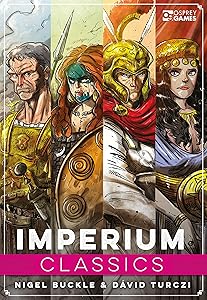
Imperium: Classics is a bit of a sleeper in the deck building space. It's a campaign-focused game where you're building a civilization across multiple scenarios, and your deck improvements persist from one scenario to the next. This creates a progression arc that feels unlike traditional one-off deck builders.
Each scenario is relatively quick (20-30 minutes), but they're part of a larger narrative. Your choices in one game affect what cards are available to you later. Did you focus on military might? Great for conquering enemies, but now you're behind on economy. It's a meaty strategic puzzle spread across multiple sessions.
The card design is clean and elegant—not overly complicated. You're managing resources like food, gold, and military power, and converting those into deck improvements. It feels more like building an actual civilization than the medieval kingdom fantasy of Dominion, even though both games are ultimately about optimizing your card economy.
Imperium: Classics is notably the cheapest option here ($34.85), which is wild given the production quality and campaign length you're getting.
Pros:
- Campaign structure offers long-term engagement and narrative progression
- Excellent price-to-content ratio
- Clean, intuitive card design
- Plays great solo or with up to 4 players
- Multiple difficulty settings and paths mean high replayability
Cons:
- Campaign commitment means you can't just play one scenario and stop
- Learning curve is steeper than Dominion—more systems to track
- Less immediately satisfying than competitive games (you're competing against scenarios, not players)
- Requires tracking campaign state between sessions
---
5. Ashes Reborn: Rise of the Phoenixborn — Asymmetrical Dueling
Ashes Reborn is a deck building game that's actually more of a customizable card game—but it plays like the best of both worlds. Each player controls a different Phoenixborn (a powerful mage character), and you build your deck before the game starts based on your character's unique abilities.
This is where "asymmetrical" comes in: every character plays fundamentally differently. One might focus on summoning creatures, another on spellcasting, another on resource acceleration. There's no single dominant strategy, which means the best deck building game for competitive play needs this kind of diversity. Ashes Reborn nails it.
The core mechanic is elegant: you have an action phase where you spend dice to cast spells or summon creatures, and a resource phase where you recover and draw cards. Your deck feeds into this economy, but you're also making real-time tactical decisions about creature placement and spell timing. It feels like playing chess with customization options.
At $28.01, it's also extremely affordable, though fair warning: like most customizable card games, expanding your collection beyond the base game can get expensive if you want access to all possible Phoenixborn.
Pros:
- Highly asymmetrical characters create completely different play experiences
- Beautiful fantasy art and production quality
- Deep competitive strategy without being overly complicated
- Lower entry price makes the initial investment feel reasonable
Cons:
- Requires deck building before game starts (not a "living" deck building experience)
- Limited player count effectively (2-4, but really shines at 2)
- Learning curve is real—there's a lot of interaction to understand
- Smaller community compared to other picks on this list
---
How I Chose These
I evaluated every option against specific criteria: teaching complexity (how quickly can a new player understand what's happening?), strategic depth (does it stay interesting?), theme integration (how well do the mechanics serve the story?), player count flexibility, and whether the game actually delivers what the best deck building game should—that satisfying moment when your carefully constructed deck comes together and executes exactly as you planned.
I also weighted real-world factors like price, how much table space you need, and how often you'll genuinely want to play it again. A game that's theoretically perfect but becomes repetitive after five plays isn't actually the best deck building game for most people. I also prioritized games that work across different player counts and skill levels, because the best recommendations are ones that actually get played.
---
Frequently Asked Questions
What makes a deck building game different from a trading card game?
In deck building games, you build your deck during the game, buying cards with resources you generate through play. In trading card games, your deck is fixed before the game starts. This fundamental difference means deck builders reward flexible strategy and adaptation, while TCGs reward preparation and collection investment.
Do I need expansions to enjoy these games?
Not at all. Every game on this list is complete and satisfying in its base form. Expansions add variety, but they're entirely optional—I'd recommend playing 10-20 base game sessions before considering any expansion.
Which best deck building game should I buy first if I'm new to the genre?
Dominion (2nd Edition). It teaches you the core mechanics cleanly and quickly. After you've played it a dozen times, you'll know whether you prefer competitive or cooperative play, whether you want theme or pure strategy, and what to explore next.
Can these games be played solo?
Aeon's End and Imperium: Classics both have strong solo modes. Dominion can be played solo but it's less compelling. Clank! and Ashes Reborn are designed for multiplayer.
How long does each game actually take?
Dominion: 30-45 minutes. Clank!: 45-60 minutes. Aeon's End: 45-60 minutes. Imperium: Classics: 20-30 minutes per scenario. Ashes Reborn: 30-45 minutes.
---
The best deck building game depends on what you want from a board game experience. If you want elegant strategy and fast play, grab Dominion. If you want adventure and theme, Clank! is your pick. If your group loves cooperative games, Aeon's End won't disappoint. For campaign depth, Imperium: Classics is unbeatable at its price. And if you're specifically looking for competitive head-to-head play with real asymmetry, Ashes Reborn stands alone.
Each of these genuinely delivers on the promise of deck building—that special moment when your decisions have shaped your deck into exactly what you needed it to be.
Get the best board game picks in your inbox
New reviews, top picks, and honest recommendations. No spam, unsubscribe anytime.
More in Deck Building
The Best Card Games Under $30 in 2026: Fast Fun Without Breaking the Bank
Finding a genuinely good card game shouldn't mean spending $50 or more. I've tested dozens of options, and the best card games under $30 deliver real...
Best Card Games Under $15 for 2026: Fast Fun That Won't Break the Bank
Finding a genuinely fun card game that costs less than $15 feels rarer than it should be.
Best Card Games Under 10: Hidden Gems for 2026 That Won't Break the Bank
Finding quality card games under $10 feels impossible until you know where to look.