By Jamie Quinn · Updated April 20, 2026
Best Deck Building Games for Beginners in 2026



Best Deck Building Games for Beginners in 2026
If you're new to board games and curious about deck building, you've probably noticed the genre can feel intimidating—there are a lot of games out there, and some assume you already know the rules inside and out. The good news? Several fantastic beginner-friendly options exist that teach you the mechanics naturally while keeping games actually fun instead of feeling like homework.
Quick Answer
Dominion (2nd Edition) is the best deck building game for beginners because it invented the genre and still teaches the core mechanics better than anything else. The rulebook is straightforward, games move at a reasonable pace, and it scales perfectly from 2 to 4 players without becoming chaotic.
Our Top Picks
| Product | Best For | Price |
|---|---|---|
| Dominion (2nd Edition) | Clear rules and genre-defining gameplay | $38.34 |
| Star Realms: Deckbuilding Card Game | Fast games and competitive head-to-head play | $17.95 |
| Clank! A Deck-Building Adventure | Combining deck building with adventure and excitement | $59.99 |
| Aeon's End | Cooperative play and building together | Check Amazon |
| Cascadia | Simpler, calmer gameplay without combat | $31.99 |
| Ashes Reborn: Rise of the Phoenixborn | Head-to-head fantasy battles | Check Amazon |
| Imperium: Classics | Solo play and campaign experiences | Check Amazon |
| Star Wars The DeckBuilding Game | Licensed IP and 2-player tactical gameplay | $30.57 |
Detailed Reviews
1. Dominion (2nd Edition) — The Genre Standard
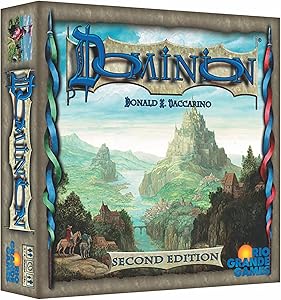
Dominion literally created deck building as a board game genre in 2008, and the second edition remains the clearest introduction to how these games work. You start with a small, weak deck and gradually buy better cards to create an engine that generates wealth and victory points. There's no overwhelming theme or hidden mechanics—it's just you, your cards, and smart decisions about what to buy.
The genius of Dominion as the best deck building game for beginners is its simplicity. Each card does exactly what it says, and most cards share familiar concepts like "gain gold" or "draw a card." You can teach someone the basic turn structure in under five minutes. Games run 30–45 minutes once everyone knows what they're doing, and every player has equal turns without downtime issues.
The 2nd Edition also includes tweaks from two decades of play. Cards have been rebalanced, the rulebook is clearer, and the component quality is solid without being flashy. You get enough variety in the included card sets to keep early games interesting without feeling random.
Pros:
- Clearest ruleset in the genre—teaches the fundamentals every other deck building game builds on
- Perfect for 2–4 players with minimal setup time
- Games play in under an hour once you understand the flow
- Low luck factor means skill matters, but beginners can still win
Cons:
- Minimal theme—it's about card efficiency, not a fantasy adventure
- Some players find repeated plays feel similar without expansions
- Takes a few games to develop real strategy beyond basic optimization
---
2. Star Realms: Deckbuilding Card Game — Budget-Friendly Competitive

At under $18, Star Realms proves you don't need to spend big money to learn the best deck building game for beginners. It's designed as a two-player head-to-head game where you and an opponent build space-themed decks while dealing damage to each other. Games last 15–20 minutes, which means you can play multiple rounds and try different strategies without a long time commitment.
Star Realms shares Dominion's core mechanic—you buy cards to improve your deck—but adds direct player conflict. You're not just optimizing; you're choosing which cards counter your opponent's strategy. This makes every decision feel more personal and reactive, which some beginners actually prefer over the "solitaire" feel of Dominion.
The card pool is smaller and more focused than Dominion, which makes deck-building decisions clearer for new players. You'll recognize patterns quickly: this card generates money, that one does damage, and this other one does both. After a few rounds, you'll naturally understand what a "strong" deck looks like without needing to reference guides.
Pros:
- Extremely affordable entry point
- Quick games encourage multiple plays in one sitting
- Combat focus makes it exciting for players who like confrontation
- Easy to understand card effects
Cons:
- Only plays well with two players (can play with more but it's awkward)
- Luck plays a bigger role than Dominion—card draws matter more
- Lacks the depth for long-term competitive play
---
3. Clank! A Deck-Building Adventure — Action Meets Deck Building

Clank! wraps deck building in an adventure theme that actually matters. You're thieves stealing artifacts from a dragon's dungeon, and your deck-building directly affects how deep you can venture and whether you escape alive. The board gives the game a physical presence that makes the best deck building game for beginners feel like you're doing something, not just shuffling cards.
Mechanics-wise, you still buy cards to build your deck, but now those cards generate "movement" to move down a dungeon, "stealth" to avoid the dragon, and "treasure" to complete your goal. It's Dominion's DNA with a real-world consequences layer. When you run out of stealth and the dragon wakes up, you're genuinely stressed—that emotional investment makes it more engaging than pure card-buying.
Games run 45–60 minutes and support 2–4 players, though it plays best with 3–4 where the competitive tension really shines. The board also prevents the "analysis paralysis" that hits some Dominion players because the dungeon is always closing in.
Pros:
- Theme actually integrates with mechanics instead of feeling pasted on
- Board gameplay adds urgency and prevents overthinking
- Scales well from 2 to 4 players with different feels at each count
- Beginners and experienced players enjoy it equally
Cons:
- Slightly more rules overhead than Dominion
- Randomness in the dungeon layout can occasionally feel unfair
- Takes longer than pure deck-building games
---
4. Aeon's End — Cooperative Deck Building

If you're learning deck building with a partner or group, Aeon's End flips the script by making you cooperate instead of compete. You're mages defending your city against an invading nemesis, and you collectively build decks while managing shared resources. For beginners who find competitive games stressful, this cooperative approach removes that pressure while still teaching deck-building fundamentals.
The core loop stays familiar—buy cards, play them for effects—but now you're discussing strategy together and supporting each other's decks. This makes it perfect for learning because experienced players can guide newer ones without feeling like they're "throwing" the game. You win or lose as a team, which means teaching moments don't feel like personal defeats.
Aeon's End also uses a clever mechanic where the nemesis attacks in different orders each game, adding replay value without making early games feel random. Beginners understand this immediately, and it prevents optimal play from trivializing the challenge.
Pros:
- Teaches deck building without competitive pressure
- Experienced players can mentor beginners without dominating
- Replay value comes from different nemesis opponents
- Games stay engaging at 1–4 players
Cons:
- Less exciting if you love direct competition
- Setup takes longer than solo card games
- Some players find cooperative games less rewarding than winning through skill
---
5. AEG & Flatout Games Cascadia - Award-Winning Board Game Set in the Pacific Northwest
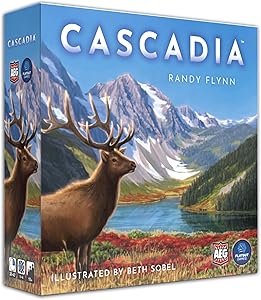
Here's a refreshing alternative: Cascadia isn't technically a deck-building game, but many people learning the best deck building game for beginners actually start here because it teaches card management, hand building, and strategic decisions with zero confrontation. You're creating habitats in the Pacific Northwest by placing tiles and building a hand of useful cards.
Why include a non-deck-building game? Because it teaches pattern recognition and hand management—skills that directly transfer to deck builders—without the complexity of buying mechanics. New players often find Cascadia more relaxing, which means they're actually thinking about their choices instead of feeling overwhelmed by options.
That said, Cascadia plays differently enough from traditional deck builders that it's more of an entry ramp than a full introduction to the genre. Think of it as a stepping stone.
Pros:
- Extremely accessible entry point for anxious learners
- Beautiful components and calming theme
- Games finish in 20–30 minutes
- Zero confrontation makes it great for families
Cons:
- Doesn't teach actual deck-building mechanics
- Less depth than true deck builders
- Some advanced players find it too simple
---
6. Ashes Reborn: Rise of the Phoenixborn — Tactical Head-to-Head

Ashes Reborn takes the best deck building game for beginners premise and adds a battle grid where positioning matters. You build decks representing a magical character's powers, then deploy units and spells on a board to outmaneuver your opponent. It's competitive deck building with tactical depth.
The best part for beginners? Each deck starter is thematically cohesive. You pick a Phoenixborn character, and the included cards show you how that character naturally plays. This removes decision paralysis—you're not building from 300+ cards, you're learning one character's strategy first.
Games run 30–40 minutes and play best with two, making it ideal for partners or small groups who want something more strategic than Star Realms but more structured than pure deck builders.
Pros:
- Character-based decks guide new players
- Board tactics add layer beyond card efficiency
- Balanced starter decks let both players learn simultaneously
- Excellent for competitive couples
Cons:
- More complex ruleset than Dominion
- Requires more table space for the board
- Limited to two players in most scenarios
---
7. Imperium: Classics — Solo and Campaign Play

If you're learning the best deck building game for beginners but want to play alone, Imperium: Classics is purpose-built for solo and campaign play. Each deck represents a civilization, and you progress through a campaign facing increasingly difficult challenges while your civilization grows stronger.
This structure is brilliant for beginners because it provides built-in progression and narrative. You're not just optimizing cards in a vacuum; you're telling a story of empire-building. The campaign teaches mechanics gradually—early games are simple, later ones add complexity as you get comfortable.
Solo play also removes social pressure. You can take your time understanding mechanics without someone waiting for you to make a decision. Once you're confident, you'll naturally transition to multiplayer games.
Pros:
- Perfect for learning at your own pace
- Campaign structure keeps you invested across multiple plays
- Solo experience that doesn't feel like practice for multiplayer
- Teaches intermediate strategy without jumping straight to competitive play
Cons:
- Campaign length means you're committing to multiple sessions
- Less exciting than competitive games for some players
- Not ideal if you want quick one-off experiences
---
8. Fantasy Flight Games Star Wars The DeckBuilding Game

Star Wars fans who want to learn deck building have an obvious choice. This game teaches the best deck building game for beginners mechanics through lightsaber duels between famous characters. You build decks representing a side of the Force and fight until one player reaches zero health.
The licensed theme helps immensely—you already know who these characters are, so cards feel intuitive. A Jedi deck has different cards than a Sith deck, reflecting what you already understand about those factions. This thematic coherence makes learning curve gentler than generic games.
At 30 minutes per game, it's also the fastest deck-building entry point besides Star Realms, with slightly more depth. Perfect for players who want something quick but more strategic.
Pros:
- Powerful IP investment makes learning fun
- Deck archetypes reflect character themes
- Fast, decisive games with minimal downtime
- Beautifully illustrated cards
Cons:
- Theme matters a lot—if you don't care about Star Wars, it won't hook you
- Limited player count (two players optimal)
- Somewhat lighter strategy than pure deck builders
---
How I Chose These
I evaluated games on four criteria that matter for beginners. First, clarity of rules—can you understand a game in 10 minutes without watching a 30-minute tutorial video? Second, time commitment—do games finish in a reasonable window, or will players check their phones? Third, replayability—will you want to play again, or does the game feel solved after one round? Finally, beginner-friendliness—are there
Get the best board game picks in your inbox
New reviews, top picks, and honest recommendations. No spam, unsubscribe anytime.
More in Deck Building
The Best Card Games Under $30 in 2026: Fast Fun Without Breaking the Bank
Finding a genuinely good card game shouldn't mean spending $50 or more. I've tested dozens of options, and the best card games under $30 deliver real...
Best Card Games Under $15 for 2026: Fast Fun That Won't Break the Bank
Finding a genuinely fun card game that costs less than $15 feels rarer than it should be.
Best Card Games Under 10: Hidden Gems for 2026 That Won't Break the Bank
Finding quality card games under $10 feels impossible until you know where to look.