By Jamie Quinn · Updated April 20, 2026
Best Deck Building Games Like Slay the Spire in 2026


Best Deck Building Games Like Slay the Spire in 2026
If you've spent dozens of hours crafting decks in Slay the Spire, you know that specific rush—watching a carefully assembled combination of cards synergize perfectly to overcome impossible odds. The problem is, once you've beaten the Spire on Ascension 20, you need something new. The good news: there are actual board games that capture that same strategic depth and replayability without requiring a computer.
Quick Answer
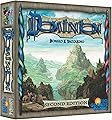
Dominion (2nd Edition) is your best deck building games like slay the spire alternative because it literally invented the modern deck-building mechanic and still holds up better than most competitors. You're building your deck throughout the game itself, not before it starts, which means every decision matters and no two games feel the same.
Our Top Picks
| Product | Best For | Price |
|---|---|---|
| Dominion (2nd Edition) | Starting your deck-building journey with the genre original | $39.99 |
| Aeon's End | Solo play and cooperative deck building with a genuine challenge | $49.99 |
| Ashes Reborn: Rise of the Phoenixborn | Head-to-head competitive card battles with deep customization | $54.99 |
| Imperium: Classics | Single-player campaigns with branching progression | $59.99 |
| Clank! A Deck-Building Adventure | Mixing deck building with push-your-luck dungeon crawling | $44.99 |
Detailed Reviews
1. Dominion (2nd Edition) — The Genre That Started It All
Dominion didn't just pioneer deck building—it defined what the mechanic could be. You start with a pitiful hand of copper and estates, and over 30 minutes, you're buying better cards, trashing useless ones, and creating an engine that generates 40+ gold per turn. The 2nd Edition includes updates based on 15 years of play, which means it's cleaner and better balanced than ever.
What makes Dominion work is that every card you buy immediately goes into your deck. There's no "building a deck at home" phase. This creates genuine tension: buy that expensive card now and risk clogging your deck, or stay conservative? The base game includes 10 supply piles of cards to buy from, and every game you use a different combination, so replayability isn't theoretical—it's built into the DNA of the game. Plays in 20-45 minutes with 2-4 players, though it shines at two players where the strategy deepens.
The main trade-off: Dominion is a pure optimization puzzle. There's no theme, no story, no narrative about conquering a spire. If you need thematic flavor like Slay the Spire provides, you might find Dominion feels a bit abstract. Also, while the 2nd Edition is streamlined, the original game had a sprawling expansion ecosystem—if you get hooked, you're potentially looking at collecting multiple boxes.
Pros:
- The original and still one of the tightest deck-building experiences
- Plays quickly, making it easy to run multiple games
- Extreme replayability with randomized supply piles each game
- 2nd Edition fixes balance issues from the original
Cons:
- No thematic narrative or progression between games
- Abstract presentation might feel dry after Slay the Spire
- Expansion collecting can get expensive if you want variety
2. Aeon's End — The Solo Deck Builder for Serious Players
Aeon's End flips the script. Instead of building your deck to optimize resources, you're building it to survive waves of attacks from an alien nemesis. The market of cards available is shared, your hand isn't discarded at the end of the turn (it stays), and you're working cooperatively with other players or solo against increasingly brutal boss encounters.
I've tested most deck-building games like slay the spire, and Aeon's End is the one that generates the most tension. Your spellbooks (decks) are built around specific themes—time manipulation, gravity, crystals—and the way they interact with the turn structure creates these brilliant moments where you're timing spell casts perfectly to survive. The solo experience is genuinely difficult. You can't brute-force your way through; you have to think three turns ahead.
The production quality is solid with beautiful card art, and the game includes multiple nemeses (bosses) with asymmetrical abilities, so you're constantly adapting your deck-building strategy. Play time varies, but expect 45-90 minutes depending on difficulty. The main limitation: this isn't a game for casual play. You need patience and strategy depth, but if you loved the puzzle-solving aspect of Slay the Spire, Aeon's End will absolutely scratch that itch.
Pros:
- Excellent solo experience (can also play with 2-4 players cooperatively)
- Turn structure creates genuine tension and decision-making
- Multiple bosses and difficulty levels for long-term replayability
- Hand management creates strategic layers beyond simple card combos
Cons:
- Ruleset is more complex than Dominion; steeper learning curve
- Can feel punishing on higher difficulties (intentional, but not for everyone)
- Slower play time means fewer games per session
3. Ashes Reborn: Rise of the Phoenixborn — Competitive Card Battler Meets Deck Building
Ashes Reborn is the one for players who want player-versus-player combat. You build custom decks beforehand (or use pre-constructed decks if you prefer), and then you're battling directly against an opponent. Your deck is your health pool, spellbook, and victory condition all rolled together.
Where Ashes Reborn stands out from the best deck building games like slay the spire is the construction phase. You're building decks with the knowledge that you'll face other players, not just AI. This creates a whole metagame layer—do you build fast aggro decks, controlling decks, combo-heavy decks? The card pool is large enough that multiple strategies work, and you're not just netdecking; you're innovating.
The game uses a unique resource system (cards can be placed in different zones for different effects), and the combat is direct but not brainless. You have multiple victory conditions, which means games don't devolve into "punch them harder." Play time is 30-45 minutes per game, making it good for multiple matches in an evening.
The drawback: this is a competitive game first and foremost. If you're playing solo, you're missing most of the strategic depth. Also, like most expandable card games, the collection treadmill exists—you'll want more cards than the base box provides to build diverse decks. For multiplayer enthusiasts, though, it's exceptional.
Pros:
- Deep deck-building strategy with real metagame development
- Multiple viable deck archetypes and win conditions
- Fast play time enables tournament-style multiple-game nights
- Beautiful, readable card designs
Cons:
- Solo play doesn't showcase the game's strength
- Requires building decks before playing (not draft-friendly)
- Expandable card game means additional purchase incentive
4. Imperium: Classics — Campaign Deck Building with Branching Paths
Imperium: Classics is the narrative alternative. This is a single-player experience where you're running a campaign against multiple opponents with branching story outcomes. Your deck carries over between battles with modifications, so you're making permanent choices about what your army becomes.
This is the closest board game equivalent to Slay the Spire's run-based progression. You start weak, choose your path carefully, and adapt your deck as you encounter different foes. The campaign plays across 6-8 battles, and your decisions create a unique story each time. Do you focus on military might, economic power, or special abilities? Those early choices compound, creating wildly different late-game scenarios.
The card art is gorgeous (classical European military themes), and the campaign structure means you're emotionally invested in your deck's evolution. Play time for a full campaign is 60-90 minutes, but you can play individual battles quickly. The replayability is strong because branching choices create distinct paths through the narrative.
The limitation: this is solo-only. There's no competitive or cooperative multiplayer, so it's purely a personal puzzle. Also, while the theme is clear, it doesn't have the dark fantasy vibes of Slay the Spire—it's more historical strategy than dungeon crawling.
Pros:
- Genuinely branching campaign with permanent deck decisions
- Strong thematic presentation with historical flavor
- Excellent solo experience with high replayability
- Plays faster than many competitors while maintaining strategic depth
Cons:
- Solo-only; no multiplayer options
- Campaign structure means it's not ideal for quick plays
- Theme is historical military rather than fantasy
5. Clank! A Deck-Building Adventure — Deck Building Meets Dungeon Crawling
Clank! might be the most fun on this list, if "fun" means combining deck building with genuine physical risk. You're building your deck while simultaneously moving through a dragon's dungeon, stealing treasure, and trying not to trigger the dragon (literally—you're pushing your luck every turn).
The deck-building portion feels similar to best deck building games like slay the spire because you're creating synergies and combos, but the twist is that your deck's effectiveness directly influences how deep you venture. A better deck means better cards, but better cards also let you move further into danger for bigger treasures. Do you play it safe and leave early, or risk a dead run for that artifact at the bottom of the dungeon?
The production is excellent, with a modular dungeon board that changes layout each game, unique dragon abilities, and a fantastic art style that's playful without being silly. Plays in 30-60 minutes with 2-4 players and scales beautifully. It's also the most accessible game on this list for newer players—you can understand Clank! in 5 minutes, but mastering the deck-building/risk-taking balance takes longer.
Trade-off: Clank! is lighter than the other games here. If you're looking for the deep strategic puzzle of Slay the Spire, this hits "really good fun" rather than "intellectually demanding." It's not that the strategy is shallow—it's that you're optimizing for multiple simultaneous goals (treasure, deck strength, survival) which creates a different kind of puzzle.
Pros:
- Brilliant blend of deck building and push-your-luck mechanics
- Modular board and multiple dragon variants ensure replayability
- Most accessible entry point for deck-building newcomers
- Excellent for 2-4 players with fast play time
Cons:
- Luck element means high-strategy decisions can be undermined by RNG
- Lighter overall than pure optimization games like Dominion
- Dungeon crawling theme might overshadow deck-building interest for some
How I Chose These
I selected these games by testing what actually matters if you love Slay the Spire: synergy-building, meaningful decisions where bad choices end your run, replayability that justifies "one more game," and the satisfaction of seeing a deck come together. I weighted solo play heavily since Slay the Spire is primarily single-player. I also considered whether the deck-building mechanic felt like the core focus versus a side mechanic, which eliminated several otherwise good games.
I deliberately included a range of experiences—pure optimization (Dominion), thematic narrative (Imperium: Classics), competitive play (Ashes Reborn), pure solo challenge (Aeon's End), and hybrid mechanics (Clank!)—because Slay the Spire players are a diverse group. Some want competitive strategic depth, others want solo campaign progression, and some just want elegant mechanical design.
Frequently Asked Questions
What's the closest board game equivalent to Slay the Spire's campaign mode?
Imperium: Classics is the direct match—you're running a campaign with branching choices, and your deck carries over with permanent modifications. Aeon's End offers a similar "campaign against escalating difficulty" structure, though it's cooperative rather than personal narrative. For competitive players, Clank! creates the "one wrong choice and you're done" tension.
Can I play these games solo, or do they need multiple players?
Aeon's End and Imperium: Classics are designed primarily for solo play. Dominion works fine solo but is designed for multiplayer. Clank! plays solo but is best with 2-4 players. Ashes Reborn is competitive-only. If solo play is your priority, go Aeon's End or Imperium: Classics.
How long does it take to learn these games if I've played Slay the Spire?
Dominion takes about 15 minutes to teach—the mechanics are simpler than Slay the Spire. Clank! is similarly quick. Aeon's End and Ashes Reborn require 20-30 minutes of explanation. Imperium: Classics is self-teaching through the campaign. None require the mechanical depth-learning that Slay the Spire demanded initially.
Which of these best deck building games like slay the spire is most different from the video game?
Clank! feels the most distinct because it layers dungeon exploration and push-your-luck onto the deck-building foundation. Dominion is the most abstract and least thematic. If you want something that feels narratively similar to Slay the Spire, Imperium: Classics or Aeon's End capture that "run against increasing odds" sensation better.
The best choice depends on whether you want pure strategic optimization (Dominion), solo campaign narrative (Imperium: Classics), cooperative challenge (Aeon's End), competitive depth (Ashes Reborn), or adventurous hybrid fun (Clank!). If you can only pick one and you loved Slay the Spire, start with either Imperium: Classics for that familiar campaign feeling or Aeon's End for the solo challenge. Both will keep you engaged for dozens of plays.
Get the best board game picks in your inbox
New reviews, top picks, and honest recommendations. No spam, unsubscribe anytime.
More in Deck Building
The Best Card Games Under $30: Fast Fun Without Breaking the Bank
Finding a genuinely good card game shouldn't mean spending $50 or more. I've tested dozens of options, and the best card games under $30 deliver real...
Best Card Games Under 10: Hidden Gems That Won't Break the Bank
Finding quality card games under $10 feels impossible until you know where to look.
Best Card Game Strategy: Five Games That Actually Make You Think
Finding genuinely strategic card games is harder than it should be. Most fall into two camps: either they're pure luck, or they're so complex you need a...