By Jamie Quinn · Updated April 20, 2026
Best Deck Building Strategy Games in 2026: Our Top Picks to Build, Battle & Win
Deck building strategy games are some of the most rewarding board games you can play—you're literally constructing your power level as the game progresses, making every card choice matter. Whether you're looking to outsmart opponents in competitive battles or work together against impossible odds, the best deck building strategy games combine thoughtful mechanics with real replayability. I've tested dozens of these games, and I'm sharing the ones that actually deliver on both gameplay depth and fun.
Quick Answer
Dominion (2nd Edition) is the best overall deck building strategy game because it literally invented the modern deck building genre, remains mechanically elegant after 15+ years, and scales perfectly from 2 to 4 players without breaking strategy or pacing. If you want to learn what makes a great deck builder work, this is the gold standard.
Our Top Picks
| Product | Best For | Price | |||||
|---|---|---|---|---|---|---|---|
| Rio Grande Games Dominion 2nd Edition Deck Building Strategy Card Game for 2-4 Players, Ages 13 Plus | Best Overall & Gateway Game | $38.34 | |||||
| Imperium: Classics | Best for Narrative Campaign & Solo Play | ~$50–60 | |||||
| Lost Ruins of Arnak | Best Hybrid (Deck Building + Worker Placement) | ~$45–55 | |||||
| Aeon's End | Best Cooperative Deck Building | ~$35–45 | |||||
| Dune: Imperium | Best for Theme-Heavy Strategy | ~$60–70 | |||||
| Avatar: The Last Airbender: Aang's Destiny, Cooperative Deck Building Strategy Board Game, Play as Aang, Katara, Appa & More, Fun for Family Game Night, Ages 10+, 2-4 Players, 60 Minutes | Best for Families & IP Fans | $41.65 | |||||
| Fantasy Flight Games Star Wars The DeckBuilding Game \ | Strategy Card Game \ | Head-to-Head Tactical Battle Game for Adults & Kids \ | Ages 12+ \ | 2 Players \ | Average Playtime 30 Minutes (FFGSWG01) | Best for Direct PvP Duels | $30.57 |
| Asmodee Star Wars: The Deckbuilding Game: The Clone Wars Edition - Intense Galactic Battle, Strategy Game for Kids and Adults, Ages 12+, 2 Players, 30 Minute Playtime | Best for Fast Head-to-Head Combat | $30.39 | |||||
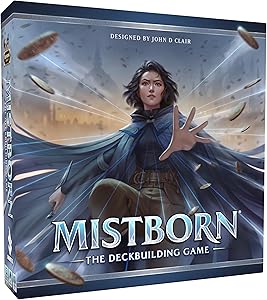
| Mistborn Deckbuilding Game by Brotherwise Games \ | Fantasy Card Strategy with Allomantic Powers \ | Build Your Deck, Burn Metals, and Battle Through Cinematic Missions \ | 1 to 4 Players \ | Ages 13+ | Best for Deep Theme & Solo Campaign | $44.95 |
Detailed Reviews
1. Rio Grande Games Dominion 2nd Edition Deck Building Strategy Card Game for 2-4 Players, Ages 13 Plus — The Game That Started It All
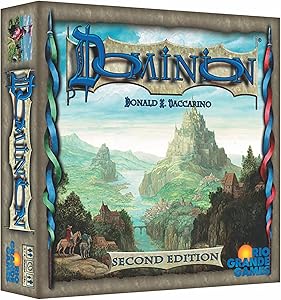
Dominion didn't just popularize the deck building strategy game genre—it defined what modern deck building is. You start with 10 identical cards (copper and estates), and from there, every choice is yours. Each turn, you buy cards from the supply to strengthen your deck, but you also need to manage hand size, action economy, and what your opponents are doing. The elegance is remarkable: the core rules fit on one page, yet the strategic depth rivals games ten times more complex.
The 2nd Edition is cleaner than the original, with better card iconography and improved balance. Games run 30–45 minutes, and the modular card sets mean no two games play the same way. You might face a kingdom focused on terminal collision (cards that don't combo well together), forcing you to build slim, efficient decks. Next game, maybe card draw and actions dominate, and you're stacking cards for chain turns. This variability is why people with hundreds of plays still come back.
That said, Dominion is purely mechanical. There's no theme tying the fantasy kingdom together—you're just optimizing card economy. If you want narrative or heavy thematic immersion, this isn't it. Also, with more than 4 players, downtime creeps in.
Pros:
- Invented and perfected the deck building strategy game formula
- Plays fast once everyone understands the rules
- Modular card selection creates infinite replayability
- Scales well from 2 to 4 players
Cons:
- Zero theme—it's purely mechanical
- Can feel a bit dry if you're new to the genre
- Limited to 4 players
- Requires learning which cards exist (no theme flavor to guide decisions)
Price: $38.34
---
2. Imperium: Classics — Best for Campaign Play & Solo Adventures
Imperium: Classics takes the best deck building strategy game mechanics and wraps them around a 13-mission solo or cooperative campaign. You're building a Roman empire across different scenarios, and your deck evolves between missions—cards you acquire stick around, making each mission feel like a natural progression of your power.
What makes this special is the narrative glue. Every mission has unique rules and enemy composition. One scenario locks down your army, so you need cards that generate extra actions. Another focuses on resource conversion. The game creates emergent story moments: "We scraped by that invasion, so now we're stronger." The solo experience is genuinely excellent, and it also scales to 2–4 players for cooperative play.
The card pool is smaller than standalone Dominion, which sounds like a downside but actually works to Imperium's advantage. Fewer total cards means faster decisions and tighter strategic choices. You'll recognize cards after a few plays and focus on combos rather than remembering what cards do.
The main trade-off is that Imperium shines in campaign mode. If you want a sandbox experience where you can play different kingdom configurations infinitely, Dominion is stronger. Also, campaign mode means results carry between games—if you botch a mission, you might struggle in the next one.
Pros:
- Campaign structure gives the game a narrative arc
- Solo play is genuinely engaging and well-designed
- Smaller card pool keeps decisions focused
- Cards persist between missions, creating progression
- Excellent for 1–4 players
Cons:
- Less replayability per session compared to Dominion's infinite variability
- Campaign structure means losing early impacts later missions
- Smaller card pool could feel limiting after many plays
---
3. Lost Ruins of Arnak — Best Hybrid: Deck Building Meets Worker Placement
Lost Ruins of Arnak deserves a spot in any best deck building strategy games list because it proves the genre doesn't need to exist in isolation. Here, you're still building your deck, but you're also placing workers on a modular board to unlock different actions and resources. Every turn, you manage two separate economic systems: your deck and your worker placement.
The theme is immediate and engaging—you're an archaeologist exploring a lost temple, uncovering artifacts and knowledge. The game board reveals new action spaces as you progress, meaning the late game feels different from the early game. Your deck tends toward artifact-generating cards, while workers chase knowledge and exploration. The systems interlock naturally; a card might let you place workers more effectively, or a worker action might discount deck purchases.
This is excellent for players who find pure deck building abstract or those who like strategy board games with meaningful board presence. The game hums for 2–4 players and takes 30–50 minutes once everyone knows the flow.
The downside is that this hybrid nature means it's not as tight as a pure deck builder. You have to manage two systems, which adds cognitive overhead. If you want something more streamlined or more purely about deck optimization, Dominion wins.
Pros:
- Theme and narrative tension make deck building feel purposeful
- Two intertwined systems create richer decisions
- Modular board means different game experiences
- Plays 2–4 players with excellent scaling
- Worker placement prevents "multiplayer solitaire" feeling
Cons:
- More rules than a pure deck builder
- Longer learning curve than Dominion
- Can occasionally feel like two games fighting for space
---
4. Aeon's End — Best Cooperative Deck Building Strategy Game
Most of the best deck building strategy games pit players against each other, but Aeon's End flips the script—you and your teammates build decks to defeat nemeses (boss enemies) before they destroy your world. The novelty here is that you reveal your turn order at the start, which means planning isn't random but strategic. You might hold back a powerful turn to let a teammate set up a combo.
Each player specializes in a different mage type (heavy damage, healing, control), and your decks reflect this. You buy spells and relics to customize your approach, while the nemesis damages you via preset patterns. The base game includes several nemeses with different difficulty levels, so there's real tactical depth beyond just "get stronger cards."
The cooperative nature means you're never waiting for your turn while others play. Everyone's invested simultaneously. Games run 45–60 minutes, and the difficulty scales well—you can play on easy while learning, then hard mode once you know combos.
The catch is that Aeon's End is cooperative-first. If you want competitive cut-throat deck building, this isn't it. Also, some nemeses feel more threatening than others, so variety in difficulty isn't perfectly balanced.
Pros:
- Cooperative play prevents kingmaking and player elimination
- Simultaneous turn reveals create interesting planning puzzles
- Multiple nemeses provide different challenges
- Excellent scaling from easy to hard difficulty
- Plays well from 1–4 players
Cons:
- Purely cooperative—no competitive mode
- Some nemesis balance issues
- Less replayability than pure competitive deck builders
- Requires table communication and teamwork
---
5. Dune: Imperium — Best for Theme-Heavy Strategy
Dune: Imperium is a board game first and a deck building game second—it combines deck building, worker placement, combat, and Dune lore into one meaty package. You're a Great House controlling armies and intrigue on Arrakis, building a deck to fuel your political and military strength. The theme isn't window dressing; it determines how every mechanic functions.
Combat uses a blind-bid system where you and opponents secretly spend cards and tokens to win battles. Intrigue cards generate power and effect board state. Your deck isn't optimized purely for efficiency—it reflects your faction's flavor and strategy. House Atreides might focus on alliances and card draw, while House Harkonnen storms in with brute force.
This is one of the best deck building strategy games for players who want theme to matter mechanically, not just aesthetically. However, Dune is complex. Setup takes time, rules have exceptions, and a full game with 4 players can stretch to 90+ minutes. It's heavy in the best way for committed gamers, but it's not a gateway deck builder.
Pros:
- Exceptional theme integration—mechanics reflect faction identity
- Combat system creates memorable dramatic moments
- Player powers differentiate each faction meaningfully
- Scales well from 2–4 players
- High replayability due to different faction approaches
Cons:
- Complex ruleset with many exceptions
- Setup is involved; teaching takes 20+ minutes
- 90+ minutes for 4 players can test patience
- Blind bidding sometimes creates feel-bad moments
---
6. Avatar: The Last Airbender: Aang's Destiny, Cooperative Deck Building Strategy Board Game, Play as Aang, Katara, Appa & More, Fun for Family Game Night, Ages 10+, 2-4 Players, 60 Minutes — Best for Families & Avatar Fans

If you or someone you're playing with loves Avatar: The Last Airbender, this deck building game captures the show's charm and combat dynamics. You play as Team Avatar, building decks of bending powers and abilities to defeat enemies and obstacles from the series. Each character has a unique starter deck reflecting their bending style—Aang brings air and spirit powers, Katara brings water healing and control.
The cooperative structure means no one gets eliminated, and the difficulty ramping lets families play together across age ranges. You're not just matching mechanics to abstract cards; you're pulling off Aang's iconic moves and combo attacks. If IP connection matters to your group, this is significantly better than a generic deck builder.
The downside is that mechanical depth takes a back seat to theme and accessibility. This is not a game for pure strategy optimization. Also, the card pool is relatively limited compared to industry-leading deck builders—you'll see the same cards frequently across plays.
Pros:
- Strong Avatar IP integration creates emotional connection
- Cooperative play is excellent for families
- Character asymmetry encourages different playstyles
- Accessible rules for younger players (age 10+)
- Good difficulty scaling
Cons:
- Less mechanical depth than pure deck builders
- Limited card variety across plays
- Theme might feel wasted if you're not an Avatar fan
- Shorter strategic shelf life for experienced gamers
Price: $41.65
---
7. Fantasy Flight Games Star Wars The DeckBuilding Game | Strategy Card Game | Head-to-Head Tactical Battle Game for Adults & Kids | Ages 12+ | 2 Players | Average Playtime 30 Minutes (FFGSWG01) — Best for Direct PvP Duels
[ ](https://www.amazon.com/dp/B0BLT6F5
Get the best board game picks in your inbox
New reviews, top picks, and honest recommendations. No spam, unsubscribe anytime.
More in Deck Building
The Best Card Games Under $30 in 2026: Fast Fun Without Breaking the Bank
Finding a genuinely good card game shouldn't mean spending $50 or more. I've tested dozens of options, and the best card games under $30 deliver real...
Best Card Games Under $15 for 2026: Fast Fun That Won't Break the Bank
Finding a genuinely fun card game that costs less than $15 feels rarer than it should be.
Best Card Games Under 10: Hidden Gems for 2026 That Won't Break the Bank
Finding quality card games under $10 feels impossible until you know where to look.