By Jamie Quinn · Updated May 12, 2026
The Best Euro Games Ever in 2026: Complete Reviews of Top Strategy Picks


The Best Euro Games Ever in 2026: Complete Reviews of Top Strategy Picks
If you're searching for the best euro games ever, you probably already know that euros are different from your typical American board games. They focus on elegant mechanics, minimal luck, and meaningful player interaction without direct confrontation. After years of playing and testing everything from light tile-layers to heavy economic simulations, I've narrowed down the genuinely standout titles that belong in any serious board game collection.
Quick Answer
Terraforming Mars is my top pick among the best euro games ever. It combines deep strategic choices, meaningful player decisions on every turn, and a theme that actually matters—you're building an entire planetary ecosystem while competing against other corporations. The modular setup keeps it fresh across dozens of plays, and it scales beautifully from 1 to 5 players.
Our Top Picks
| Product | Best For | Price |
|---|---|---|
| Terraforming Mars | Deep strategy & variable replayability | ~$45 |
| Agricola (Revised Edition) | Worker placement fundamentals | ~$40 |
| Brass: Birmingham | Economic simulation & table tension | ~$60 |
| Gaia Project | Heavy sci-fi strategy | ~$90 |
| Imperium: Classics | Deck-building with unique factions | ~$50 |
| Cascadia | Quick, accessible tile-placement | $31.99 |
| Azul Board Game | Beautiful, easy-to-teach strategy | $34.39 |
| Scorpion Masqué Sky Team | Cooperative two-player gaming | $32.29 |
| Targi | Elegant two-player competition | $21.51 |
| Lost Cities Card Game | Portable, tense head-to-head play | $19.64 |
Detailed Reviews
1. Terraforming Mars — The Gold Standard of Modern Euros
Terraforming Mars stands as one of the best euro games ever for a reason: it nails the balance between accessibility and strategic depth. You're running a corporation tasked with making Mars habitable, but every card you play, every action you take, creates branching paths forward. The game uses a card-driven economy where cards represent technologies, resources, and projects. On your turn, you're not just playing cards—you're managing three competing currencies (money, steel, and titanium) while tracking three global parameters (temperature, oxygen, and ocean coverage).
What makes this shine is the asymmetry baked into the card pool. Over 200 unique cards exist, and the random draw means no two games feel identical. Standard project cards remain constant, so you always have a fallback, but the path there varies wildly. Playing with 3-5 players creates genuine tension as you watch opponents claim the best projects before your next turn.
The game does drag slightly with analysis paralysis in higher player counts, and teaching it requires patience—the rulebook could be clearer on card timing and tag interactions. It's also not a game where luck disappears entirely; the card draw matters significantly. But if you want the best euro games ever that rewards planning and long-term thinking, this delivers.
Pros:
- Enormous replay value with card variety and modular module selection
- Every player has meaningful decisions every single turn
- Scales perfectly from solo play to five players
- Theme reinforces mechanical decisions beautifully
Cons:
- Teaching takes 20-30 minutes; expect 2+ hours per game with experienced players
- Card draw can occasionally feel punishing if you whiff on draw luck
- Player elimination potential exists if one player gets too far ahead
---
2. Agricola (Revised Edition) — The Worker Placement Classic
If you're studying the best euro games ever, you must understand Agricola. Released in 2007, it essentially defined worker placement as a mechanic, and the 2016 Revised Edition perfects it. You're building a farm over 14 rounds, placing workers to gather resources, improve your land, and feed your growing family. Simple premise. Deceptive depth.
Each round, you have fewer workers than available action spaces, forcing brutal prioritization. Do you grab the forest to harvest wood, or do you plant fields? Do you improve your farm buildings now, or feed your family first? The constraint creates elegant tension without any aggressive player interaction. You're not attacking opponents; you're racing for limited resources.
The Revised Edition streamlined components, balanced the occupation and improvement cards, and created a far more accessible on-ramp than the original. New players can play competitively within a single game, which is remarkable for a euro this heavy. Playtime hovers around 90-120 minutes, making it substantial without overstaying its welcome.
The main limitation: games follow predictable patterns once you understand optimal strategies. The core food crisis mechanic sometimes feels arbitrary rather than thematic. It's not a pick if you want surprises or theme-driven narrative; it's a pick if you want elegant mechanical perfection.
Pros:
- Foundational worker placement mechanic executed flawlessly
- Revised Edition balances components better than the original
- Multiple viable strategies lead to different farm configurations
- Excellent for 2-5 players with minimal downtime between turns
Cons:
- Can feel repetitive after many plays as optimal paths become clear
- Food production sometimes feels punishing rather than thematic
- Not ideal for players who dislike resource management puzzles
---
3. Brass: Birmingham — Economic Complexity at Its Peak
Among the best euro games ever made, Brass: Birmingham ranks as the pinnacle for players who thrive on economic simulation and emergent player interaction. This is not a newcomer's game, but it's the game serious board gamers point to when defending euros as strategic masterpieces.
You're industrialists building networks across Birmingham during two eras: the Canal era and the Rail era. Actions are minimal on the surface—place a tile, or sell a tile for income. But the network effects, loan mechanics, and era-specific rules create cascading decisions. Building a cotton mill only pays off if you can connect it to a city. Connecting networks requires loans that drain your cash. Selling tiles floods the market with future buyers, which changes what others will pay later.
The genius lies in the shared action selection: on your turn, you execute one of only five actions, and everyone else gets to execute all remaining actions cheaply. This forces you to consider whether claiming an action is worth triggering cheap actions for opponents. The economy emerges naturally from these constraints, creating genuine negotiation and table tension without explicit trading mechanics.
Brass demands multiple plays to fully appreciate the strategic layers. First plays feel random. By game three, you're seeing how loan timing affects mid-game tempo. By game ten, you're orchestrating multi-era setups. It's a commitment, not a casual play.
Pros:
- Economic simulation that feels earned, not pasted on
- Shared action selection creates organic tension and negotiation
- Enough hidden information and variable tile draws for replayability
- Two distinct eras mean the game feels like it evolves
Cons:
- High learning curve; first play will take 2+ hours
- Can feel overwhelming if you prefer lighter games
- Network effects mean some positions feel inherently stronger by endgame
- Best with 3-4 players; weaker at 2 or 5
---
4. Gaia Project — Cosmic Complexity for Serious Strategists
Gaia Project is best euro games ever territory for players who've climbed the complexity ladder and want a view from the top. This is Terra Mystica transplanted to space: you control one of 14 asymmetrical alien factions competing to terraform planets and spread influence across the galaxy.
Each faction plays genuinely differently. The Ivits are space nomads with no planets. The Hadsch Hallas are traders who profit from others' expansion. The Baltaks are aggressive expansionists. Learning that each faction has different scoring priorities, different tech tracks, and different action efficiency forces you to rethink strategy with every game. This asymmetry pushes Gaia Project into the best euro games ever conversation because it rewards adaptation.
The core loop involves upgrading structures (trading stations, academies, research labs) on planets, advancing technology, and completing missions. But the interaction layer—where you block expansion, deny resources, and trigger Gaia Projects that reset regions—makes this a game where table politics and negotiation trump raw optimization.
Fair warning: this is a 150+ minute game for experienced players, and setup takes 15 minutes. The rulebook requires careful reading. Player elimination can occur if someone gets too far behind. It's not a pick if you want something quick or light.
Pros:
- 14 asymmetrical factions create wildly different play patterns
- Elegant action selection (pay resources or use a power) scales beautifully
- Tech trees and research tracks provide long-term planning satisfaction
- Excellent solo mode included
Cons:
- Substantial learning curve; misunderstanding faction abilities ruins first plays
- 150+ minutes is long even for experienced players
- Some factions feel inherently stronger in certain player counts
- Best at 3-4; weak at 2 players
---
5. Imperium: Classics — Accessible Deck-Building Mastery
Imperium: Classics lands on the best euro games ever list because it does something remarkable: it makes deck-building mechanically tight while keeping it tactically accessible. Unlike many deck-builders where you're throwing spaghetti at walls hoping combos stick, every card purchase here feels intentional.
The setup is elegant. Each player starts with identical starter decks (legionaries and denarii). On your turn, you draw five cards, then use military icons to conquer territory and gold to buy new cards. The core tension: cards that generate lots of military strength don't generate gold, and vice versa. Balancing this creates satisfying puzzle moments.
What separates Imperium from mediocre deck-builders is how powers (special card abilities) modify the baseline mechanics. Some powers generate extra military. Others let you recycle cards. Others create combo chains. With 10+ different factions available, the metagame stays fresh across dozens of plays.
The main limitation is that analysis paralysis can occur—there are often many optimal card purchases, and deciding between them stalls turns. The game also scales awkwardly at 2 players; it shines with 3-4.
Pros:
- Tight resource management (military vs. gold) creates satisfying decisions
- Faction powers feel meaningfully different without breaking balance
- Scales beautifully from 2-6 players
- Plays in 60-90 minutes, making it accessible despite the depth
Cons:
- Can slow down if players overthink purchase decisions
- Weaker asymmetry than some competitors; factions feel more tweaks than transformations
- The market deck order can occasionally create feelbad moments
- Not ideal for players who prefer pure aggression or negotiation
---
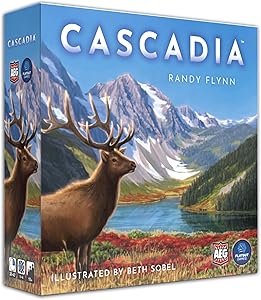
6. Cascadia — Award-Winning Tile-Placement Strategy Game Set in the Pacific Northwest | Easy to Learn | Quick to Play | Ages 10+
Among the best euro games ever for pure elegance, Cascadia is a masterclass in simplicity hiding depth. You're building habitats across the Pacific Northwest, placing terrain tiles to create forests, mountains, and wetlands while populating them with wildlife. Your opponent is doing the same. The player whose ecosystem best matches the habitat requirements of native animals wins.
A single turn: draw a terrain tile and animal token from two shared markets, or draw two of each. Place one tile on your board, and one token on a habitat it likes. That's it. But the interaction emerges from the shared market—tokens and tiles run out. Placing a token blocks your opponent from using that habitat. Strategically choosing what to draw versus what to take creates beautiful tension.
Cascadia plays in 30-45 minutes, making it perfect for players who want strategic depth without commitment. The component quality is gorgeous, and teaching takes five minutes. It's one of the rare euros that works equally well with brand-new players and serious strategists.
The trade-off: there's minimal player interaction beyond market scarcity. The game isn't competitive in the aggressive sense; it's about optimizing your own ecosystem. If you want direct conflict or negotiation, look elsewhere.
Pros:
- Teaches in five minutes; plays in 30-45
- Gorgeous components and soothing theme
- Simple rules hide surprising strategic depth
- Excellent for families and serious players alike
Cons:
- Minimal direct player interaction beyond market competition
- Luck in the tile/token draw can occasionally feel frustrating
- Relatively light strategy compared to heavier euros on this list
- Best at 2-3; weaker at higher player counts
---
7. Azul Board Game - Award-Winning Tile-Placement Strategy Game, Beautiful Mosaic Art, Family Fun for Kids & Adults, Ages 8+, 2-4 Players, 30-45 Minute Playtime
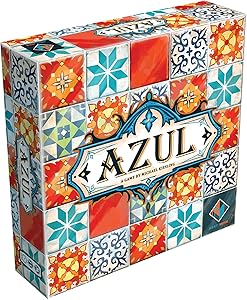
Azul might be the best euro games ever for pure accessibility without sacrificing strategic meat. You're collecting tiles from a shared display, then placing them on your mosaic board. Complete rows, columns, or colors to score points. But here's the hook: every tile you don't select goes into a shared penalty pool. Take too much, and you're penalized next round.
The elegance is staggering. On your turn, you have one decision: which tiles to take? That's genuinely it. But downstream decisions emerge—should you take large sets and risk penalties, or conservative sets that keep you safe? Should you take tiles your opponent clearly wants, or focus on your own board?
At just 30-45 minutes with minimal rules overhead, Azul is a gateway euro that actually respects experienced players. The strategy curves gradually—new players can play intuitively, while veterans optimize tile selection and board positioning obsessively. It's genuinely tough to win against someone who understands probability and board blocking.
The limitation: once you learn the core strategy (prioritize completing rows early, then optimize columns), games can feel repetitive. There's less player interaction than some alternatives, and the tile draw does matter.
Pros:
- Absolutely stunning components; every game feels like playing art
- Perfect learning game that
Get the best board game picks in your inbox
New reviews, top picks, and honest recommendations. No spam, unsubscribe anytime.
More in Strategy
The Best Engine Building Games of 2026: 5 Excellent Choices That Actually Deliver
Engine building games are genuinely addictive because they give you that satisfying progression feeling—you start with almost nothing, then gradually...
Best Euro Games for Kids in 2026: Top Picks for Family Game Night
Euro games—those elegant, strategy-focused board games from European designers—are perfect for kids who want more than dice-rolling luck.
The Best Strategy Board Games for 6 Players in 2026
Finding the right board game for exactly six players is trickier than it sounds. Too many games max out at four or five, forcing awkward house rules.