By Jamie Quinn · Updated April 7, 2026
Best Family Board Card Games for 2026: Our Top Picks That Actually Work


Best Family Board Card Games for 2026: Our Top Picks That Actually Work
Finding the right board game for your family can feel overwhelming—there are thousands out there, and most collect dust after a few plays. I've tested dozens over the years, and the best family board card games share one thing: they're genuinely fun for everyone at the table, whether you've got kids, teenagers, or adults who haven't played a game in years.
Quick Answer
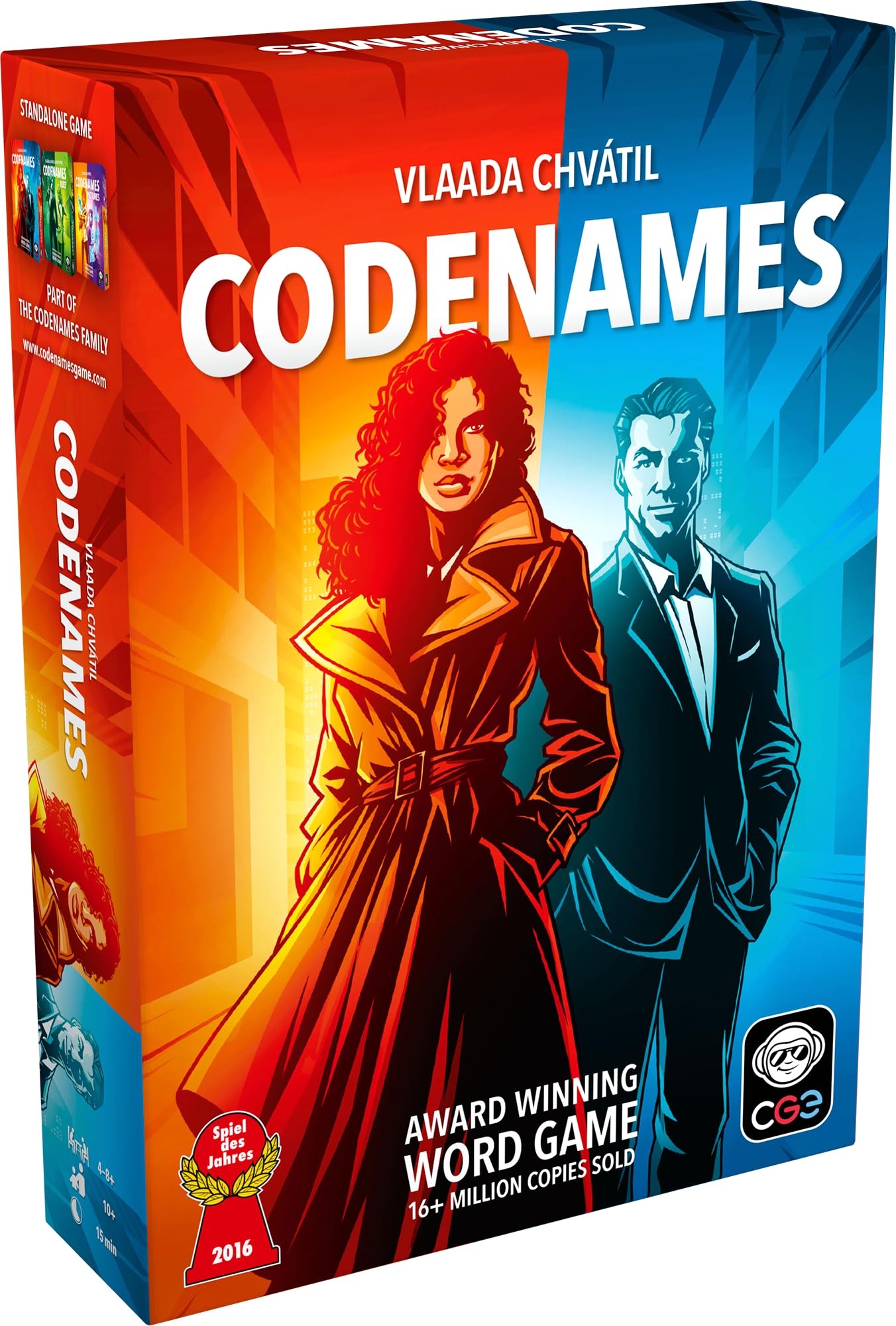
Codenames is the best family board card game overall because it works with 2-12+ players, takes 15 minutes, requires zero setup, and the learning curve is basically non-existent. Everyone understands it after one round, and it creates the kind of moments where families actually laugh together instead of staring at their phones.
Our Top Picks
| Product | Best For | Price |
|---|---|---|
| Codenames | All ages, large groups, quick rounds | ~$15-20 |
| Sushi Go Party! | 2-8 players, younger kids included, drafting mechanics | ~$25-30 |
| Clank! A Deck-Building Adventure | 2-4 players, families liking adventure themes, 30-60 min games | ~$40-45 |
Detailed Reviews
1. Codenames — The Perfect Family Starter

Codenames stands out because it's a team word-association game that somehow manages to be accessible to an 8-year-old and challenging enough for adults who play word games competitively. You split into two teams, and one person on each team gives one-word clues to help their teammates identify secret agents on a grid of 25 word cards. That's it. That's the whole game.
What makes this the best family board card game for most households is the pure simplicity combined with strategic depth. Your 9-year-old can play and feel like a genius when they guess the right person from a cryptic clue. Your 45-year-old can spend three minutes agonizing over whether a clue is too clever or too obvious. Both experiences are equally valid and equally fun.
The game plays in 15 minutes, which means you can squeeze in multiple rounds before anyone gets bored. With 2-8 players officially (though you can easily adapt for larger groups), it covers basically every family size. There's no luck involved—only communication, vocabulary, and knowing your teammates well enough to predict what they'll think.
Pros:
- Works immediately with zero learning curve
- Scales beautifully from 2 to 10+ players
- Fast enough to play multiple rounds in one sitting
- Creates genuine memorable moments and inside jokes
- No player elimination—everyone stays engaged the whole time
Cons:
- If you have someone who refuses team games, they won't enjoy it
- The word cards get repetitive after 100+ plays (though you can print custom cards online)
- Requires players to be willing to talk and think out loud
---
2. Sushi Go Party! — Best for Younger Kids and Variety
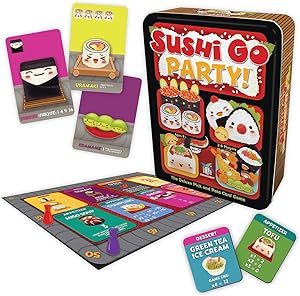
Sushi Go Party! is the kind of game that keeps kids engaged without making parents want to flip the table. It's a drafting game where you're building a sushi meal by passing cards around the table in simultaneous rounds—you pick one card, pass the rest, then the next player picks one from what you passed them, and so on.
The core mechanic is elegant: you want to collect matching cards (like sets of the same nigiri or maki rolls) because completed sets score points. But it's not just about collecting—you're also blocking other players from getting what they need. A 7-year-old understands this immediately. A 12-year-old starts developing strategy. Adults realize there's actually quite a bit of subtle decision-making happening.
What separates Sushi Go Party! from the original Sushi Go is the modularity. It comes with multiple card sets, so you can mix and match which cards to use in each game. This sounds like a small thing, but it means the game stays fresh across dozens of plays because the strategy shifts based on which cards are available.
The game plays 2-8 players, though 4-6 is the sweet spot. Rounds are quick (maybe 10-15 minutes total), and since there's no downtime where one player has to wait forever for their turn, younger kids stay focused.
Pros:
- Easy to teach, deeper than it looks
- Multiple card configurations keep it from getting stale
- Fast-paced with no player elimination or downtime
- Works for a wide age range (6-year-olds to adults)
- Beautiful art that makes kids actually excited to play
- Set collection satisfies the part of our brain that likes organizing things
Cons:
- The module selection can feel overwhelming if you want "just pick something" simplicity
- If you want a dice-rolling or move-your-piece-on-a-board game, this isn't it
- Playing with very young kids (under 6) requires more parent guidance than Codenames
---
3. Clank! A Deck-Building Adventure — Best for Adventure Storytelling

Clank! combines deck-building (you start with a small deck of cards and gradually buy better ones) with push-your-luck dungeon exploration. You're thieves trying to steal treasure from a dragon-guarded vault, and the longer you stay in the dungeon, the richer you get—but the more likely the dragon catches you.
This game works for families because it has a narrative arc built in. You're not just moving pieces around abstractly—you're actually adventuring through a dungeon, sneaking past a dragon, and racing for the exit with your loot. Kids connect with this story in a way they don't with pure strategy mechanics.
The deck-building is simplified compared to heavy games like Dominion, making it accessible to players who've never encountered the mechanic before. You start each turn with your current deck of cards, play them to move through the dungeon and buy new cards, then reshuffle and draw again next turn. Each card you buy is a meaningful decision because you'll shuffle it back into your deck and draw it repeatedly.
The push-your-luck element is where the family moments happen. Do you push deeper into the dungeon for more treasure, or play it safe and head for the exit? A 10-year-old will make the exact same desperate decision that a 40-year-old makes, and both will either celebrate wildly or groan at the consequences.
Pros:
- Story-driven gameplay that feels like an adventure, not just a game
- Turns are engaging without being long (game runs 30-60 minutes)
- Deck-building feels rewarding even for first-timers
- Beautiful board and components that look great on a table
- Scales well from 2-4 players
- The push-your-luck decisions create natural tension and conversation
Cons:
- Takes longer to teach than Codenames or Sushi Go Party! (maybe 10 minutes)
- More luck-dependent than pure strategy games—some families don't like that
- Playing with more than 4 people means longer wait times between turns
- If your family absolutely hates anything involving luck or risk, skip this
- Setup takes a couple of minutes (shuffling decks, organizing cards)
---
How I Chose These
When evaluating candidates for the best family board card game, I focused on three core criteria that separate games families actually return to from games that get abandoned. First, the learning curve—can you teach it in under 10 minutes without losing anyone's attention? Second, game length—does it finish before someone gets bored or frustrated? Third, does it actually create moments where the family enjoys being together, whether that's through competition, collaboration, or shared story?
I also weighed practical factors like player count flexibility (can it handle anything from 2 to 6 players?), replayability (do you need a whole expansion collection to keep it interesting?), and setup time (should you spend more time setting up than playing?). I excluded games that require one player to be significantly better informed than others, games with elimination where kids sit out, and games that feel like homework.
The three games here represent different family sizes and preferences: word-based team play, strategic drafting with light luck, and narrative-driven adventure building. Together, they cover what most families actually want from game night.
Frequently Asked Questions
What's the best family board card game if we have kids under 8?
Sushi Go Party! works down to around age 6 with parental help, and Codenames is playable at 7 with teams. If you have younger kids, you might look at cooperative games specifically, since they remove the elimination and competitive stress that upsets younger players.
Can we play these games with just two people?
Codenames and Sushi Go Party! both work with 2 players but aren't ideal (Codenames is awkward since you're teammates facing almost no opposition). Clank! A Deck-Building Adventure plays best with 2 people—it's actually more tense when it's just you and one opponent racing out of the dungeon.
How long do games actually take, including teaching and setup?
Codenames: 5 minutes teaching + 15 minutes playing. Sushi Go Party!: 5-10 minutes teaching + 15 minutes playing. Clank! A Deck-Building Adventure: 10 minutes teaching + 40-50 minutes playing. These are real-world times, not publisher estimates.
Which game should we buy first if we can only pick one?
Codenames. It's the cheapest, teaches fastest, and works for the widest range of people and group sizes. If Codenames becomes a household staple after a month, then add Sushi Go Party! next. If you want something meatier where luck and strategy both matter, go straight to Clank! A Deck-Building Adventure.
Do these have expansions, and do we need them?
Codenames has several expansions and themed versions (Codenames: Pictures, Codenames: Duels). The base game has enough replayability that you don't need them for years. Sushi Go Party! comes with multiple card modules built in, so no expansion needed. Clank! has expansions, but the base game stands alone fine.
The best family board card game ultimately depends on your specific family—whether you want quick laughs, strategic depth, or adventure storytelling—but these three cover the vast majority of what families actually enjoy. Pick based on what sounds most appealing, play the first one repeatedly before buying another, and you'll build a collection that actually gets used instead of gathering dust.
Get the best board game picks in your inbox
New reviews, top picks, and honest recommendations. No spam, unsubscribe anytime.
More in Deck Building
The Best Card Games Under $30 in 2026: Fast Fun Without Breaking the Bank
Finding a genuinely good card game shouldn't mean spending $50 or more. I've tested dozens of options, and the best card games under $30 deliver real...
Best Card Games Under 10: Hidden Gems for 2026 That Won't Break the Bank
Finding quality card games under $10 feels impossible until you know where to look.
Best Card Game Strategy in 2026: Five Games That Actually Make You Think
Finding genuinely strategic card games is harder than it should be. Most fall into two camps: either they're pure luck, or they're so complex you need a...