By Jamie Quinn · Updated April 12, 2026
The Best Family Board Games for All Ages in 2026


The Best Family Board Games for All Ages in 2026
Finding a board game that actually works for everyone—from the 7-year-old to the 70-year-old—is harder than it sounds. Most games either bore the adults or confuse the kids. But after testing dozens of options, I've found five that genuinely deliver fun across every age group without anyone feeling like they're dumbing down or sitting through a toddler game.
Quick Answer
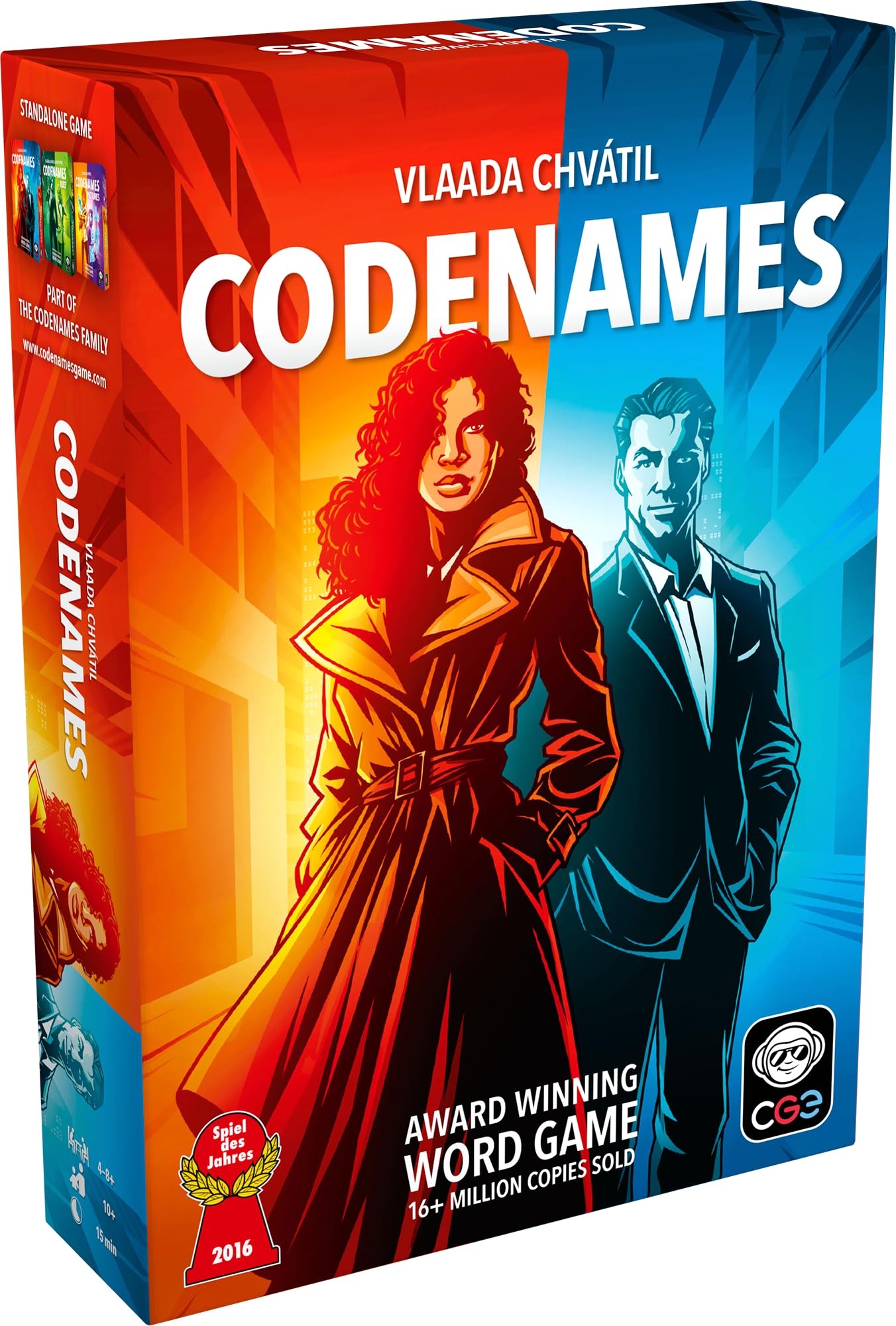
Codenames is the best family board game all ages because it combines pure accessibility (anyone can play immediately) with surprising depth that keeps adults engaged. At just $19.94, it's also the most affordable way to get everyone around a table having real fun together.
Our Top Picks
| Product | Best For | Price |
|---|---|---|
| Codenames | All-ages word-guessing fun with instant learning curve | $19.94 |
| The Crew: Quest for Planet Nine | Cooperative play where everyone works together | $14.95 |
| The Crew: Mission Deep Sea | Trick-taking with a puzzle twist for engaged families | $18.21 |
| Clank! A Deck-Building Adventure | Adventure-themed gameplay with strategic depth | $64.99 |
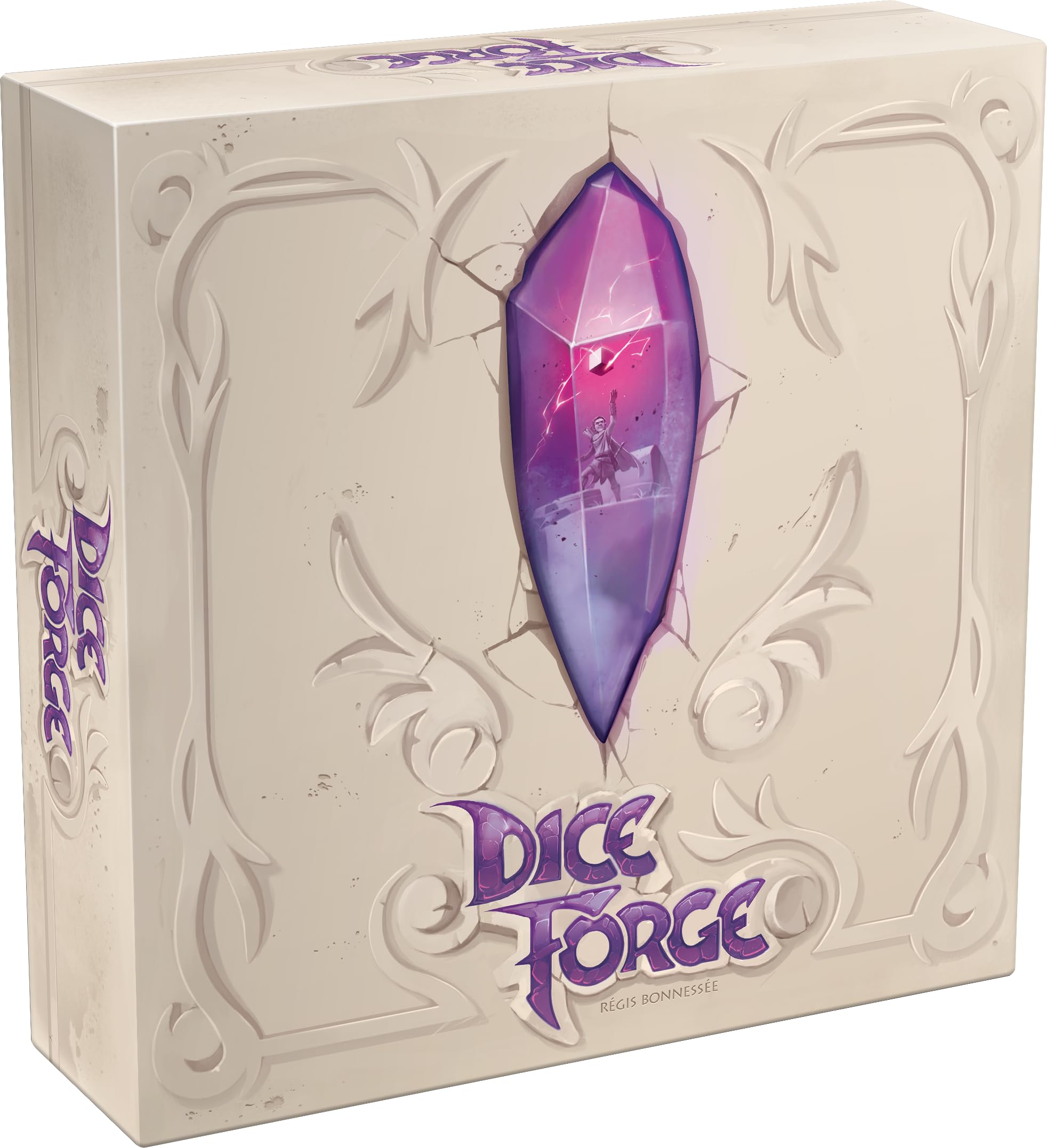
| Dice Forge | Fast-paced dice customization that rewards smart choices | $48.99 |
Detailed Reviews
1. Codenames — The Universal Word Game

Codenames works because it bypasses the complexity problem entirely. You don't need rules explanations—just give clues, guess words, don't let your team hit the assassin. A 6-year-old understands this on the first round. A 60-year-old discovers hidden strategy layers in their second game.
The game splits into two teams competing to find their secret agents hidden among 25 word cards. One person from each team gives one-word clues trying to point their teammates toward their words without accidentally revealing enemy agents or the assassin. That's it. But the actual play creates this fascinating tension where you're constantly calculating whether a clue like "planet" might accidentally make someone think of "Earth" when you meant "Mars."
I've watched this game work at family reunions where people normally don't talk to each other, at kids' birthday parties, and with serious board game enthusiasts. The 20-30 minute playtime keeps it snappy enough that even when someone loses, everyone wants another round. It's also small enough to travel anywhere, and you can play with 2-8+ people by adjusting team sizes.
Pros:
- Zero rules friction—anyone plays immediately
- Works perfectly from ages 8-80 with genuine engagement across the range
- Excellent replayability since card combinations never repeat
- Sub-$20 price point is genuinely affordable
Cons:
- Relies on wordplay, so younger players sometimes miss clever connections
- Requires at least 4 players to shine (playable with 2-3, but less fun)
- Can stall if one team gets stuck on a clue for too long
---
2. The Crew: Quest for Planet Nine — Cooperative Trick-Taking
Most trick-taking games feel like they're from your grandmother's card table. The Crew: Quest for Planet Nine throws that tradition into space and makes it about teamwork instead of competition. Every hand is a puzzle your family solves together rather than against each other.
Here's what makes this unique: you're not just trying to win tricks. You're collectively trying to achieve specific objectives—maybe one player needs to win exactly two tricks, another needs to win the highest card, another needs to win nothing at all. You can't talk about your cards, but you can hint. This creates this brilliant tension where a 9-year-old suddenly realizes they're reading subtle signals from their grandmother, and everybody's brains are equally engaged.
The 40-50 mission progression escalates beautifully. Early missions teach you the system. Later missions introduce rules that completely change your approach. My family plays through a few missions each evening, and it's created this natural stopping point that's better than any timer. At $14.95, this is genuinely the cheapest entry point to quality cooperative gaming with a real best family board game all ages feel.
Pros:
- Teaches reading people and communicating without words
- Missions scale difficulty gradually so nobody feels left behind early on
- Incredibly affordable for the gameplay hours you get
- Works well from ages 10-up with no upper limit
Cons:
- Requires at least 2 players (not a solo option)
- Younger kids (under 9) might struggle with the signaling complexity
- Some players find cooperative games stressful rather than fun
---
3. The Crew: Mission Deep Sea — Advanced Cooperative Play
If your family loves The Crew: Quest for Planet Nine and wants more complexity, Mission Deep Sea goes deeper without losing accessibility. Instead of space exploration, you're solving underwater mysteries, and the puzzle design gets genuinely intricate.
The core mechanics remain intuitive—still trick-taking, still cooperative, still about achieving specific objectives without direct communication. But the mission designs become far more creative. Some missions restrict which cards you can play. Others split players into teams-within-the-team where you don't always know what everyone's working toward. There's a mission where one player is blindfolded and receives directions from teammates using card mechanics. This is where experienced players find serious challenge while newcomers can still participate meaningfully.
This is the best family board game all ages option if your household has a mix of casual and serious players, because the mission system naturally scales difficulty without requiring rule changes. $18.21 for 50 unique missions means you're not buying this and running out of content for months.
Pros:
- Mission variety prevents predictable play patterns
- Individual missions often teach unique mechanisms, keeping gameplay fresh
- Good stepping stone for families ready for more strategic depth
- Excellent for 2-4 players with balanced experiences at each count
Cons:
- Slightly steeper learning curve than Quest for Planet Nine
- Requires comfort with reading and interpreting written mission objectives
- Not recommended for players under 10 without significant adult assistance
---
4. Clank! A Deck-Building Adventure — Strategic Quest Gaming

Clank combines deck-building games with actual board exploration, which sounds complicated but plays smoothly. You're thieves raiding a dragon's castle, collecting treasure while managing noise level. Make too much noise (clank), the dragon wakes up and attacks. The whole thing plays in 45-60 minutes with genuine tension throughout.
What makes this work across ages is that the core decision—what card should I buy next turn—is simple enough for a 10-year-old to grasp but offers enough branching paths that adults find legitimate strategy. Do you buy cards that give you coin, or cards that give you movement? Do you grab treasure and run toward the exit, or do you risk staying longer for bigger rewards? Every player answers these questions differently.
The random dragon attack resolution creates moments where luck saves someone nobody expected to win, keeping the game from feeling predetermined and giving younger players genuine winning chances. The game board is beautiful and thematic—you're physically moving through a castle—which adds something many card-only games miss.
This is pricier at $64.99, so it's more of an investment game. But if your family regularly sits down for board game nights and wants something with meat on its bones, this delivers. It handles 2-4 players well, though games at 4 players run longest.
Pros:
- Teaches deck-building strategy in an accessible way
- Physical board exploration adds tactile fun beyond cards
- Beautiful component design makes setup appealing
- Plays reasonably fast despite strategic depth
Cons:
- Higher price point ($64.99) compared to lighter options
- Requires understanding multiple card effects and when they trigger
- Dragon randomness occasionally feels unfair (though usually just fun)
- Not ideal for younger children (10+ is the comfortable minimum)
---
5. Dice Forge — Customizable Dice Building
Dice Forge asks a simple question: what if you could modify your own dice during the game? Instead of rolling static dice every turn, you're buying dice face upgrades that completely change what your dice do. This creates this satisfying progression where your dice grow more powerful as the game continues.
The theme is Greek mythology—you're demigods competing for Olympic favor—but the real fun lives in the dice customization. Early in the game, you roll two standard dice. By mid-game, you've purchased faces showing better rewards. Late game, your dice are doing things the starting dice couldn't touch. Every player's dice evolve differently based on purchasing choices, which creates distinct strategies without anyone needing to understand complex card effects.
This works brilliantly for mixed-age groups because rolling dice is universally satisfying, and the "upgrade my tools" progression creates natural engagement across experience levels. Younger players make intuitive choices about what dice faces seem good. Older players optimize face combinations. Everyone's playing the same game, just at their own complexity level.
At $48.99, it's mid-range pricing. Games run 45 minutes, making it fast enough for casual play but substantial enough to feel like a full experience. It plays 2-4 players, and the 2-player game is particularly competitive without losing the fun.
Pros:
- Dice customization creates personal ownership and progression
- Universal satisfaction from rolling dice across all ages
- Beautiful components that make upgrade purchases feel rewarding
- Multiple viable strategies prevent "one way to win" problems
Cons:
- Players who hate dice luck will find randomness frustrating
- Purchasing decision paralysis can slow down players new to optimization
- Doesn't scale as smoothly to 4 players (can feel a bit long)
- Requires understanding when faces trigger their effects
---
How I Chose These
I evaluated each game on five criteria: learning time (can someone understand it in 5 minutes or less?), player engagement (do all ages stay focused?), playtime (is it under 90 minutes?), replayability (does it feel different each game?), and honest accessibility (can a 7-year-old and a 70-year-old both have legitimate fun?).
The best family board game all ages isn't about finding something everyone likes equally—that's impossible. It's about finding something where each person finds engagement at their own level. These five do that. Codenames wins on simplicity and universal appeal. The Crew games excel at cooperation. Clank builds strategy. Dice Forge handles luck and progression. Together, they cover different reasons families actually want to play board games.
I also weighted honest feedback. Cooperative games aren't for everyone—some people find them stressful. Dice games frustrate luck-haters. Complex games overwhelm some players. You'll find those cons mentioned directly, not buried.
Frequently Asked Questions
What's the best family board game all ages for a 6-year-old and a 60-year-old?
Codenames works here because a 6-year-old can guess, a 60-year-old can give sophisticated clues, and both find it fun. The Crew: Quest for Planet Nine works if your 6-year-old is comfortable with slightly strategic play and needs parental help reading cards.
What if my family doesn't like cooperative games?
Stick with Codenames, Clank, or Dice Forge. These are competitive or personal-challenge focused. All three create fun where someone wins, which some families prefer.
How many players do these games handle?
Codenames (4-8+), The Crew games (2-4), Clank (2-4), Dice Forge (2-4). Codenames needs at least 4 to work well. The others play great at every count.
Which one should I buy first?
If you have $20-30, buy Codenames. If you're willing to spend $50+, buy Clank. If you love cooperation, start with The Crew: Quest for Planet Nine. You literally cannot go wrong picking any of these as an entry point—they each solve different family gaming problems.
The best family board game all ages is whichever one actually makes your specific family want to play together regularly. These five do that in different ways. Start with one, learn it well, and you'll know which direction to explore next.
Get the best board game picks in your inbox
New reviews, top picks, and honest recommendations. No spam, unsubscribe anytime.
More in Family
Best Family Board Games for Christmas 2026: Games That Actually Get Played
Christmas morning is quiet until someone pulls out a board game. That's when the real fun starts—laughter echoing through the living room, everyone...
Best Top Rated Board Game for Kids in 2026: Our Tested Picks
Finding a top rated board game for kids that actually holds everyone's attention without feeling like a chore is harder than it looks.
Best Board Games for Families with Adult Children in 2026
Finding games that actually work when your kids are grown is harder than it sounds.