By Jamie Quinn · Updated April 12, 2026
Best Family Board Game for 3 Players in 2026: Our Top Picks


Best Family Board Game for 3 Players in 2026: Our Top Picks
Finding the right board game for three players is trickier than it sounds. Most games either feel designed for four people with one person left out, or they're so heavy that nobody has fun. I've spent the last few years testing what actually works when you've got exactly three people around the table, and I want to share the games that genuinely hit the sweet spot.
Quick Answer
The Crew: Quest for Planet Nine is the best family board game for 3 players because it's specifically designed for your player count, requires zero setup time, and creates genuine cooperation without anyone getting eliminated. At $14.95, it's also the most affordable option on this list.
Our Top Picks
| Product | Best For | Price |
|---|---|---|
| The Crew: Quest for Planet Nine | Quick cooperative fun, minimal setup | $14.95 |
| Codenames | Party atmosphere, word puzzle lovers | $19.94 |
| The Crew: Mission Deep Sea | Deeper cooperative challenge | $18.21 |
| Clank! A Deck-Building Adventure | Adventure fantasy theme, solo-competitive balance | $64.99 |
| Dice Forge | Engine building, beautiful components | $48.99 |
Detailed Reviews
1. The Crew: Quest for Planet Nine — The Most 3-Player Friendly
This is the game I recommend first when someone asks about the best family board game for 3 players. The Crew: Quest for Planet Nine is a cooperative trick-taking game that's specifically designed to work beautifully at three players. Each round, you're trying to collect certain planets without talking to each other or seeing each other's hands. The twist is that you have to communicate through a clever bidding system where your bid tells other players information about what you're holding.
What makes this special for three players is that the game actually wants you to work together. Unlike games that feel like they're tacked on to accommodate three people, The Crew: Quest for Planet Nine uses three-player symmetry to create its most interesting challenge. A typical game takes 15 minutes once everyone understands the rules. There's no random elimination—everyone plays the entire time. Setup is literally just shuffling a deck. If your family enjoys games that feel like solving a puzzle together, this is genuinely your best bet.
The difficulty curve is built into the game itself. Earlier missions teach you how the game works, and later ones get legitimately tricky. You can play through the entire campaign in a few sessions, or just grab random missions when you want a quick game.
Pros:
- Specifically optimized for 3 players (not adapted from a larger game)
- Takes 15-20 minutes per game, perfect for busy families
- No player elimination—everyone stays engaged
- Campaign structure keeps things fresh across multiple plays
- Incredibly affordable at under $15
Cons:
- The trick-taking mechanism can feel confusing in the first mission or two
- Once you've beaten the campaign, replayability drops (though missions are randomizable)
- Not good for people who hate silent communication games
---
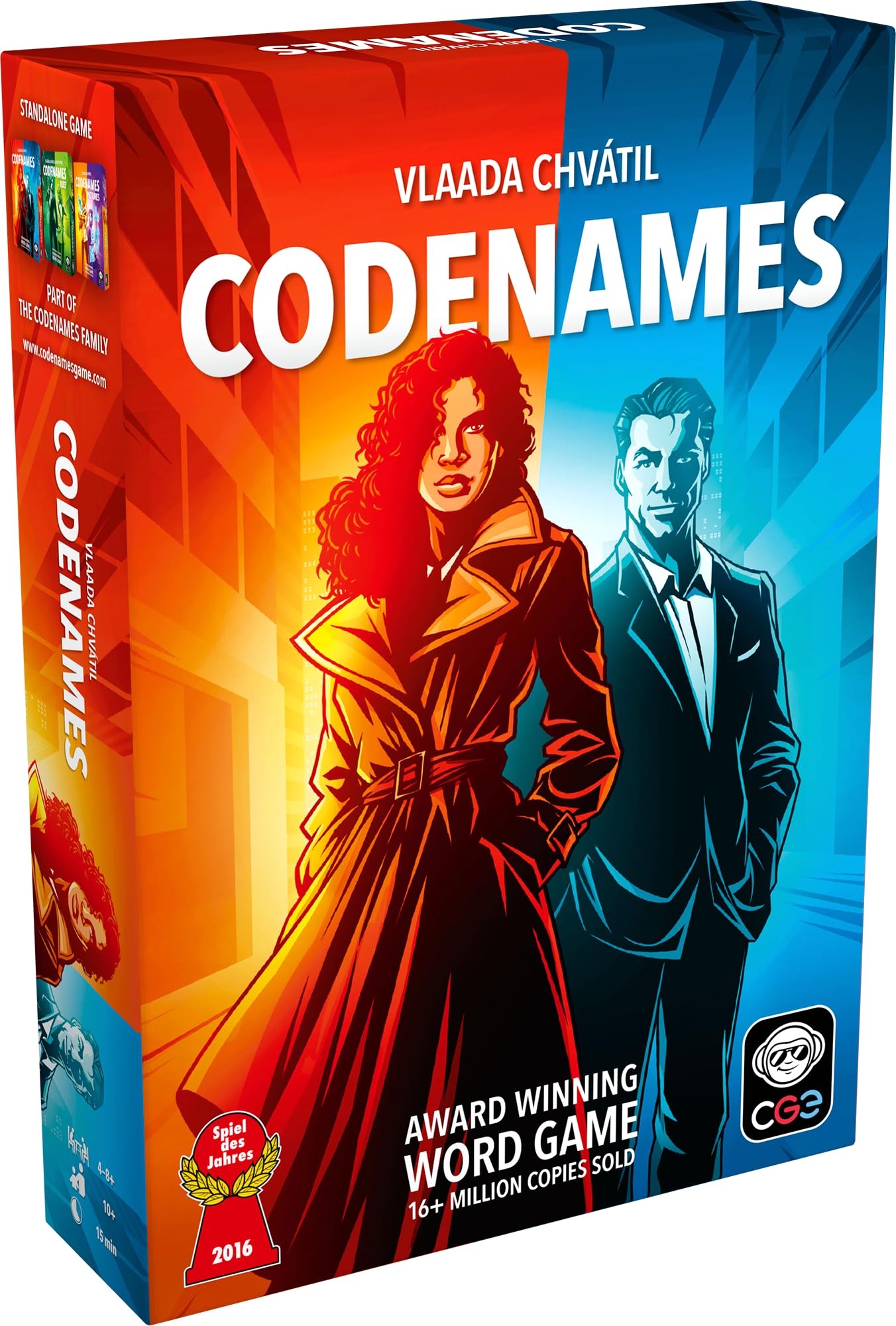
2. Codenames — The Party Game That Actually Works at 3

Codenames is a word association game where two teams take turns giving one-word clues to help their teammates guess secret agents hidden among 25 words on the table. At three players, you have a few options: one person can be the clue-giver while the other two guess, you can split into teams with one person doing double duty, or you can play a special three-player variant that works surprisingly well.
I've used Codenames with families for years. It's genuinely fun whether you're all trying to guess together or playing competitively. The best family board game for 3 players should be accessible to everyone, and Codenames clears that bar completely. A 6-year-old can sit down and understand the basic concept, while a teenager can get clever with their clues. Games take about 15 minutes.
What makes this work at three players is that Codenames doesn't care about perfect balance. You're looking for that moment when someone says a clue and everyone simultaneously gets it—that's the reward. The game is cheap enough that you might want to grab an expansion set too (the box includes two versions—Original and Pictures—so you technically get two games).
Pros:
- Works beautifully at 3 players with minimal rule tweaking
- No player elimination—nobody sits out
- Genuinely funny moments as people explain their reasoning
- Low cost and compact box
- Appeals to a wide age range
Cons:
- Loses some depth compared to 4+ players
- Requires good communication skills (can exclude younger or quieter family members)
- Gets repetitive if you play 10+ games in a row with the same word sets
- The Pictures variant is less flexible with smaller groups
---
3. The Crew: Mission Deep Sea — The Cooperative Challenge
The Crew: Mission Deep Sea is the deeper, more complex cousin of Quest for Planet Nine. You're still playing trick-taking games with silent communication, but now you're diving deeper into the ocean, collecting treasures, and solving increasingly difficult puzzles. If The Crew: Quest for Planet Nine felt a bit easy after your second playthrough, this is the next step up.
The theme—exploring the ocean and finding treasure—gives the mission structure real flavor. Instead of abstract planets, you're actually feeling like you're on an expedition. The best family board game for 3 players should feel like an adventure, and this delivers that. Mission Deep Sea has more missions (20 instead of 50, but they're substantially more complex), and they genuinely feel like a progression toward something bigger.
This is trickier than the first Crew game. Expect some failures while you're learning. The silence requirement is stricter here, making communication much more challenging. If your family liked The Crew: Quest for Planet Nine and wanted something with more meat on its bones, this is the obvious choice. Games run 20-30 minutes depending on how confident you feel.
Pros:
- More challenging than Quest for Planet Nine
- Ocean exploration theme feels cohesive and immersive
- Still perfectly balanced for 3 players
- Campaign is substantial but not overwhelming
- Teaches you to read subtle signals from other players
Cons:
- Significantly harder—not for families that want pure relaxation
- Missions can feel frustrating if your table doesn't click with the silent communication idea
- Less replayable than the first game once you know the optimal solutions
- Slightly longer setup and teach time
---
4. Clank! A Deck-Building Adventure — The Adventure Game

Clank! A Deck-Building Adventure combines deck-building (where you gradually improve your hand of cards) with pushing-your-luck mechanics (deciding when to leave a dungeon before the dragon catches you). You're thieves raiding a dragon's lair, and the tension comes from knowing exactly when to escape with your treasure.
This is the first game on this list that's genuinely competitive rather than cooperative. Three players actually work well here because everyone's racing toward the exit simultaneously, and nobody has time to gang up on a single person. The deck-building element means your game gets stronger throughout, and you feel like you're actually improving rather than just getting lucky.
The best family board game for 3 players doesn't always have to be cooperative—sometimes families want a little competitive energy. Clank! delivers that without creating tension or hard feelings. The dragon's behavior is random, so everyone's got a fair shake. Setup takes about 5 minutes, and games run 45-60 minutes depending on how much people optimize their decks.
Fair warning: this is more expensive than the other picks, and it does require reading some rules complexity. The teaching time is probably 10-15 minutes. But families that enjoy strategy and don't mind some competitive play will love it.
Pros:
- Genuinely exciting push-your-luck decisions (do I grab that treasure and risk the dragon?)
- Deck-building gives you a sense of progression and growth
- Three players create perfect competitive balance
- Adventure theme is fun and thematic
- Random dragon behavior keeps things unpredictable
Cons:
- Most expensive on this list at $64.99
- Takes 45-60 minutes, which is too long if you want something quick
- Luck plays a meaningful role—no amount of strategy guarantees a win
- New players might feel overwhelmed by the deck-building aspect
- Not cooperative, so it's not ideal if your family prefers working together
---
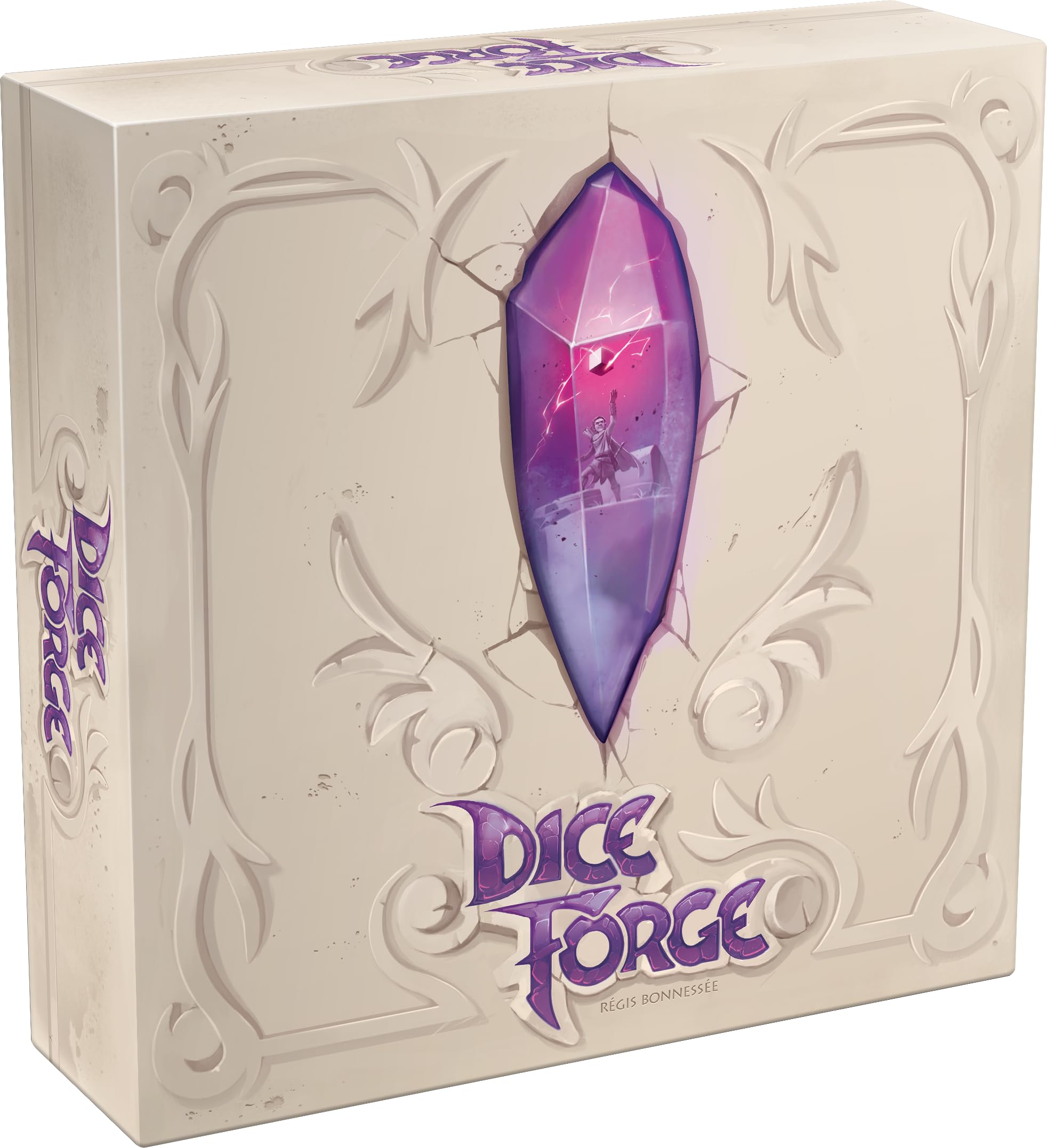
5. Dice Forge — Engine Building with Gorgeous Dice
Dice Forge is a game about collecting resources by rolling dice and upgrading those dice throughout the game. Instead of drawing cards, you're physically modifying your dice by clicking custom faces into them. It sounds gimmicky, but it genuinely feels satisfying. Every few turns, you feel like your engine is getting stronger as your dice start producing better resources.
Three players is actually the ideal count for Dice Forge. The game scales perfectly, and nobody feels left behind. The component quality is exceptional—these dice are chunky, satisfying to roll, and customizing them is genuinely fun. The best family board game for 3 players should feel good to hold and manipulate, and this absolutely does.
The strategy is accessible but not trivial. You're not planning 15 moves ahead, but you do need to think about which dice upgrades will work best with your strategy. Games run about 40-45 minutes once everyone knows what they're doing. The aesthetic is beautiful—it's got this fantasy/mythology vibe that appeals to a lot of families.
This is pricier than most picks on this list ($48.99), but the components justify it. If your family appreciates nice game pieces and doesn't mind spending a bit more, this is absolutely worth considering.
Pros:
- Unique dice-customization mechanic is genuinely satisfying
- Three-player balance is excellent
- Beautiful component quality and visual presentation
- Engine-building feels rewarding and progressive
- 40-45 minute playtime is manageable for families
Cons:
- $48.99 is a meaningful investment
- The dice customization is fun but doesn't add mechanical depth (it's mostly cosmetic)
- Can feel a bit random—good rolls matter more than strategy
- Setup requires organizing a lot of small pieces
- Not collaborative, so teams-oriented families might prefer other picks
---
How I Chose These
Finding the best family board game for 3 players means looking at a few specific criteria. First, I filtered for games that actually work at three players—meaning they're either designed for it or they adapt beautifully without feeling awkward. Second, I considered variety: you want options depending on your mood (quick vs. long, cooperative vs. competitive, simple vs. strategic). Third, I weighted toward games that families have actually played and recommended to me, not theoretical picks.
I specifically looked for games where three players isn't an afterthought. Games designed for 2-4 players sometimes feel like three is the awkward middle ground. The best picks here either shine at three or work equally well at any count. I also considered setup time, teaching time, and how much luck versus strategy matters. A family game should be accessible but not feel like pure randomness.
Price mattered too, but not as a simple "cheaper is better" metric. Some families are willing to spend more on a game they'll play 100 times. Others want something under $20. This list includes both options so you can choose what fits your budget and commitment level.
Frequently Asked Questions
What's the difference between The Crew: Quest for Planet Nine and The Crew: Mission Deep Sea?
Quest for Planet Nine is simpler, quicker, and has an easier learning curve. Mission Deep Sea is more complex, takes longer, and is significantly more challenging. Pick Quest for Planet Nine if you want something casual that you can teach in under 5 minutes. Pick Mission Deep Sea if you want a deeper puzzle that'll take a few missions to fully understand.
Can these games work at 2 or 4 players, or are they stuck at 3?
All of these work at multiple player counts. The Crew games work at 2-5 players. Codenames works best at 4+ but absolutely functions at 3. Clank! plays 2-4. Dice Forge plays 2-4. None of them are locked into exactly three players—they're just really good at three.
Which of these is best for kids under 10?
Codenames is your answer. The word-guessing mechanic is intuitive, the rules are simple, and younger kids can participate fully. The Crew: Quest for Planet Nine also works if your kids are comfortable with card games and basic number understanding.
If I can only buy one game, which should it be?
If you want something quick and cooperative that teaches in under 5 minutes: The Crew: Quest for Planet Nine ($14.95). If you want more longevity and variety: Clank! A Deck-Building Adventure or Dice Forge. If you want pure fun with minimal rules: Codenames.
Do I need the expansions for any of these?
No. All of these games stand alone perfectly. The expansions (if they exist) add options, but they're never necessary.
---
The best family board game for 3 players ultimately depends on whether you want cooperation or competition, how much complexity you can handle, and how much you're willing to spend. If you're starting from zero, grab The Crew: Quest for Planet Nine—it's affordable, immediately playable, and genuinely designed with three people in mind. If you've got a bigger budget and want something that'll last through dozens of plays, Clank! A Deck-Building Adventure or Dice Forge are worth the investment. Either way, you've got solid options that'll bring your family together without anyone feeling left out.
Get the best board game picks in your inbox
New reviews, top picks, and honest recommendations. No spam, unsubscribe anytime.
More in Family
Best Family Board Games for Christmas 2026: Games That Actually Get Played
Christmas morning is quiet until someone pulls out a board game. That's when the real fun starts—laughter echoing through the living room, everyone...
Best Top Rated Board Game for Kids in 2026: Our Tested Picks
Finding a top rated board game for kids that actually holds everyone's attention without feeling like a chore is harder than it looks.
Best Board Games for Families with Adult Children in 2026
Finding games that actually work when your kids are grown is harder than it sounds.