By Jamie Quinn · Updated April 12, 2026
Best Family Board Games for Teenagers in 2026



Best Family Board Games for Teenagers in 2026
Finding a board game that actually keeps teenagers engaged—without feeling babyish or impossibly complicated—is harder than it sounds. Most family games either talk down to teens or require a PhD to understand the rulebook. The five games I'm featuring strike that sweet spot: they're genuinely fun for adults, challenging enough to hold a teenager's attention, and designed so families can actually finish a game in one sitting without someone rage-quitting.
Quick Answer
The Crew: Quest for Planet Nine is the best family board game for teenagers if you want something affordable, quick to teach, and genuinely cooperative. At just $14.95, it eliminates the competitive tension that derails many family game nights while still delivering real brain-burning challenges. Most teenagers find the puzzle-like missions addictive, and it plays in under an hour.
Our Top Picks
| Product | Best For | Price |
|---|---|---|
| The Crew: Quest for Planet Nine | Budget-conscious families wanting cooperation | $14.95 |
| Codenames | Large groups and quick party rounds | $19.94 |
| The Crew: Mission Deep Sea | Families who want Crew games with fresh themes | $18.21 |
| Dice Forge | Teens who love strategy and dice manipulation | $48.99 |
| Clank! A Deck-Building Adventure | Adventure-loving families wanting complexity | $64.99 |
Detailed Reviews
1. The Crew: Quest for Planet Nine — Best Value Cooperative Game
This is the game that proves you don't need a $60+ price tag to get your family genuinely engaged. The Crew strips away everything except the core mechanic: you're playing trick-taking cards together to complete specific mission objectives, but here's the twist—you can't talk strategy openly. Communication is limited to specific signals, which forces teenagers to think critically about what they're telling each other through card play.
The missions escalate brilliantly. Early rounds teach you the system, then the game introduces constraints that make your brain hurt in the best way. One mission might require you to win exactly three tricks in a specific order. Another forbids you from winning the last trick. Parents consistently tell me this is the first game their teenager has willingly played twice in one night.
Setup takes two minutes, teaching takes five, and a full campaign plays in 35-45 minutes. It works with 2-5 players, though it shines with 3-4. The production is minimal—just cards and a small board—but that actually makes it feel like a puzzle game rather than a flashy toy.
Pros:
- Incredibly affordable for the engagement you get
- Teaches genuine strategic thinking without being condescending
- Fast enough that teenagers won't feel trapped in a commitment
- Cooperative format removes the "sore loser" problem
Cons:
- The limited communication might frustrate players who want to chat freely
- If your family prefers competitive games, the cooperative format won't appeal
- Component quality is basic (cards feel thin compared to premium games)
---
2. Codenames — Best for Groups and Quick Rounds

Codenames solves the biggest problem with family game nights: not everyone has the same attention span. This works with anywhere from 4-8+ players (with teams of 2+), it plays in 15-20 minutes, and it's social enough that even the teenager who "doesn't like board games" will actually participate.
The concept is straightforward: one teammate gives one-word clues to help their team identify code words on a grid, while the other team does the same. The catch is you're racing to find your 25 agents before the other team finds theirs—and if you accidentally identify an innocent bystander or (worst case) the assassin, you lose. What makes this work for teenagers is that it rewards lateral thinking and cultural knowledge. The best clues are clever, not obvious.
I've watched teenagers engage in this game because the clues matter—you're not just lucky or lucky, you're actually communicating through language. Quick rounds mean you can play 3-4 games in succession without the experience feeling like a time commitment. It's the definition of a best family board game for teenagers who have short patience for lengthy rule explanations.
Pros:
- Scales to almost any group size
- Genuinely funny—expect laughter and groaning at bad clues
- Teaches verbal communication and creative thinking
- Each game feels fresh because the words change every time
Cons:
- Requires at least 4 players to be fun (with 3 it feels forced)
- Works better when players are at similar vocabulary levels
- The game ends when one team wins, so lower-energy players might feel rushed
---
3. The Crew: Mission Deep Sea — Crew with a Fresh Theme
If your family loves The Crew: Quest for Planet Nine but wants variety, Mission Deep Sea is the sequel that actually justifies buying both. Same core mechanic—cooperative trick-taking with restricted communication—but the theme shifts from space exploration to deep-sea diving, and the mission objectives become even more intricate.
The new missions introduce concepts like "you must win these specific tricks" combined with "but only the player holding the pearl can lead," creating puzzles that require real collaboration. Teenagers with analytical minds will find these legitimately challenging. The deep-sea theme also works better for some families; there's something about exploring an underwater world that captures imagination differently than space.
Play time is slightly longer than Quest for Planet Nine (40-50 minutes), and it plays with 2-5 players. If you already own Quest, you might wonder if Mission Deep Sea is necessary. Here's my honest take: if your family plays Crew regularly and wants harder challenges, buy it. If you're on a budget, one Crew game is enough—they share the same foundation.
Pros:
- Fresh missions prevent repetition if you already own Quest for Planet Nine
- Harder difficulty spikes keep experienced players engaged
- Same elegant rules with deeper strategic layers
- Slightly better production quality than the first game
Cons:
- You need to understand the base Crew mechanics first
- Doesn't justify the purchase if you're not already playing cooperative games
- Learning new missions takes longer than teaching Quest for the first time
---
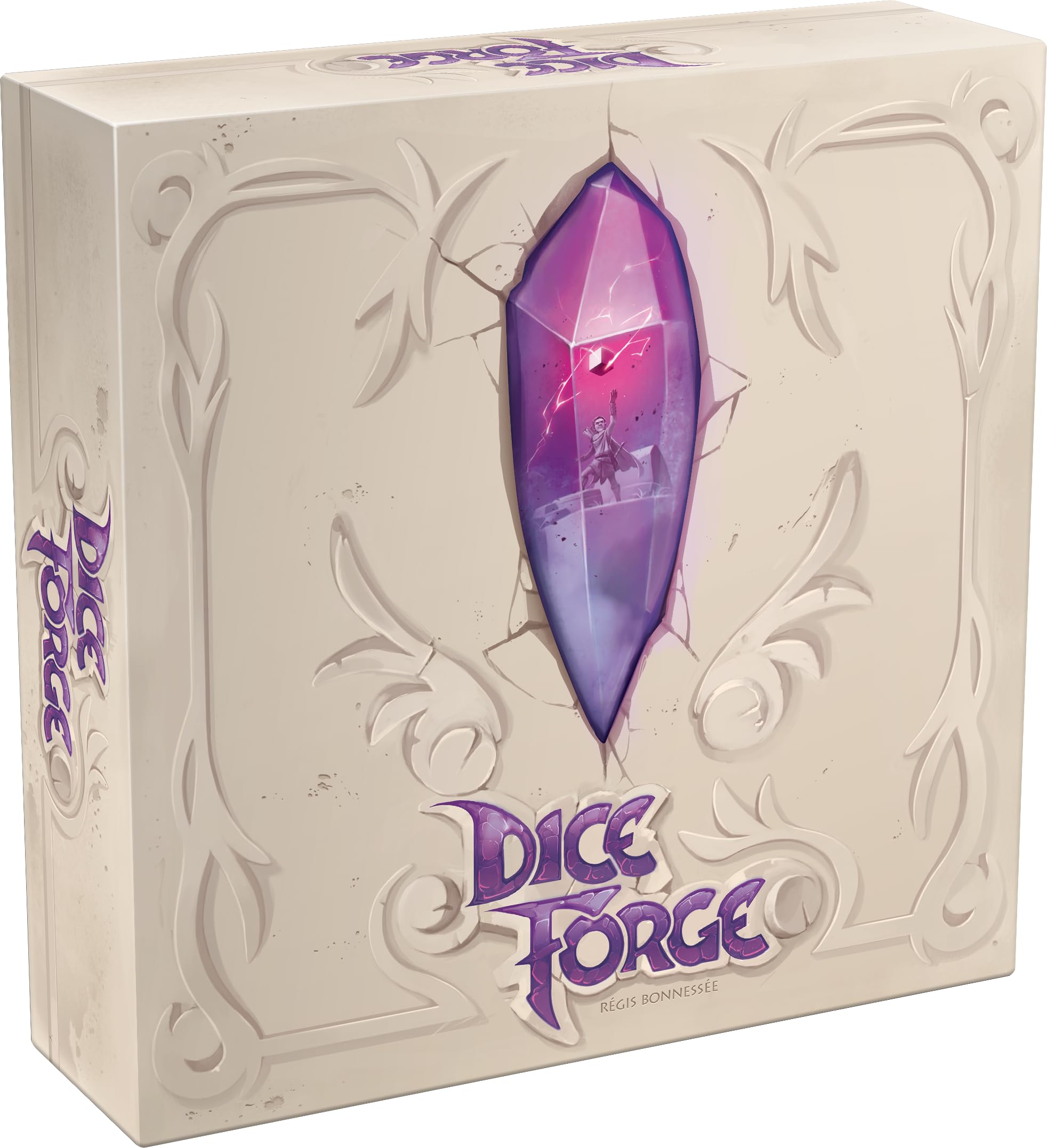
4. Dice Forge — Strategic Dice-Building for Ambitious Teens
Dice Forge isn't a traditional deck-building game—it's a dice-building game, which means you're customizing the actual dice you roll throughout the game. This appeals to teenagers who think mechanics are cool and want to optimize their strategy.
Here's how it works: you're rolling your custom dice to gather resources (coins, gems, shards), then spending those resources to upgrade your dice by adding better faces, or to purchase mythological cards that give special abilities. The genius part is that every decision matters. When you upgrade a die, you're changing what you can roll for the rest of the game. Early upgrades feel risky because you're committing to a strategy, but that's also what makes the game compelling for strategy-minded teenagers.
The gameplay loop is tight: roll dice, spend resources, upgrade, repeat. A game takes 45-60 minutes with 2-4 players, and there's enough player interaction (you're all competing for the same limited upgrades) that it never feels like everyone's playing solitaire. The art is gorgeous—Greek mythology rendered beautifully—which matters more to teenagers than we sometimes admit.
Pros:
- The dice customization system is genuinely unique
- Beautiful components and art style appeal to older teens
- Enough strategic depth that players care about their decisions
- Scales well from 2-4 players
Cons:
- Teaches in 10 minutes, but new players will be making suboptimal choices their first game
- The luck element (you're still rolling dice) frustrates hardcore strategy players
- At $48.99, it's not cheap for something that plays relatively quickly
- The rulebook explanation can feel confusing until you play your first round
---
5. Clank! A Deck-Building Adventure — Best for Adventure-Loving Families

This is the best family board game for teenagers who want a narrative experience—you're literally a thief stealing treasure from a dragon-infested castle, and the physical board representation makes every decision feel consequential. Unlike abstract strategy games, Clank! feels like you're adventuring together.
The deck-building mechanic works like this: you start with weak cards, buy better ones from a marketplace, and use your hand to move through a dungeon, collect treasure, and escape before the dragon catches you. The pressure is real—if you stay too long hoarding treasure, the dragon (controlled by a simple AI system) will hunt you down. If you bail early, you miss out on riches. This push-your-luck element creates genuine tension that hooks teenagers.
What makes this work for families is that it plays 2-4 people in about 60 minutes, and the competitive element doesn't feel mean-spirited. You're all facing the same dragon threat, even though only one person will win. Setup takes longer than Codenames or Crew (maybe 10 minutes), and the rulebook is thicker, but that complexity delivers genuine depth. Experienced players will develop strategies, but new players can still surprise everyone by making bold moves.
Pros:
- Narrative structure keeps engagement high across the full 60 minutes
- Deck-building gives you tangible progress and customization
- Beautiful board and components feel premium
- Plays differently each game thanks to random market cards and dungeon layout
Cons:
- At $64.99, this is a significant investment
- Takes 10+ minutes to teach if your family has never deck-built before
- The dragon AI is simple, so once you understand the pattern, tension decreases
- Setup and cleanup time can feel like a commitment for a weeknight game
---
How I Chose These
I evaluated each game on criteria that matter specifically for teenagers: Can it be taught without parents talking down to them? Does it respect their intelligence without requiring three readings of dense rulebooks? Will they actually want to play again? I also weighted affordability heavily—a $15 game that gets played 20 times beats a $60 game that collects dust. I picked games with play times between 15-60 minutes because anything longer fights against teen attention spans for "family time." Each game needed to work with 3-4 players (the typical family size) but also flex to larger groups. Finally, I included a mix of cooperative and competitive games, quick social games and strategic deep dives, because different families have different needs. Every game here has been actually played with teenagers, not just evaluated on paper.
Frequently Asked Questions
What's the difference between The Crew games, and do I need both?
Both are cooperative trick-taking games with restricted communication. Quest for Planet Nine is the better starting point (cheaper, slightly simpler missions). Mission Deep Sea has harder puzzles and a deep-sea theme. You don't need both unless your family plays regularly and wants more challenges—one is plenty.
Are these games actually fun for 13-year-olds and 17-year-olds at the same time?
Yes, but differently. Younger teens often enjoy the social and competitive elements more (Codenames is their jam), while older teens tend to prefer the strategic depth (Dice Forge, Clank!). The Crew games work across the range because cooperation removes the ego component that younger teens sometimes struggle with in competitive play.
How do these compare to video games in terms of engagement?
Honestly? Better at creating genuine family interaction because you're talking and reacting in real-time. But they require buy-in—if someone shows up determined to be bored, they will be. Frame it as something fun you're all trying together, not as punishment for screen time.
Which one should I buy first if I can only afford one?
The Crew: Quest for Planet Nine. At $14.95, it's affordable enough that it's not a risky purchase, and it genuinely works for families. If that game gets played 10+ times, then you know your family likes board gaming and can invest in something bigger like Clank!
The best family board game for teenagers isn't about finding the one "perfect" game—it's about matching your family's actual preferences. Start with something affordable and low-stakes, and let your teenagers help choose the next one based on what they actually enjoyed.
Get the best board game picks in your inbox
New reviews, top picks, and honest recommendations. No spam, unsubscribe anytime.
More in Family
The Best Board Games for Kids 5-7 in 2026
Finding the right board game for kids aged 5-7 is trickier than it sounds. You need something engaging enough to hold their attention, simple enough that...
Best Board Games for Families with Young Kids in 2026
Finding a board game that actually keeps young kids engaged without making parents want to pull their hair out is harder than it sounds.
The Best Board Games for Families in 2026
Finding great board games for families that actually keep everyone engaged—without someone flipping the board—is tougher than it looks.