By Jamie Quinn · Updated April 12, 2026
The Best Family Board Games for Teens in 2026




The Best Family Board Games for Teens in 2026
Finding a board game that actually keeps teenagers engaged—without feeling forced or babyish—is surprisingly hard. Most family games skew too young, while hardcore strategy games intimidate newcomers. You need something with real depth that doesn't take 90 minutes to explain, where teens feel like they're playing something genuinely cool rather than a compromise activity.
Quick Answer
Codenames is our top pick for the best family board game for teens. It plays in 15 minutes, works with 4-8 people, requires zero setup beyond shuffling cards, and generates the kind of spontaneous laughter that brings families closer together. Everyone contributes equally, and there's genuine strategy hiding under the simple rules.
Our Top Picks
| Product | Best For | Price |
|---|---|---|
| Codenames | Fast-paced team play, large groups, minimal rules | $19.94 |
| The Crew: Quest for Planet Nine | Cooperative strategy, puzzle-solving, sci-fi theme | $14.95 |
| The Crew: Mission Deep Sea | Trick-taking without competition, teamwork focus | $18.21 |
| Clank! A Deck-Building Adventure | Action-adventure theme, deck building mechanics | $64.99 |
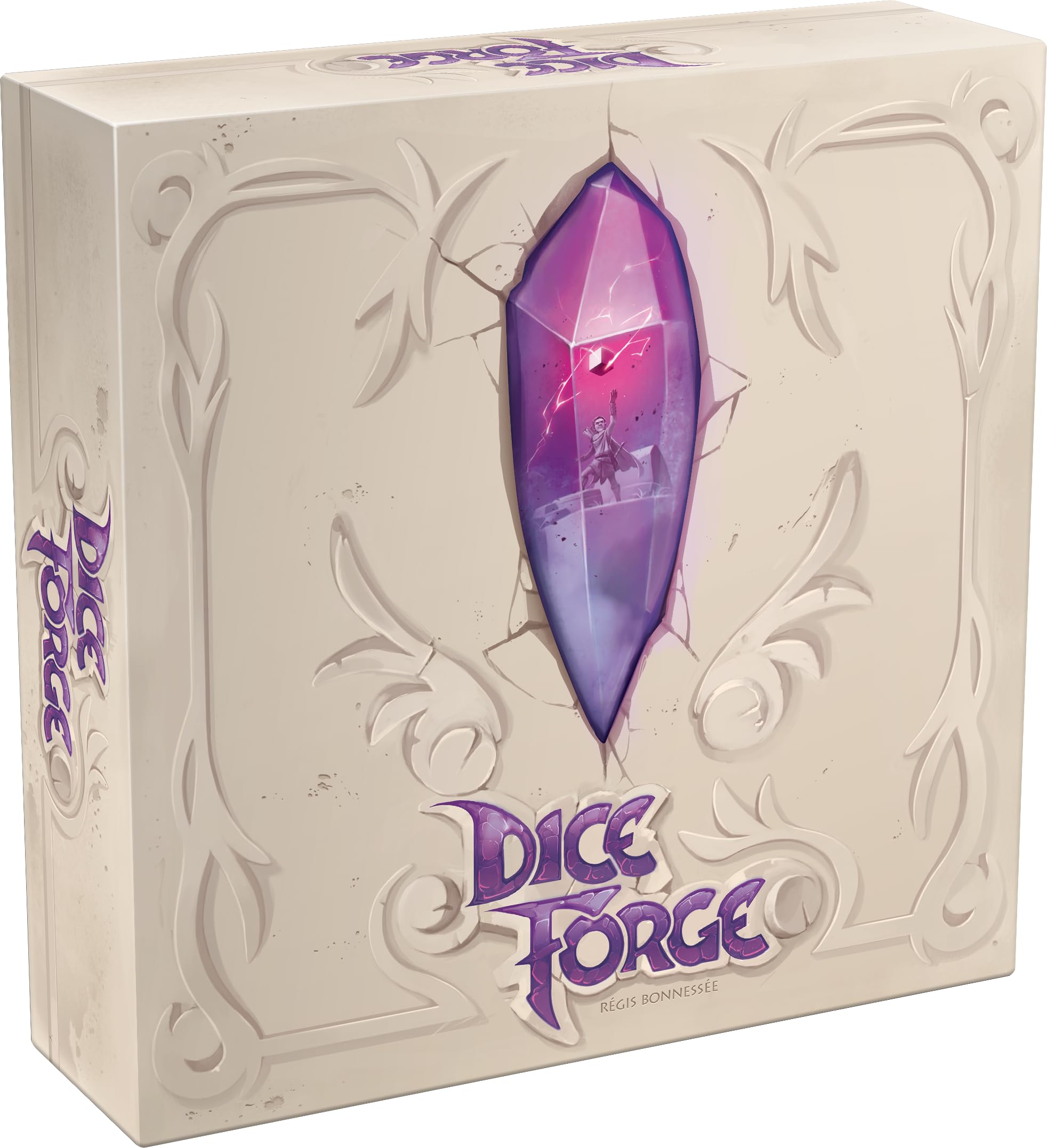
| Dice Forge | Solo progression, satisfying mechanics, light strategy | $48.99 |
Detailed Reviews
1. Codenames — The Social Connector

Codenames deserves its reputation as the best family board game for teens because it does something unusual: it makes communication the entire game. One player from each team gives one-word clues to help teammates identify secret agents on a 5x5 grid. That's it. You're competing to find your agents first, but the real magic happens in the conversations—the groans when someone makes a terrible connection, the triumphant moments when a three-word clue lands perfectly.
Setup takes 30 seconds. Teaching takes two minutes. Playing takes 15 minutes. This matters because teenagers have short windows of interest, and Codenames respects that. You can play back-to-back rounds without fatigue.
What makes it genuinely appealing to teens is the intelligence required. The best clues aren't obvious; they require lateral thinking and understanding how your teammates' minds work. Watching a confident teen struggle to find the perfect word, then watching that word click for their team—that's entertainment value no amount of graphics or theme can replicate. It also works across age gaps. A 14-year-old and a 48-year-old clue-giver can be equally competitive.
The card deck provides variety (every game uses different words), and there are themed versions if your family has specific interests. The downside is that the game lives or dies by your clues. A group that doesn't engage with the wordplay aspect will find it flat. Also, it requires at least 4 people to be genuinely fun—with 3, it feels stripped down.
Pros:
- Incredibly fast to teach and play
- Works with groups from 4-8+ players
- Minimal components, maximum replayability
- Creates genuine moments of connection and laughter
- Inexpensive for what you get
Cons:
- Requires players to engage with creative thinking
- Less fun with only 2-3 people
- Can feel stilted if your family finds wordplay awkward
- Limited theme—it's purely about the mechanic
2. The Crew: Quest for Planet Nine — The Cooperative Puzzle
The Crew: Quest for Planet Nine approaches the best family board game for teens from a completely different angle. This is a cooperative trick-taking game with a 50-mission campaign. You and your family aren't competing—you're working together to complete specific objectives using cards you can't see each other holding.
What stands out is the puzzle design. Each mission has constraints: maybe you need the player with the 2 to win the first trick, or no one can play a card higher than an 8 in round three. The difficulty escalates thoughtfully across the campaign, and missions feel genuinely impossible until you figure out the logic. This is where the best family board games for teens shine—when solving the puzzle together creates that "wait, how do we even do this?" moment of collective problem-solving.
The sci-fi theme wraps around the mechanics nicely, but it's barely present. What matters is the satisfaction of cracking mission 23 after three failed attempts and realizing the solution was hiding in plain sight. Teens appreciate this kind of intellectual challenge disguised as a simple card game.
One catch: the campaign structure means you're playing in sequence, and the rulebook is tightly designed but could confuse new players. You'll benefit from watching a tutorial video before diving in. Also, if your group loves table talk and explaining strategy, The Crew: Quest for Planet Nine restricts communication—you can't discuss what cards you're holding, which feels arbitrary at first but protects the puzzle integrity.
Pros:
- 50 escalating missions mean 50+ hours of content
- Cooperative play removes player elimination
- Pure puzzle satisfaction without luck-heavy mechanics
- Compact and portable
- Incredible value for the price
Cons:
- Limited communication options reduce social dynamics
- Steep learning curve on the rulebook
- Campaign structure means less casual replayability
- Takes 30-40 minutes per mission
- Some groups find trick-taking mechanics boring
3. The Crew: Mission Deep Sea — The Cooperative Evolution
The Crew: Mission Deep Sea is essentially a sequel to Quest for Planet Nine, offering another 50-mission campaign with subtle mechanic changes. If your family falls in love with the first Crew game, this extends that experience significantly. The underwater theme is thinner than the space theme, but again, the theme matters less than the puzzle design.
This is best for families who've already discovered cooperative trick-taking games and want more. The new missions teach different puzzle logic—different constraints, different communication limitations. Some players prefer this version's slightly more intuitive ruleset, while others prefer the original's structure. It's genuinely a matter of taste rather than one being objectively better.
The main question is whether you need both. For a casual family player, one Crew game provides years of content. For families that consume cooperative games at high speed, having both gives you 100 missions to work through. Each game can be purchased independently—you don't need to play Quest first.
Pros:
- Another full 50-mission campaign
- Slightly more intuitive rules than Quest for Planet Nine
- Can be played independently or in addition to the original
- Same exceptional value
- Underwater theme appeals to some families more
Cons:
- Very similar core mechanics to Quest for Planet Nine
- Redundant if you already have the first game
- Mission difficulty scaling isn't dramatically different
- Communication restrictions still apply
- Rulebook could be clearer on edge cases
4. Clank! A Deck-Building Adventure — The Action-Adventure Game

Clank! A Deck-Building Adventure combines deck-building with a physical board game in a way that feels genuinely fresh. You're thieves stealing treasure from a dragon, and you're literally moving across the board while building a better deck each round. The tension comes from a mechanic called "clank"—noise you make—that alerts the dragon. Make too much noise, and the dragon attacks.
This is the best family board game for teens that want something with actual adventure. The theme matters here because it creates urgency. You're not abstractly optimizing a deck; you're racing to grab treasure and escape before the dragon incinerates you. Teens gravitate toward this because it combines traditional strategy with a concrete goal that feels like a story.
The learning curve is moderate. You need to understand deck-building (buying cards to improve your deck), but the game teaches it gradually. The first round or two feel chaotic, then the strategy clicks. Play time runs 60 minutes, which is longer than Codenames but shorter than most competitive strategy games. The board changes each game through modular setup, so replayability is strong.
Clank! A Deck-Building Adventure isn't a best family board game for teens if your group wants pure cooperation—it's competitive. You're racing each other. Some families love that; others find it creates unwanted tension. Also, at $64.99, it's the most expensive game on this list, and production quality matters here. The components—coins, tokens, cards—feel good, which justifies the price. But it's still a significant investment.
Pros:
- Deck-building plus board exploration creates engaging gameplay
- Adventure theme resonates with teens
- Modular board setup means high replayability
- Strong component quality
- Plays 2-4 people
- Sweet spot between complexity and accessibility
Cons:
- 60-minute play time is longer than casual family game sessions
- Competitive structure creates winners and losers
- Deck-building can overwhelm new players
- More expensive than alternatives
- Dragon attack mechanic is somewhat luck-dependent
- Takes longer to teach
5. Dice Forge — The Satisfying Progression Game
Dice Forge is the best family board game for teens who like the feeling of progression. Every turn, you're rolling custom dice—dice that you've literally been modifying throughout the game—to collect resources and forge better dice faces. It's satisfying in a physical sense. Upgrading your dice from "basic" to "spectacular" creates tangible improvement you can see and feel.
The core appeal is elegant: roll your dice, collect resources based on what you rolled, spend those resources to make your dice better, then next turn roll better dice. The feedback loop is tight and rewarding. Teens appreciate this because each turn feels like you're building toward something, not just shuffling numbers around. The theme (mythological forging) is light but thematic enough to make upgrades feel meaningful.
Dice Forge works with 2-4 players and plays in 45 minutes once everyone understands it. Teaching takes about 10 minutes. There's luck involved—you could roll poorly—but deck-building style games always have luck elements. The skill comes in optimizing which dice faces to buy, creating a light strategy layer that engages without overwhelming.
The downside is that it's less dramatic than Clank! or as socially engaging as Codenames. Some groups find the progression mechanic interesting; others find it methodical. Also, the dice are proprietary components, so if you lose them or they get damaged, replacements are harder to find than replacing standard cards. This is a consideration for games in heavy family rotation.
Pros:
- Satisfying upgrade system
- Dice modification creates physical engagement
- Forgiving learning curve
- Plays quickly once understood
- Good balance of luck and strategy
- Beautiful component design
Cons:
- Less interactive than competitive games
- Dice-rolling luck can feel frustrating
- Progression-focused appeal isn't universal
- Proprietary components mean difficult replacement
- Less dramatic than thematic adventure games
- Relatively quiet game (fewer memorable moments)
How I Chose These
These picks prioritize what actually makes a board game work for families with teenagers. That means acknowledging that teenagers won't play something just because a parent says it's "fun for families." They want real strategy, genuine challenge, or genuine social connection.
I weighted several factors: play time (anything over 90 minutes loses teen attention), setup complexity (lengthy setup kills spontaneous game nights), accessibility (games shouldn't require a PhD to understand), and replayability (same game 30 times gets boring). I also specifically looked for games that work across age gaps—where a 15-year-old and a 50-year-old can compete equally. Games with catch-up mechanics or luck elements balanced against skill tend to work best for mixed-age groups.
Finally, I considered the actual reason families play games together: connection. The best games create moments worth remembering—laughter, shared problem-solving, or healthy competition. Games that isolate players or create long downtime between turns fail this test, regardless of mechanical quality.
Frequently Asked Questions
What's the best family board game for teens if we don't like competitive games?
The Crew games (both Quest for Planet Nine and Mission Deep Sea) are your answer. These are purely cooperative, so nobody's getting eliminated or losing. Every player contributes to solving the puzzle. If your family values teamwork over competition, these are superior choices to Codenames or Clank!.
How many players do these games support?
Codenames handles 4-8+ players beautifully. The Crew games work with 2-4 players. Clank! and Dice Forge support 2-4 players. If you have a larger family or frequently have friends over, Codenames is the clear winner for accommodating bigger groups.
Do any of these games have a strong theme?
Clank! A Deck-Building Adventure has the strongest theme—you're genuinely thieves stealing from a dragon, and the board and mechanics reinforce that story. The Crew games have light sci-fi/ocean themes that wrap around puzzle mechanics but don't drive the experience. Codenames and Dice Forge are almost purely mechanical, with minimal theme.
Which game has the longest play time?
Clank! A Deck-Building Adventure takes 60 minutes on average. The Crew missions run 30-40 minutes depending on group speed and mission difficulty. Codenames and Dice Forge take 15-45 minutes. If your family only has 30 minutes, Codenames is your only option.
Can teens play these games solo?
Dice Forge has a solo mode. The Crew games can technically be played solo if you control multiple hands, but it defeats the puzzle design. The others require multiple players. If you want solo board game options, you'd need different recommendations.
Finding the best family board game for teens means matching the game to your family's actual preferences, not chasing what's popular. If your family loves quick laughs together, Codenames wins. If you want puzzle-solving cooperation, choose The Crew. If you want adventure and strategy, Clank! delivers. Each of these games creates different kinds of family moments, and that's what separates good games from genuinely great ones.
Get the best board game picks in your inbox
New reviews, top picks, and honest recommendations. No spam, unsubscribe anytime.
More in Family
The Best Board Games for Kids 5-7 in 2026
Finding the right board game for kids aged 5-7 is trickier than it sounds. You need something engaging enough to hold their attention, simple enough that...
Best Board Games for Families with Young Kids in 2026
Finding a board game that actually keeps young kids engaged without making parents want to pull their hair out is harder than it sounds.
The Best Board Games for Families in 2026
Finding great board games for families that actually keep everyone engaged—without someone flipping the board—is tougher than it looks.