By Jamie Quinn · Updated April 12, 2026
Best Family Board Games for Teenagers in 2026


Best Family Board Games for Teenagers in 2026
Finding a board game that actually gets teenagers excited about family game night is harder than it sounds. Most games feel either too childish or too complicated, and you need something that keeps everyone engaged without requiring a PhD to understand the rules. The best family board game teenagers will enjoy strikes a balance between genuine strategy, social interaction, and games that don't feel like you're forcing fun.
Quick Answer
The Crew: Quest for Planet Nine is our top pick for the best family board game teenagers can enjoy together. At just $14.95, it's an affordable cooperative game where everyone works toward the same goal, eliminating the awkwardness of crushing your teenager's will to win. The communication-limited gameplay creates natural tension and laughter, making it genuinely fun for mixed ages.
Our Top Picks
| Product | Best For | Price |
|---|---|---|
| The Crew: Quest for Planet Nine | Cooperative play and family bonding | $14.95 |
| Codenames | Large groups and quick rounds | $19.94 |
| The Crew: Mission Deep Sea | Replayability and challenge progression | $18.21 |
| Clank! A Deck-Building Adventure | Longer sessions with strategic depth | $64.99 |
| Dice Forge | Fast gameplay and exciting mechanics | $48.99 |
Detailed Reviews
1. The Crew: Quest for Planet Nine — Perfect Gateway to Cooperative Gaming
This game completely changes the dynamic of family game night by removing competition between players. Instead, you're all working together to complete increasingly difficult missions across 50 different scenarios. Each mission has specific requirements—maybe you need to win exactly three tricks, or ensure certain players take particular cards—and you can only communicate through the cards you play.
What makes this work so well with teenagers is that the gameplay forces meaningful interaction without feeling forced. A wrong guess about what someone played becomes a funny moment rather than someone sulking about losing. The game teaches strategy and card sense naturally, and at $14.95, it's criminally affordable for the replayability you get.
The 50 missions mean you're not playing the same game twice. Mission 1 might be simple, but by Mission 30, you're sweating through genuinely challenging puzzles. Play time is roughly 30-45 minutes per mission, so you can pick it up for a quick session or commit to a longer evening.
Pros:
- Cooperative gameplay eliminates competitive tension between family members
- 50 different missions provide months of new challenges
- Teaches deduction and strategic thinking organically
- Extremely affordable and portable
- Works perfectly with mixed skill levels
Cons:
- Some teenagers might find it too "thinky" if they prefer action
- The communication restrictions can feel frustrating at first (which is actually the point, but worth knowing)
- Limited player count (2-5 players) if you have a large extended family gathering
---
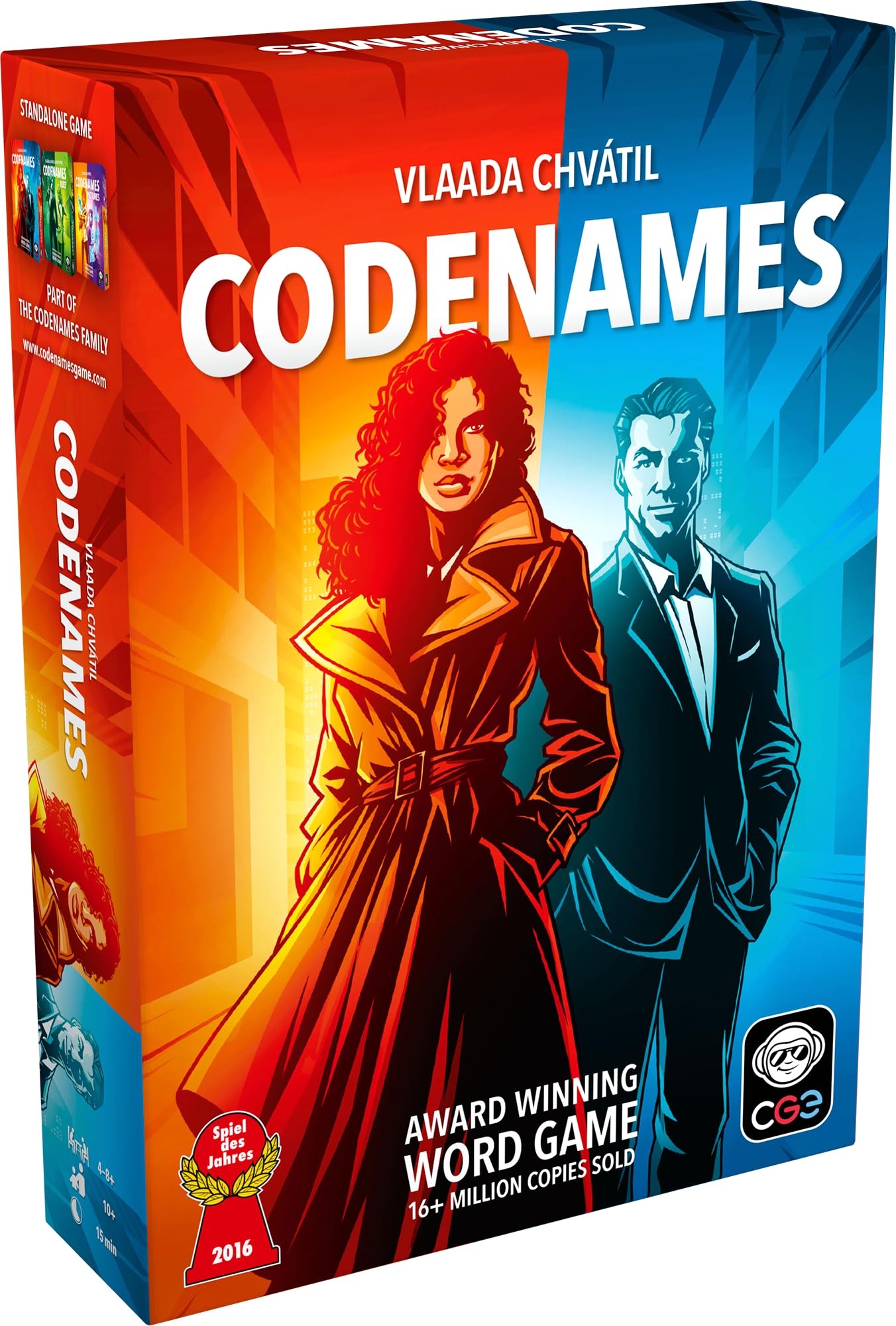
2. Codenames — The Gold Standard for Groups

Codenames is the best family board game teenagers gravitate toward naturally because it plays like a game they've essentially invented themselves—it's just word association with stakes. Two teams compete to identify their secret agents based on one-word clues from their teammates. A clue like "space" might connect "rocket," "star," and "alien," but you need to give exactly one word and one number.
The genius is how it works with any group size and any age gap. You can play with six people or twelve. The game runs about 15 minutes per round, so you can play multiple games in succession without commitment. Teenagers love the thinking-fast aspect, and the competitive element is light enough that it stays fun rather than turning bitter.
The word-guessing mechanics make this genuinely challenging. You're not just naming agents; you're thinking three or four moves ahead, predicting how your opponent will interpret words, and trying not to accidentally point your opponents toward their agents. I've played this probably fifty times and still discover new clue combinations.
At $19.94, you're paying for pure replayability. The game comes with 400 agent cards, and since you only use 25 per game, you could play dozens of times before repetition matters. The box is small enough to take anywhere, which matters when you're managing board game night logistics.
Pros:
- Lightning-fast learning curve—teenagers can start playing immediately
- Works perfectly with mixed ages since clues adapt to the audience
- Quick rounds encourage multiple games in one session
- Fantastic for large groups (4-8+ players easily)
- Highly affordable for the entertainment hours
Cons:
- Can feel repetitive after dozens of plays
- Requires players to think quickly, which some might find stressful
- Less strategic depth than some other options—it's more about social intuition than planning
- Not a cooperative game, so competitive friction is possible (though mild)
---
3. The Crew: Mission Deep Sea — The Evolved Cooperative Experience
If your family falls in love with the original Crew game, Mission Deep Sea takes everything you enjoyed and deepens it. This is essentially a sequel that builds on the cooperative trick-taking foundation but adds new mechanics like submarines you can move around the table, special powers, and increasingly Byzantine mission requirements.
The gameplay feels fresher than the original because you're not just tracking cards—you're managing positioning and special abilities alongside traditional card play. The 50 new missions are legitimately harder than the first game, which is perfect if you've already mastered Quest for Planet Nine. Some missions are genuinely devilish, the kind where you finish and immediately want to play the next one to see if you can figure out the puzzle.
This works best for families that already understand the basic Crew mechanics. If your teenagers haven't played a trick-taking game before, start with Quest for Planet Nine. But if they have and they want more complexity, Mission Deep Sea scales beautifully. The submarine mechanic adds a spatial reasoning element that makes the game feel fundamentally different despite the similar framework.
Play time runs 30-50 minutes depending on mission difficulty, and the game supports 2-5 players. At $18.21, it's the same price-to-value ratio as the original, which is exceptional for a game with this much content.
Pros:
- Natural evolution for players who've mastered the original Crew game
- Submarines and special powers add legitimate strategic depth
- Difficulty scaling means you're always challenged but not frustrated
- Excellent replayability with 50 unique missions
- Teaches advanced card game strategy naturally
Cons:
- Requires understanding of basic trick-taking games (plays badly as first game)
- Some missions are brutally difficult, which can be discouraging
- Less immediately accessible than the original Crew
- The added complexity might overwhelm teenagers new to hobby games
---
4. Clank! A Deck-Building Adventure — Strategic Depth Meets Adventure

Clank! combines deck-building—where you buy cards to improve your hand—with a dungeon-crawling adventure where you're stealing treasure from a sleeping dragon. It sounds complicated, but it flows beautifully. You're managing two parallel systems: improving your personal deck while also moving through a shared board where everyone's racing to grab treasure and escape before the dragon wakes.
This is legitimately the best family board game teenagers who enjoy strategy and risk-taking will gravitate toward. There's a push-your-luck element where you decide how deep into the dungeon to venture, knowing that each card you play might wake the dragon. Do you grab one more treasure or run for the exit? That decision creates natural tension.
The deck-building mechanics teach genuine strategic thinking. Early in the game, you buy cards that seem weak. But later, those cards combine with others you've acquired to create powerful turns. Teenagers understand this instinctively—it's like building a deck in video game card games, which many have played.
Setup and teaching takes about 15 minutes, and actual gameplay runs 60-90 minutes depending on player count and experience. At $64.99, it's the priciest option here, but the production quality justifies it. The board is gorgeous, the cards feel substantial, and the dragon miniature is actually intimidating.
Pros:
- Teaches deck-building strategy in an adventure context
- Push-your-luck element creates memorable moments and laughs
- Beautiful components and production quality
- Excellent balance between strategy and accessibility
- Plays 2-4 players, scales well across player counts
- Highly engaging throughout the entire game
Cons:
- 60-90 minute playtime might be too long for shorter family game nights
- Setup and rules explanation takes longer than quicker games
- The dragon can feel random sometimes, which bothers strategy-focused players
- Most expensive option in this list
- Not cooperative, so it can create competitive heat
---
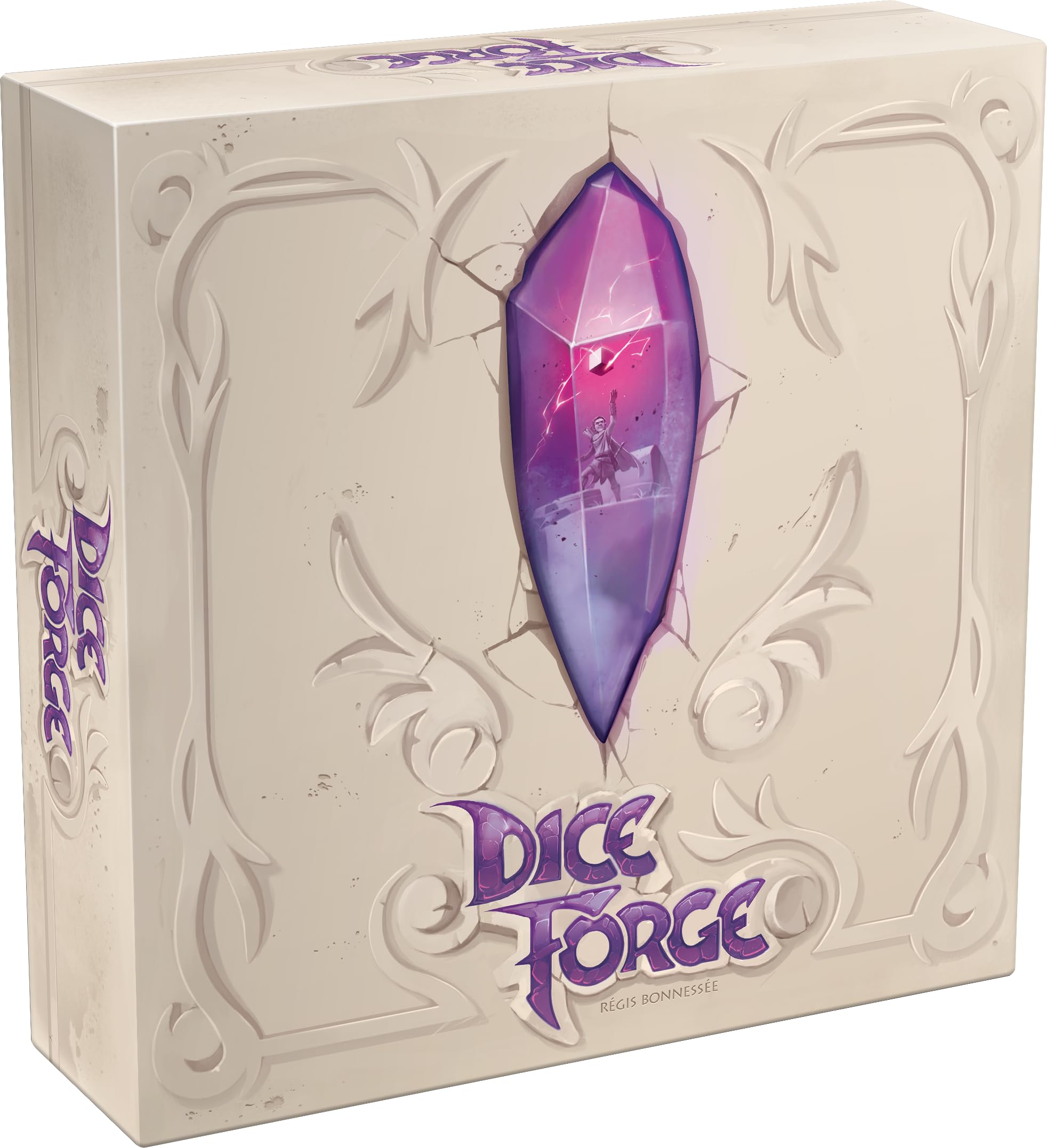
5. Dice Forge — Quick, Exciting, and Visually Stunning
Dice Forge is a dice-building game where you literally customize your dice throughout the game by swapping out faces. You start with basic dice, but as you earn resources, you upgrade them with better faces. This creates tangible progression that teenagers can see and feel—their dice physically get better.
The core gameplay is straightforward: roll your dice, collect resources, spend those resources to upgrade your dice, repeat. But the strategic decision-making is deeper than it appears. Do you prioritize gold for upgrades or victory points? Do you chase a specific dice path or stay flexible? By the end of the game, everyone's playing with completely different dice configurations.
What makes this special is the tactile feedback. Actually holding your upgraded dice and rolling them feels rewarding in a way that abstract strategy games don't replicate. Teenagers respond well to this. They can see their progress, hold it in their hands, and feel like they're building something.
Play time is 45 minutes, which hits a sweet spot—longer than quick party games but shorter than marathon sessions. At $48.99, it's moderate in price and offers genuine replayability since dice combinations create different strategies each game.
Pros:
- Unique dice customization creates tangible progression
- Beautiful components and satisfying tactile experience
- Quick enough for family game night but meaty enough for strategy fans
- Scales perfectly for 2-4 players
- Teaches resource management naturally
- Easy to teach but hard to master
Cons:
- Less thematic than adventure games (it's more mechanical)
- Luck with dice rolls can sometimes override strategy
- Not cooperative, so competitive elements exist
- Some teenagers might want deeper strategic complexity
---
How I Chose These
I evaluated these games specifically for multi-generational family play where teenagers are present. The criteria were: Does this game work with players of different ages and experience levels? Does it create genuine engagement rather than obligatory participation? Can families realistically set it up and play it on a regular game night without it feeling like a chore?
I prioritized games that either eliminate direct competition (like the Crew games) or keep it lighthearted (Codenames, Dice Forge). Games where one adult absolutely demolishes their teenager usually don't encourage repeat play. I also weighted replayability heavily—if you're buying a game, you need something you'll want to play more than once.
Price was a consideration but not the deciding factor. A $65 game that gets played weekly is better value than a $20 game that gathers dust after three plays. However, I included budget-friendly options because not every family can commit that much upfront.
Check out our cooperative games guide if you want more options specifically designed for teams playing together rather than against each other.
Frequently Asked Questions
What's the best family board game teenagers will actually want to play without complaining?
The Crew: Quest for Planet Nine. Cooperative games remove the awkward dynamic where a teenager resents losing to a parent, and the missions are genuinely interesting puzzles that engage their problem-solving instincts. It also doesn't feel babyish, which matters to teenagers.
How many players do these games support?
Most work for 2-5 players. Codenames can scale to 8+ players, making it best for large gatherings. If you specifically need a game for two people, The Crew games work excellently, though Clank! and Dice Forge are more designed for 2-4.
Do these games require a lot of setup?
Codenames and The Crew games are almost zero-setup games. Dice Forge takes 5 minutes. Clank! takes about 10-15 minutes because you need to organize the card market and set up the board. If setup time matters, prioritize Codenames or The Crew games.
Are these games too hard for teenagers new to board games?
The Crew games and Codenames are perfect entry points—they're genuinely easy to learn. Clank! and Dice Forge require a bit more explanation but not significantly. Only consider those if your teenagers have played a board game or two before, or if you're willing to invest 15 minutes in teaching.
Can these games work for just parents and one teenager?
Yes. All five games work perfectly with three players. The Crew games actually prefer smaller player counts. Codenames needs at least four for team balance, so it's the only one that doesn't work ideally with three.
Finding the right board game for family night with teenagers doesn't require settling for games that feel like homework. The best family board game teenagers will enjoy teaches them something, creates genuine laughter, and makes them want to play again. Start with The Crew: Quest for Planet Nine if you want the best , or add Codenames if your family skews toward social games. Either way, you'll actually get people to show up to game night.
Get the best board game picks in your inbox
New reviews, top picks, and honest recommendations. No spam, unsubscribe anytime.
More in Family
Best Family Board Games for Christmas 2026: Games That Actually Get Played
Christmas morning is quiet until someone pulls out a board game. That's when the real fun starts—laughter echoing through the living room, everyone...
Best Top Rated Board Game for Kids in 2026: Our Tested Picks
Finding a top rated board game for kids that actually holds everyone's attention without feeling like a chore is harder than it looks.
Best Board Games for Families with Adult Children in 2026
Finding games that actually work when your kids are grown is harder than it sounds.