By Jamie Quinn · Updated April 12, 2026
Best Family Board Games with Teens in 2026




Best Family Board Games with Teens in 2026
Finding a board game that actually keeps teenagers engaged alongside adults is trickier than it sounds. Too childish and they'll bail. Too complex and everyone gets frustrated. The games below hit that sweet spot where teens feel challenged, adults stay entertained, and everyone actually wants to play again next week.
Quick Answer
Codenames is the best family board game with teens because it requires zero rules memorization, plays in under 20 minutes, and creates the kind of laughing-out-loud moments that make family game night actually fun. It works with literally any age combination and scales perfectly whether you have 4 players or 10.
Our Top Picks
| Product | Best For | Price |
|---|---|---|
| Codenames | Quick games with mixed ages | $19.94 |
| The Crew: Mission Deep Sea | Cooperative play and bonding | $18.21 |
| The Crew: Quest for Planet Nine | Budget-friendly cooperative gameplay | $14.95 |
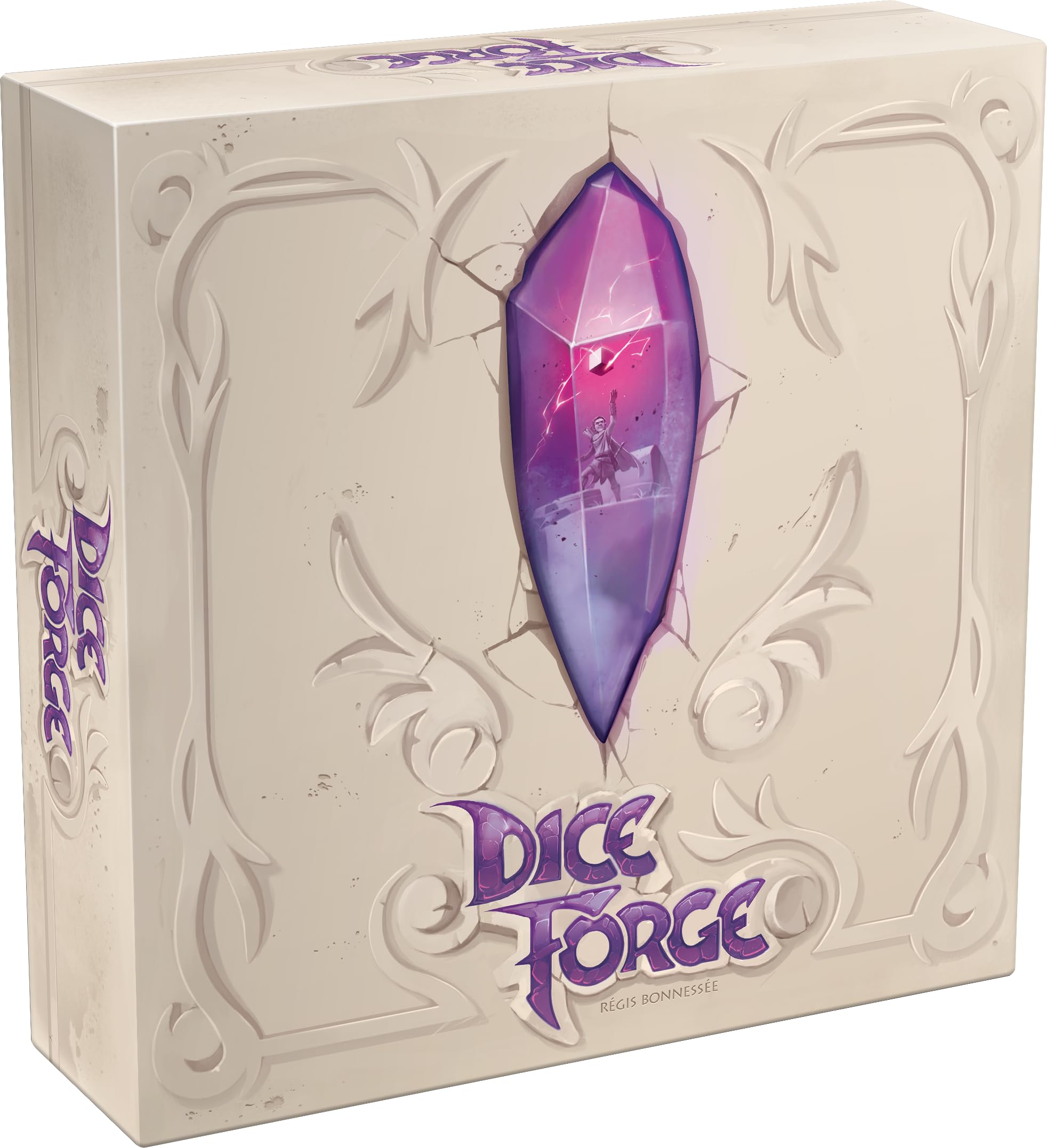
| Dice Forge | Engaging strategy with fantastic components | $48.99 |
| Clank! A Deck-Building Adventure | Adventure-themed gameplay with depth | $64.99 |
Detailed Reviews
1. Codenames — The Easiest Win for Family Game Night

Here's the thing about Codenames: there's literally nothing to learn. You look at a 5x5 grid of words, give one-word clues, and your team guesses which words you're referring to. That's it. No rulebook debates, no setup headaches, no explaining mechanics for 15 minutes while everyone checks their phones.
What makes it stand out for families with teens is the pure thinking it requires. Your 14-year-old might give a clue that makes perfect sense to them but completely baffles you. That's where the fun happens—in that space between what you meant and what people understood. Games run about 15 minutes, so even if someone's skeptical about board games, it's low commitment.
The vocabulary in the base game skews toward recognizable words, which actually matters with age gaps. Your teen won't feel talked down to, and younger players won't get completely lost. It's genuinely skill-based—the better you are at lateral thinking, the better you play.
The main limitation: if someone hates word games or lateral thinking, they won't enjoy this. It's also purely a guessing game, so there's no adventure or narrative element if your family wants more immersion.
Pros:
- Teaches lateral thinking and perspective-taking
- Zero setup time; grab it and play in 30 seconds
- Works with any group size from 4 to way more
- Teenagers feel like adults, not talked down to
Cons:
- Relies entirely on word association skills
- No progression or narrative—each game is standalone
- Can feel repetitive if you play multiple games in succession
---
2. The Crew: Mission Deep Sea — Teamwork Without the Stress
The Crew: Mission Deep Sea is a cooperative trick-taking game that looks deceptively simple but requires genuine strategy and communication. Everyone's on the same team, but with a twist: you can't directly tell people what cards you're holding. You've got limited signals to hint at your hand while trying to complete specific mission objectives.
This is the best family board game with teens when your goal is actually bonding. There's no competition, no one feels left behind, and the game naturally creates moments where you realize someone else's move was brilliant. It hits the table in under 30 minutes, and the 50 included missions give you progression—you start easy and gradually get genuinely difficult.
The cooperative structure removes that awkward dynamic where teenagers feel like they need to dominate to prove something. Instead, everyone's working together, which somehow makes the victories feel more genuine. Failing a mission together is also a bonding moment—you laugh about how the signals went sideways.
One real trade-off: if your family loves competitive games, this won't scratch that itch. The cooperative-only format works for family bonding but removes the "I won, you lost" satisfaction some people crave.
Pros:
- Builds communication and trust without feeling cheesy
- Missions provide natural progression and replayability
- Fast playtime means you can do multiple missions back-to-back
- Teaches reading subtle signals and perspective-taking
Cons:
- No competitive elements at all
- Can feel frustrating if you communicate poorly as a group
- Takes a few games to understand the signal system
---
3. The Crew: Quest for Planet Nine — Cooperation on a Budget
The Crew: Quest for Planet Nine is the original version of the game concept, released before Mission Deep Sea. It's nearly identical mechanically—cooperative trick-taking with limited communication—but has a space exploration theme instead of underwater.
For a family testing whether cooperative gameplay actually works for them, this is the smart entry point at $14.95. It's absolutely a best family board game with teens option if you want to save money without sacrificing gameplay quality. Same 50 missions, same thinking required, same communication-based strategy.
The space theme resonates with some teens more than the underwater setting. If your family's into sci-fi, this gives the experience a slight narrative boost. Both versions play identically, so your choice honestly comes down to theme preference and budget.
The downside: if you already own Mission Deep Sea, there's no reason to own this. And if you're going to buy one, Mission Deep Sea's underwater theme has slightly broader appeal. But as a standalone choice? This is fantastic value.
Pros:
- Identical gameplay to Mission Deep Sea at $3+ cheaper
- Space theme appeals to sci-fi-loving teens
- Same quality components and mission progression
- Perfect for testing if cooperative games work for your family
Cons:
- No advantage over Mission Deep Sea if you're not attached to the space theme
- Same learning curve as the other version
- Limited difference in components or gameplay
---
4. Dice Forge — Rolling Your Way to Strategy
Dice Forge is where the best family board game with teens conversation gets interesting. This is a dice-rolling game where you're literally building your dice throughout the game by swapping out faces. Instead of standard d6s, you're creating custom dice that give you advantages.
The gimmick works. Rolling custom dice feels incredible, and teenagers genuinely light up when they realize they're building something better each turn. It's not just rolling random numbers—your choices matter. Do you go for consistent income or chase a high-risk, high-reward face? That decision-making keeps everyone engaged.
Games run 45 minutes with 2-4 players, which is longer than Codenames but shorter than heavier strategy games. The luck factor from dice rolling keeps less experienced players competitive with optimizers, so your teen who plays every strategic board game doesn't automatically dominate.
The trade-off is that it requires about 10 minutes of explanation, and some families find dice-heavy games frustrating ("I built the perfect dice but got unlucky"). If your group loves chaos and luck-based moments, this works. If your teen's the type who sulks when dice betray them, stick with something more deterministic.
Pros:
- Customizable dice create genuine progression and satisfaction
- Beautiful components that feel premium for the price
- Quick enough for multiple plays in one sitting
- Strategy matters despite the luck element
Cons:
- Requires upfront explanation of the mechanic
- Some dice rolls will feel unfair despite good strategy
- Takes up table space with all the custom dice options
---
5. Clank! A Deck-Building Adventure — The Full Experience

Clank! A Deck-Building Adventure is a deck-building game with adventure elements—you're actually moving through a dragon's dungeon, grabbing treasure, and trying to escape. Unlike pure strategy games, there's a narrative and physical board that makes the experience feel like an adventure, not just optimizing numbers.
Teenagers connect with this one because it has stakes and story. You're not just acquiring cards; you're stealing gold from a dragon and potentially getting caught. The push-your-luck element means even someone behind on cards can make a bold move and swing the game. Plus, deck-building is genuinely engaging—watching your starting weak deck transform into a powerful engine is satisfying.
Games take about an hour, which is a solid commitment without being excessive. You'll have enough game that victory feels earned, but not so much that attention drops halfway through.
The complexity here is real—this isn't your mom's board game. Someone needs to explain how deck-building works, and a few turns in, people are still refining their understanding. Your teen needs to be genuinely interested in games for this to land, not just willing to play along. If you're shopping for a reluctant participant, start with Codenames instead.
Pros:
- Narrative and adventure make it feel like more than just mechanics
- Deck-building is rewarding and creates different strategies each game
- Beautiful board and components justify the premium price
- Scales well from 2 to 4 players
Cons:
- Requires genuine interest in board games—not casual entertainment
- Setup and teardown take 15+ minutes
- Learning curve is steep; first game feels slow as people learn
---
How I Chose These
Finding the best family board game with teens means balancing five competing needs: engagement for older players, accessibility for younger ones, minimal setup friction, playtime that respects everyone's schedule, and that intangible "actually fun" factor. These picks prioritize games where teenagers don't feel like they're being patronized and where adults don't feel like they're babysitting.
I weighted heavily toward games without excessive rulebook reading, since that's where most family game nights derail. Games work best when the first explanation gets you playing within 5-10 minutes. I also looked for titles that create moments worth remembering—the laugh when someone's clue lands perfectly, the tension of a close finish, the satisfaction of a clever move. Rules elegance matters less than the experiences the game creates.
---
Frequently Asked Questions
What's the minimum player count for these games?
Codenames needs at least 4 people (2v2). The Crew games play 2-5. Dice Forge works 2-4 players. Clank! is 2-4 players. Only Codenames specifically requires multiple people on a team, making it slightly different from the others.
How long does setup actually take?
Codenames: 30 seconds. The Crew games: 2 minutes. Dice Forge: 5 minutes. Clank!: 10-15 minutes including organization. If your family hates setup, Codenames or The Crew are your friends.
Which one's best if my teen thinks board games are boring?
Start with Codenames. It's fast, funny, and requires almost no gaming experience. If they enjoy that, move toward The Crew for cooperation or Dice Forge for something slightly deeper. Clank! and Dice Forge are for people who already like games.
Can these work with a really wide age range?
Codenames works with anyone who can understand English word associations. The Crew games work 8+. Dice Forge works 10+. Clank! is 13+. If you've got a huge age spread, Codenames is genuinely your best option.
Should I get both Crew games?
No. Pick one based on theme preference. They're mechanically identical, so owning both is redundant. Mission Deep Sea has slightly broader appeal, but if your family loves space, Quest for Planet Nine is the smarter buy.
---
The best family board game with teens isn't about finding something "serious" enough for older players—it's about finding something worth playing for everyone. Codenames works because nobody feels talked down to and games end before anyone gets bored. The Crew games work because cooperation replaces the awkward competitive dynamics. Dice Forge and Clank! work for families that actually like gaming together.
Start with Codenames if you're unsure. If that lands, expand from there based on what your family gravitates toward: cooperation (The Crew), strategy (Dice Forge), or adventure (Clank!). You'll know what works after one game night.
Get the best board game picks in your inbox
New reviews, top picks, and honest recommendations. No spam, unsubscribe anytime.
More in Family
The Best Board Games for Kids 5-7 in 2026
Finding the right board game for kids aged 5-7 is trickier than it sounds. You need something engaging enough to hold their attention, simple enough that...
Best Board Games for Families with Young Kids in 2026
Finding a board game that actually keeps young kids engaged without making parents want to pull their hair out is harder than it sounds.
The Best Board Games for Families in 2026
Finding great board games for families that actually keep everyone engaged—without someone flipping the board—is tougher than it looks.