By Jamie Quinn · Updated May 4, 2026
Best Family Board Games for 10 Year Olds in 2026
Finding board games that actually hold a 10-year-old's attention while keeping the whole family entertained is harder than it sounds. You need something that's not too babyish, complex enough to be interesting, but not so complicated that setup takes 30 minutes. We've tested the games that hit that sweet spot—where kids are genuinely laughing, thinking strategically, and asking to play again tomorrow.
Quick Answer
Codenames is our top pick for best family board games for 10 year olds because it works for any group size, teaches real strategy and vocabulary, plays in under 15 minutes, and keeps everyone engaged the entire time. No downtime, no complicated rulebooks, and it's genuinely fun for adults too.
Our Top Picks
| Product | Best For | Price |
|---|---|---|
| Codenames | All-around family fun and word lovers | $14.99 |
| Taco Cat Goat Cheese Pizza | Quick laughs and fast-paced action | $9.95 |
| TAPPLE | Speed and word-finding challenges | $15.99 |
| The Crew: Mission Deep Sea | Cooperative puzzle-solving | Varies |
| Clank! A Deck-Building Adventure | Adventure lovers and strategy | Varies |
| Hasbro Gaming Scrabble Board Game | Word building and vocabulary | $21.92 |
| Dice Forge | Dice rolling and light strategy | Varies |
| BRAVEBUG You Laugh You Lose Game | Comedy and silly moments | $19.95 |
| Hasbro Gaming Retro Series Clue 1986 Edition | Mystery and deduction | $20.99 |
| The Crew: Quest for Planet Nine | Advanced cooperative play | Varies |
Detailed Reviews
1. Codenames — The Strategic Word Game That Never Gets Old

This is exactly what you want when you say "best family board games for 10 year olds." The game splits players into two teams competing to identify secret agents based on one-word clues. It sounds simple, but it requires genuine thinking—you're balancing how obvious your clue is while avoiding the assassin card.
What makes Codenames brilliant for this age is the vocabulary development happening without feeling educational. Kids naturally expand their word associations to figure out connections between seemingly unrelated words. A 10-year-old will think hard about whether "bat" connects to baseball AND vampire, then realize they need a different clue entirely. It teaches lateral thinking.
The game handles 2-8+ players without losing quality, takes 15 minutes per round, and there's zero player elimination—everyone stays invested throughout. Setup is genuinely 30 seconds.
Pros:
- Fast-paced with no downtime
- Works perfectly with 4-6 players
- Encourages creative thinking and vocabulary building
- Affordable and compact for travel
Cons:
- Needs at least 4 players to shine (it's possible with 2, but loses the team dynamic)
- Some word associations will feel obvious to experienced players after 20+ games
- Not a game about winning—it's about the clues and thinking process
---
2. Taco Cat Goat Cheese Pizza — The Chaos Card Game

If your kids think that saying "taco cat goat cheese pizza" in a silly voice is peak comedy, this is your game. Players lay cards while chanting the phrase, and when a card matches the word you're saying, everyone slaps the pile. Whoever's hand is on top wins the cards.
This isn't a strategy game—it's a reflex and chaos game. And honestly, that's perfect for 10-year-olds who need something active and silly. It gets the whole family laughing, especially when someone dramatically slow-motion slaps the pile or second-guesses whether they actually matched.
The beauty is the price. At $9.95, it's an impulse-buy that actually delivers. Games last 10-15 minutes, so you can play multiple rounds without commitment.
Pros:
- Incredibly affordable
- Works with 2-8 players
- Fast, energetic, and hilarious
- Easy to teach in 30 seconds
- Great for parties and sleepovers
Cons:
- Purely luck and reflex—no strategy at all
- Can get repetitive after 5-6 plays in one sitting
- Physical contact (hand slapping) means it's not for kids who get frustrated with losing
---
3. USAOPOLY The Original TAPPLE — Speed Meets Vocabulary
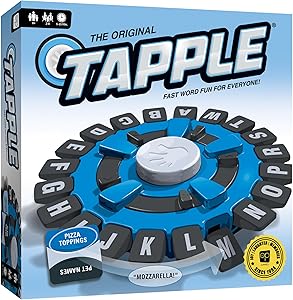
TAPPLE is a fast-paced word game where you spin the wheel to select a category, then race against the timer to name things in that category while pressing buttons. The twist: each letter button only works once per round, so you can't just shout "apple, apricot, avocado" in the fruit round.
This is genuinely challenging for 10-year-olds in a good way. It forces quick thinking and knowledge of words that start with less common letters. You'll hear kids say things like "Q for quince" because they've suddenly learned that's a fruit. The timer pressure keeps everyone's heart racing.
The game plays in 15-20 minutes with 2-8 players, so it fits between other activities. It's also a solid addition to best family board games for 10 year olds because it teaches vocabulary under pressure, which is a practical life skill.
Pros:
- Teaches quick vocabulary and thinking under pressure
- Works with any number of players
- Affordable at $15.99
- Requires zero setup
- Fast game time keeps energy high
Cons:
- Some kids get frustrated if they freeze under timer pressure
- Categories can repeat, so novelty wears after 8-10 plays
- Not strategic—purely about knowing words and thinking fast
---
4. The Crew: Mission Deep Sea — Cooperative Problem-Solving

This is a cooperative card game where your family works together against the game itself—not competing against each other. You're completing missions as a submarine crew, which means you need to coordinate plays without directly telling each other what cards you hold.
The elegance here is that communication is severely limited. You can give signals and hints, but you can't say "I have the high card." This forces actual teamwork and teaches kids about strategy, communication, and patience. The missions start easy and escalate quickly, so you're progressively learning the game's systems.
It's genuinely different from most family games. There's no luck element—if you lose, you didn't coordinate well. That means kids see direct consequences of their decisions, which builds critical thinking.
Pros:
- True cooperative gameplay—builds teamwork
- Progressive difficulty keeps it interesting across 50+ missions
- No luck factor means losses feel educational, not random
- Beautiful art and high-quality components
- Plays 2-5 people in 30-45 minutes
Cons:
- Requires everyone to stay focused (not great if kids are distracted)
- Takes longer than most family games
- Some families find the limited communication frustrating rather than fun
- Losing consecutive missions can feel discouraging
---
5. Clank! A Deck-Building Adventure — Adventure with Strategy

Clank! combines deck-building with dungeon crawling. You're collecting cards to build your hand power, moving through a dungeon, stealing treasure, and rushing back before the dragon catches you. It's like a video game in board form.
The learning curve is moderate—you'll need 10 minutes to explain deck-building if your family hasn't played this type of game before. But 10-year-olds grasp it quickly because it's intuitive: you buy better cards, your deck gets stronger, you can do more. There's a satisfying "build and execute" loop.
What keeps families coming back is that the dungeon layout is randomized each game, so you're not just replaying the same path. The dragon mechanic creates tension—you're constantly balancing greed (stealing more treasure) against safety (getting out alive).
Pros:
- Teaches genuine strategy and resource management
- Randomized dungeon keeps replay value high
- Perfect blend of luck and decision-making
- Plays 2-4 in 30-60 minutes
- Great introduction to deck-building mechanics
Cons:
- Rules explanation takes 10-15 minutes (first time only)
- Player elimination is possible in later rounds (eliminated players wait for the game to end)
- More expensive than casual family games
- Requires table space for cards and boards
---
6. Hasbro Gaming Scrabble Board Game — The Word Classic
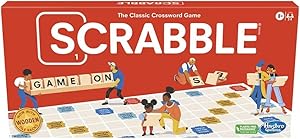
Scrabble at age 10 is the sweet spot. Kids have solid vocabulary, they're developing spelling skills, and they start to understand word strategy (high-value letters, board positioning). It's a game that doesn't get old because language itself is infinite.
This version is the standard Hasbro edition at $21.92. It's not fancy, but it doesn't need to be. What matters is the gameplay—placing words, calculating points, and occasionally challenging whether a word is legitimate (which leads to dictionary lookups and learning).
Scrabble teaches patience, spelling, vocabulary, and mild strategy. It also creates natural learning moments without feeling forced. A 10-year-old will ask "Is 'qi' a word?" and you'll look it up together, and suddenly they've learned something.
Pros:
- Genuinely teaches vocabulary and spelling
- Works with 2-4 players of different skill levels
- Endless replay value
- Creates natural learning moments
- Great for building confidence in word knowledge
Cons:
- Games can run 45-90 minutes (longer than other options)
- Requires decent vocabulary—younger 10-year-olds might feel stuck
- Luck element with tile draws can frustrate strategic players
- Not exciting visually (it's a word game, not an adventure)
---
7. Dice Forge — Dice Building Fantasy Game

Dice Forge is brilliant because it literally lets you modify your dice as the game progresses. You start with basic dice and buy upgrades that replace the faces. This is a genuinely cool mechanic that 10-year-olds find satisfying—watching your dice become more powerful creates a sense of progress.
The game itself is simpler than Clank! but still strategic. You're rolling to collect resources, buying new dice faces, and competing for victory points. There's luck (the dice rolls), but the strategy (which dice to upgrade) matters more.
It plays in 30-40 minutes, which is perfect for maintaining attention. The theme (mythological fantasy) appeals to this age group, and the components are genuinely nice—the dice feel premium, and the upgrade cards are colorful.
Pros:
- Unique dice-upgrading mechanic
- Balanced luck and strategy
- Beautiful components that feel good in your hand
- Plays 2-4 in reasonable time
- Satisfying progression feeling
Cons:
- Rules explanation needed (though not overly complex)
- Some randomness in dice rolls can feel frustrating to strategy-focused kids
- Less interactive than games with direct competition
- Requires understanding resource management
---
8. BRAVEBUG You Laugh You Lose Game — Comedy Central

This is a "try not to laugh" game where players perform charades, and the goal is to make other players laugh. At $19.95, it's a party game that works specifically well for sleepovers or family game nights where the goal is entertainment over competition.
The humor is age-appropriate for 10-year-olds—silly scenarios and physical comedy rather than jokes that go over their heads. The charades cards include funny situations that naturally create laughter, and watching someone try not to crack up while doing something ridiculous is peak entertainment at this age.
It's best family board games for 10 year olds when you specifically want silliness and bonding rather than strategic thinking. Some nights, that's exactly what you need.
Pros:
- Creates genuine laughter and memories
- Works with any group size
- No strategy or luck—just entertainment
- Perfect for parties and sleepovers
- Components are simple and durable
Cons:
- Not a "game" in the traditional sense (no winning through skill)
- Humor depends on group comfort with silliness
- Can feel awkward if your family is reserved
- Limited replayability if you play frequently
---
9. Hasbro Gaming Retro Series Clue 1986 Edition — Classic Mystery
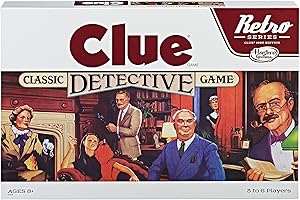
Clue is the deduction game. Players move through mansion rooms collecting clues to solve the mystery of "who did it, with what, and where." It's a game about information gathering and logical elimination—you're figuring out what your opponents know based on their answers.
At age 10, kids can genuinely understand deductive reasoning. They'll start to notice patterns in what opponents ask for, and they'll realize that if three people pass on a clue, it might be in someone's hand. This teaches real logical
Get the best board game picks in your inbox
New reviews, top picks, and honest recommendations. No spam, unsubscribe anytime.
More in Family
The Best Board Games for Kids 5-7 in 2026
Finding the right board game for kids aged 5-7 is trickier than it sounds. You need something engaging enough to hold their attention, simple enough that...
Best Board Games for Families with Young Kids in 2026
Finding a board game that actually keeps young kids engaged without making parents want to pull their hair out is harder than it sounds.
The Best Board Games for Families in 2026
Finding great board games for families that actually keep everyone engaged—without someone flipping the board—is tougher than it looks.