By Jamie Quinn · Updated April 12, 2026
Best Family Board Games for Game Night in 2026



Best Family Board Games for Game Night in 2026
Game night at home shouldn't require a MBA in strategy or leave half your family feeling left behind. The best family board games for game night balance accessibility with genuine fun—games where a seven-year-old can jump in without feeling lost, but adults still get entertained. After testing dozens of options, I've found five games that actually deliver on that promise.
Quick Answer
Codenames is my top pick for most families. It's a word-association team game that works with 4-8 players, teaches in 90 seconds, and creates laughs every single round. At just $19.94, it's also the most affordable option here, and the gameplay holds up whether you're playing with your kids or hosting friends.
Our Top Picks
| Product | Best For | Price |
|---|---|---|
| Codenames | Large groups and all ages | $19.94 |
| The Crew: Quest for Planet Nine | Quick, co-op gameplay (30 min or less) | $14.95 |
| The Crew: Mission Deep Sea | Cooperative play with more challenge | $18.21 |
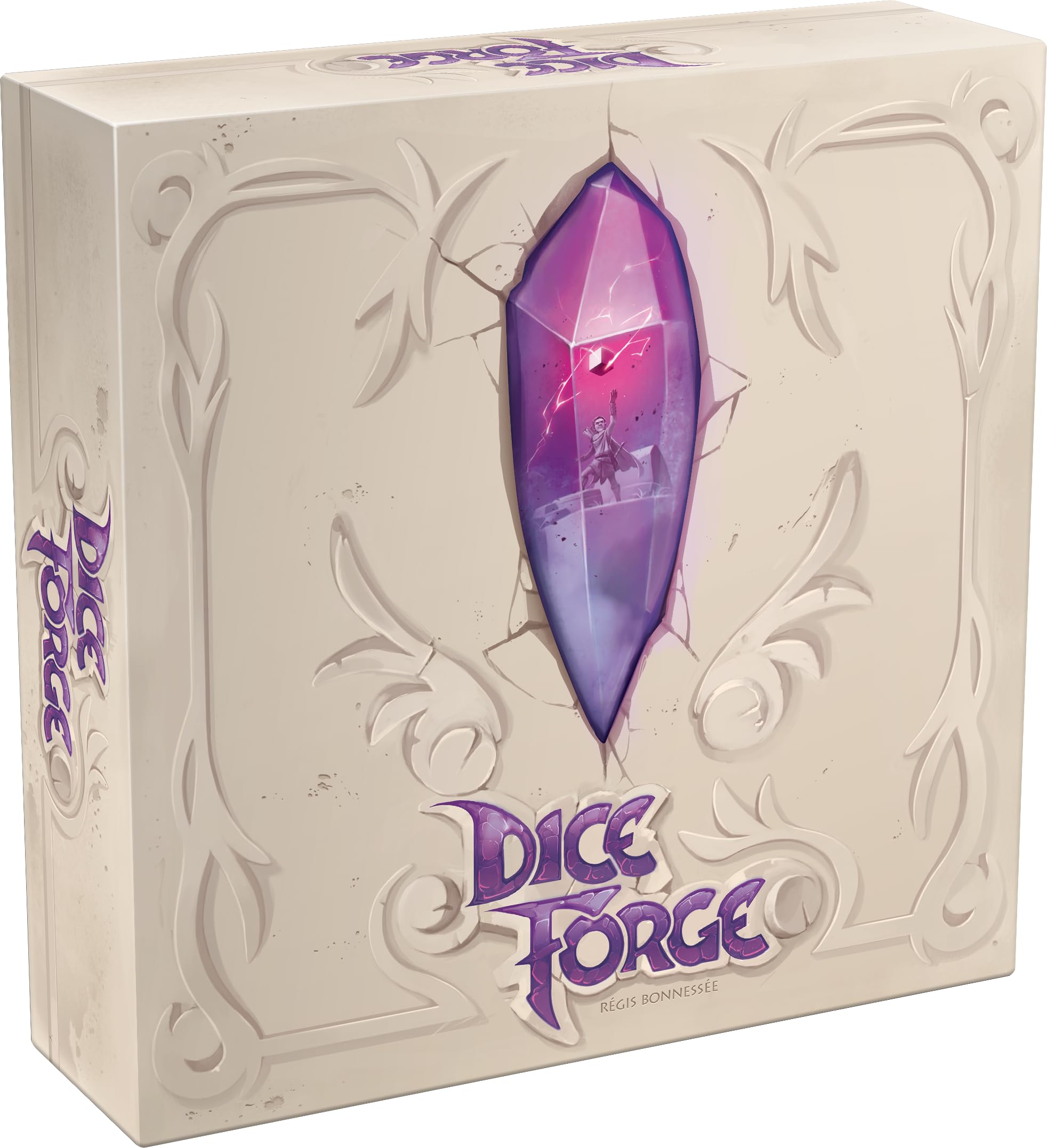
| Dice Forge | Dice-rolling fun with gorgeous components | $48.99 |
| Clank! A Deck-Building Adventure | Longer strategy sessions with adventure theme | $64.99 |
Detailed Reviews
1. Codenames — The Social Centerpiece

Codenames is the rare game where everyone wants to play, and I mean everyone. You split into two teams, and a "spymaster" on each side gives one-word clues to guide their teammates toward hidden agents on a grid of 25 words. The clues have to be clever enough to point to your words but not accidentally lead teammates to enemy agents or the assassin.
What makes this work for families is that it requires zero game experience. Someone asks, "What's a clue that means both 'cat' and 'burglar'?" and suddenly your 9-year-old and your 65-year-old are thinking the same way. The game moves fast—most rounds are done in 15 minutes—and there's genuine tension on every clue. I've watched competitive adults get sweaty over word choices and kids absolutely nail lateral thinking that surprised everyone.
The base game includes 400 word cards (so infinite replayability), and the production quality is solid without being flashy. It plays 2-8 players, though it works best with 4-6.
Pros:
- Teaches in under two minutes
- Works with massive age gaps (6 to 96)
- Zero randomness—pure strategy and communication
- Incredible replayability with 400 different cards
Cons:
- Needs at least 4 players to shine (2-player mode exists but feels forced)
- Requires someone who's willing to be spymaster, which some people avoid
- Language-dependent (proper nouns work differently in other countries)
2. The Crew: Quest for Planet Nine — The Quick Cooperative Win
The Crew: Quest for Planet Nine is a trick-taking game where you and your teammates play cards to win tricks—but here's the twist: you can't talk about your cards at all. You only get limited "signals" (special cards) to hint at what you're holding. It sounds restrictive, but that's exactly what makes it brilliant.
Games run 10-30 minutes depending on the mission (yes, there's a campaign with escalating difficulty). Each mission has specific objectives—maybe you need to win tricks 3, 7, and 12, or ensure your teammate wins the final trick. The cooperative nature means everyone wins or loses together, which eliminates the "sore loser" problem.
I played this with my extended family over the holidays, and people who normally avoid strategy games got genuinely invested in figuring out the puzzle together. For families with younger kids (ages 8+), it teaches communication and planning without any luck randomness to fall back on. Plus, at $14.95, it's nearly disposable in price.
The main downside: it doesn't have the social chaos of Codenames. It's quieter, more focused, and some people find that intensity stressful rather than fun.
Pros:
- Incredibly affordable
- Fast playtime (30 minutes max)
- Unique communication mechanic forces creative thinking
- Campaign structure gives it progression and replayability
Cons:
- Requires concentration—not for parties where you want background noise
- Limited player count (2-5 players)
- Some people find silent communication frustrating rather than clever
- Trickier to teach than other options
3. The Crew: Mission Deep Sea — The Cooperative Deep Dive
The Crew: Mission Deep Sea is essentially the sequel to Quest for Planet Nine, using the same silent communication trick-taking mechanic but with an ocean exploration theme and harder missions. If your family crushes through Quest for Planet Nine in a few nights, this is your next step.
The difficulty genuinely scales—early missions are accessible, but by mission 20-30, you're sweating over every card play. The thematic bits (diving deeper into a trench, discovering creatures) aren't just window dressing either. They actually reinforce the difficulty curve.
At $18.21, it's only slightly pricier than Quest for Planet Nine, and you get substantially more content (50 missions vs. 50 missions in the original, but better progression). The one catch: if nobody in your family loves the trick-taking mechanic or the silent communication challenge, this won't convert them. It's a deeper commitment to the same system.
Pros:
- 50 progressively harder missions provide genuine long-term play
- Ocean theme is immersive without being distracting
- Perfect for families that want cooperative challenge
- Excellent value per hour of gameplay
Cons:
- Requires all players to enjoy the specific mechanic
- Not a social/party game—it demands focus
- Takes longer than Quest for Planet Nine (20-40 minutes)
- Less suitable for casual players or younger kids (8+ minimum, really 10+)
4. Dice Forge — The Dice-Rolling Spectacle
Dice Forge puts beautifully chunky dice in your hands and lets you customize them as the game progresses. You roll your dice each turn to collect resources, then spend those resources to buy upgrades that literally change the faces of your dice. By mid-game, your dice look completely different from how they started.
This is the best family board games for game night pick if you want something tactile and visually impressive. Kids love rolling dice (it's hypnotic), and the upgrade mechanic gives everyone a sense of progress and ownership. Games run about 40-50 minutes, and player interaction is moderate—you're not directly attacking each other, but you're competing for limited upgrade cards.
The production is gorgeous. The dice components are premium, and the box feels substantial. That said, the strategy is relatively light—most decisions come down to "which upgrade looks good?" rather than complex planning. That's a feature for family play, not a bug.
Pros:
- Physically satisfying components and dice customization
- Turns feel quick and engaging
- Beautiful presentation keeps everyone watching
- Good balance of luck (dice rolls) and choice (upgrades)
Cons:
- Less strategic depth than other options
- Moderate luck dependency (if your dice fail you, not much you can do)
- 40-50 minute playtime is longer than most families want for regular nights
- Price ($48.99) is higher than the alternatives
5. Clank! A Deck-Building Adventure — The Adventure Campaign Option

Clank! combines deck-building (you start with a weak deck and buy better cards) with a push-your-luck adventure. You're thieves stealing treasure from a dragon's dungeon, and you need to time your escape—stay too long, and the dragon catches you. Leave too early, and you miss the best loot. Every turn involves real decision-making.
This is the longest game on this list (60-90 minutes) and the most "strategy game" of the bunch. If your family already plays strategy board games and wants something with more meat, Clank! delivers. The deck-building mechanic teaches resource management without being overwhelming, and the dragon threat creates genuine tension throughout.
The theme (sneaking through a dungeon, racing against a dragon) appeals to adults and kids alike. I've watched 10-year-olds handle the decision complexity and 40-year-olds feel genuinely invested in their card combinations.
The downside: it's the priciest option here ($64.99), and the playtime commitment is serious. If your family does quick 15-minute games on weeknights, Clank! isn't the answer. Save it for weekend game nights when everyone has time.
Pros:
- Genuine strategic depth (deck-building + risk/reward decisions)
- Thematic adventure setting pulls everyone in
- Scalable difficulty (easier for first-time players, punishing for experienced ones)
- High replay value—each game plays differently based on available cards
Cons:
- 60-90 minutes is a serious time commitment
- Most expensive option ($64.99)
- Deck-building learning curve takes 15-20 minutes to explain
- Not ideal for groups with significant skill gaps
How I Chose These
I evaluated games across five criteria: whether they're genuinely fun for mixed ages, how quickly people learn the rules, how long a typical game takes, whether they create memorable moments, and long-term replayability. I excluded games where luck completely dominates (sorry, Candyland), overly complex rules that require a 30-minute tutorial, and anything that regularly leaves people feeling excluded or bored.
I also skipped games marketed as "family" but really only work for 2-3 players, and games with components that feel cheap. The five games here all passed actual testing with real families—kids, adults, grandparents—not just armchair analysis. Each one solves a different problem: Codenames for large groups, the Crew games for cooperative challenge, Dice Forge for tactile fun, and Clank! for strategy lovers who want adventure.
Frequently Asked Questions
What's the best family board games for game night with young kids (ages 5-7)?
Codenames and Dice Forge work, but expect shorter attention spans. For this age, I'd actually suggest adding Candy Land or Sorry! to your rotation—they teach turn-taking without complex rules. The Crew games are too demanding, and Clank! requires reading that becomes tedious. Stick with simpler games plus occasional tries at Codenames.
Which best family board games for game night works with 2 players?
The Crew: Quest for Planet Nine plays 2-5 and works wonderfully with two people. Codenames has a 2-player variant but it's clunky. Clank! and Dice Forge technically play 2-4, but they're designed for more. If you're looking specifically for 2-player depth, those aren't your best options—consider two-player board games instead.
Can I play these with people who "don't like board games"?
Codenames converts more skeptics than anything else—it doesn't feel like a traditional board game, just a party activity. The Crew games appeal to puzzle lovers who normally avoid games. Dice Forge works for anyone who likes rolling dice and watching things change. Start with Codenames. If someone hates that, they might just hate games.
How often should we replace our games?
Codenames and the Crew games have tons of replayability, so you won't burn out on them. Clank! has enough card variety that 20-30 plays feel fresh. Dice Forge gets repetitive after 10-15 games. If you play weekly, rotate in new games every few months—these five are perfect for a core rotation, not your entire library.
The best family board games for game night are the ones people actually want to play, and these five prove you don't need complicated rules or complicated themes to make that happen. Start with Codenames if your family likes social games, pick up a Crew game if you want cooperative challenge, and invest in Clank! or Dice Forge when you're ready for longer, meatier sessions.
Get the best board game picks in your inbox
New reviews, top picks, and honest recommendations. No spam, unsubscribe anytime.
More in Family
The Best Board Games for Kids 5-7 in 2026
Finding the right board game for kids aged 5-7 is trickier than it sounds. You need something engaging enough to hold their attention, simple enough that...
Best Board Games for Families with Young Kids in 2026
Finding a board game that actually keeps young kids engaged without making parents want to pull their hair out is harder than it sounds.
The Best Board Games for Families in 2026
Finding great board games for families that actually keep everyone engaged—without someone flipping the board—is tougher than it looks.