By Jamie Quinn · Updated April 6, 2026
Best Family Cooperative Board Game 2026: Top 5 Picks That Actually Work



Best Family Cooperative Board Game 2026: Top 5 Picks That Actually Work
Finding a board game that the whole family actually wants to play together is harder than it sounds. You need something that doesn't take three hours to teach, doesn't leave half the players bored, and doesn't end with someone flipping the board in frustration. That's where cooperative games change everything—everyone wins or loses together, which somehow makes losing fun.
Quick Answer
Forbidden Island is the best family cooperative board game for most households. It teaches in minutes, plays in 30-45 minutes, works with 2-4 players from age 8 up, and creates genuine tension without making anyone feel left out. The mechanics are straightforward enough for kids but strategic enough to keep adults engaged.
Our Top Picks
| Product | Best For | Price |
|---|---|---|
| Forbidden Island | Tight strategy and classic cooperative fun | $20.39 |
| Castle Panic 2nd Edition | Tower defense with group decision-making | $24.70 |
| A Gentle Rain | Relaxing solo or cooperative play | $24.99 |
| The Chameleon | Large groups who want hidden role deduction | $18.99 |
| Herd Mentality | Parties and big groups (4-20 players) | $19.99 |
Detailed Reviews
1. Gamewright - Forbidden Island - Cooperative Strategy Survival Board Game, 2-4 Players

Forbidden Island is the gold standard for introducing families to cooperative gameplay. You're a team of adventurers racing to escape a sinking island before it disappears entirely. The board literally floods as you play—island tiles sink away, and you have to reach your helicopter before the landing pad goes under. It's tense without being mean-spirited because nobody's actively working against you.
The setup takes two minutes, and you'll understand the rules within five. On your turn, you move around the island, shore up sinking tiles, and collect treasures. The catch: the island floods more aggressively as you progress through the deck, ramping the pressure steadily. Playing with 2 players feels completely different from playing with 4, which speaks to smart design. The production quality is solid—nice tiles, clear iconography, cards that shuffle well.
This works because it forces real communication. You can't just do your own thing; you have to coordinate who handles which area and prioritize which tiles to save. Kids as young as 8 can play meaningfully, though 10+ is where they'll really grasp strategy.
Pros:
- Lightning-quick teaching and setup
- Scales beautifully from 2 to 4 players
- Genuinely suspenseful without elimination
- Beautiful, sturdy components that feel nice to handle
- Plays in exactly the time it promises (30-45 minutes)
Cons:
- Only plays 2-4 people (not ideal for larger families)
- The randomness can occasionally make a perfect loss feel cheap
- Some players might find it too easy once they understand the strategy
---
2. Castle Panic 2nd Edition | Cooperative Board Game for Adults and Family | Ages 8+ | for 1 to 6 Players | Average Playtime 45 Minutes | Made by Fireside Games
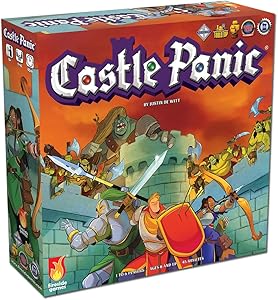
Castle Panic flips tower defense into a tabletop experience. Monsters are marching toward your castle from all directions, and your team needs to coordinate attacks to eliminate them before they reach the wall. Unlike Forbidden Island's fluid urgency, this one demands constant negotiation and hand management.
The board is a circular fortress divided into rings and segments. Monsters enter from the outer ring and advance inward. You play cards to attack them, and different card colors and symbols only work in specific locations and ranges. This constraint creates incredible moments of "I have the card you need—can you play yours next turn so I can set this up?" It's actually a best family cooperative board game because it forces participation from everyone at the table.
The 2nd Edition improved on an already-solid original with clearer components and streamlined rules. Scaling from 1 to 6 players is genuinely impressive; at 6, it gets chaotic in the best way. At 1, you're managing multiple hands, which isn't ideal but works. The difficulty adjusts with optional modular expansions if you ever find the base game too easy.
Pros:
- Highest player count (up to 6) of any game on this list
- Incredible hand management puzzle
- Genuinely funny moments when plans fall apart
- Scales well across player counts
- The tower defense theme is intuitive and thematic
Cons:
- Table talk and coordination can feel overwhelming for younger players (8+ is the minimum, but 10+ is more enjoyable)
- Plays closer to 60 minutes than 45 in most groups
- The circular board takes up decent table space
- If one player "quarterbracks" and directs everyone else, it loses appeal
---
3. A Gentle Rain – Calming Tile-Laying Puzzle Game – Mindful Solo, 2-Player, or Cooperative Play in 15 Minutes – Soft-Touch Tiles & Wooden Blossoms – Compact, Giftable, Family-Friendly Board Game

A Gentle Rain is the odd one on this list because it's not about preventing disaster—it's about creating beauty. You're laying tiles to build a garden landscape, matching colors and patterns cooperatively. The tiles have a soft, tactile feel (they describe them as "soft-touch"), and completing the 15-minute game feels meditative rather than stressful.
This is the best family cooperative board game for families who find traditional conflict-based games exhausting. There are no timers, no resource scarcity, no moments where someone "ruins" the board. You're all working toward the same visual pattern, and the puzzle satisfies when it clicks. The wooden blossoms that go on the board add a handcrafted quality that makes it feel more like a craft project than a typical game.
It plays solo, with 2 players, or cooperatively with more (the rules suggest flexibility). The compactness makes it perfect for travel, and the gift-presentation quality means it works as an actual present, not just a game box. If your family includes anyone with anxiety around competitive games or a dislike of confrontation, this solves that problem entirely.
Pros:
- Genuinely calming to play (no one gets frustrated)
- Beautiful physical components (soft tiles, wooden pieces)
- Plays in exactly 15 minutes—perfect for casual time
- Works solo or cooperatively
- Compact and portable
- Great for non-gamers who want to participate
Cons:
- Not a "challenge" in the traditional sense—puzzle difficulty is minimal
- Once you understand the pattern, the novelty fades quickly
- If your family wants dramatic tension and stakes, this won't deliver
- Limited replayability compared to games with more variety
---
4. The Chameleon: Award-Winning Bluffing Board Game for Family, Adults & Friends | Includes 80 Extra Secret Words | Who is The Imposter?
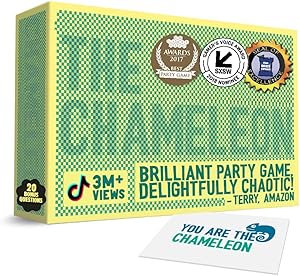
The Chameleon straddles cooperative and competitive territory. Everyone but one player knows a secret word. That one player—the chameleon—doesn't, and has to blend in with clever guesses while everyone else tries to figure out who the imposter is. It's hidden role deduction that works surprisingly well with families because the hidden role player doesn't feel victimized; they're having just as much fun trying to deceive everyone.
Each round is quick (maybe 3-5 minutes), and because the roles rotate, nobody's stuck in one position for long. The award-winning design means the hidden role mechanic is genuinely balanced. The 80 extra secret words included mean you won't exhaust the content quickly, and the word categories span from easy to tricky, so you can adjust difficulty based on who's playing.
This is less of a best family cooperative board game and more of a best family party game wearing cooperative clothing, but the psychology works. You're all trying to communicate and read each other, which builds connection. If you have mixed ages (older kids, parents, grandparents), this keeps everyone engaged without anyone feeling left behind.
Pros:
- Quick rounds that hold attention
- Works with surprising player counts
- Each role feels rewarding for different reasons
- 80 extra words prevent repetition
- Very portable and easy to teach
- Genuine laughter and "aha!" moments
Cons:
- Players who are terrible at bluffing might feel self-conscious
- If someone reveals the chameleon too quickly, a round can feel anticlimactic
- Requires active engagement; can't just coast
- Not as deep strategically as other cooperative games
---
5. Herd Mentality: Udderly Funny Family Board Game | Easy & Fun for Big Groups of 4-20 Players | Includes 20 Extra Exclusive Questions

Herd Mentality is designed for exactly one scenario: gatherings with lots of people. It plays 4-20 players, which makes it perfect for holiday dinners, multi-family game nights, or when relatives visit. Everyone answers trivia-style questions simultaneously and silently, then reveals answers. You score points when your answer matches others' answers—hence "herd mentality."
The genius is that it doesn't matter if you're right. It doesn't matter if anyone knows the actual answer to "What's the most popular pizza topping?" What matters is that eight other people also said "pepperoni." It's cooperative in that sense—you're trying to think like everyone else, which is hilarious because people's assumptions about what others think are often completely wrong.
The included 20 extra exclusive questions ensure you won't repeat content if you host game nights regularly. The humor in the question selection is genuinely good—there are awkward moments and stupid arguments about what counts as a pizza topping, and those moments are the point.
Pros:
- Genuinely handles large groups (4-20 is actually useful)
- Zero prior knowledge required
- Laughter from the social dynamics, not from complex humor
- Plays quickly (you can do multiple rounds in an hour)
- Inclusive—everyone participates equally
- 20 extra questions included
Cons:
- Not strategic at all—it's purely social
- Doesn't work well with just 2-3 people
- For smaller, regular game groups, it gets repetitive fast
- Some answers don't have objectively good choices (making it feel random)
- Can fall flat if the group isn't social or if people are tired
---
How I Chose These
I weighted five factors: teaching time (anything over 10 minutes is a dealbreaker for family games), player count flexibility (does it work with just two kids and two parents? What about extended family?), age-appropriateness (can an 8-year-old actually participate or just sit there?), engagement (does everyone stay involved or does the game allow someone to zone out?), and replayability (will anyone want to play this again next month?).
I excluded games that require one player to be a game master, games that take more than 90 minutes, and games with heavy random elements that can make losses feel unfair. I also prioritized games where losing together is actually fun, not frustrating. That's the secret of good family cooperative games—the experience matters more than the outcome.
Frequently Asked Questions
What's the difference between a cooperative game and a team game?
A cooperative game has all players on the same side working toward one goal. A team game splits players into opposing teams. Cooperative games eliminate the "I'm losing" feeling entirely, which is why they work better for families with wide age gaps.
Can you play these games solo?
Forbidden Island works solo (you just control multiple characters). A Gentle Rain explicitly supports solo play. The others are designed for groups but technically can be adapted. If solo gaming matters to you, Forbidden Island and A Gentle Rain are your best bets.
Which game is best for a 5-year-old?
Honestly, none of these are ideal for a 5-year-old. A Gentle Rain is the gentlest option—they can help place tiles without needing to understand strategy. Forbidden Island and Castle Panic are 8+, and that's the real minimum. The Chameleon requires reading, and Herd Mentality requires forming opinions about random questions. Wait until closer to 7-8 for this list, or look at games specifically designed for younger kids.
How long do these games actually take?
Forbidden Island: 30-45 minutes (it delivers). Castle Panic: 45-60 minutes. A Gentle Rain: exactly 15 minutes. The Chameleon: 20-30 minutes total (multiple quick rounds). Herd Mentality: 15-30 minutes depending on how many rounds you play.
---
Pick Forbidden Island if you want the classic best family cooperative board game experience with real stakes and strategy. Choose Castle Panic 2nd Edition if you have a larger family (up to 6 players) and want something meatier. Go with A Gentle Rain if you need something calming and zero-conflict. Select The Chameleon for mixed-age groups who like deduction and bluffing, or grab Herd Mentality if you're hosting big gatherings. Each one solves a different family game night problem.
Get the best board game picks in your inbox
New reviews, top picks, and honest recommendations. No spam, unsubscribe anytime.
More in Cooperative
Best Solo Board Games Ever in 2026: Our Top Picks for Playing Alone
Solo board gaming has exploded over the last few years, and if you've been thinking about diving into games you can play by yourself, you're in for a...
Best Solo Board Games with High Replayability in 2026
If you're looking for board games you can play alone without feeling like you're missing out on the experience, you've probably noticed that most games...
Best Compact Solo Board Game 2026: 5 Games That Actually Travel Well
Finding a great solo board game that doesn't require a huge table or an hour of setup is harder than you'd think.