By Jamie Quinn · Updated March 25, 2026
Best Funny Board Games for Families in 2026


Best Funny Board Games for Families in 2026
Family game night doesn't have to mean hours of boredom or arguments that derail the evening. The best funny board games for families hit that sweet spot where everyone, from your 8-year-old to your competitive aunt, actually wants to play, and laughs happen naturally throughout. I've tested plenty of games that promise humor but deliver awkwardness instead, so I've narrowed down the options to games that genuinely deliver laughs while keeping gameplay accessible for mixed ages and skill levels.
Quick Answer
Telestrations is my top pick for best funny board games for families because it requires zero strategy knowledge, works with virtually any age group, and the humor emerges from what players actually draw and guess, not from a rulebook joke. Everyone participates equally, and it creates the kind of laugh-out-loud moments that families remember.
Our Top Picks
| Product | Best For | Price |
|---|---|---|
| Telestrations | Pure laughter, mixed ages, no strategy needed | ~$25 |
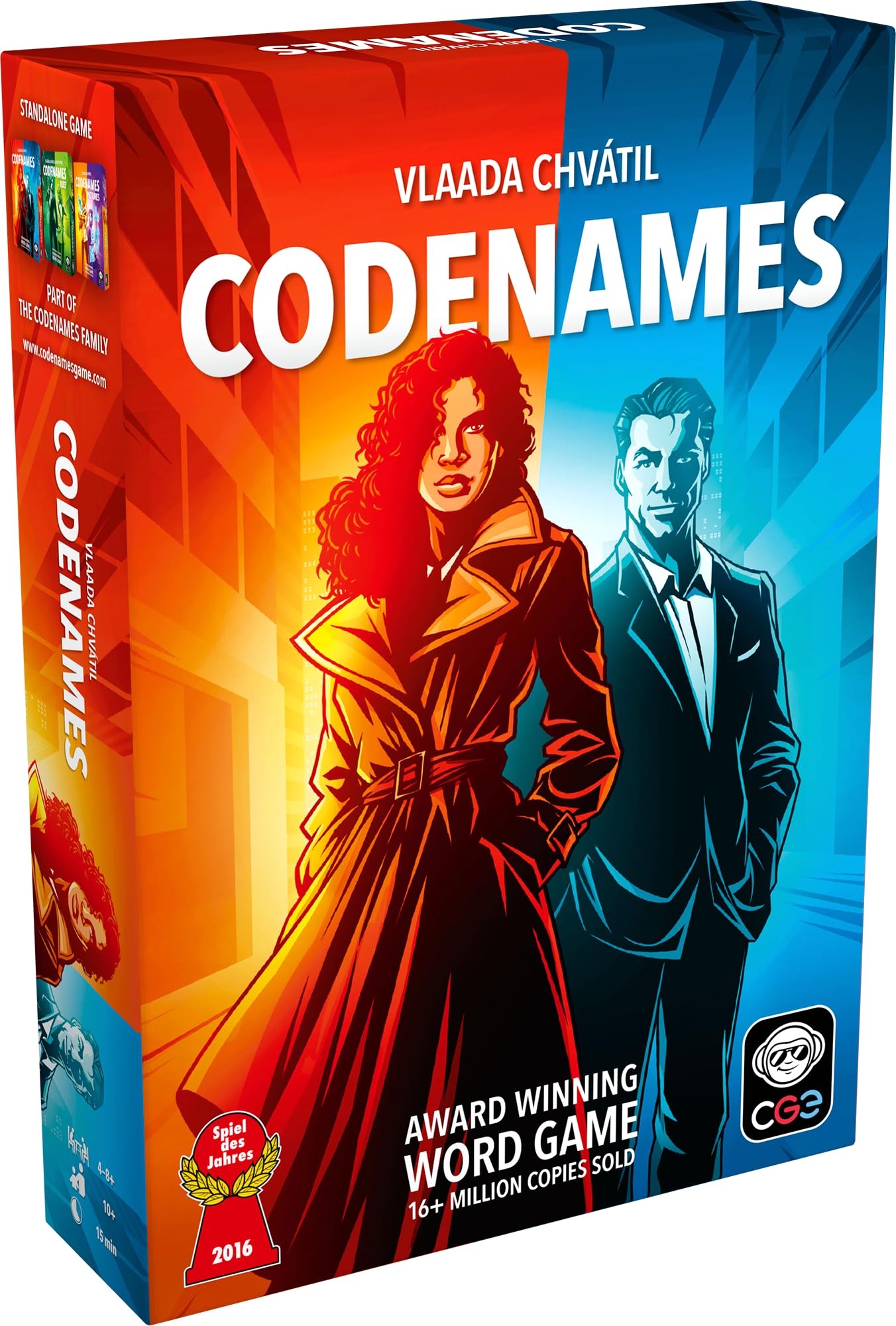
| Codenames | Clever team-based fun, older kids and adults | ~$20 |
| The Crew: Quest for Planet Nine | Cooperative puzzle-solving with surprising moments | ~$15 |
| Clank! A Deck-Building Adventure | Action-packed adventure with deck-building strategy | ~$40 |
| The Crew: Mission Deep Sea | Cooperative challenge, more complex than Quest for Planet Nine | ~$20 |
Detailed Reviews
1. Telestrations. The Hilarity Generator
Telestrations is a game where humor isn't engineered, it emerges organically from players' actual drawings and interpretations. One player draws a phrase, passes it to the next person who writes what they think they saw, then the next person draws that phrase, and so on. By the end of the chain, the original phrase has usually transformed into something completely absurd, and that's the entire appeal.
The game works with 2-8 players and takes about 30 minutes, which means it doesn't overstay its welcome. I've played this with groups ranging from age 6 to 70, and everyone gets it immediately, there's no rulebook complexity that might intimidate younger players or bore adults. The humor isn't dependent on knowing pop culture references or completing specific tasks; it's purely about how bad (or weirdly good) people are at drawing stick figures.
The pad-and-pencil format also means everyone's participating simultaneously rather than taking turns, so there's no dead time watching other people play. That constant engagement keeps the energy up throughout the entire game.
Pros:
- Works with mixed ages and abilities instantly
- Generates genuine, unpredictable humor every single game
- Quick setup and fast gameplay (30 minutes)
- Minimal rules means more focus on fun than learning
Cons:
- Relies entirely on the group's willingness to be silly, quiet groups might find it awkward
- The humor is subjective and depends on players' creativity, not game mechanics
- Not replayable if you're playing with the same group multiple times (you'll remember the funny outcomes)
2. Codenames. Strategy Wrapped in Laughter
Codenames splits players into two teams trying to identify hidden agents based on one-word clues. One player from each team gives clues to help their teammates guess correctly, which creates a ton of opportunities for miscommunication, misinterpretation, and hilarious mistakes. The humor here comes from watching your teammate guess the wrong word because your "brilliant" clue made absolutely no sense.
It works with 2-8+ players (though it's best with 4+), plays in about 15 minutes, and requires just enough strategy to keep competitive players engaged without being overwhelming for casual players. The clue-giving element introduces real creativity, you're essentially playing with language, which naturally produces funny moments when someone's weird association between two words somehow makes perfect sense only to them.
I especially like Codenames for families with older kids (10+) and adults mixed in. Younger children can still play but might struggle with the abstract thinking required to give and interpret single-word clues. It's also the best funny board games for families where you want some actual strategy involved without the game becoming overly complicated.
Pros:
- Humor emerges from actual player interaction, not the game itself
- Quick games mean you can play multiple rounds in one sitting
- Works for 4+ players with natural team dynamics
- Competitive without being aggressive or frustrating
- Deep enough for adults, accessible enough for kids who like word games
Cons:
- Requires decent vocabulary and abstract thinking, younger kids might struggle
- If one team is much stronger than the other, games become lopsided
- The humor is more subtle than slapstick; you need players who enjoy clever moments
3. The Crew: Quest for Planet Nine. Cooperative Surprises
This is a cooperative deck-building game where you're all working together to complete missions, but here's the twist, you can't tell each other what cards you have. You're basically solving puzzles together while operating with incomplete information, which creates moments of surprise and occasionally frustration that, in hindsight, become funny.
With 2-5 players and games lasting 15-20 minutes per mission, The Crew: Quest for Planet Nine moves quickly. The missions escalate in difficulty, and the best funny board games for families sometimes need this kind of cooperative pressure-cooker dynamic. You're not laughing at bad drawings or silly misinterpretations; you're laughing when someone plays exactly the card you needed, or when a mission succeeds by pure luck despite your questionable strategy.
It's less "laugh out loud constantly" and more "smile and shake your head" humor, the kind that builds because you're all experiencing moments of shared chaos together. If your family enjoys games where you're working toward a common goal rather than competing, this hits differently than games built purely around pranks or miscommunication.
Pros:
- Unique communication restriction creates genuine puzzle-solving tension
- Quick to play, good for weeknight entertainment
- Cooperative energy builds bonding rather than competition
- Missions scale in difficulty so it doesn't get stale
- Works excellently with 2-5 players
Cons:
- The humor is more situational than laugh-out-loud
- Takes a few missions to understand the system (learning curve exists)
- Not ideal if your group hates working together toward goals
- The "can't communicate" rule might frustrate players who want to chat freely
4. Clank! A Deck-Building Adventure. Laughs Through Action
Clank! is a deck-building game mixed with a dungeon-crawling adventure where you're stealing treasure from a dragon. The setup sounds complex, but the core loop is simple: build your deck, move through the dungeon, grab treasure, and don't wake the dragon. The humor comes from the chaotic moments, watching someone desperately try to escape with treasure while the dragon gets increasingly angry, or seeing a player's carefully planned strategy collapse because they drew bad cards.
With 2-4 players (plays best with 3-4) and 30-45 minute games, Clank! keeps everyone engaged. The deck-building mechanic means your starting hand is weak, but as you buy better cards, your capabilities expand. This creates natural progression and keeps games from feeling static. The dragon's awakening mechanic adds urgency and forces dramatic moments where people are essentially racing for survival.
It's the most "gamey" option on this list, if your family enjoys actual gaming depth and strategy, Clank! delivers that while still maintaining a fun, adventure-movie energy. The humor is more subtle than Telestrations but more strategic than the reliance on pure luck.
Pros:
- Deck-building mechanics are genuinely satisfying to execute
- Dragon awakening adds real tension and dramatic moments
- Scales well from 2-4 players (plays differently each time)
- Beautiful components and artwork enhance the adventure feel
- Games move at a good pace despite depth
Cons:
- Higher price point (~$40) than other options
- Steeper learning curve than Telestrations or Codenames
- Luck plays a role in card draws, strategic players might find that frustrating
- Best with 3-4 players; 2-player games feel slightly hollow
5. The Crew: Mission Deep Sea. The Harder Challenge
The Crew: Mission Deep Sea is the more complex sibling to Quest for Planet Nine. It uses a similar communication-restriction mechanic but adds depth with different mission objectives and trickier puzzle requirements. Think of Quest for Planet Nine as the introductory course and Mission Deep Sea as the advanced class, same classroom, harder material.
With 2-5 players and 15-20 minute missions, it works on the same timeframe as Quest for Planet Nine, but the missions themselves are genuinely harder. Some cooperative puzzles might take a few attempts to solve, and that repeated failure followed by eventual success creates a satisfying arc that families remember. The humor here is more about triumph than traditional "funny moments."
This is best for families who've already played Quest for Planet Nine and want a bigger challenge, or for groups that really enjoy brain-teaser games. If you're new to The Crew games, start with Quest for Planet Nine. If you love that and want more difficulty, Mission Deep Sea is absolutely worth adding.
Pros:
- Significantly more challenging than Quest for Planet Nine
- Same quick playtime with expanded strategic depth
- Cooperative missions create genuine bonding over shared puzzle-solving
- Multiple difficulty levels within the mission set
- Replay value as missions become easier after understanding them
Cons:
- Difficulty spike means some groups might feel stuck on certain missions
- Less accessible for younger kids than other options on this list
- If your group prefers laugh-out-loud humor, this won't deliver that
- Requires patience and discussion with your co-players
How I Chose These
I selected these options for best funny board games for families by weighing several factors: accessibility for mixed ages (can a 7-year-old and a 70-year-old both enjoy this?), the type of humor generated (is it forced by the rulebook or organic from player interaction?), playtime (does it finish before attention spans fracture?), and replayability (will we want to play this again next month?).
I ruled out games where humor is delivered through cards or predetermined jokes, because that style rarely lands consistently. The games here all generate laughter through player choices, misinterpretation, or shared challenge, humor that feels earned rather than scripted. I also prioritized games that don't require explaining complex rules to get to the fun part, because best funny board games for families should be entertaining, not a tutorial session disguised as game night.
Frequently Asked Questions
What if my family has kids under 8 and adults who like strategy?
Telestrations works for everyone, but if you want something with a bit more structure, try Codenames with slightly modified rules, younger kids can play on a team with adults who help with tougher clues. For pure strategy with younger players, none of the games here are ideal, but Clank! is the most strategic if you're willing to help younger players understand deck-building.
Can these games be played with just two people?
Codenames and The Crew games work great with 2 players, though Codenames feels slightly small compared to 4+. Telestrations technically works with 2 but loses the chain-effect humor that makes it special. Clank! plays with 2 but feels designed for 3-4.
Which game creates the most laugh-out-loud moments?
Telestrations wins here by a significant margin. It's specifically engineered to generate big laughs through visual miscommunication. Codenames is second, with subtle humor from weird clue associations. The Crew games are more "smile and nod" humor from cooperative chaos.
What if someone in my family hates losing?
Stick with cooperative games (The Crew series) or games with no real winners (Telestrations). Codenames and Clank! both have clear winners and losers, which can create frustration for competitive players who struggle with defeat. Telestrations is genuinely the safest option if you have someone who gets upset during games.
The best funny board games for families in 2026 aren't necessarily the newest releases, they're the ones that bring people together without creating stress. Each game here does that differently, so your choice depends on whether your family craves visual humor, clever wordplay, cooperative challenges, or strategic adventure. Start with Telestrations if you want guaranteed laughs, then branch out based on what your family actually enjoys.
Get the best board game picks in your inbox
New reviews, top picks, and honest recommendations. No spam, unsubscribe anytime.
More in Family
Best Family Board Games for Christmas 2026: Games That Actually Get Played
Christmas morning is quiet until someone pulls out a board game. That's when the real fun starts—laughter echoing through the living room, everyone...
Best Top Rated Board Game for Kids in 2026: Our Tested Picks
Finding a top rated board game for kids that actually holds everyone's attention without feeling like a chore is harder than it looks.
Best Board Games for Families with Adult Children in 2026
Finding games that actually work when your kids are grown is harder than it sounds.