By Jamie Quinn · Updated April 6, 2026
Best Modern Family Board Games in 2026: Our Top Picks for Every Family

Best Modern Family Board Games in 2026: Our Top Picks for Every Family
Finding board games that actually bring families together without boring the kids or frustrating the adults is harder than it sounds. The best modern family board games strike a balance between genuinely fun gameplay, reasonable learning curves, and playtimes that won't derail your evening. We've tested the games below with families of different ages and dynamics—here's what actually works.
Quick Answer
Codenames Board Game (2nd Edition) is our top pick because it works brilliantly with any group size from 4 to 10+ players, teaches in under two minutes, and creates the kind of laughing-out-loud moments that define great family nights. At $24.98, it's an affordable way to upgrade your game night entirely.
Our Top Picks
| Product | Best For | Price |
|---|---|---|
| CGE Codenames Board Game (2nd Edition) | Large groups and quick laughs | $24.98 |
| Azul Board Game | Strategy lovers and beautiful table presence | $34.39 |
| HUES and CUES | Visual thinkers and color enthusiasts | $24.97 |
| The Chameleon | Quick games with bluffing elements | $18.99 |
| Hasbro Gaming The Game of Life Board Game | Traditional family fun and role-playing | $18.49 |
Detailed Reviews
1. CGE Codenames Board Game (2nd Edition) — The Party Game That Actually Works
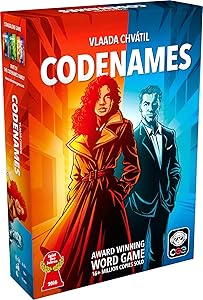
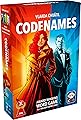
Codenames earns its place as the best modern family board game because it solves a real problem: finding something that works for everyone from a competitive sibling to your uncle who "doesn't really do games." The core mechanic is elegant—one person gives one-word clues to help their team identify secret agents among 25 cards, while the opposing team listens in trying to sabotage them. What makes it brilliant is that it requires zero special skills. You don't need strategy experience or even a good memory. You just need to think creatively about how words connect.
The 2nd edition comes with clearer cards and better components than the original, which matters more than you'd think when you're trying to read word cards from across a table. Games run 15-20 minutes, so you can play multiple rounds without anyone getting bored. The beauty of Codenames is its scalability—it works with 4 players, works even better with 6-8, and can handle 10+ if you split into larger teams.
The main limitation is that it's not a solo game or great for one-on-one play. It also requires at least one person to be comfortable giving clues without explaining themselves, which occasionally throws off very literal-minded players. But for family gatherings and group nights, this is genuinely hard to beat.
Pros:
- Lightning-fast to teach and play
- Works perfectly with 4-10+ players
- Creates hilarious "why would you say that?" moments
- Encourages creative thinking without punishing you for it
- Plays in 15-20 minutes, perfect for multiple rounds
Cons:
- Needs at least 4 players to be fun
- Not suitable for solo or two-player games
- Some players struggle with lateral thinking required for clues
---
2. Azul Board Game — The Beautiful Strategy Game
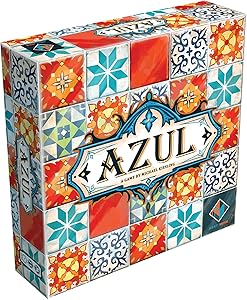
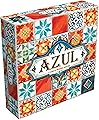
Azul looks like art and plays like strategy, which is why it sits on the coffee tables of people who actually care about their board game collection. The premise is simple—you're collecting colored tiles to complete rows on your personal board, earning points for completed patterns. But the genius is in the tile selection mechanic: when you pick tiles from the center display, you're also choosing what tiles your opponents will have access to. This creates a genuine strategic tension without overwhelming anyone.
What separates the best modern family board games from mediocre ones is their ability to scale in complexity. Azul does this perfectly. A child can play by taking tiles they like without thinking too far ahead and still have fun. An adult can spend their turn orchestrating which tiles go where to block opponents. Both players experience genuine gameplay without one group being bored.
The physical presentation matters here. The tiles are substantial and satisfying to manipulate. The board is clean and beautiful. It's the kind of game you don't mind having on display, which matters for families who value aesthetics alongside entertainment. Games run 30-45 minutes, and there's no downtime—everyone's playing almost constantly.
The trade-off is that it's best with 2-4 players. At higher player counts, the strategy becomes less interesting because you have less control over what happens when you're not picking tiles. It's also purely abstract—there's no theme or story, which some families prefer but others find less engaging than narrative-driven games.
Pros:
- Beautiful components that actually enhance gameplay
- Quick to teach, rewarding to play well
- Perfect difficulty scaling for mixed-skill families
- 30-45 minute playtime hits the sweet spot
- Plays excellently at 2, 3, or 4 players
Cons:
- Less engaging with more than 4 players
- No theme or narrative to hook some players
- Somewhat abstract—might not appeal to families who prefer themed games
- Can occasionally see runaway leaders if one person plays perfectly
---
3. HUES and CUES — The Visual Thinking Game

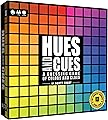
HUES and CUES is what you play when your family thinks differently than Codenames teams do. Instead of word associations, you're giving clues about specific colors among 480 color squares. One person points and gives clues like "ocean" or "sad" or "that one time we went to the beach," and their teammates guess which shade of blue you meant. It sounds niche, but it's actually one of the best modern family board games for visual thinkers and people who struggle with abstract word games.
The real innovation here is how it handles different skill levels. New players might give obvious clues and struggle. Experienced players find the subtle differences between colors and craft brilliant, lateral clues. Everyone's playing the same game but at their own level. The game includes 480 color squares split into multiple rounds, so you're not just seeing the same colors over and over.
The social dynamic is different from Codenames—it's less confrontational and more collaborative within teams. Players rarely feel bad about missing a guess because the colors genuinely are tricky. Games run 30-40 minutes depending on group size, and the variety of possible clues means multiple plays feel fresh.
The limitation is that it absolutely requires good color vision—people with color blindness will struggle with the core mechanic. It also works best with 3+ players, and the extended playtime means it's less ideal than Codenames if you want quick rounds.
Pros:
- Perfect for visual and artistic thinkers
- Works beautifully with 3-10 players
- 480 color squares mean many games feel different
- Less confrontational than word-based party games
- Accessible even for players new to modern games
Cons:
- Not accessible for color-blind players
- Requires at least 3 players
- Takes longer than Codenames (30-40 minutes)
- Less effective if your family doesn't think visually
---
4. The Chameleon: Award-Winning Bluffing Board Game — The Imposter Game
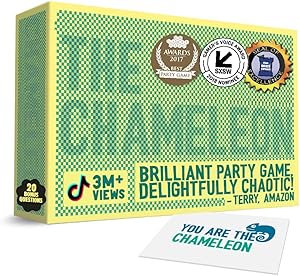
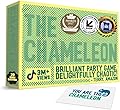
The Chameleon is smaller in physical footprint but mighty in entertainment value. In each round, everyone receives a card showing a secret word—except one player gets a card showing that they're the chameleon. Everyone then gives one-word clues trying to identify the word while the chameleon tries to blend in without giving themselves away. After clues are given, everyone votes on who they think is the chameleon. It's deduction meets bluffing meets word association, and it creates immediate table energy.
What makes this one of the best modern family board games for shorter attention spans is that rounds take 5-10 minutes. You can play a full game with multiple rounds in 20-30 minutes total. The 80 extra secret words included in the box means you won't run out of variety quickly. The rules fit on two pages, and teach time is under three minutes even for people who've never played a modern game.
The sweet spot for The Chameleon is 4-6 players. It can technically play up to 8, but the game loses some of its deduction magic when the chameleon can hide too easily in the crowd. With fewer than 4 players, the voting becomes too predictable. The game also leans heavily on language skills and word association, so families with mixed language abilities might find some players have an edge.
Pros:
- Tiny playtime (5-10 minutes per round)
- Teaches in under 3 minutes
- Creates immediate engagement and laughter
- Includes 80 extra words to prevent repetition
- Works with casual and experienced gamers equally
Cons:
- Best with 4-6 players (weaker with 3 or 8+)
- Relies heavily on word association and language skills
- Less suitable for families with significant age gaps
- Limited to conversation-based gameplay
---
5. Hasbro Gaming The Game of Life Board Game — The Classic Reimagined

The Game of Life is the game that introduces kids to the concept of life choices and probability without being preachy about it. This version includes 31 different careers to pursue, giving it much more variety than the original. You're spinning a spinner, moving around a board, making decisions about college versus career, and ultimately watching how different choices lead to different endings. It's nostalgic for parents but genuinely engaging for kids because it involves role-playing and decision-making, not just following rote rules.
What makes The Game of Life work for families is that it creates natural conversation starters. A 10-year-old picking a career opens up discussions about what they might want to do. Someone landing on a life event creates funny moments. The spinner-based movement means luck matters enough that no one feels permanently behind, but choices matter enough that you can strategize. The 31 careers mean you're not all pursuing the same paths.
The honest limitation is that this is more about the experience and family bonding than it is about challenging gameplay. The strategy is minimal once you've played once or twice. Adults who crave actual tactical decisions in their board games will find it simplistic. The playtime can stretch to an hour with certain player combinations, which is long for what's ultimately a luck-and-dice game. It's also better for the 8-12 age range where kids engage with the life choices; younger kids might lose interest, and teenagers might find it too simplistic.
Pros:
- Creates natural family conversations
- 31 different careers provide real variety
- Spinner-based so luck keeps games competitive
- Great introduction to life-themed gaming
- Works for mixed ages (kids to adults)
Cons:
- Limited strategic depth once learned
- Playtime can exceed 1 hour
- Better for ages 8-12 than younger or older players
- More about experience than challenging gameplay
- Luck dominates strategy in most games
---
How I Chose These
Finding the best modern family board games means looking at multiple factors beyond just fun. I weighted play time heavily—games that run 20-45 minutes work better for actual families than those requiring 90+ minutes. I also prioritized games with flexible player counts because family compositions vary; a game that only works perfectly with exactly 4 players isn't as useful as one handling 3-8.
Teachability matters enormously. Games you can explain in under five minutes see more plays because the setup friction is lower. I excluded anything requiring rule lookups mid-game or complex exception tracking. I also considered strategic depth—not because families need chess-like complexity, but because games that scale from casual to competitive keep both kids and adults engaged over multiple plays.
Finally, I weighted cost-to-engagement ratio. These five games range from $18 to $35, and all provide genuine value for that price point. I excluded expensive games or those that require expansions to be truly fun.
Frequently Asked Questions
What makes a board game suitable for modern families?
Modern family board games prioritize quick setup, flexible player counts, reasonable playtimes, and gameplay that works whether you're playing with kids or just adults. They tend to involve less luck-based elimination and more engaging mechanics that keep everyone involved throughout the game.
Are these games better for casual families or competitive ones?
All five work for casual families. Codenames, HUES and CUES, and The Chameleon lean toward casual party vibes. Azul appeals to competitive players who enjoy strategy. The Game of Life works for families who prefer storytelling and role-play elements over pure strategy.
Do I need multiple games or can I start with just one?
Start with one. If your family is 4+ people who like word games and quick rounds, get Codenames. If you have 2-4 people and want something you'll play repeatedly, get Azul. If visual thinking is your family's strength, start with HUES and CUES. One good game that gets played regularly beats five mediocre games gathering dust.
What's the best modern family board games option for families with kids ages 6-8?
The Game of Life is designed for ages 8+, which is the absolute youngest I'd recommend for any of these. At 6-8 years old, your family might need to look at dedicated kids' games until they're ready for these more complex titles. Most of these require reading and strategic thinking that develops around ages 8-10.
Can I play these games with adults only, or are they just for families?
All five play excellently with adults. Codenames is a common party game staple. Azul and HUES and CUES work great for game night groups. The Chameleon is actually more fun with adults who understand bluffing psychology. The Game of Life is the only one that leans "family," but it still works for adult game nights if you're seeking casual fun rather than competition.
The best modern family board games aren't about complicated rules or expensive components—they're about creating moments where everyone wants to play again next weekend. The five games above do exactly that, each bringing something different to your table depending on your
Get the best board game picks in your inbox
New reviews, top picks, and honest recommendations. No spam, unsubscribe anytime.
More in Family
The Best Board Games for Kids 5-7 in 2026
Finding the right board game for kids aged 5-7 is trickier than it sounds. You need something engaging enough to hold their attention, simple enough that...
Best Board Games for Families with Young Kids in 2026
Finding a board game that actually keeps young kids engaged without making parents want to pull their hair out is harder than it sounds.
The Best Board Games for Families in 2026
Finding great board games for families that actually keep everyone engaged—without someone flipping the board—is tougher than it looks.