By Jamie Quinn · Updated March 24, 2026
Best Party Board Games for Adults in 2026



Best Party Board Games for Adults in 2026
You're hosting friends this weekend and want something better than the same old card games. Party board games are designed to get people laughing, thinking fast, and actually engaged - no phones required. The right game can transform an ordinary night into something memorable, but picking the wrong one means everyone's bored by round two.
Quick Answer
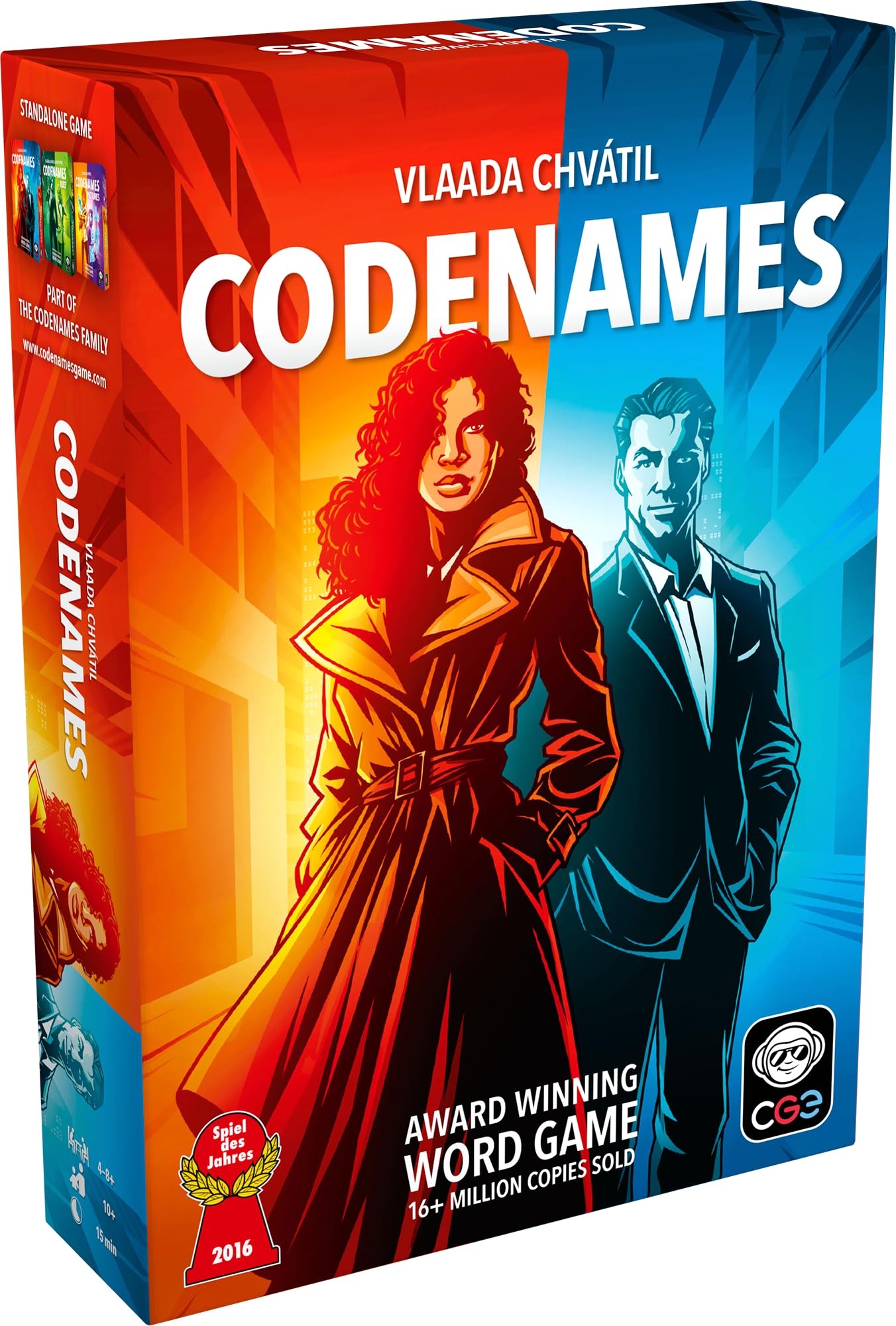
Codenames is the best party board game for adults because it works with any group size, plays in under 30 minutes, and creates funny moments without requiring extensive rules explanation. Two captains give one-word clues to guide their teams to the right words, and the simplicity masks surprising depth in strategy.
Our Top Picks
| Product | Best For | Price |
|---|---|---|
| Codenames | Large groups and quick games | $24.99 |
| Telestrations | Silly laughs and creative players | Check current price |
| Deception: Murder in Hong Kong | Social deduction and shorter sessions | Check current price |
| One Night Ultimate Werewolf | Fast-paced hidden role games | $19.82 |
| Sushi Go Party! | Lighter strategy with lighter vibes | $21.99 |
Detailed Reviews
1. Codenames - The Social Deduction Essential

Codenames is the closest thing to a perfect party game. You're not playing against the board - you're playing with a partner, trying to identify your team's secret agents using only one-word clues. The captain says something like "spy" or "movie," and their team has to figure out which words on the board match that clue without accidentally identifying the other team's agents.
What makes it brilliant is how it scales instantly. Four people? Perfect. Eight people? Still works. Twelve people? Split into teams and go. The 5x5 grid of words stays constant, but the combinations are endless because you can play with different word sets each time. Games run 15-30 minutes, so you can play multiple rounds without anyone getting bored.
The strategy is deeper than it looks. A clue like "Bermuda" could connect triangle, shorts, and grass, but your team might think of vacation instead. The tension comes from that space between what you mean and what people actually hear. New players immediately understand the rules, but watching someone give a genius clue that makes their entire team groan is peak party entertainment.
Pros:
- Scales from 4 to 12+ players without rule changes
- Everyone stays engaged every round (no sitting out)
- Setup is 30 seconds
- Infinite replayability with included word sets
- Teaches new players in under two minutes
Cons:
- Requires at least two people per team (not great for exactly three people)
- Word associations vary by region, which occasionally creates confusion
- Can feel repetitive if you play the same word set multiple times
---
2. Telestrations - The Laugh Machine
Telestrations is a game about how badly people can communicate. You draw a phrase, pass it to the next person who writes what they think the drawing was, they pass it to someone who draws that description, and so on. By the end, the result is completely unrecognizable. The reveal phase - where everyone sees the chain of destruction - generates guaranteed laughter.
This game works because the results are always hilarious regardless of talent level. A terrible drawer can create chaos just as easily as someone who actually studied art. Someone might draw "accountant" and after three rounds it becomes "space alien eating spaghetti." The humor isn't at anyone's expense; it's shared confusion.
Setup takes one minute. You have pads and markers already. The game includes phrase cards for prompts, or you can write your own if you want tighter control. Games run 20-40 minutes depending on group size. The optional house rules keep things moving - some groups skip certain categories to save time.
Pros:
- Generates the most laughter per dollar spent
- Works with any art skill level (bad drawings are funnier)
- No reading required for shy people
- Scales from 4 to 8+ players smoothly
- Takes physical space but nothing else
Cons:
- Requires drawing, which some adults feel self-conscious about
- Paper and markers need to be tracked (easy to lose components)
- Less engaging if your group has zero sense of humor
- Pad quality degrades after multiple erasures
---
3. Deception: Murder in Hong Kong - The Intense Social Game

Deception: Murder in Hong Kong is a social deduction game where one person is a murderer, one person is a detective, and everyone else is trying to figure out who committed the crime. The murderer knows what happened. The detective doesn't, but they get clues. Everyone else is trying to deduce the truth before someone innocent gets blamed.
The genius hook is that the murderer can't vote but gets to hear everyone's arguments. The detective gives one-word clues using tokens - pointing at evidence, weapons, alibis. Other players debate, accuse, and defend based on what they think they've figured out. Games last 15 minutes, which keeps the tension high and prevents overthinking.
This works best with 4-12 people. With fewer than four players, roles get thin. With more than twelve, some people have less to contribute. The roles rotate, so everyone gets a turn as murderer, detective, and civilian. The social dynamics make every game feel different even with the same ruleset.
Pros:
- Faster rounds than other social deduction games
- Detective role is challenging (they're not all-powerful)
- Everyone has meaningful decisions to make
- No player elimination - everyone plays the whole game
- Physical tokens make clues visual and easier to track
Cons:
- Requires players who enjoy confrontation and debate
- Takes setup time to organize evidence cards and tokens
- Can feel unfair if murderer gets lucky guesses
- Less fun with people who shut down under social pressure
---
4. One Night Ultimate Werewolf - The Speed Round Champion

One Night Ultimate Werewolf strips away the elimination mechanic that kills pacing in traditional werewolf games. Everyone plays the entire game - all five minutes of it. You get a role card at night (hidden from others), things happen during the night phase that might swap your role, and then one accusation during the day determines who gets eliminated.
The roles include werewolves, villagers, special characters with abilities, and tokens on the table that might flip to reveal more wolves. The chaos comes from the fact that you might have been a werewolf at the start but aren't anymore. Or you think someone switched roles but they didn't. Or maybe you're making things up because you're confident and have no idea what's actually true.
This is the best party board game if you want rapid-fire rounds. You can play five games in the time one traditional werewolf game finishes. Groups with short attention spans love this. The randomness means the person who won last round doesn't automatically win this one.
Pros:
- Games finish in 5-10 minutes
- No player elimination (everyone plays simultaneously)
- Components are simple and durable
- Role abilities create varied gameplay
- Scaling works from 3 to 10 players
Cons:
- Victory feels luck-dependent rather than skill-dependent
- Same roles can feel stale after many plays
- Requires some deductive reasoning (not ideal for very casual groups)
- Less discussion than longer social deduction games
---
5. Sushi Go Party! - The Lighter Strategy Option
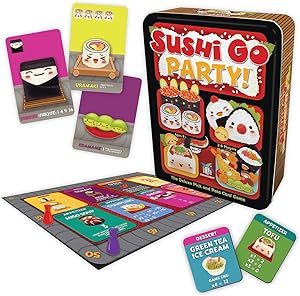
Sushi Go Party! is a drafting game where you're building the best sushi combination. You pass hands of cards around the table, each player picks one card, then the hand moves to the next person. By the end, you've collected different sushi types, nigiri, and desserts for points.
This is fundamentally less "party" than the others on this list, but it works at parties because turns are fast, everyone's paying attention (you never know who'll take the card you want), and it doesn't require social energy. It's perfect if your group wants something more strategic than Telestrations but less confrontational than Deception.
The modular setup means you can adjust which cards are in play, creating different games each time. Expand sets add even more variety. Games run 20-30 minutes with 2-8 players. New players understand the core mechanic in one example round.
Pros:
- Teaches new players in minutes
- Drafting creates natural tension without confrontation
- Beautiful artwork and quality components
- Modular design prevents staleness
- Works with 2-8 players smoothly
Cons:
- Less social interaction than true party games
- Can feel simplistic for strategy game enthusiasts
- Player elimination is possible (usually eliminated players are bored)
- Takes a few rounds to understand optimal play
---
How I Chose These
These five games represent different styles of best party board games for adults because different groups have different needs. Codenames and Telestrations maximize laughter and inclusivity - no one gets eliminated and everyone participates equally. Deception and One Night Ultimate Werewolf satisfy people who want social deduction and higher stakes without the downtime of traditional social games. Sushi Go Party! bridges into strategy without demanding heavy rules knowledge.
I weighted heavily toward games that finish in 30 minutes or less (except when player count makes it unavoidable), because parties aren't long enough for 90-minute slogs. I prioritized games where new players can jump in without extensive teaching. Most importantly, I chose games that create memories - the specific moments people talk about the next week, not just "we played a game."
---
Frequently Asked Questions
What's the best party board game for adults with large groups?
Codenames scales better than anything else. You can run it with 4 to 15 people without changing rules - just adjust team sizes. For groups over 10, split into two tables and run parallel games.
Can I play these games online?
Codenames has official online versions. Telestrations has browser-based knockoffs that work fine. Deception and Werewolf are harder to play virtually because they lose the social energy. Sushi Go Party! can work over video call but drafting loses some tension.
Which best party board games for adults work with only three or four people?
All of them work with four. With three, Codenames needs a weird rule tweak (solo player vs. a team), One Night Ultimate Werewolf gets thin, and Deception struggles. Sushi Go Party! actually plays better with fewer people because drafting feels more strategic.
How much table space do I actually need?
Codenames: small table, easily played on a couch. Telestrations: needs a flat surface for everyone to draw. Deception: moderate space for evidence cards and voting tokens. Werewolf: minimal space. Sushi Go Party!: moderate space for card organization.
Are these good as gifts for people who don't typically play board games?
Absolutely. Codenames is the easiest gateway - people understand it instantly and have fun immediately. Telestrations appeals to people who think they're "not board game people" because it's really just drawing with friends.
---
Pick one based on your group. If you have wide-ranging interests and just want the safest choice for best party board games for adults, Codenames wins. If your group is already comfortable with each other and wants maximum laughter, Telestrations. If people want confrontation and debate, grab Deception or Werewolf. For something lighter that still engages everyone, Sushi Go Party! hits the mark. Any of these will outperform scrolling through your phone, and they'll get people talking - which is what parties are actually about.
Get the best board game picks in your inbox
New reviews, top picks, and honest recommendations. No spam, unsubscribe anytime.