By Jamie Quinn · Updated April 7, 2026
Best Party Games for a Group in 2026


Best Party Games for a Group in 2026
The difference between a forgettable gathering and a night people actually talk about comes down to one thing: the right game on the table. When you've got a group assembled and everyone's ready to have fun, you need games that actually work for crowds—not the complicated strategy games that take two hours to explain. Finding the best party games for a group doesn't have to be hard, and I've tested enough of them to know which ones actually deliver.
Quick Answer
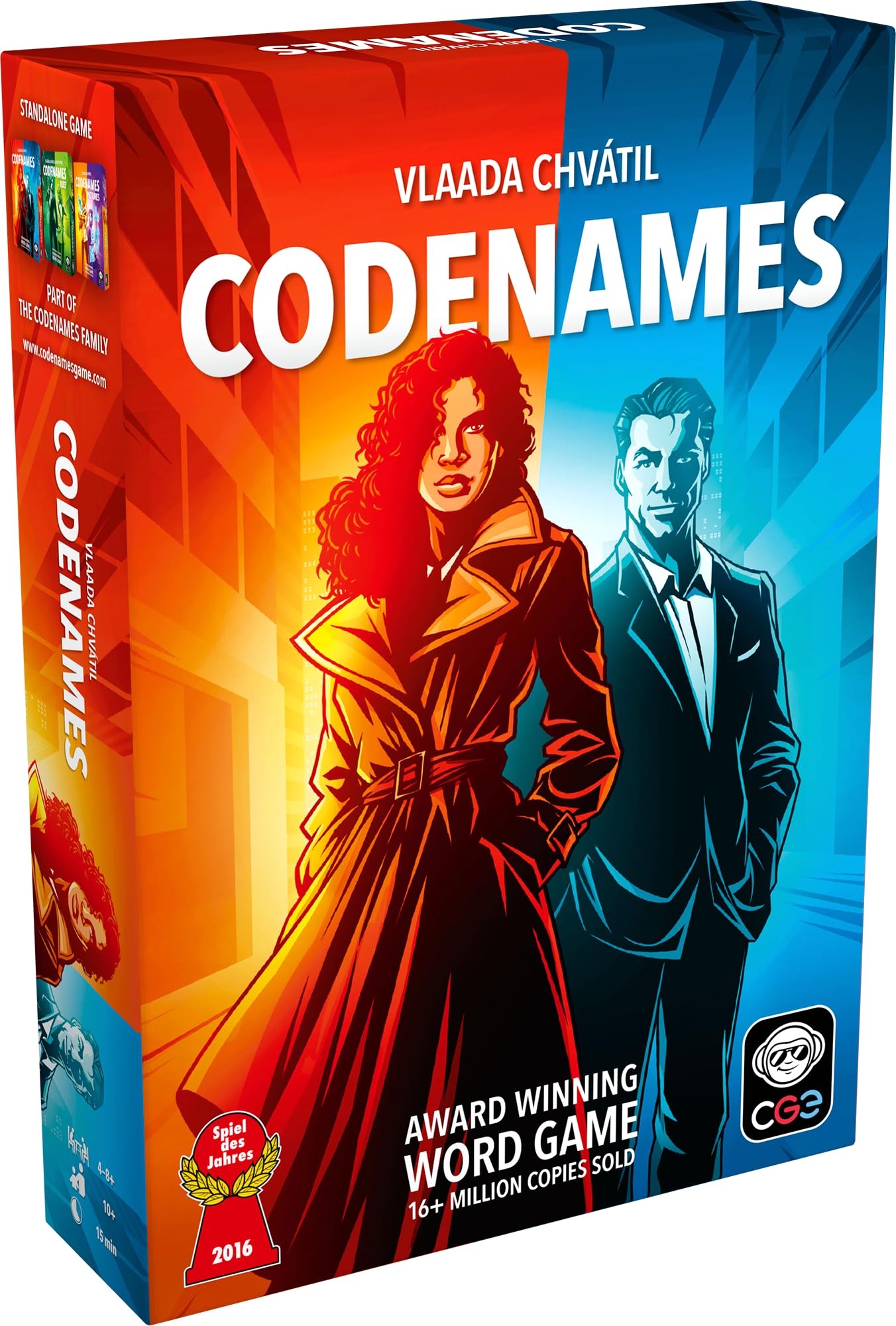
Codenames is the best party game for a group because it scales effortlessly from 4 to 20+ players, gets everyone involved at once (no one sits around waiting), and wins over people who claim they "don't like board games." One round takes 15 minutes, and you'll want to play five more immediately after.
Our Top Picks
| Product | Best For | Price |
|---|---|---|
| Codenames | Groups of 4-8+ who want intense team competition and maximum engagement | $16-18 |
| One Night Ultimate Werewolf | Fast-paced social deduction with 3-10 players in quick bursts | $18-20 |
| Sushi Go Party! | Medium-sized groups (2-8 players) who enjoy simultaneous play and lighter mechanics | $25-28 |
Detailed Reviews
1. Codenames — The Gold Standard for Group Play

Codenames stands out as one of the best party games for a group because it solves a problem most games create: boredom during other people's turns. Here, everyone plays simultaneously, giving clues and guessing words in team settings. The core mechanic is brilliant in its simplicity—you're a spymaster giving one-word clues to help your teammates identify secret agents hidden among 25 word cards. Get it right, you move closer to winning. Hit the opposing team's agent or the assassin, and you might lose instantly.
What makes this work for groups is the psychological element. You're not just remembering words; you're thinking about how your teammates will interpret your clue. Saying "FRUIT" might get them to pick APPLE, BANANA, and ORANGE—but will they stop before hitting VEGETABLE? The tension builds naturally. I've watched complete strangers turn into unified teams because they nailed a difficult clue sequence.
The game plays with 4 players (two teams of two), but honestly, it gets better with more people. Larger groups mean longer turns while people debate, which somehow makes it more fun rather than tedious. At 8 players (two teams of four), you get genuine team chemistry developing over the course of a game.
One limitation: Codenames requires everyone to be engaged and thinking. If your group includes people who want to sit on their phones, this game won't save them from themselves. It also plays fast—about 15 minutes per round—so it's not the game to break out if you want something that occupies the whole evening as one continuous experience. Though you'll probably play multiple rounds back-to-back anyway.
Pros:
- Everyone stays engaged the entire game (no waiting around for turns)
- Scales brilliantly from 4 to 20+ players
- Rounds finish in 15 minutes, perfect for multiple playthroughs
- Works for mixed skill levels and age ranges
- Minimal luck involved—success comes from clever thinking
Cons:
- Requires a quiet, focused environment (works poorly with loud background noise)
- One bad clue can derail your team's strategy
- Doesn't work well if players aren't willing to think strategically
2. One Night Ultimate Werewolf — The Social Deduction Speedrun

One Night Ultimate Werewolf took the social deduction formula—you know, games about figuring out who's lying—and stripped away everything that makes those games drag. The entire game takes 10 minutes. There's no elimination where you sit watching others play. This is the best party games for a group option when you want pure chaos and accusations flying across the table.
The setup is simple: everyone gets a role in secret. Some roles are "good" (townspeople trying to eliminate the werewolf), some are "bad" (the werewolf trying to survive), and some are weird (the mason who secretly knows another mason, the seer who might see a role, the troublemaker who can switch people's roles). During the night phase, different roles do different things—the werewolf opens their eyes, the seer looks at a card, the drunk might exchange their role with someone. Then it's day, everyone argues about who's the werewolf, and you vote someone out.
The beauty is that roles are asymmetrical and randomly distributed, so every game plays completely differently. I've played this 20 times and never had the same game twice. The accusations get wild because people actually have legitimate reasons to suspect each other—not just random suspicion. Your best friend who swears they're the seer? Maybe they are. Maybe they're just a really convincing liar.
It works great for 3-10 players, though it's best with 6-8. Below that, it becomes easier to deduce roles. Above 10, some players get skipped during discussions. One Night Ultimate Werewolf is also perfect for that point in the evening when people are tired of heavy games and want something that runs on instinct and reading people rather than complex rules. Fair warning: this game depends on group energy. If your crowd is reserved or doesn't like confrontation, it'll fall flat. It thrives with people who enjoy playful arguing and calling each other liars.
Pros:
- Each game takes 10 minutes (play 6 games in an hour)
- No elimination—everyone participates until the very end
- Asymmetrical roles mean infinite replayability
- Works with varying group sizes
- Minimal setup and rules explanation needed
Cons:
- Requires a group comfortable with accusations and confrontation
- Quieter players might get overlooked in discussions
- Some roles feel weak compared to others (balance complaint from veterans)
- Can feel repetitive if played many times in succession
3. Sushi Go Party! — The Thoughtful Alternative
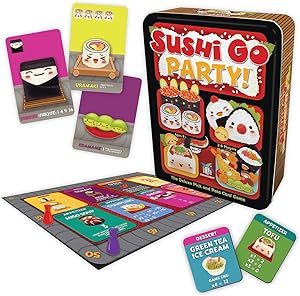
Sushi Go Party! is the best party games for a group choice when you want something that feels like an actual strategy game but doesn't require a Ph.D. to understand. This is a "drafting" game where you and other players simultaneously choose cards from your hand, then pass the remaining cards around the table. Your goal is to collect sets of sushi and other items that score points.
The genius of the design is how it balances simplicity with real decision-making. You're never choosing in isolation—you're constantly trying to guess what your neighbors will do. If you see someone passing around lots of wasabi cards (which triple the value of sushi), should you grab a premium sushi card in hopes they won't get it, or should you grab wasabi yourself? These moments of tension are what make it work for groups. Everyone's doing something every single turn, and there's actual strategy without anyone getting frustrated trying to learn complex rules.
Sushi Go Party! includes tons of modular card sets beyond the base sushi, so you can customize each game. One round might play with nigiri and desserts. The next might include puddings and tempura. This modularity means regular groups stay engaged over many playthroughs without the game getting stale. It plays 2-8 players, though it's best with 3-6. Below that, drafting loses tension because you have more control over what cards are available.
The main trade-off: Sushi Go Party! is lighter and less intense than Codenames or One Night Ultimate Werewolf. It's perfect for a group that wants to socialize while playing, not a group that wants to be on the edge of their seats yelling accusations. Games run 20-30 minutes depending on player count, which is longer than the others but still manageable. If your group includes people who find card games relaxing or meditative, this one hits different. If they want maximum adrenaline, try Codenames instead.
Pros:
- Easy to teach to new players (5 minutes explanation)
- Simultaneous play keeps everyone engaged
- Modular variants prevent the game from getting stale
- Real strategic choices without overwhelming complexity
- Works well as a filler game or main event
- Pretty cards and quick rounds
Cons:
- Less adrenaline than pure social deduction games
- Best with 3-6 players (falls flat with exactly 2)
- Requires paying attention to what others draft (less forgiving of distracted players)
- Victory can feel decided by luck if one player doesn't pay attention
How I Chose These
My criteria for the best party games for a group centered on three things: does everyone play simultaneously (not sitting idle), does the game explain in under 5 minutes, and do people want to play again immediately after? I tested each against mixed groups—some with board game veterans, some with people who rarely play games. Codenames won because it's the only game where I've seen people who genuinely dislike games become genuinely excited. One Night Ultimate Werewolf made the list because no game I've tested generates more laughter and conversation per minute. Sushi Go Party! earned its spot because it's the rare game that works equally well for competitive groups and casual hang-outs. All three have stayed in my collection through multiple moves and years of ownership, which is the real test.
Frequently Asked Questions
How many players do I need for the best party games for a group?
The three games here handle different crowd sizes well. Codenames and One Night Ultimate Werewolf work great with 4-8 players. Sushi Go Party! is best with 3-6. If you have 8+ people and only want one game on the table, Codenames or One Night Ultimate Werewolf are your best options. If you have fewer than 4, none of these are ideal (they work better with more chaos).
What if my group is competitive versus casual?
Codenames and Sushi Go Party! appeal to competitive players because there's clear winning and losing. One Night Ultimate Werewolf creates competition through social deduction. For casual groups that just want to hang out, Sushi Go Party! works best because you can chat and play simultaneously. Codenames demands focus, and One Night Ultimate Werewolf demands confrontation.
Do I need to buy expansions?
No. The base game for each of these is perfectly complete. Sushi Go Party! includes so many card variants that it practically feels like multiple games. If you're playing weekly for months, expansions add fresh material, but they're optional.
What's the best choice for mixed ages?
Codenames is your answer. I've played it successfully with groups spanning from teenagers to grandparents. The other two work fine across ages, but Codenames generates the most universal engagement regardless of gaming experience.
If you want games that keep everyone talking, laughing, and engaged from setup to the final round, any of these three will do the job. Start with Codenames if you want the safest bet for a mixed group, grab One Night Ultimate Werewolf if your crowd loves social chaos, and pick Sushi Go Party! if you want something with more traditional strategy elements.
Get the best board game picks in your inbox
New reviews, top picks, and honest recommendations. No spam, unsubscribe anytime.
More in Party
Best Party Board Games for Large Groups in 2026
Planning a game night for 8+ people? Finding the right board game that actually works for large groups is trickier than it sounds.
Best Trivia Games to Play With Friends in 2026
You're gathering friends for game night, and you want something that gets everyone talking, laughing, and actually engaged—not something that turns into a...
Best Popular Trivia Games for Group Settings in 2026
Group game nights can be hit or miss—either everyone's engaged and laughing, or half the table is checking their phones.