By Jamie Quinn · Updated April 12, 2026
Best Small Family Board Games in 2026: Our Top 5 Picks for Quality Game Nights


Best Small Family Board Games in 2026: Our Top 5 Picks for Quality Game Nights
Finding board games that actually work for families is harder than it sounds. You need something that doesn't take three hours to teach, won't bore the adults, and keeps kids engaged without feeling like punishment. After testing dozens of options, I've narrowed down the best small family board games that deliver real fun and don't require a physics degree to understand.
Quick Answer
The Crew: Quest for Planet Nine is our top pick for best small family board games overall. At just $14.95, it's an affordable cooperative trick-taking game that works beautifully with 2-5 players, teaches in under five minutes, and creates genuinely tense moments where everyone feels like they're solving a puzzle together rather than competing.
Our Top Picks
| Product | Best For | Price |
|---|---|---|
| The Crew: Quest for Planet Nine | Best overall value and cooperation | $14.95 |
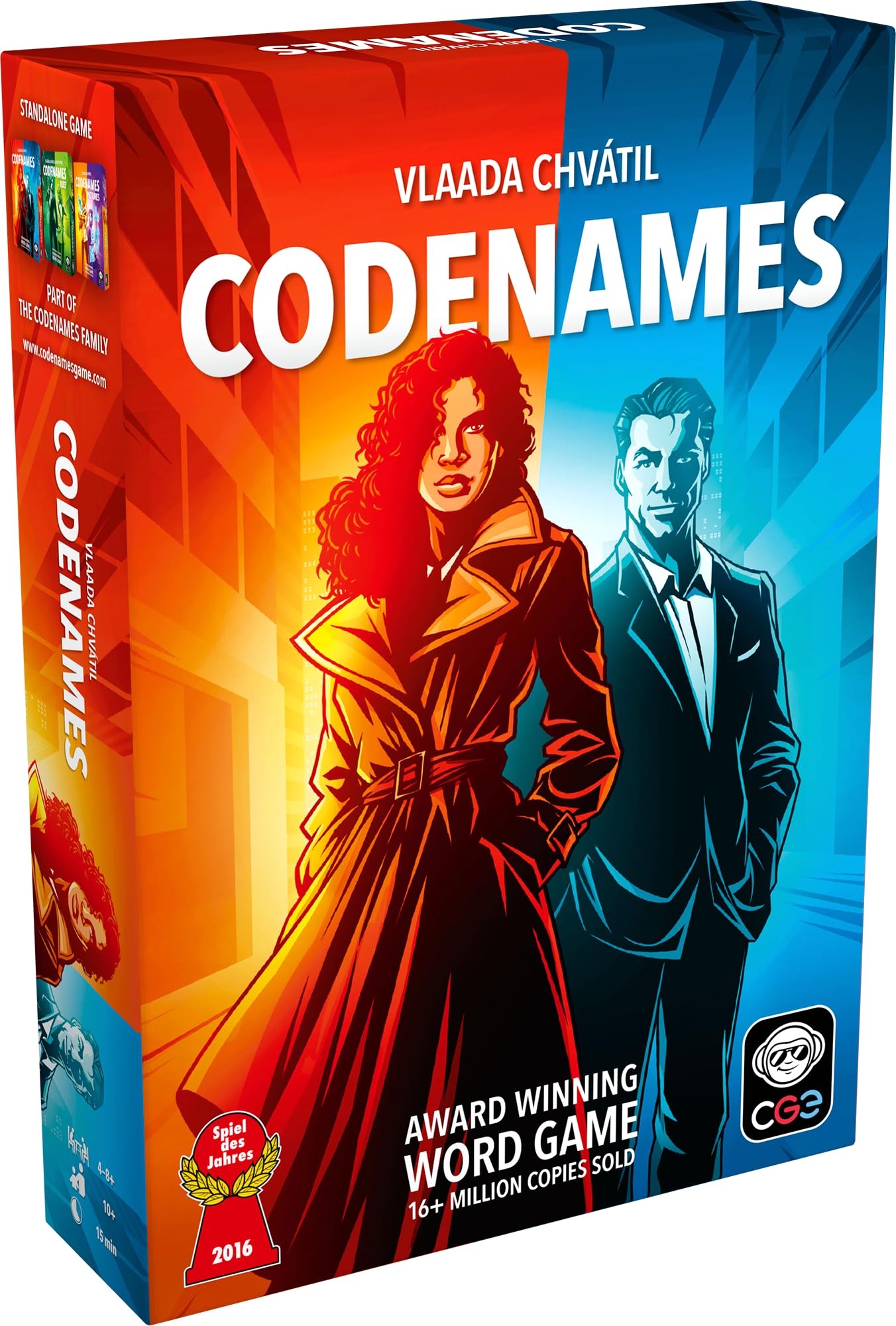
| Codenames | Larger family groups and party vibes | $19.94 |
| The Crew: Mission Deep Sea | Extended campaign play | $18.21 |
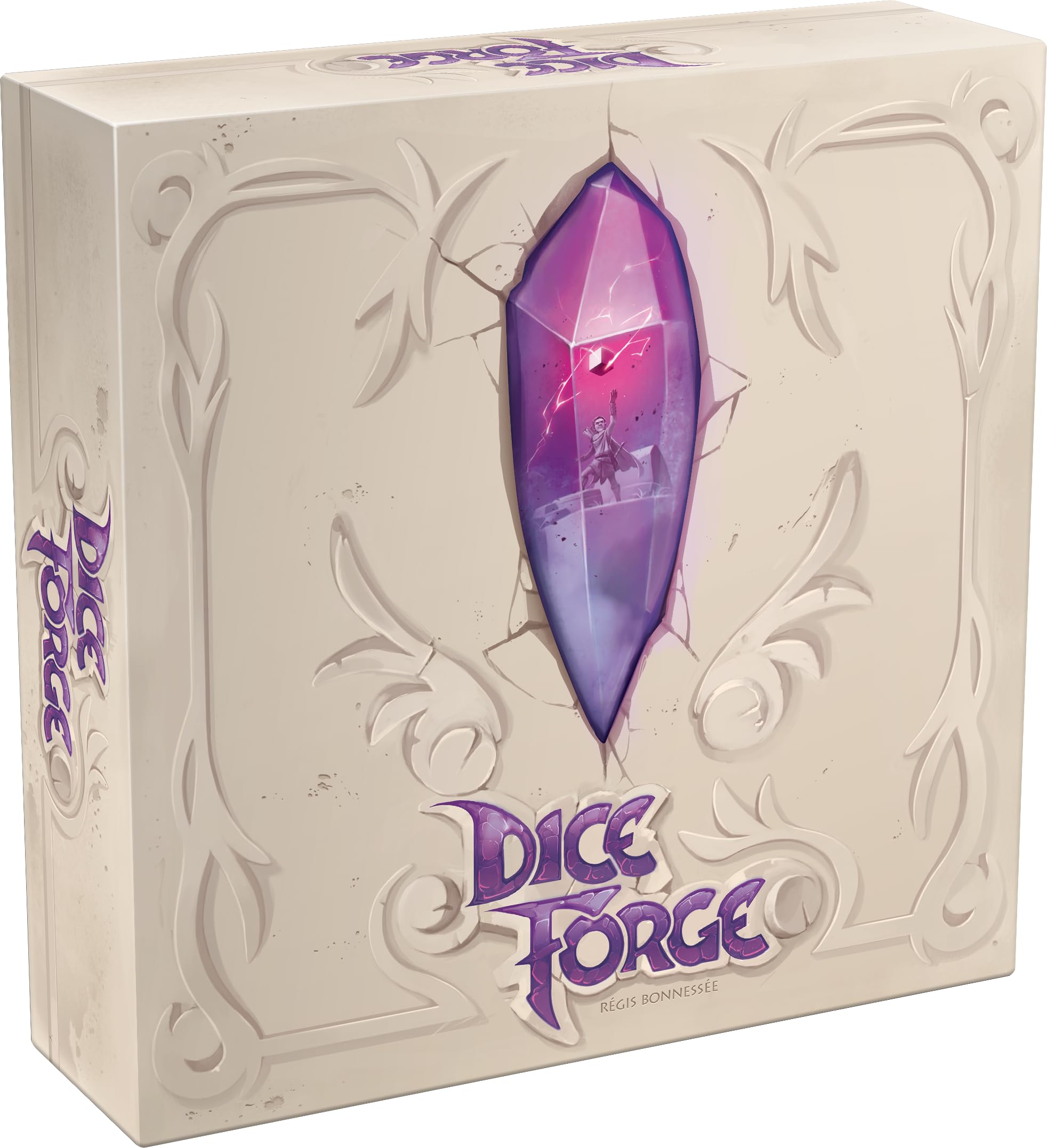
| Dice Forge | Light strategy and solo appeal | $48.99 |
| Clank! A Deck-Building Adventure | Adventure theme and replayability | $64.99 |
Detailed Reviews
1. The Crew: Quest for Planet Nine — Best Overall Value and Cooperative Magic
This game genuinely surprised me. For under $15, you get a cooperative trick-taking game that plays 2-5 people and creates this wonderful sense of shared purpose. Unlike most family games where players compete against each other, this one has you all working toward specific mission objectives each round. One round you might need to win exactly two tricks; another might require the player with the lowest card to win a specific trick.
The brilliance is in the simplicity. There's no randomness, no luck beyond your initial hand. Everything hinges on communication, deduction, and coordinating who plays what card when. My 8-year-old and my 60-year-old mom both found it equally engaging. Setup takes 30 seconds, teach time is roughly five minutes, and rounds play in about 10-15 minutes each. The 50-mission campaign unfolds across multiple play sessions, so you're not locked into one sitting.
The only real limitation is that this works best with players who can think strategically and handle some tension. If your family prefers pure luck-based games or needs constant action and chaos, you might want something different.
Pros:
- Incredibly affordable for the depth you get
- Teaches and plays in under 20 minutes
- Campaign structure keeps bringing you back
- Works equally well with 2 players or 5
Cons:
- Requires strategic thinking (not ideal for very young kids)
- Can create mild "analysis paralysis" if someone overthinks
- No solo variant, always needs at least 2 people
2. Codenames — Best for Larger Groups and Party Energy

Codenames is the game you grab when half your extended family shows up and you need something that works for 4-8 people at once. It's a word association game where one player from each team gives one-word clues trying to get their teammates to guess the right words on a 5x5 grid. "Fruit? Four" might get people pointing at APPLE, ORANGE, BANANA, and hopefully nothing that'll make your team lose.
What makes this work as one of the best small family board games is that it requires zero special knowledge. You don't need to understand game mechanics or remember card effects. You just need to know words and be willing to make associations. A 7-year-old and a 70-year-old can play together meaningfully.
The game moves fast—20-30 minutes typically—and the social interaction is the whole point. You're watching people's faces when they guess wrong, celebrating when someone makes a wild association work, and occasionally ending up in friendly arguments about whether a clue was fair. There's minimal downtime since everyone's involved on every turn.
This isn't a strategy game, and there's no campaign or progression system. If you want something with more mechanical depth or replayability through advancing rules, you'll need something else. But for pure enjoyment and getting non-gamers excited, it's exceptional.
Pros:
- Works with groups from 4-8+ people
- Literally anyone can learn it instantly
- Plays quickly, perfect for casual nights
- Massive replayability because the word grid is always different
Cons:
- Requires at least 4 players (needs 2 teams of 2)
- Can be unbalanced if one team has much stronger clue-givers
- Not strategic in the traditional sense
3. The Crew: Mission Deep Sea — Best for Campaign Depth

The Crew: Mission Deep Sea is essentially the bigger sibling to Quest for Planet Nine. Instead of a space exploration theme, you're on a submarine solving 50 progressively complex missions. The core mechanic—cooperative trick-taking with communication restrictions—stays the same, but the difficulty curve is steeper and the mission variety is more inventive.
Where this shines is if your family falls in love with the core concept but wants more challenge. Mission Deep Sea introduces twists like "only the player with the most tricks wins," multi-stage objectives, and increasingly restrictive communication rules. By mission 40, you're genuinely sweating because one wrong card play cascades into failure.
At $18.21, it's seven dollars more than Quest for Planet Nine, but the campaign is longer and considerably harder. This matters if your group includes competitive adults who'll get bored with easier games. It doesn't matter much if your primary players are young kids or you just want casual, relaxing game nights.
The production quality is solid—the cards feel good, the rulebook is clear, and the campaign structure keeps you motivated to keep playing. Like its space-themed sibling, it needs at least 2 players and plays best with 3-4.
Pros:
- Substantial difficulty curve keeps experienced players engaged
- 50-mission campaign provides hours of gameplay
- Thematic and atmospheric
- Great for groups that already love Quest for Planet Nine
Cons:
- Harder than Quest for Planet Nine—might frustrate younger kids
- Requires committed players who'll return to finish the campaign
- Doesn't work for solo play
4. Dice Forge — Best for Light Strategy and Satisfying Progression
Dice Forge stands out because you're literally building your own custom dice throughout the game. Each turn you roll your dice, spend resources, and then visit temples to replace individual die faces with stronger ones. By the end of the game, everyone's rolling completely different dice than they started with.
This creates this wonderful sense of progression that families actually respond to. Kids feel like they're getting stronger. Adults enjoy the optimization puzzle of deciding which die faces to upgrade first. The theme—Greek mythology and becoming a hero—isn't revolutionary, but it supports the mechanics nicely.
At $48.99, it's pricier than the cooperative games, but you're getting more player agency and a genuinely satisfying engine-building experience. Games run 30-45 minutes, work with 2-4 players, and teach in about 10 minutes. The production is solid with good quality components.
The trade-off is that this is lighter strategically than something like Clank! It's not a deep strategy game; it's a medium-weight game with simple turn structure but interesting decisions about dice upgrades. If your family wants something more tactical or chess-like, you'll want something different. If you want engaging gameplay without analysis paralysis, this hits the sweet spot.
Pros:
- Unique "upgrade your dice" mechanic feels novel and satisfying
- Good progression system keeps everyone engaged
- Beautiful components and fun theme
- Plays in under an hour
Cons:
- Pricier than cooperative alternatives
- Light strategy means experienced gamers might find it simplistic
- Luck-dependent since you're rolling dice
5. Clank! A Deck-Building Adventure — Best for Adventure Theme and Replayability

Clank! combines deck-building (where you create a stronger deck of cards across the game) with a tabletop map where you're a thief sneaking into a dragon's dungeon stealing treasure. Each card you play gives you movement points, resources, or special abilities. The tension comes from the fact that playing more cards helps you, but cards also trigger a "Clank!" noise that alerts the dragon. Get hit too many times and you're in serious trouble.
This is the most complex game on this list and the priciest at $64.99, but it's also the one with the most replay value and storytelling potential. Every game feels like a different adventure because you're navigating different map layouts and facing different dragons based on which modular dungeon setup you choose. Experienced board gamers genuinely enjoy this. Families find it engaging because the theme is fun and every decision feels meaningful.
Playtime is 30-60 minutes depending on player count (2-4 works well). The rulebook takes some patience to understand, and you need to teach the deck-building concept before the dungeon escape part clicks. Once it clicks though, people ask to play again immediately.
The main limitation is that this is the heaviest game mechanically. If your family prefers games they can teach in two minutes or purely cooperative experiences, this might feel like too much overhead. Kids under about 10 will struggle with the deck-building concept.
Pros:
- Unique deck-building plus adventure map combination
- Massive replayability through modular dungeon setups
- Real tension and memorable moments
- High-quality components feel premium
Cons:
- Most complex game to teach and learn
- 60-90 minutes with 4 players (not quick)
- Deck-building concept is unfamiliar to many families
- Price point is steeper
How I Chose These
Finding the best small family board games meant prioritizing games that actually get played repeatedly. I weighted several factors: teachability (can you explain it in under 10 minutes?), engagement (does everyone stay interested?), table talk (does it create fun moments and conversation?), and value (are you getting your money's worth?).
I focused on games that work with typical family sizes (2-5 players) and realistic attention spans. Every game here plays in under an hour. I avoided anything that requires a dedicated hobby enthusiast mentality or expensive expansions to stay interesting. I also included a mix—some cooperative, some competitive, some luck-based, some strategic—because families are diverse and different groups want different things.
Real-world testing mattered more than theoretical analysis. These recommendations come from watching different age groups actually play these games, seeing which ones get requested again, and noticing which ones end up gathering dust.
Frequently Asked Questions
What makes a board game good for families specifically?
A genuinely family-friendly game teaches in minutes, not hours. Everyone stays engaged even when it's not their turn. It works with varying skill levels and doesn't require previous gaming knowledge. It also creates actual memorable moments—funny situations, satisfying victories, good-natured competitive moments—rather than feeling like an obligation.
Are cooperative games better for families than competitive ones?
Not necessarily. Cooperative games remove the stress of direct competition, which some families prefer. But competitive games teach kids how to handle winning and losing gracefully, which is valuable. The best approach is mixing both. The Crew games are cooperative, Codenames has team competition, and Dice Forge is direct competition. Pick what matches your family's vibe.
What's the age range for these games?
The Crew games work from about age 8 up. Codenames works from age 10 (depends on vocabulary comfort). Dice Forge is friendly from age 7+. Clank! works from age 12+ because of deck-building complexity. Always check individual player recommendations since every kid is different.
How often should families play board games?
Frequency matters less than consistency. Weekly game nights create better bonding and skill development than sporadic playing. Even 20-30 minutes of game time weekly beats occasional marathon sessions.
Can I play these games with just two people?
Yes. Both Crew games specifically shine with 2 players. Codenames technically needs 4 (minimum 2 per team). Dice Forge and Clank! both work fine with 2 but play better with 3-4. If two-player gaming is your main scenario, the Crew games are your best bets.
The best small family board games aren't about having the fanciest components or longest rule books. They're about creating time together where everyone's genuinely engaged and having fun. Any of these five will do exactly that.
Get the best board game picks in your inbox
New reviews, top picks, and honest recommendations. No spam, unsubscribe anytime.
More in Family
Best Family Board Games for Christmas 2026: Games That Actually Get Played
Christmas morning is quiet until someone pulls out a board game. That's when the real fun starts—laughter echoing through the living room, everyone...
Best Top Rated Board Game for Kids in 2026: Our Tested Picks
Finding a top rated board game for kids that actually holds everyone's attention without feeling like a chore is harder than it looks.
Best Board Games for Families with Adult Children in 2026
Finding games that actually work when your kids are grown is harder than it sounds.