By Jamie Quinn · Updated April 11, 2026
Best Solo Roguelike Board Games in 2026: 5 Games That Actually Challenge You


Best Solo Roguelike Board Games in 2026: 5 Games That Actually Challenge You
Finding a solo roguelike board game that doesn't feel like playing solitaire with extra steps is harder than it should be. Most games designed for groups fall flat when you're playing alone, but the best solo roguelike board games demand real strategy, punish bad decisions, and give you a different puzzle every single time you play.
Quick Answer
Spirit Island is the best solo roguelike board game because it combines genuinely asymmetrical gameplay, meaningful decision-making on every turn, and a fresh challenge thanks to randomized invader placement. You're not just executing a predetermined strategy—you're adapting minute-to-minute against an opponent that thinks differently each game.
Our Top Picks
| Product | Best For | Price |
|---|---|---|
| Spirit Island | Solo roguelike purists who want deep, adaptive gameplay | $58.12 |
| Mage Knight Board Game | Players who want extreme complexity and puzzle-like solo experiences | $149.95 |
| Robinson Crusoe: Adventures on the Cursed Island | Story-driven survival with meaningful consequences | $54.55 |
| Under Falling Skies | Quick, tense solo sessions with brutal difficulty scaling | $56.07 |
| Marvel Champions: The Card Game | Superhero fans who want roguelike deckbuilding mechanics | $55.99 |
Detailed Reviews
1. Spirit Island — Deep, Adaptive Asymmetrical Gaming
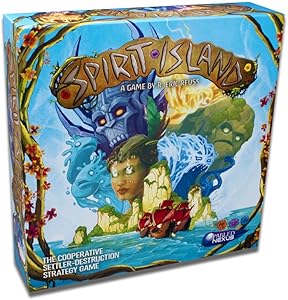
Spirit Island stands apart as a solo roguelike board game because you're not just reacting to random events—you're wrestling against an opponent with completely different goals and mechanics. You play as a spirit defending an island while an AI-controlled invading civilization follows its own escalating strategy. Every game changes because the invaders' actions unfold differently based on where they've already settled.
What makes this genuinely roguelike is the asymmetry. Your powers (special abilities tied to specific spirits) remain consistent within a game, but the combination of spirits you select dramatically changes your approach. Some spirits excel at slowing the invaders; others punish them for building settlements. This creates natural difficulty variation—picking three synergistic spirits is harder than picking three unrelated ones, so veteran players naturally escalate their own challenge.
The learning curve is steep. Your first five games will feel like fumbling through the rulebook. By game ten, you'll understand how to chain powers together and anticipate invader behavior patterns. This isn't a quick-play roguelike—each session runs 60-90 minutes once you know what you're doing.
Pros:
- Genuine asymmetrical gameplay that creates new puzzles every session
- Spirit selection system lets you self-scale difficulty naturally
- Invader AI is predictable enough to master but varied enough to stay interesting
- Produces genuinely tense moments where a single power placement determines victory or defeat
Cons:
- Steep learning curve; your first games will drag as you parse rules
- High component count and table footprint make setup feel like a chore
- Can feel repetitive if you play the same spirit combinations repeatedly
---
2. Mage Knight Board Game — Puzzle-Like Complexity for Devoted Players

Mage Knight is the best solo roguelike board game if you want something that genuinely feels like solving a three-dimensional puzzle. Every turn you're chaining card plays, positioning your mage strategically, and racing against an escalating threat track. It's less about reacting to randomness and more about finding the optimal path through constrained options.
The core loop involves moving your mage across a procedurally generated map, conquering cities and dealing with enemies in turn-based combat. Your hand of spell and ability cards determines what actions you can take, and playing cards efficiently is everything. A bad sequence of three card plays can leave you vulnerable; a brilliant combo can clear multiple enemies at once. This tight mechanical puzzle is what makes the best solo roguelike board game experiences—you're not waiting for luck to break your way; you're engineering your own success or failure.
What sets Mage Knight apart is the sheer depth. You can spend 120 minutes in a single game, and not a moment feels wasted. Every decision cascades into consequences. However, this intensity also means the game punishes new players brutally. Your first game might end in frustration because you didn't understand how to sequence your plays efficiently.
Pros:
- Incredibly tight puzzle design where card play efficiency directly determines outcomes
- Immense replay value thanks to randomized map generation and card draw
- Plays solo best—the asymmetrical AI is elegant and challenging
- True mastery is achievable; veteran players can reliably win on higher difficulties
Cons:
- $149.95 price point is steep, even for dedicated board gamers
- Rules overhead is substantial; teaching yourself will take multiple games
- Prone to analysis paralysis—turns can drag if you overthink plays
- Not approachable for casual players; this demands focused attention
---
3. Robinson Crusoe: Adventures on the Cursed Island — Survival with Story
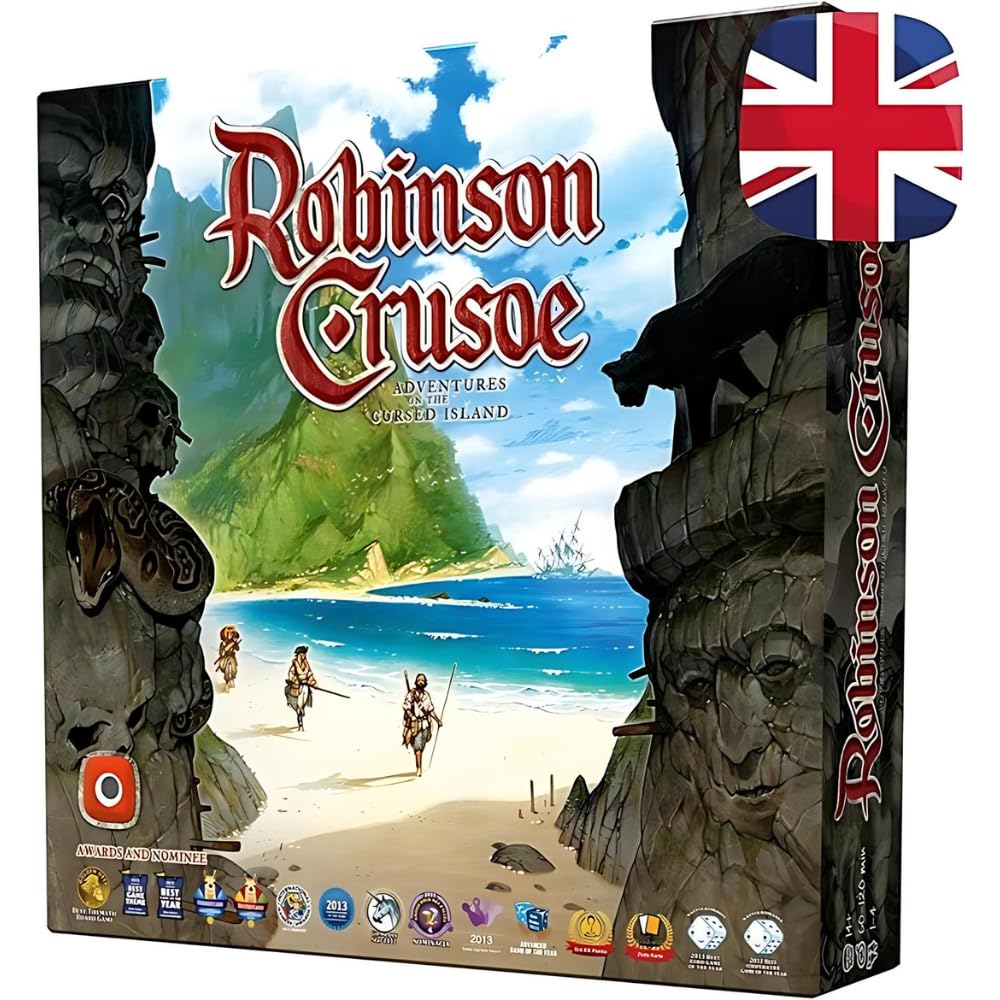
Robinson Crusoe delivers the best solo roguelike board game experience if you want narrative weight alongside mechanical challenge. You're managing survival—food, shelter, health, morale—while completing scenario objectives. The game forces you into impossible-seeming situations where every decision has hidden costs.
What distinguishes this from other survival games is how scenario objectives completely reframe what success looks like. One scenario might demand you escape the island in ten rounds; another wants you to build a specific shelter while battling disease. The same survival mechanics take on different urgency depending on your objective. This natural difficulty scaling makes it feel roguelike in the best way—you're adapting not just to random draws but to fundamentally different win conditions each game.
The resource scarcity is genuinely brutal. You'll frequently face choices where you can't solve every problem. Do you spend precious action points hunting for food, or do you build shelter against the coming storm? These aren't false choices with an obvious correct answer—they're real trade-offs where different players legitimately disagree on priority.
Pros:
- Scenario variety creates fundamentally different games and strategic demands
- Resource scarcity creates genuine tension and meaningful choices
- Solo mode feels designed for solo play, not retrofitted
- Narrative-driven gameplay creates memorable moments beyond mechanics
Cons:
- Can feel swingy; bad dice rolls early can cascade into unwinnable situations
- Setup and cleanup are tedious with fiddly cardboard tokens
- Scenarios vary wildly in quality and difficulty balance
- Plays noticeably longer (90+ minutes) than its component complexity might suggest
---
4. Under Falling Skies — Tension in 30 Minutes
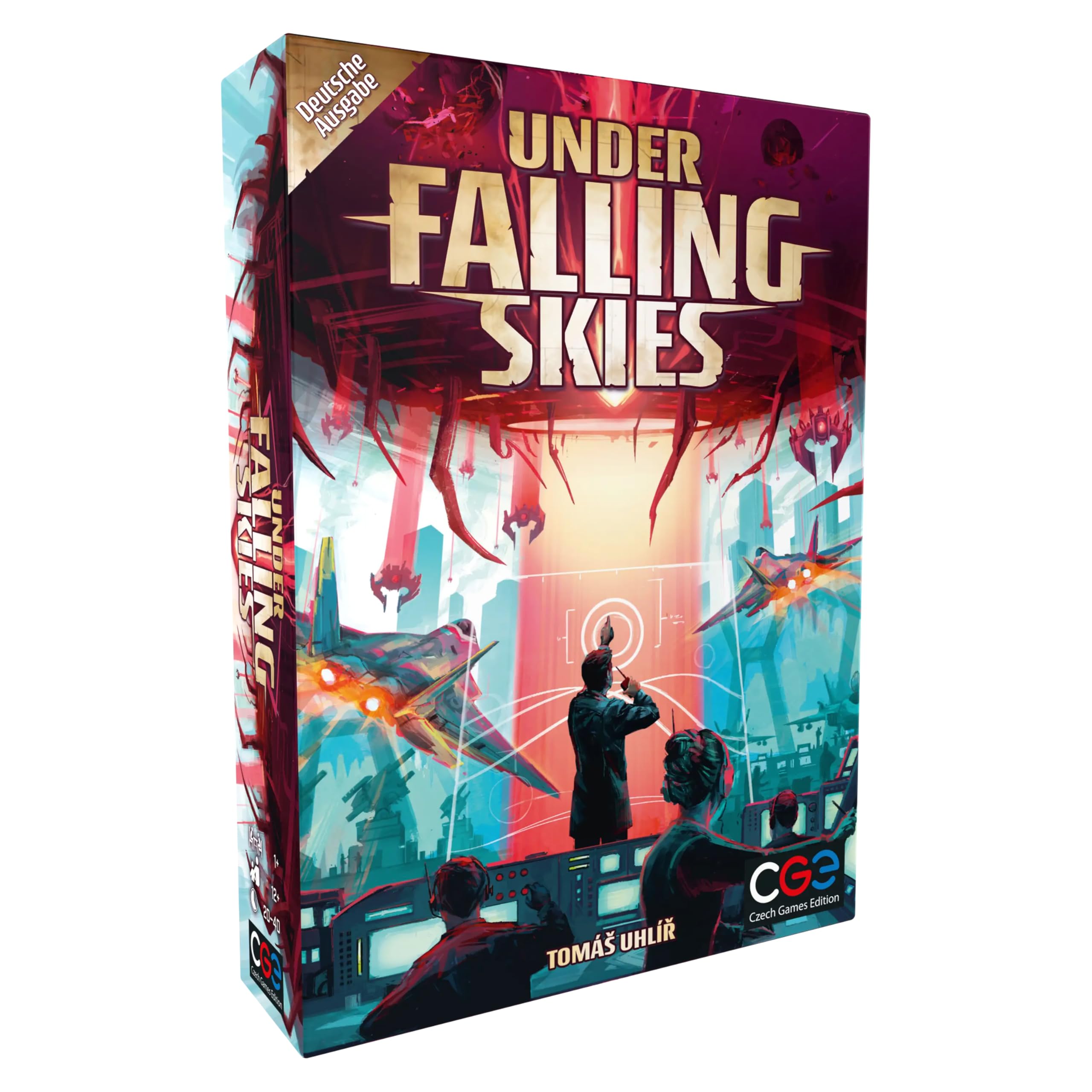
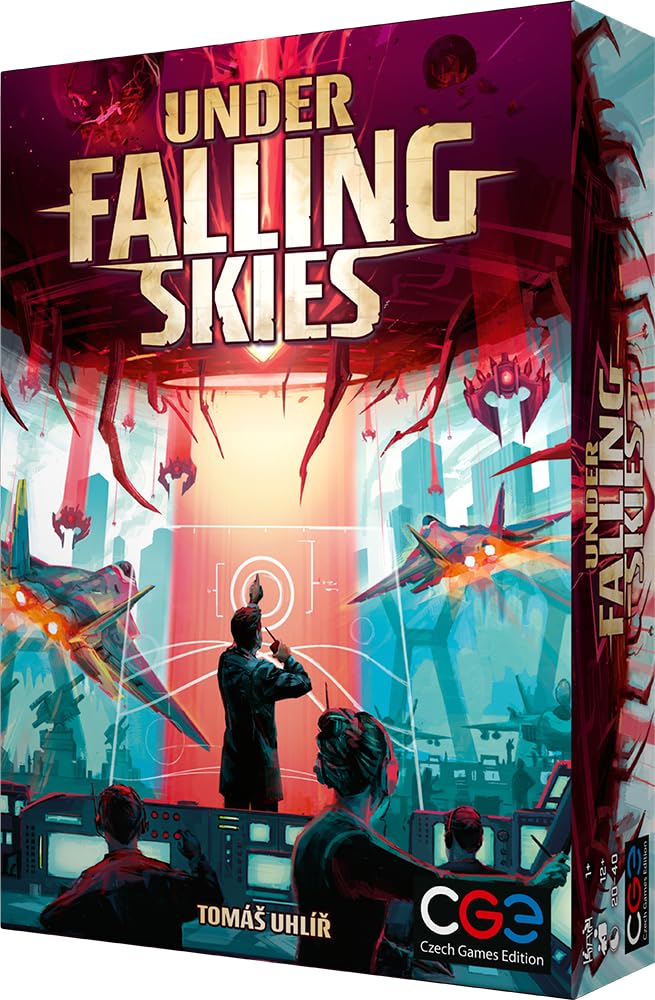
If you want the best solo roguelike board game that respects your time, Under Falling Skies delivers relentless pressure in under 30 minutes. You're defending three cities against an alien invasion, placing dice to activate defenses and attack enemies. The catch: enemies advance closer each round, and once they reach your cities, the game tightens dramatically.
The solo roguelike mechanics here are brutal and satisfying. You don't get to choose which dice values you roll—you roll what comes up and improvise around it. This creates legitimate roguelike tension: you're working with what the game gives you, and bad luck genuinely can doom your run. Unlike some games where bad luck is forgivable, Under Falling Skies punishes every wasted action because time is your scarcest resource.
Difficulty scaling is smart. The base game is challenging but winnable for practiced players. Higher difficulty tiers introduce new alien types and harsher starting positions, letting you gradually escalate the challenge as you master the core mechanics.
Pros:
- Quick play time makes multiple runs feasible in a single session
- Difficulty scaling is well-tuned and genuinely challenging at higher tiers
- Elegant dice placement mechanic creates meaningful decisions despite randomness
- Teaches fundamental roguelike concepts—adapting to constraints, managing limited resources
Cons:
- Can feel repetitive after 10+ plays; the strategic space is smaller than deeper games
- Dice luck can occasionally feel unfair, creating games that feel determined before turn two
- Less narrative or thematic depth; it's mechanically elegant but mechanically focused
- Solo mode doesn't feel as designed-for-solo as some competitors
---
5. Marvel Champions: The Card Game — Deckbuilding Roguelike Systems
Marvel Champions bridges the gap between traditional roguelike deckbuilding games (like Slay the Spire) and physical board games. You're building a hero-specific deck as you fight supervillains, with enemy encounters changing based on which villain you face and which modular encounter set you're using.
The best solo roguelike board game elements here are the deck construction interactions and villain variety. Each of the game's heroes has a unique deck-building identity—Iron Man wants tech upgrades, Thor wants heavy-hitting attacks, Captain Marvel wants cosmic synergies. Facing different villains requires different approaches, and the encounter decks scale up naturally as you progress through a villain's health.
This isn't as deep as Mage Knight or as asymmetrical as Spirit Island, but it fills a specific niche: if you love roguelike deckbuilding video games and want a physical analog, Marvel Champions delivers. The thematic flavor also means you'll actually care about the interactions, not just the mechanical efficiency.
Pros:
- Excellent solo mode design with natural difficulty scaling
- Villain variety creates genuinely different strategic challenges
- Deckbuilding decisions feel meaningful and hero-specific
- Thematic superhero flavor makes abstract card interactions click into place
- Plays in 30-45 minutes, making multiple sessions feasible
Cons:
- Base game card pool is small; you'll want expansions to avoid repetition
- Less strategic depth than dedicated complex games like Mage Knight
- Villain power scaling can occasionally feel arbitrary or unbalanced
- If you don't enjoy Marvel thematic flavor, the mechanical core might feel generic
---
How I Chose These
Selecting the best solo roguelike board game meant prioritizing games where solo play wasn't an afterthought but the primary design focus. I weighted several factors: Does the game create fundamentally different puzzles on each playthrough? Can you naturally scale difficulty yourself? Does losing feel like a learning moment rather than random bad luck?
I excluded games that work solo through simple automation layers—where you're really just playing multiplayer solitaire with a dummy opponent. The games here demand actual adaptation and strategic rethinking between plays. They also needed to deliver meaningful challenge; any game can be hard if it cheats with unfair odds, but these games create tension through elegant mechanics and genuine asymmetry.
Price and complexity both mattered. A $150 game needs to justify that investment through exceptional depth; a $55 game can afford to be more focused and streamlined. All five games deliver exceptional value for dedicated solo players, though they serve different appetites.
---
Frequently Asked Questions
What makes a board game roguelike versus just a challenging solo game?
A roguelike emphasizes unpredictability and adaptation—each playthrough generates fundamentally different strategic demands. True roguelike board games build this variation into core mechanics rather than just randomizing difficulty. Spirit Island's variable invader placement and Robinson Crusoe's scenario objectives create this roguelike essence better than games that just shuffle encounter cards.
Can I play these games casually, or do they demand serious focus?
Spirit Island and Mage Knight demand serious engagement—you can't play them while watching TV. Robinson Crusoe and Under Falling Skies are more flexible; you can play them casually or intensely. Marvel Champions sits in between; base game plays are straightforward, but optimal decisions require thought.
Which best solo roguelike board game has the steepest learning curve?
Mage Knight without question. You'll need 3-4 full games just to understand card sequencing. Spirit Island has a steep rules curve but smoother mechanical learning. If you want to play immediately, start with Under Falling Skies or Marvel Champions.
Do I need to buy expansions to avoid repetition?
Spirit Island and Robinson Crusoe have enough base content for 20+ plays. Mage Knight similarly has exceptional depth in the base game. Marvel Champions benefits from expansions, but the base game offers solid variety. Under Falling Skies's base game might feel repetitive after 15 plays for dedicated players.
---
The best solo roguelike board game depends on what you want from your solo gaming sessions. If you want asymmetrical puzzle-solving that stays fresh indefinitely, Spirit Island creates more varied games than anything else here. If you want mechanical mastery and deep strategic optimization, Mage Knight rewards hundreds of hours of play. If you want quick, tense sessions that respect your time, Under Falling Skies delivers legitimate pressure in 30 minutes. All five games listed here respect solo players as their primary audience—they're not multiplayer games with solo modes bolted on, and that fundamental design choice makes them worth your time and money.
Get the best board game picks in your inbox
New reviews, top picks, and honest recommendations. No spam, unsubscribe anytime.