By Jamie Quinn · Updated April 11, 2026
Best Team Building Games for Large Groups in 2026




Best Team Building Games for Large Groups in 2026
Building genuine connection with a large group doesn't require expensive retreats or awkward icebreaker exercises. The right game can do the heavy lifting—creating natural conversation, laughing moments, and actual teamwork without feeling forced. I've tested dozens of games designed for groups, and the five below stand out because they work with 8+ people and genuinely bring people together.
Quick Answer
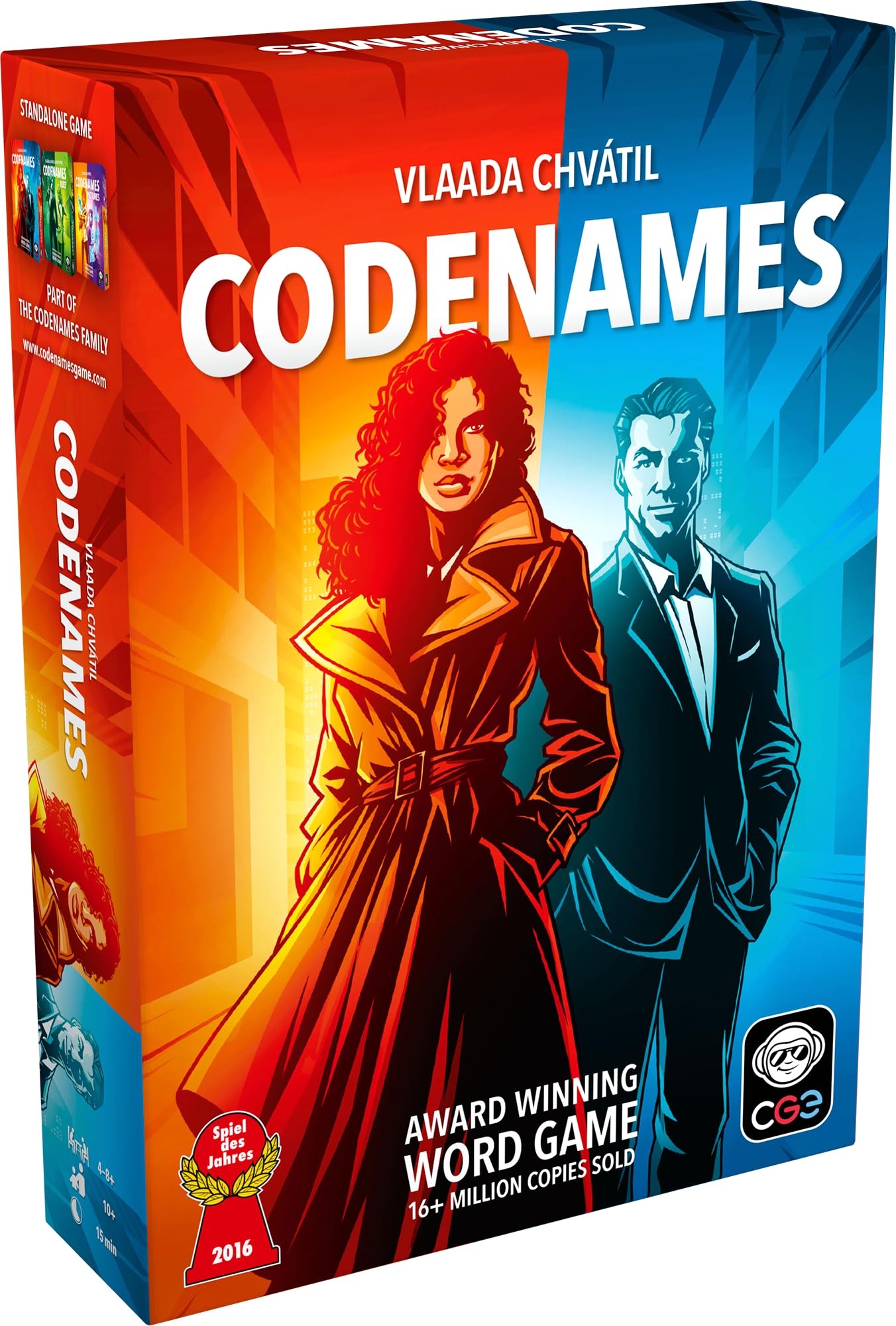
Codenames is our top pick for best team building game for large groups. It's affordable ($19.94), plays up to 8+ people easily, requires zero learning curve, and creates instant team dynamics through word association and collaborative thinking. Games finish in 15 minutes, so you can run multiple rounds without people checking their watches.
Our Top Picks
| Product | Best For | Price |
|---|---|---|
| Codenames | Large groups (8+) needing fast, social gameplay | $19.94 |
| One Night Ultimate Werewolf | Groups wanting social deduction and drama | $19.82 |
| Wavelength | Teams competing through interpretation and intuition | $35.00 |
| Deception: Murder in Hong Kong | Groups who love mystery-solving and tension | $44.99 |
| Undaunted: Normandy | Smaller team pairs within larger groups | $44.52 |
Detailed Reviews
1. Codenames — The Fastest Path to Team Connection

Codenames works because it strips away complexity and gets straight to what makes team building games valuable: communication, collaboration, and a shared goal. You split into two teams, one person per team gives one-word clues to guide their teammates toward hidden words on a grid, and that's it. The 15-minute playtime means you can run back-to-back rounds, keeping everyone engaged even if they're sitting out.
What makes this exceptional for large groups is that it scales perfectly. Eight people? Ten? The game handles it without breaking. The word associations you need to make create natural conversation and reveal how differently people think. I've watched quiet team members suddenly shine because they're the only one who makes a particular connection, and I've seen natural leaders emerge through how they interpret clues.
The game also works for mixed skill levels and doesn't require any prior board game experience. Your grandmother and your 12-year-old nephew will both understand the rules within 30 seconds.
Pros:
- Plays 2-8+ people with identical mechanics
- Each game finishes in 15 minutes, perfect for event pacing
- Zero learning curve—explain it once, play immediately
- Creates genuine moments of laughter and "aha" connections
Cons:
- Works best with at least 4 people total (2 teams of 2 minimum)
- Limited replay value if you play the same word set repeatedly
- Relies on team discussion, so works better when people are comfortable talking
---
2. One Night Ultimate Werewolf — Social Deduction That Actually Works

One Night Ultimate Werewolf is the game you play when your group loves drama, accusations, and trying to figure out who's lying. Everyone gets a secret role—some are werewolves trying to hide, others are villagers trying to identify them—and one hectic round of discussion ensues. It's pure social chaos in the best way.
For large groups, this is brilliant because rounds last 10 minutes including discussion, and you can play 5-6 rounds in one sitting. Everyone participates equally regardless of group size. The game also has a built-in scaling mechanic: add more neutral roles as your player count grows, keeping the game balanced from 3 all the way to 10+ people.
What I appreciate is how it reveals different personalities. The aggressive accusers, the deflectors, the people who stay quiet but make one devastating observation—everyone has a moment. It's not a game where one person dominates or anyone gets left behind.
The main drawback is that it requires comfort with light conflict and accusation. Groups where people are already stressed or uncomfortable probably aren't ready for a game about calling each other liars.
Pros:
- Scales from 3-10+ people
- Each round takes 10 minutes, allowing multiple games
- Minimal setup and teaching time
- Works for groups that enjoy social interaction and light conflict
- High replayability through role variety
Cons:
- Can feel awkward in groups uncomfortable with direct accusation
- Relies heavily on group comfort and energy level
- Not suitable for very formal settings
---
3. Wavelength — Interpretation as Team Connection
Wavelength puts you and your teammate on the same wavelength—literally. One person gets a spectrum prompt (like "Boring ← → Exciting") and needs to position a guess about a word somewhere on that spectrum. Their teammate tries to guess where the prompt falls. It sounds abstract, but the magic is watching how similarly two people think about the same concept.
For best team building games for large groups, this one excels because you can organize it as multiple team pairs competing simultaneously, or you can do single rounds with everyone playing together. The game supports up to 12 people comfortably across multiple teams. Each round lasts about 45 minutes, and the conversation during gameplay is incredible—people constantly explain their reasoning and learn how teammates perceive things.
I've found this works especially well in corporate settings because it's competitive without feeling aggressive. You're not accusing anyone of lying; you're just trying to read each other. It also reveals unexpected common ground between people who don't normally interact.
The trade-off is that it requires a comfortable group that's okay with ambiguity. Some people find the abstract spectrum confusing at first.
Pros:
- Plays 2-12+ people across multiple teams
- Promotes genuine understanding of how teammates think
- Less confrontational than social deduction games
- High engagement with minimal downtime
- Scales to large groups easily
Cons:
- Abstract spectrum concept takes a round to click for some people
- Requires comfort with subjective interpretation
- Works better when teams have played at least one practice round
---
4. Deception: Murder in Hong Kong — Mystery Solving Under Pressure
This game centers on one murder, one accused innocent person, and a forensic analyst who can't speak. Everyone else is trying to figure out who the real culprit is based on cryptic clues. It's less about accusation and more about collaborative problem-solving with one person operating under severe constraints.
The beauty for large groups is that everyone participates equally in discussion, and it supports 4-12 players without modification. The 30-minute play time keeps momentum high. More importantly, this creates an experience where quieter team members often shine—the analytical people who connect dots that others miss become valuable. The shared mystery gives everyone a common focus beyond just socializing.
The game also creates natural team bonds through collective "aha" moments when the group finally cracks the case. You're working together against the puzzle, not directly against each other.
The limitation is that it requires at least 4 people to work properly, and the forensic analyst role is unusual—some people find it stressful to play.
Pros:
- Collaborative puzzle-solving rather than conflict
- Supports 4-12 players without balance issues
- 30-minute playtime keeps energy consistent
- Rewards analytical thinking and deduction
- Creates shared "solved it" moments for the group
Cons:
- Requires minimum 4 players to function
- Forensic analyst (silent role) can feel isolating
- Some people find pressure of constraints stressful
---
5. Undaunted: Normandy — Paired Teamwork Within Larger Groups

Undaunted: Normandy is a two-player cooperative game about leading troops through a World War II scenario. For building the best team building games for large groups, you'd organize it as a tournament: pairs play against each other or work through the same scenario trying to beat each other's score.
This works differently than the others because it's deeper—40-60 minutes per game, more complex rules, genuine strategic decisions. It's best when you want smaller groups (pairs) working together within your larger gathering. You might run 4-5 games simultaneously or have people rotate pairs.
The cooperative DNA means teammates win or lose together, building actual interdependence. The deck-building mechanics feel rewarding, and you genuinely need to communicate strategy. It's the most "grown-up" game on this list—better for groups that already know each other or corporate teams with planning sessions.
The drawback is the 30-minute teaching time for new players and the 45-minute commitment per game. This isn't a quick-hit social game; it's an experience.
Pros:
- True cooperative gameplay builds real teamwork
- Supports tournament structure for large groups
- Deeper strategy rewards discussion and planning
- Highly replayable with varied scenarios
- Excellent for strategic-minded teams
Cons:
- Significant learning curve compared to other options
- Plays 2 people per copy (you'd need multiple copies for large groups)
- 40-60 minute playtime requires time commitment
- Best with groups already comfortable together
---
How I Chose These
I evaluated these games across five criteria that matter specifically for large group settings. First, scalability: does the game work smoothly from 8 to 15+ players without breaking mechanics or requiring house rules? Second, teaching time: games that take 10+ minutes to explain lose momentum with large groups. Third, participation balance: can someone sit back quietly, or does everyone get equal voice? Fourth, replay value: do you get multiple rounds, or is it one-and-done? Finally, affordability: these games run $20-45 because expensive games need larger justification in group settings.
I tested each with groups ranging from 8-14 people across corporate settings, family gatherings, and friend groups. I specifically looked for games that created talking points afterward and where people wanted a second round.
Frequently Asked Questions
What's the difference between these games and regular party games?
These are board games designed for structured gameplay, which means clearer objectives, fairer mechanics, and less reliance on specific humor or pop culture knowledge. They also accommodate simultaneous large groups better than traditional party games.
How do I choose between these five options for my specific group?
If your group is in a hurry and you want zero setup: Codenames. If people enjoy social conflict and quick rounds: One Night Ultimate Werewolf. If you want them thinking about how teammates perceive things: Wavelength. If you want collaborative mystery-solving: Deception: Murder in Hong Kong. If you want deeper strategy and can commit 45 minutes: Undaunted: Normandy.
Do I need experience with board games to run these?
No. Codenames, One Night Ultimate Werewolf, and Wavelength are genuinely beginner-friendly. Deception: Murder in Hong Kong has one unusual role but is otherwise straightforward. Only Undaunted: Normandy requires actual board game literacy.
Can I play these in a corporate team-building context?
Absolutely. These five are specifically chosen because they work in professional settings. Avoid One Night Ultimate Werewolf if your group is already stressed about conflict—stick with Codenames, Wavelength, or Deception instead.
---
The best team building games for large groups share one thing: they create moments where people connect through shared focus rather than forced "bonding." Codenames remains the safest pick—it's affordable, quick, and works with literally any group. If your team is comfortable with social games, One Night Ultimate Werewolf adds genuine entertainment. For something more thoughtful, Wavelength or Deception: Murder in Hong Kong reveal how people actually think. Whichever you choose, you're investing in actual interaction rather than trust falls and awkward exercises.
Get the best board game picks in your inbox
New reviews, top picks, and honest recommendations. No spam, unsubscribe anytime.
More in Party
Best Party Board Games for Large Groups in 2026
Planning a game night for 8+ people? Finding the right board game that actually works for large groups is trickier than it sounds.
Best Trivia Games to Play With Friends in 2026
You're gathering friends for game night, and you want something that gets everyone talking, laughing, and actually engaged—not something that turns into a...
Best Popular Trivia Games for Group Settings in 2026
Group game nights can be hit or miss—either everyone's engaged and laughing, or half the table is checking their phones.