By Jamie Quinn · Updated April 24, 2026
Best Trivia Game to Buy in 2026: Our Top 5 Picks for Every Party



Best Trivia Game to Buy in 2026: Our Top 5 Picks for Every Party
Finding the right trivia game can make the difference between a forgettable game night and one people talk about for weeks. Whether you're hosting a casual hangout or looking for something that'll spark real conversation, the best trivia game to buy depends on what your group actually enjoys — and I've tested enough options to know which ones deliver.
Quick Answer
The QUOKKA Trivia Card Games for Adults with 500 Questions is our top pick for most people. It's affordable at $12.74, plays with any group size, and the 500 general knowledge questions keep rounds moving without feeling exhausting. You set up in seconds, no board to manage, and people stay engaged throughout.
Our Top Picks
| Product | Best For | Price |
|---|---|---|
| QUOKKA Trivia Card Games for Adults with 500 Questions | Best overall value and flexibility | $12.74 |
| HISTORY Channel Trivia Game – 2000+ General Knowledge Questions | History buffs and serious trivia players | $24.95 |
| Lyrically Correct '90s & 2000s Music Trivia Card Game - Pop Edition | Music lovers and millennial parties | $24.98 |
| Hasbro Games Trivial Pursuit Mini Packs Multipack | Classic format lovers and board game purists | $14.99 |
| I should have known that! - A Trivia Game About Things You Oughta Know, Green | Casual players who want fun over difficulty | $19.00 |
Detailed Reviews
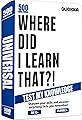
1. QUOKKA Trivia Card Games for Adults with 500 Questions — Best Overall Value

This is the best trivia game to buy if you want something that works right out of the box without complicated rules. The card-based format means setup takes literally 30 seconds—shuffle the deck, pick a reader, start asking. The 500 general knowledge questions span movies, history, geography, science, and pop culture, so you're not locked into one niche topic. Questions range from easier warm-ups to genuinely challenging ones, which keeps competitive players interested without leaving casual participants feeling stupid.
What makes this stand out is the flexibility. With a card game, you can play with 2 people or 12 people. You can play for 15 minutes or an hour. There's no board getting in the way, no pieces to lose, and no complicated scoring system to track. The answers are printed on the back of each card, so the reader doesn't need to memorize anything.
This isn't for someone looking for a specific theme or wanting a visual board game experience. If you want your trivia to be purely about knowledge without the board game components, this delivers. The difficulty curve is solid—not so easy that it's boring, not so hard that rounds feel painful.
Pros:
- 500 questions means plenty of variety and replayability
- Works with any group size from 2 to 20+
- Card format is genuinely portable (throws in a bag easily)
- Fast setup and rounds keep the game moving
- General knowledge mix prevents any group from feeling left out
Cons:
- No board or visual elements means less "game night" atmosphere for some people
- Questions aren't themed, so you can't customize for your group's interests
- You're entirely dependent on whoever reads the questions reading them correctly
---
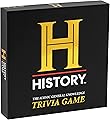
2. HISTORY Channel Trivia Game – 2000+ General Knowledge Questions — Best for History Lovers

If someone in your group gets genuinely excited about history, this is the best trivia game to buy for them. The HISTORY Channel brand isn't just branding—the questions actually lean heavily into historical knowledge without being completely inaccessible to casual players. You get 2000+ questions, which is a massive library that means you can play this repeatedly without hitting the same question (realistically) for months.
The deeper question pool lets this game work better for groups that play trivia regularly. Instead of recycling the same 500 questions every few months, you've got genuine staying power. Questions span different historical periods and regions, so it doesn't just focus on American history—you'll see questions about ancient Rome, medieval Europe, and modern global events.
The card game format is similar to other trivia games, but the real value here is that 2000+ question count. For a serious trivia group or someone who hosts game nights frequently, this prevents the dreaded experience of playing the exact same questions two months later.
This isn't ideal if your group isn't interested in history or prefers broader topic variety. The HISTORY Channel focus means you're getting more questions weighted toward historical topics than you might in a completely general knowledge game.
Pros:
- 2000+ questions provide months of unique gameplay
- History focus appeals to trivia enthusiasts specifically
- HISTORY Channel branding means the questions are vetted and topical
- Works perfectly for recurring game night groups
- Card format is easy to manage and portable
Cons:
- History-heavy questions might not suit groups that prefer equal topic distribution
- Higher price point at $24.95
- If your group isn't interested in history, many questions fall flat
---
3. Lyrically Correct '90s & 2000s Music Trivia Card Game - Pop Edition — Best for Music-Obsessed Groups

This is the best trivia game to buy if your group grew up in the '90s and 2000s or genuinely loves music trivia. The "finish the lyrics" mechanic is different from standard multiple-choice trivia—you'll get a song lyric and have to complete it or identify the artist. This makes the game more interactive and personal because people have stronger memories about songs than random facts.
The '90s and 2000s Pop Edition focus is specific enough that millennials and Gen X players will crush this, but broad enough that anyone who grew up listening to mainstream pop will recognize most songs. You're not dealing with obscure deep cuts—these are songs that actually got radio play and streaming numbers.
What makes this work better than general trivia for music lovers is that the lyrics themselves trigger actual memories. Someone hears "I gotta take it back to..." and immediately remembers where they were when that song played. It creates a different kind of engagement than trivia where you're just recalling facts.
Skip this if your group doesn't care about music or if they're primarily into genres outside pop (metal, country, indie rock). The specific decade focus also means if you've got a teenager who listens to current music, they might struggle here since it tops out at early 2000s.
Pros:
- Lyrics-based gameplay is more fun and memory-triggering than standard trivia
- Perfect for millennial game nights
- Pop Edition ensures recognizable songs, not obscure tracks
- Taps into genuine nostalgia
- Strong card quality and clear printing
Cons:
- Extremely niche—only works well if your group loves '90s/'00s pop music
- Decade limitation means newer music fans won't recognize many songs
- Limited replayability for groups outside the target demographic
- Some questions assume pretty specific music knowledge (artist names, album details)
---
4. Hasbro Games Trivial Pursuit Mini Packs Multipack — Best for Classic Board Game Fans

Trivial Pursuit is iconic for a reason, and this Multipack format is smart—you get 4 different decade-specific games (covering 4 decades) in one box at $14.99. This gives you variety without buying multiple full-size boxes. If you want the best trivia game to buy that also feels like a "real" board game with pieces, a board, and the full game night aesthetic, this delivers.
The Mini Pack format is smaller and more portable than the classic Trivial Pursuit box, but you're still playing the actual game—moving around the board, answering category-specific questions, collecting pie pieces. It feels more like "a game night" than just "asking trivia questions." For people who grew up playing Trivial Pursuit, there's comfort in that format.
Four different decade packs means you get 4 different question sets, extending replayability. Each decade focuses on movies, history, science, sports, entertainment, and arts/literature—the classic Trivial Pursuit categories. The questions span different difficulty levels, so it works for mixed-ability groups.
The board game format is heavier than card games—setup takes longer, and you need a table. If someone in your group finds the game mechanics frustrating (moving around the board, tracking pie pieces) or wants a quicker game, they might prefer cards. Also, "Mini" packs means the questions might be more abbreviated than the full board game version.
Pros:
- Classic board game format with pieces and board
- Four decades means decent question variety
- Trivia Pursuit is familiar to most people
- Portable enough compared to full-size version
- The pie piece collection creates satisfying game progression
Cons:
- Board and pieces mean longer setup and more table space
- Rounds can drag if questions are hard
- Mini format might have fewer questions per category than full versions
- Some people find moving around the board tedious
---
5. I should have known that! - A Trivia Game About Things You Oughta Know, Green — Best for Casual Players

The title tells you everything—this is the best trivia game to buy if you want questions that make people laugh at themselves for not knowing something "obvious." The tone is playful rather than competitive. Questions lean toward general knowledge that adults encounter in everyday life—things you'd expect someone to know but many people don't (how your body works, basic economics, common historical facts, etc.).
The game is designed to prevent that painful silence where nobody knows the answer. Questions are intentionally calibrated so most people can take a guess, even if they're not sure. This keeps the game moving and prevents anyone from feeling completely lost. Perfect for mixed-skill-level groups or casual game nights where the goal is fun, not proving who's smartest.
The green version is visually appealing—better packaging than some competitors—and the card format makes it highly portable. You can throw this in a backpack and have a full game on any flat surface. Game rounds stay quick because the question difficulty doesn't spike dramatically.
This isn't for trivia purists or competitive groups who want genuinely challenging questions. If someone in your group gets frustrated by "easy" questions or wants questions that really test knowledge, they'll find this boring. It's also not great for groups that already know each other well and have heard all these common facts repeatedly.
Pros:
- Questions are accessible without being insulting
- Great pacing—rounds move quickly
- Perfect tone for casual game nights
- Appealing packaging (the green design is nice)
- Questions actually spark conversation and funny moments
- Works well for mixed groups with different knowledge levels
Cons:
- Not challenging enough for serious trivia players
- "Things you oughta know" category feels vague sometimes
- Less replayability if your group is tight-knit
- Questions can feel repetitive after multiple plays
- Price point at $19 is higher than some alternatives for the content
---
How I Chose These
I evaluated each game based on what actually matters during game night: setup time, pacing, question quality, durability, and whether they work for different group sizes. The best trivia game to buy isn't always the most expensive or feature-complete—it's the one that fits how your specific group plays.
I prioritized games that play in 30-60 minutes (most people lose focus after that), don't require complex scoring systems, and offer genuine replay value. I also weighted how well each game handles mixed-ability groups, since most game nights include people with different knowledge bases.
Price mattered, but only in relation to value. A $25 game with 2000 questions offers better value than a $15 game with 300 questions if you play frequently. However, if you play casually, that extra cost doesn't matter as much.
---
Frequently Asked Questions
What's the difference between card-based trivia games and board-based games like Trivial Pursuit?
Card games set up faster and play quicker, making them better for casual groups or when you want to fit trivia into limited time. Board games create more of a "formal" game night experience and the pieces provide visual progress (like pie slices in Trivial Pursuit). Choose cards if you want speed and flexibility; choose boards if the full game experience matters to your group.
How many players do these games work with?
Most trivia games work with 2-20+ players since you're just rotating who answers questions. Card games handle any group size . Trivial Pursuit has practical limits (maybe 4-6 people per team) since everyone needs reasonable turn time.
Are these games good for serious trivia competitors?
The HISTORY Channel Trivia Game works best for serious players because of the 2000+ question count. Most others are designed for casual play. If your group does trivia competitions, consider if you want something designed specifically for competitive play rather than party games.
Can you mix questions from different games?
Technically yes, but it gets awkward—you'd need a unified scoring system and difficulty levels get uneven. Better to pick one game and stick with it.
Which game would I buy if I could only afford one?
The QUOKKA Trivia Card Games for Adults with 500 Questions at $12.74 is the safest bet. It works with any group, any setting, and any skill level without requiring anything beyond the cards themselves.
---
The best trivia game to buy comes down to your group's personality. If you host frequent game nights, invest in the HISTORY Channel game for depth. If you want something immediately usable and flexible, grab QUOKKA. For music lovers, Lyrically Correct is obvious. Whatever you choose, the key is picking something you'll actually play, not something that sits in a closet. Most groups get more value from playing the same game repeatedly than constantly chasing new options.
Get the best board game picks in your inbox
New reviews, top picks, and honest recommendations. No spam, unsubscribe anytime.
More in Party
Best Trivia Game for Teens in 2026: Our Top Picks for Game Night
Finding a trivia game that actually keeps teens engaged (instead of buried in their phones) is harder than it sounds.
Best Trivia Game to Buy in 2026: Top Picks for Every Player Type
Finding the best trivia game to buy depends on who's playing and what kind of night you're planning.
Best Party Board Games for Large Groups in 2026
Planning a game night with 8+ people is trickier than it sounds. Most games either drag on forever or leave half your guests watching from the sidelines.