By Jamie Quinn · Updated April 11, 2026
Best True Solo Board Games in 2026: Our Top Picks for Playing Alone


Best True Solo Board Games in 2026: Our Top Picks for Playing Alone
Solo board gaming has exploded over the last few years, and if you've been looking for a best true solo board game, you've probably noticed the options range from puzzle-like brain-burners to narrative adventures. The challenge isn't finding games designed for one player—it's finding ones that actually feel like a complete experience rather than a diluted version of a multiplayer game.
Quick Answer
Spirit Island is our top pick for the best true solo board game. It's built from the ground up as a solo experience where you play as a spirit defending an island from colonizers. The game delivers genuine tension, requires real strategy, and feels completely different from its multiplayer mode—not like an afterthought.
Our Top Picks
| Product | Best For | Price |
|---|---|---|
| Spirit Island | Deep strategic solo play with theme | $58.12 |
| Mage Knight Board Game | Complex puzzle-solving and mastery | $149.95 |
| Robinson Crusoe: Adventures on the Cursed Island | Narrative-driven survival stories | $54.55 |
| Marvel Champions: The Card Game | Superhero fantasy with replayability | $55.99 |
| Under Falling Skies | Quick, tense tactical challenges | $56.07 |
Detailed Reviews
1. Spirit Island — The Gold Standard for True Solo Play
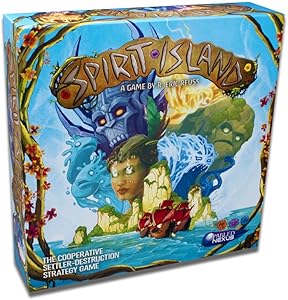
Spirit Island stands out because it was designed specifically with solo play in mind, and that shows in every decision. You're playing as a spirit protecting an island, using power cards and resource management to push back against colonization. The game doesn't feel scaled down—it feels like the natural way to experience it.
The AI system for the invaders is brilliant. Instead of randomly placing pieces, the invaders follow a specific build order that creates predictable patterns you can anticipate and disrupt. This means your decisions actually matter. Do you stop them here or let them build strength in one area while you focus on another? Every turn presents real trade-offs.
Setup takes about 10 minutes and a single game runs 60-90 minutes depending on difficulty. The spirit you choose dramatically changes how you approach the puzzle. Playing the River spirit requires completely different tactics than playing the Lightning spirit, so there's serious replay value built in.
The only real drawback is the learning curve. The rulebook is dense, and your first game will involve a lot of flipping through pages. Once you're past that, though, Spirit Island becomes one of the most satisfying best true solo board games available.
Pros:
- Designed as a solo-first experience, not multiplayer with solo bolted on
- Multiple spirits offer genuinely different strategic approaches
- Difficulty scaling means you can challenge yourself gradually
- Beautiful art and thematic gameplay flow together naturally
Cons:
- Steep learning curve for first-time players
- Takes up significant table space
- Can feel overwhelming if you prefer lighter games
---
2. Mage Knight Board Game — For Puzzle Lovers Who Want Mastery

Mage Knight is the best true solo board game if you love systems that reward deep study. This is a game where you'll spend your first 10 plays learning how pieces fit together, then 20 more plays discovering ways to combine them you never considered. It's genuinely one of the most mechanically rich solo experiences ever made.
Your goal is to explore a procedurally-generated map, defeat enemies, complete quests, and gain reputation. The card-based action system means you're constantly managing a hand of spell and movement cards, deciding which to use now and which to save. One wrong decision can cascade into a failed turn, but good decisions feel incredibly satisfying.
A single scenario takes 60-120 minutes depending on map size and difficulty. The game includes multiple scenarios with different victory conditions, and the random map generation means you're never playing the same puzzle twice. After 50 plays, dedicated fans are still discovering nuances.
The catch? This game is complicated. It's not difficult in an unfair way, but there are a lot of rules to remember, and understanding card synergies takes real effort. If you want a best true solo board game that you can pick up and play casually, this isn't it. But if you want something to sink into for months, Mage Knight is incomparable.
Pros:
- Incredible depth and mechanical complexity
- Procedurally-generated maps ensure no two games feel the same
- Multiple scenarios and difficulty levels
- Rewards mastery and study with genuine "aha!" moments
Cons:
- Very steep learning curve—expect multiple rule lookups in early games
- Setup is lengthy and components can be fiddly
- High price point at $149.95
- Not ideal if you want relaxing gameplay
---
3. Robinson Crusoe: Adventures on the Cursed Island — Narrative Survival
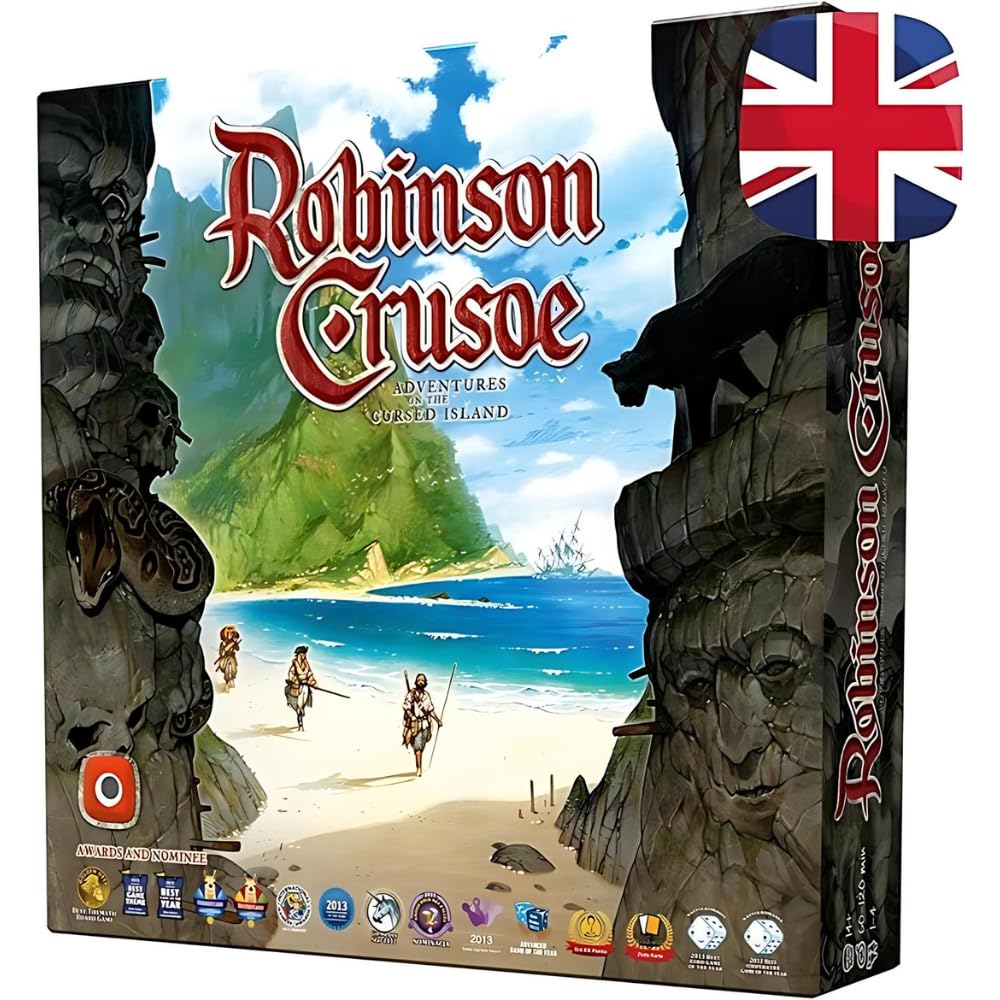
Robinson Crusoe is your best true solo board game if you want a survival story rather than a puzzle. Each scenario tells a different narrative—you're stranded on an island, dealing with weather, hunger, and danger while trying to achieve specific goals. The game excels at creating that "against the odds" feeling.
The system is straightforward: you have action points each turn to gather resources, build shelter, hunt, or explore. Meanwhile, the island throws problems at you through event cards and weather tracks. You're not optimizing some perfect strategy—you're improvising solutions with limited resources. One bad sequence of events can spiral your situation from manageable to desperate.
Setup is quick (10-15 minutes), and games last 60-90 minutes. The game includes 10 scenarios ranging from escaping the island to searching for treasure, so there's variety beyond just difficulty scaling. The theme ties directly into the mechanics rather than feeling like window dressing.
The downside is that Robinson Crusoe is less about elegant mechanical design and more about creating emergent narratives. Some games will feel unfair when bad luck piles on, and the rulebook isn't as polished as some competitors. If you want a best true solo board game where you feel like you're playing against a carefully-tuned opponent, this might frustrate you. If you want stories to tell afterward, it delivers.
Pros:
- Strong thematic integration with mechanics
- Scenario variety keeps the game fresh
- Quick setup and reasonable play time
- Creates memorable "failure stories" as much as victories
Cons:
- Can feel luck-dependent rather than skill-dependent
- Rulebook has some ambiguous sections
- May feel narratively chaotic to players who prefer tight systems
- Component quality is decent but not premium
---
4. Marvel Champions: The Card Game — Accessible Superhero Action

Marvel Champions is the best true solo board game for anyone who wants satisfying gameplay without a PhD in rulebooks. You play as a Marvel hero fighting a villain, managing your health and building up your resources to deal damage. It's a deck-building game where your hero's powers define your deck, and watching your strategies come together feels genuinely fun.
The base game includes six heroes (Spider-Man, Black Panther, Captain Marvel, She-Hulk, Doctor Strange, and Iron Man), and each one plays completely differently. Spider-Man uses web tokens and evasion, while Doctor Strange manipulates resource costs. This means every hero offers a fresh experience, and the game rewards learning multiple playstyles.
Individual games run 30-45 minutes, which is refreshing if you want a best true solo board game that respects your time. The difficulty scales well, and there are enough villains included to sustain dozens of plays. Each hero-villain combination creates a unique puzzle.
The main limitation is that the base game is the foundation, and the game designers clearly want you buying expansion packs. The core experience is solid, but you'll eventually want more heroes and villains to keep things interesting. Also, if you prefer crunchy strategic decisions, Marvel Champions might feel a bit streamlined.
Pros:
- Quick play time makes it perfect for regular play
- Six heroes with genuinely different mechanics
- Accessible rules that don't require extensive study
- High replayability and good difficulty scaling
Cons:
- Designed to encourage expansion purchases
- Less mechanical depth than heavier titles
- Base game content eventually feels limited
- Hero variety depends on buying additional products
---
5. Under Falling Skies — Dice Placement Under Pressure
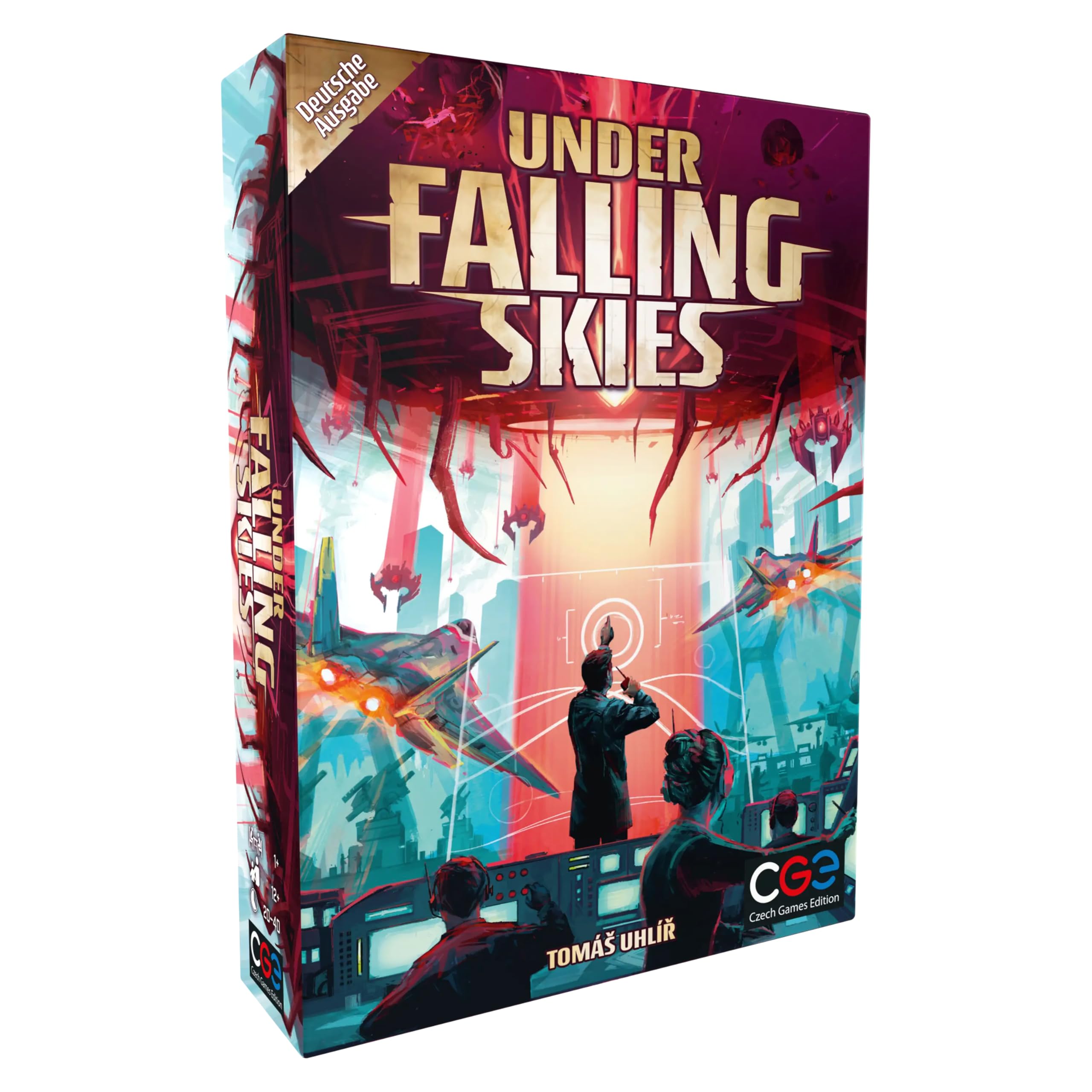
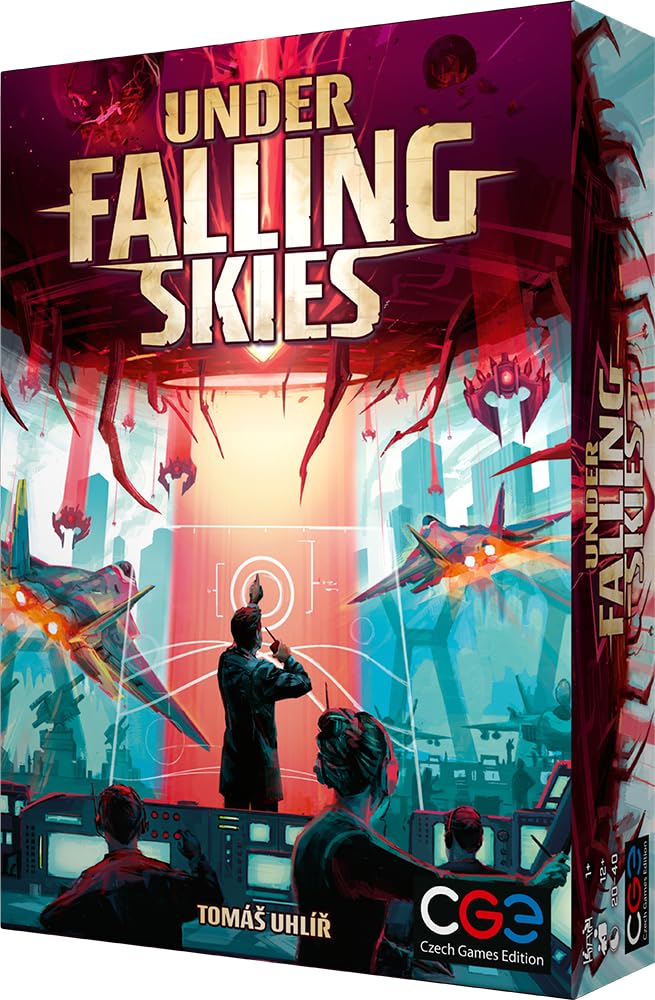
Under Falling Skies is the best true solo board game if you want something punchy and intense without a 90-minute commitment. You're defending a city against descending alien invaders, using dice allocation to manage your limited actions each turn. It's elegant, tense, and over in 20-30 minutes.
The core tension comes from a simple concept: you roll dice, then place them to activate different parts of your defense (shooting aliens, powering shields, evacuating citizens). But the aliens advance each turn regardless, and your dice rolls are frequently terrible. You're constantly making tough calls about which problems to address when you can't solve everything.
The beauty of Under Falling Skies is that it delivers high-stress decisions in a compact package. Games are short enough that you can play multiple rounds in one session, trying different strategies. Each playthrough feels tighter than the last as you learn what works.
The downside is that because games are so quick and decisions are so limited, there's less room for deep strategic mastery. Under Falling Skies is satisfying as a best true solo board game, but it's not a game you'll be discovering new synergies in after 50 plays. It's more about improving your decision-making than discovering mechanical depth.
Pros:
- Excellent pacing and play time (20-30 minutes)
- Simple rules that still create meaningful decisions
- High-stress gameplay feels genuinely thrilling
- Perfect for playing multiple games in a session
Cons:
- Limited mechanical depth for long-term engagement
- Smaller scope than other entries on this list
- Can feel repetitive after many plays
- Less thematic immersion than narrative-driven games
---
How I Chose These
I evaluated these games based on a few specific criteria that separate a genuine best true solo board game from a multiplayer game with solo rules bolted on. First, does the game feel designed for solo play, or does it feel like it's missing something without other players? Second, does the game create meaningful decisions that reward strategy and planning? Third, can you actually play it solo repeatedly without the experience growing stale?
I also weighted how accessible each game is. A best true solo board game that requires six hours of rulebook study before you can play isn't practical for most people. So I included games across the complexity spectrum—from Under Falling Skies' elegant simplicity to Mage Knight's intricate systems.
Finally, I considered replayability and value. Solo gaming often means you're playing the same game repeatedly, so games that change meaningfully across plays are worth the investment.
Frequently Asked Questions
What's the difference between a true solo board game and a game with solo rules?
A true solo board game is designed with solo play as the primary experience. The AI system, difficulty scaling, and narrative structure all account for one player. Games with solo rules often feel like you're playing against an arbitrary system rather than a thoughtful opponent. A game like Spirit Island was built for solo first, while some games just tacked on solo variants.
How much table space do these games need?
It varies wildly. Marvel Champions and Under Falling Skies are compact. Spirit Island needs a large table (around 3'x4' comfortably). Mage Knight and Robinson Crusoe are somewhere in the middle. Before buying, consider your actual play space.
Can I learn these games easily, or will I need YouTube tutorials?
Spirit Island and Mage Knight benefit from watching a tutorial video first—the rulesets are complex enough that reading alone is frustrating. Robinson Crusoe and Under Falling Skies are more learnable from the rulebook. Marvel Champions sits in the middle. YouTube definitely speeds things up for any of these.
Which game should I buy first if I'm new to solo board gaming?
Start with Marvel Champions or Under Falling Skies. Both are accessible, respect your time, and won't overwhelm you with rules. Once you know if you like the hobby, move to heavier options like Spirit Island or Mage Knight.
Do these games stay engaging after 20+ plays?
Spirit Island, Mage Knight, and Robinson Crusoe all have excellent long-term replay value. Marvel Champions depends on you buying expansions. Under Falling Skies is engaging but may feel repetitive after extensive play—it's better as a regular game rather than your only solo title.
---
If you're serious about solo board gaming, start with Spirit Island—it's genuinely the best true solo board game available right now. But the right choice depends on whether you want strategic depth (Mage Knight), narrative variety (Robinson Crusoe), accessibility (Marvel Champions), or quick sessions (Under Falling Skies). Pick based on what kind of experience matters most to you, and you'll have something you'll be playing for months.
Get the best board game picks in your inbox
New reviews, top picks, and honest recommendations. No spam, unsubscribe anytime.
More in Cooperative
Best Solo Board Games Ever in 2026: Our Top Picks for Playing Alone
Solo board gaming has exploded over the last few years, and if you've been thinking about diving into games you can play by yourself, you're in for a...
Best Solo Board Games with High Replayability in 2026
If you're looking for board games you can play alone without feeling like you're missing out on the experience, you've probably noticed that most games...
Best Compact Solo Board Game 2026: 5 Games That Actually Travel Well
Finding a great solo board game that doesn't require a huge table or an hour of setup is harder than you'd think.