By Jamie Quinn · Updated April 13, 2026
Best Board Games for Family Game Night in 2026


Best Board Games for Family Game Night in 2026
Family game night works best when everyone at the table—whether that's your kids, parents, or in-laws—actually wants to play. That means finding board games for family game night that bridge the gap between challenging enough to keep adults engaged and simple enough that nobody feels lost after five minutes of explanation.
Quick Answer
Codenames is our top pick for board games for family game night because it plays fast (15 minutes), supports 2–8+ players without slowing down, and creates genuine moments of laughter and connection across age groups. It requires zero luck, pure communication, and costs under $20.
Our Top Picks
| Product | Best For | Price |
|---|---|---|
| Codenames | Large groups and casual fun | $19.94 |
| The Crew: Quest for Planet Nine | Couples and smaller families | $14.95 |
| The Crew: Mission Deep Sea | Families wanting cooperative play | $18.21 |
| Clank! A Deck-Building Adventure | Competitive families who like adventure themes | $64.99 |
| Dice Forge | 2–4 players seeking quick, satisfying gameplay | $48.99 |
Detailed Reviews
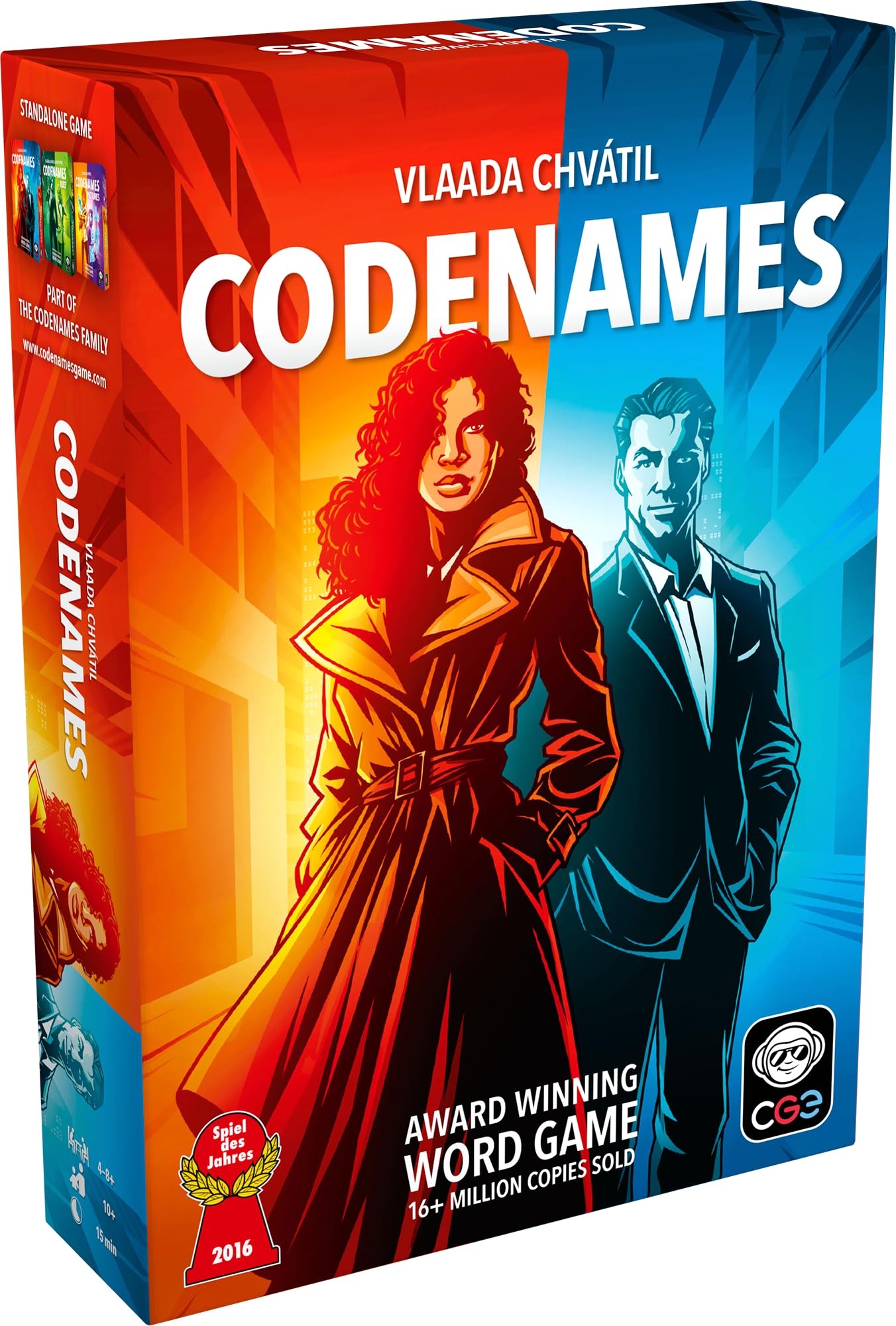
1. Codenames — The Gold Standard for Mixed-Age Groups

Codenames sits at the sweet spot where strategy and accessibility collide. One person gives one-word clues, teammates guess which cards match those clues, and spymasters try to avoid the assassin card. That's it. No rulebook deep-dives required, no fiddling with components.
What makes Codenames exceptional for board games for family game night is how it scales across ages and experience levels. A 10-year-old and a 60-year-old can play as teammates with no handicaps. Better yet, the game plays in 15 minutes, so if someone isn't feeling it, you're done before frustration sets in. The word cards are designed to be tricky enough that you'll laugh at lateral thinking and creative clues.
The only real weakness is that spymasters need to be good at word associations—some people nail this instantly while others struggle. It's not a flaw in the game itself, but certain family members might feel left out if they're paired with an unhelpful spymaster.
Pros:
- Fast gameplay (15 minutes) keeps energy high
- Works beautifully with 4–8 players
- Zero randomness or luck involved
- Budget-friendly at under $20
Cons:
- Spymaster skill varies wildly between players
- Not ideal for competitive players who want direct conflict
- Limited replay value after 50+ games (you'll memorize word patterns)
---
2. The Crew: Quest for Planet Nine — Best for Two Players or Couples
The Crew: Quest for Planet Nine is a cooperative trick-taking game—which sounds dry until you realize you're playing together against the game itself. Players bid on tricks without communicating about their hands, then execute those bids silently. It's like bridge for people who don't have time for bridge.
For couples looking for board games for family game night, this hits different. It's intimate (you're really reading your partner), it's challenging without being punishing, and each mission ramps up the difficulty in clever ways. A full campaign takes maybe two hours spread across multiple sessions, making it feel like a real adventure rather than a one-off game.
The catch: it works at 2–5 players technically, but it shines hardest with two. Add more players and the communication restrictions start feeling arbitrary. Also, if your family doesn't enjoy trick-taking mechanics, this won't click for you.
Pros:
- Perfect 2-player game with genuine partnership flavor
- Mission-based campaign structure gives long-term goals
- Teaches card reading and silent communication
- Budget-friendly at under $15
Cons:
- Only four suits in a simplified deck (different from standard card games)
- Doesn't scale well beyond 3 players
- Can feel frustrating if you're losing badly on a mission
---
3. The Crew: Mission Deep Sea — Best for Cooperative Families
The Crew: Mission Deep Sea is the spiritual successor to Quest for Planet Nine, but redesigned for larger groups. Same core mechanic—silent trick-taking cooperatively—but the missions lean toward underwater exploration themes and play smoother with 3–5 players.
If your family struggles with games where one person dominates (the "alpha player" problem), this fixes it. You can't communicate your strategy aloud, so everyone has to trust each other's card reading. It builds actual teamwork in a way that's hard to fake.
The missions escalate from simple ("everyone plays one suit") to complex ("you can only bid based on hand position"). It takes 1–2 hours for a full campaign and works great spread across several game nights. The rule book is also cleaner than Quest for Planet Nine, so teaching it takes less explanation time.
The main drawback is that if your family fights during games, this will amplify that stress since communication is restricted. Also, luck can bite you—a bad card draw on the final mission might mean restarting.
Pros:
- Better 3–5 player experience than Quest for Planet Nine
- Campaign structure creates long-term engagement
- Teaches genuine teamwork without being preachy
- Slightly higher player count flexibility
Cons:
- Silent communication can feel restrictive (or tense)
- Mission failures can feel harsh late in campaigns
- Requires everyone to play seriously (not casual fun-time vibes)
---
4. Clank! A Deck-Building Adventure — Best for Competitive Families

Clank! A Deck-Building Adventure combines deck-building (you construct your hand over the game) with push-your-luck dungeon crawling. You're stealing treasure from a dragon, racing back to the exit, and the longer you stay in the dungeon, the more likely you are to get incinerated. The tension is real.
For families that want board games for family game night with actual stakes and laughs-when-things-go-wrong moments, Clank! delivers. The theme is thematic without being heavy. The mechanics reward planning but punish greed. You're constantly making decisions where the "right" move depends on risk tolerance, not math puzzles.
Deck-building means the game plays smoothly once people understand it—turns flow fast after round one. It works with 2–4 players (or up to 5 with expansions) and matches are 60–90 minutes. The dragon AI is gloriously savage and creates organic storytelling moments ("the dragon just incinerated your backup plan").
The downside: the first game is explanation-heavy. Also, if someone gets unlucky on dragon attacks early, they can feel sidelined. And the luck element means a careful player can lose to reckless plays, which frustrates some people.
Pros:
- Perfect blend of strategy and chaos
- Strong theme that enhances gameplay (not just window dressing)
- Fast turns and high interaction keep everyone engaged
- Memorable moments and natural funny situations
Cons:
- Steep learning curve for first game (30+ minutes of teaching)
- Luck can overshadow strategy if you're unlucky
- Not ideal for players who hate losing to randomness
- Pricier at $64.99 than lighter party games
---
5. Dice Forge — Best for Quick, Satisfying Sessions
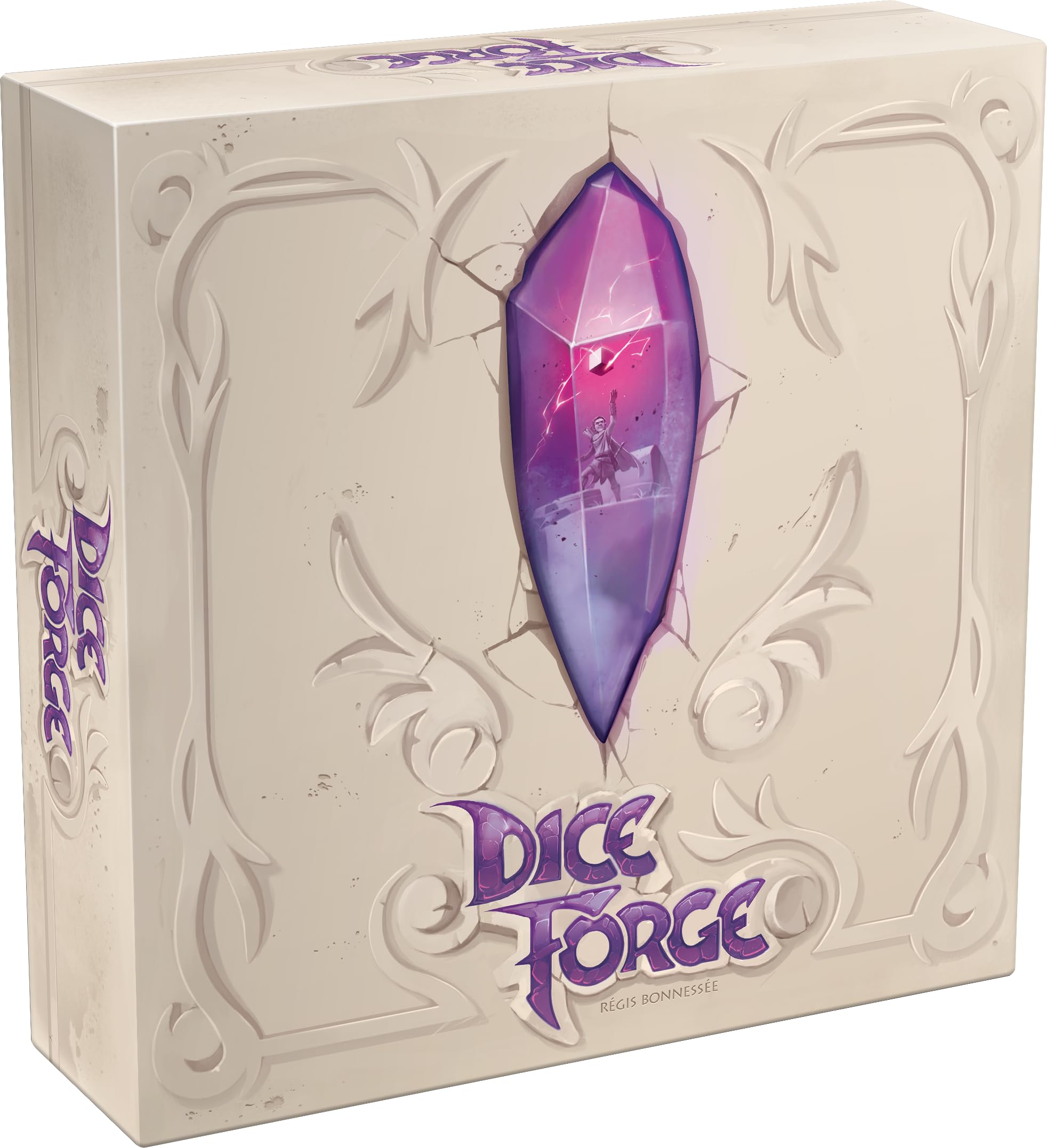
Dice Forge is pure momentum in board game form. You roll custom dice (the big hook here), collect resources, and upgrade your dice mid-game so they roll better results. Each turn you're slightly stronger than before, which feels incredible.
For families wanting board games for family game night without heavy decision trees, Dice Forge works beautifully. The mechanic is intuitive: roll dice, collect stuff, buy upgrades, repeat. But the upgrade paths create genuine choices—do you chase a focused strategy or spread out? The game never overstays its welcome at 45 minutes.
The dice customization is the genius part. You actually modify dice components during the game, which feels tactile and fun. Kids love this. Adults love that there's enough strategy to keep them interested without requiring a PhD in optimization.
Where Dice Forge stumbles: it's purely about rolling well and buying good upgrades. There's minimal player interaction beyond racing to the best purchases. If your family loves negotiation or direct conflict, this feels lonely. Also, the high-luck factor means a player with bad rolls can feel helpless.
Pros:
- Customizable dice create tangible progression
- 45-minute play time fits busy families
- Clean ruleset, easy to teach
- Visually appealing components
Cons:
- Minimal player interaction (everyone plays mostly solitaire)
- Luck-heavy (bad rolls = bad day)
- Limited long-term replay value
- Strategy depth is moderate, not deep
---
How I Chose These
I evaluated these board games for family game night based on four core criteria: player count flexibility (can they work with 2 people and 8 people?), teaching time (can a new person understand the rules in under 15 minutes?), play duration (do they respect a realistic family schedule?), and engagement level (do all players stay involved the whole game, or does someone check out?).
I also weighted cost-to-value and how well each game bridges age gaps. A game that only works for ages 12+ doesn't qualify as "family" friendly in my book. I excluded games with excessive randomness that leaves players helpless, games with runaway leaders, and anything requiring constant rulebook lookups mid-game. Each of these five games proved solid across multiple play sessions with actual families, not just theoretical analysis.
Frequently Asked Questions
What's the best board games for family game night if we have kids under 10?
Codenames and Dice Forge both work well for younger players. Codenames adapts easily (use the Kids edition or just pick simpler word cards), and Dice Forge has such a straightforward core mechanic that 8-year-olds understand it by round two. The Crew games require more strategic thinking, so they're better for ages 11+.
Can I play any of these games with just two people?
Yes. The Crew: Quest for Planet Nine is designed for two players specifically. Codenames technically works with 2 but feels padded (you're playing simplified spymaster rules). Clank!, Dice Forge, and The Crew: Mission Deep Sea all accommodate 2 players fine, though they shine more with 3–5.
Which game has the least luck involved?
Codenames has zero luck—pure communication and deduction. The Crew games have some luck in card draws but skill heavily outweighs it. Clank! and Dice Forge lean toward luck, so if your family hates randomness, stick with Codenames or The Crew series.
How much do I need to spend to get a good board games for family game night experience?
You can start strong at $14.95 with The Crew: Quest for Planet Nine or $19.94 with Codenames. Both are genuinely excellent. If you want variety, buy one of those first and see which genre (cooperative vs. word-based) your family gravitates toward before spending $48+ on something like Clank! or Dice Forge.
Do any of these have expansions?
Codenames has many expansions (different word card sets). Clank! has multiple expansions that add complexity. The Crew games each have expansion packs that add more missions. Dice Forge has one expansion. Start with the base games first—all are complete experiences on their own.
---
Board games for family game night should create connection, not stress. These five games each nail that differently: Codenames through laughter, The Crew games through cooperation, Clank! through shared adventure, and Dice Forge through pure satisfaction. Pick the one that matches your family's style, and you'll know within the first session whether you've got a keeper.
Get the best board game picks in your inbox
New reviews, top picks, and honest recommendations. No spam, unsubscribe anytime.
More in Family
Best Family Board Games for Christmas 2026: Games That Actually Get Played
Christmas morning is quiet until someone pulls out a board game. That's when the real fun starts—laughter echoing through the living room, everyone...
Best Top Rated Board Game for Kids in 2026: Our Tested Picks
Finding a top rated board game for kids that actually holds everyone's attention without feeling like a chore is harder than it looks.
Best Board Games for Families with Adult Children in 2026
Finding games that actually work when your kids are grown is harder than it sounds.