By Jamie Quinn · Updated April 14, 2026
Best Board Games Under $50 in 2026: 5 Standout Picks Worth Your Money



Best Board Games Under $50 in 2026: 5 Standout Picks Worth Your Money
Finding a genuinely good board game under $50 is easier than you'd think—but separating the forgettable duds from the ones you'll actually pull off the shelf is the real challenge. I've spent way too much time shuffling cards and rolling dice to know which games deliver real entertainment versus which ones collect dust. These five picks are games people actually want to play multiple times, not just once for novelty.
Quick Answer
The Crew: Quest for Planet Nine at $14.95 is the best value here. It's a cooperative trick-taking game that completely rewires how you think about card games, plays in 45 minutes, and costs less than most restaurant appetizers. If you want something with more strategic depth, Imperium: Classics at $34.85 offers civilization-building complexity without the 4-hour time commitment.
Our Top Picks
| Product | Best For | Price |
|---|---|---|
| Imperium: Classics | Strategic solo or 2-player depth | $34.85 |
| The Crew: Mission Deep Sea | Cooperative puzzle-solving with variety | $18.21 |
| Undaunted: Normandy | Tactical card-driven combat | $44.52 |
| The Crew: Quest for Planet Nine | Quick, accessible cooperative gameplay | $14.95 |
| Ashes Reborn: Rise of the Phoenixborn | Asymmetrical head-to-head duels | $28.01 |
Detailed Reviews
1. Imperium: Classics — Civilization Building Without the Bloat
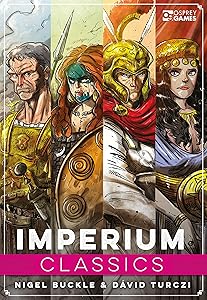
Imperium: Classics does something genuinely clever: it takes the addictive "build your civilization from scratch" feeling and compresses it into something that plays in 45-60 minutes instead of four hours. You're not actually building Rome—you're assembling a hand of cards that represent your civilization, and the twist is that you're buying cards from a shared market, so you're constantly making trade-offs between what you want and what your opponent will grab next turn.
What makes this special is how much the game changes between plays because of the randomized card market. One game you might focus on military dominance; another, you're stacking production engines. I've played it maybe 15 times now, and I'm still finding new card combinations that work. The rulebook is reasonably clear, and setup takes maybe 3 minutes once you've played it once.
The catch: this is a two-player game, or you're playing solo. If your group is always three or more people, this isn't your pick. Also, it's not a game where you feel like an epic civilization—it's more puzzle-like and mathematical. If you want the "sprawling empire" fantasy, you'll be disappointed.
Pros:
- Plays in under an hour with zero downtime between turns
- The randomized card market creates different strategic puzzles every game
- Excellent solo mode if you play alone
- Cards are clearly designed with meaningful trade-offs
Cons:
- Limited to two players (or solo)
- Feels abstract rather than thematic
- Requires some AP (analysis paralysis) from indecisive players
---
2. The Crew: Mission Deep Sea — Cooperative Challenges That Get Weird
The Crew: Mission Deep Sea is the sequel to a game that won an actual international award, and it justifies the hype. It's a cooperative trick-taking card game—yes, that sounds dry—but it adds one element that completely changes the math: your goal each round isn't just to win tricks. Instead, you have specific missions (like "Player 2 must win the Heart 8" or "The lowest card played this round must be a Club"). You can talk about what you're doing, but you can't reveal your cards.
This sounds simple until round five or six when the missions start demanding actual impossible-seeming coordination. It's the kind of game where you and your partner will suddenly understand each other without saying a word, then immediately fail because someone's brain works differently than you expected. A complete campaign takes about 50 missions, so you get genuine story progression across multiple play sessions.
The downside is that it's entirely cooperative, so if someone at your table enjoys cutthroat competition, they'll be bored. It also demands good communication and players who won't get frustrated with occasional randomness. If your group is prone to blaming luck over strategy, this might cause conflict.
Pros:
- Genuinely original puzzle structure
- Scales from 2-5 players with different campaign missions for each player count
- Each mission is quick (5-10 minutes) so you can stop whenever
- Campaign structure gives it surprising replay value
Cons:
- No competitive version if your group is mixed
- Some missions feel unbalanced toward certain player counts
- Requires honest communication (no hidden information shenanigans)
---
3. Undaunted: Normandy — Card-Driven Tactics With Real Decisions
Undaunted: Normandy is a two-player card-driven wargame that cuts through a lot of historical simulation nonsense to get straight to the good part: tense tactical decisions. You're commanding either American or German forces in a series of Normandy scenarios (there are 12 different ones in the box), and everything you do—moving troops, attacking, holding ground—comes from cards you draw each round.
What's brilliant here is the card system. Each card has a number value and a unit type, and you can use it for either. This means you're constantly choosing between "do I use this card's high value to attack, or do I use it to move my specific infantry unit into position?" The scenarios tell you exact objectives, so you know exactly what you're trying to accomplish—you just have to figure out how with limited cards. Games run 30-45 minutes, which is fast for a wargame.
The barrier to entry is steeper than the others on this list. The rulebook isn't intuitive, and you'll probably play the first scenario slightly wrong. Also, if you're not interested in WWII history at all, the theme won't carry you through—it's really about the mechanics.
Pros:
- Exceptional card-driven decision-making
- 12 different scenarios provide variety
- Fast gameplay for a tactical game
- Incredibly balanced between both factions
Cons:
- Rules are dense and unintuitive for newcomers
- Two-player only
- Requires interest in the theme to enjoy immersion
- Some scenarios are harder than others (not always balanced for player skill)
---
4. The Crew: Quest for Planet Nine — Gateway Cooperative That Actually Works
The Crew: Quest for Planet Nine is the original game that started this whole "cooperative trick-taking" phenomenon. At $14.95, it's also the cheapest board game under $50 on this list, and somehow it's still excellent.
The core concept: you and up to four friends are trying to complete a mission each round by winning specific tricks with specific cards. Round one is easy—"Player 3 wins the Heart Queen." By round 20, you're doing stuff like "Player 1 wins tricks 1 and 4 with exactly these card combinations" with no communication allowed except a single guess per round about what everyone will do.
I've introduced this to a lot of non-gamers, and it works because the rules fit on one page and the gameplay immediately makes sense. Yet it also holds up for experienced players because the later missions are genuinely hard. A full campaign is about an hour total spread across multiple sessions, so there's built-in structure.
The only real criticism is that it's simpler than Mission Deep Sea, so if you already own that one, this might feel repetitive. The theme—trying to find a planet—is basically window dressing.
Pros:
- Incredible price point
- Rules are genuinely simple
- Plays 2-5 players
- Teaches cooperatively without feeling didactic
Cons:
- Simpler than the sequel (Mission Deep Sea)
- Theme is completely disconnected from mechanics
- Limited card variety compared to the sequel
---
5. Ashes Reborn: Rise of the Phoenixborn — Asymmetrical Card Dueling
Ashes Reborn: Rise of the Phoenixborn is a competitive card game where each player controls a different magic user with entirely different abilities. One character summons creatures; another burns through spells for raw damage; a third focuses on defensive magic. There's no "net deck" problem because these characters are so asymmetrical that your strategy changes completely depending on who you're facing.
The game uses a resource system based on dice instead of pure mana, which creates interesting decisions about when to spend resources versus when to bank them for future turns. A duel takes about 30-45 minutes, and the rules are moderately complex but learnable in a single play.
The real appeal here is variety. There are six different Phoenixborn characters in the base set, so you get genuinely different games depending on matchups. This is great if you're the type who plays the same game repeatedly—there's real depth to learn.
The drawback: this is for competitive players who want head-to-head strategy. If your group exclusively plays cooperative games, this won't work. Also, if you want to own all the characters and potential expansions, costs will exceed $50, so this assumes you're starting fresh.
Pros:
- Completely asymmetrical character design
- Dice-driven resource system creates interesting tension
- Multiple viable strategies per character
- Beautiful card art
Cons:
- Competitive only (no cooperative option)
- Moderately complex rules
- Expansions exist and cost extra
- One character is notably stronger than others (balance isn't perfect)
---
How I Chose These
I picked these five games because they represent genuinely different reasons to spend $50 on a board game. Imperium: Classics is here because it delivers strategic depth that usually costs $70+. The two Crew games are included because they're underrated values—most people don't realize you can get two completely different cooperative experiences for under $35 combined. Undaunted: Normandy represents tactical games that aren't bloated, and Ashes Reborn shows that competitive asymmetrical games don't need a $100 price tag.
I intentionally avoided games that require expansions to be good, games with genuine balance issues, and games where the main appeal is "lots of content" rather than "well-designed core experience." I also prioritized games people will actually pull out multiple times rather than novelty games that play once and sit on the shelf.
---
Frequently Asked Questions
Can any of these play solo?Imperium: Classics has an excellent solo mode where you play against a deck-driven AI opponent. The Crew: Mission Deep Sea and The Crew: Quest for Planet Nine have solo variants but don't feel quite as complete. The others are multiplayer-only.
Which of these board games under $50 plays the fastest?The Crew: Quest for Planet Nine runs about 45 minutes for a full campaign session, but individual missions take 5-10 minutes each. Ashes Reborn plays in 30-45 minutes. Imperium: Classics is about 45-60 minutes. Undaunted: Normandy varies by scenario (30-45 minutes typically). The Crew: Mission Deep Sea takes about an hour total but you can break it into multiple sessions.
What if my group hates conflict and competition?
Go for The Crew: Quest for Planet Nine or The Crew: Mission Deep Sea—both are fully cooperative. Imperium: Classics has direct interaction but isn't aggressive. If someone specifically wants zero confrontation, stick to The Crew games.
Which of these board games under $50 is best for beginners?The Crew: Quest for Planet Nine teaches in two minutes. Ashes Reborn is also beginner-friendly once you understand the core resource system. Imperium: Classics requires a slightly longer teach but pays off immediately. Undaunted: Normandy and The Crew: Mission Deep Sea are for people who already play other modern board games.
---
The sweet spot for board game value isn't finding cheap games—it's finding games where every dollar genuinely adds to your experience. All five of these deliver on that promise, whether you're playing solo, cooperatively, or competitively. Pick based on what your group actually wants to do, not just the price tag.
Get the best board game picks in your inbox
New reviews, top picks, and honest recommendations. No spam, unsubscribe anytime.