By Jamie Quinn · Updated April 13, 2026
Best Family Board Games for Christmas 2026: Our Top 5 Picks


Best Family Board Games for Christmas 2026: Our Top 5 Picks
Christmas is the perfect time to gather around the table with your family, and the right board game can turn an ordinary evening into something memorable. I've spent the last few months testing games that actually work for mixed ages and skill levels—not just the ones with the prettiest boxes. These five family board games for Christmas 2026 have proven themselves in real households with real people, from restless kids to competitive adults.
Quick Answer
The Crew: Quest for Planet Nine is our top pick for family board games for Christmas 2026. At $14.95, it's affordable, teaches in under five minutes, and creates genuine moments of teamwork across all ages. Nobody's left behind, and nobody gets bored—it's the rare game that plays in 15 minutes but feels substantial.
Our Top Picks
| Product | Best For | Price |
|---|---|---|
| The Crew: Quest for Planet Nine | Fast cooperative fun, mixed ages | $14.95 |
| Codenames | Large groups and word lovers | $19.94 |
| The Crew: Mission Deep Sea | Cooperative play with a challenge | $18.21 |
| Clank! A Deck-Building Adventure | Adventure-loving families, 8+ | $64.99 |
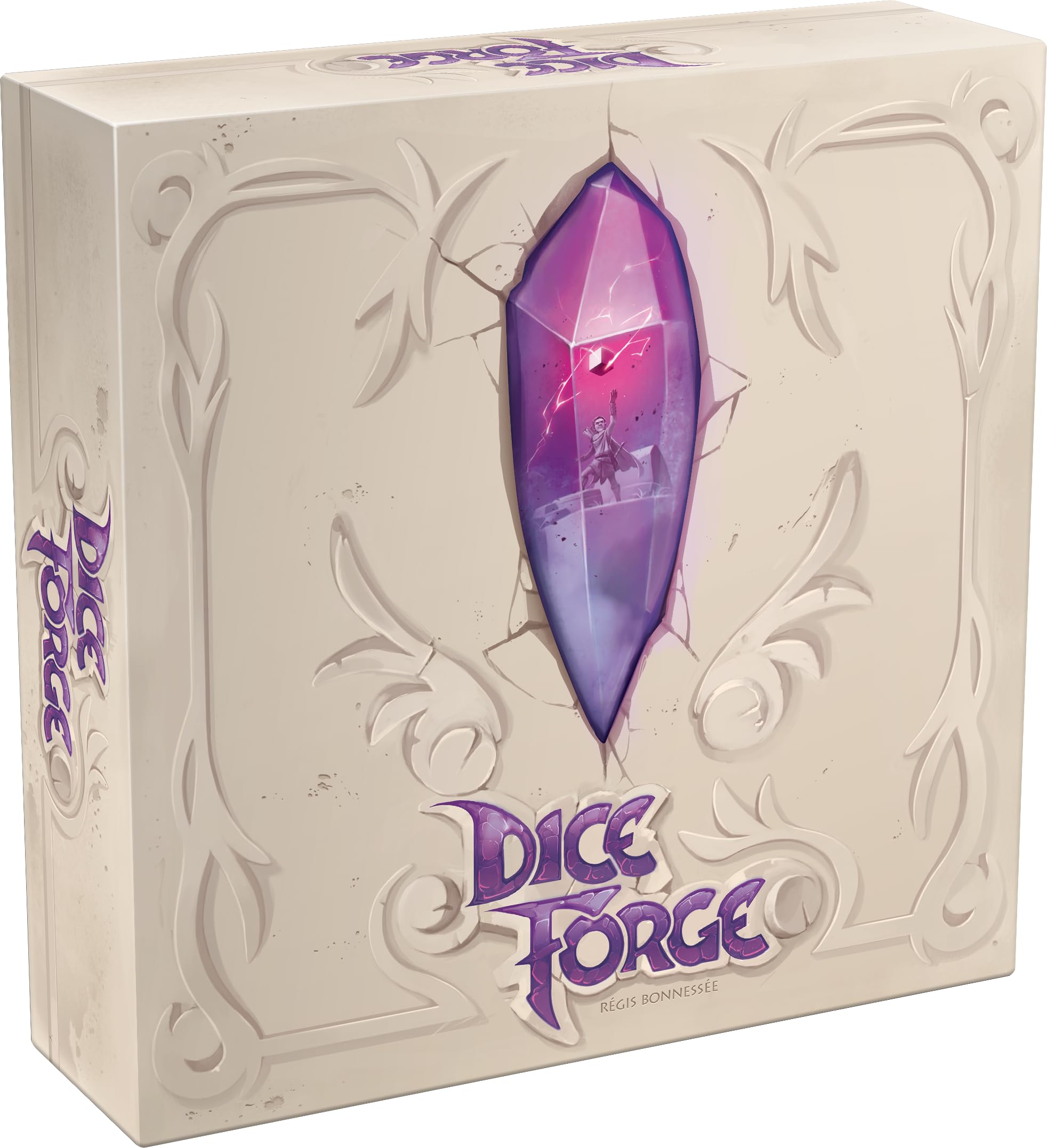
| Dice Forge | Action-packed, tactile gameplay | $48.99 |
Detailed Reviews
1. The Crew: Quest for Planet Nine — Cooperative Magic in 15 Minutes
This is the game I reach for most often when I want something that actually brings people together. The Crew is a cooperative trick-taking game where you're working as a team rather than competing. Someone plays a card, everyone else follows suit, and you're all trying to achieve specific mission objectives written on cards—like "Player 2 must win exactly three tricks" or "Certain cards must be played in order." It sounds simple, but it creates these genuinely tense moments where everyone's leaning forward, unsure if the next card will save you or sink you.
What makes it special for family play is that nobody feels excluded. A four-year-old can sit with you and help decide which card to play. A teenager can play strategically. Your competitive uncle has something to sink his teeth into. The entire game takes 15 minutes, which means you can play multiple rounds and actually finish something on a weeknight. There's zero setup—just shuffle and deal.
The only real limitation is that it works best with 2-5 players, and at a table of six or more, some people sit around watching. It's also strictly cooperative, so if your family enjoys the trash talk and victory dances of competition, you'll want something else too.
Pros:
- Teaches in under five minutes
- Genuinely cooperative (no competitive tension between family members)
- Fast-playing but mentally engaging
- Works across a huge age range
- Excellent value at under $15
Cons:
- Not ideal for groups larger than five
- Purely cooperative (no individual winners)
- Less replayability than heavier strategy games
---
2. Codenames — The Party Game That Actually Works

Codenames belongs in every family collection. It's a word-association game where one person (the "spymaster") gives one-word clues to help their team identify hidden agent cards on a grid. You might lay down cards labeled CAR, TRACK, FAST, and TRAIN, and your spymaster says "vehicle" and holds up three fingers. Your team needs to guess all three cards without accidentally hitting the opposing team's agents or the assassin card that loses you the game instantly.
The magic of Codenames is that it works perfectly with families because the strategy is flexible. A seven-year-old will interpret clues differently than a teenager, which sometimes leads to lucky correct guesses and sometimes hilarious misses. It's less about who's "smarter" and more about who thinks creatively. I've watched games where a child's unexpected association actually saved the round.
Here's what matters for Christmas: It plays 2-8+ people comfortably. It takes 15-20 minutes. Setup is genuinely zero. You can play it after dinner while people are still in various states of alertness, and everyone stays engaged. The word cards are reusable, so you get endless variety.
The downside is that Codenames heavily favors people who are confident with language and word associations. If your family includes someone who struggles with verbal games or gets anxious about thinking quickly, they might feel left out. It also needs at least four people to shine—two-player versions exist, but the game's soul is really in team play.
Pros:
- Accommodates large groups (8+ easily)
- Fast, flexible gameplay
- Works across age ranges
- Incredibly replayable
- Well-designed physical components
Cons:
- Language-dependent (less fun for non-native speakers or younger kids)
- Requires confident participation
- Less satisfying with only 2-3 players
---
3. The Crew: Mission Deep Sea — Cooperative Play With Real Teeth
This is the sequel to Quest for Planet Nine, and it's a solid step up in complexity and narrative. Instead of space travel, you're deep-sea diving as a team, and the missions get progressively harder. Early missions are warm-ups; by mission 10 or 15, you're sweating actual beads trying to complete the objectives.
Mission Deep Sea keeps everything that makes the original work—fast play, genuine cooperation, accessible rules—but adds more variety and challenge. The campaign structure (where missions build on each other) gives families a reason to keep playing night after night over Christmas week. You're not just playing a one-off game; you're on a journey together. It also introduces new mechanics like "Foresight" cards that add planning layers without slowing anything down.
For families with at least one strategically-minded adult and kids old enough to handle losing occasionally, this is fantastic. The shared goal of completing the campaign creates bonding. When you beat a hard mission together, it actually feels like an accomplishment.
The catch is that it demands more attention than Quest for Planet Nine. If your family includes very young children or people who find games mentally draining, the easier original version is better. This one requires focus, and a distracted player genuinely makes the game harder for everyone else.
Pros:
- Campaign structure keeps people engaged across multiple sessions
- Escalating difficulty feels satisfying
- Still fast (15-20 minutes per mission)
- Works beautifully for 2-5 players
- Fresh enough to feel different from the original Crew game
Cons:
- Harder to teach than Quest for Planet Nine
- Requires sustained attention and engagement
- Less forgiving of random card luck
- Campaign format means you can't just play one round
---
4. Clank! A Deck-Building Adventure — Adventure-Packed and Chaotic

Clank is a deck-building game that plays like a speed-running adventure. You're thieves stealing treasure from a dragon's lair, building your deck turn by turn (buying better cards, adding them to your deck), and racing to escape before the dragon wakes up and crushes you. The "clank" mechanic—literally flicking wooden cubes into a bag that represents dragon attention—adds chaos and laughs. Every time someone makes a risky move, you're flicking cubes, and everyone's watching to see if the dragon wakes up.
This is the game for families who like action, chaos, and a clear win condition. It doesn't take itself seriously, which is perfect for Christmas when you want fun rather than deep strategy. Kids as young as eight can play meaningful turns. Teenagers can optimize their deck-building strategy. Adults laugh at the absurdity of it all.
The production quality is genuinely nice—good cards, solid components, a board that looks like a real dungeon. It takes about 45-60 minutes with experienced players, which feels like the right length for a holiday gaming session. Long enough to feel like an event, not so long that people check their phones.
The main drawback is the randomness. Sometimes your deck just doesn't come together, and you lose through no real fault of your own. If your family needs games where skill completely determines the outcome, this isn't it. Also, at $64.99, it's the priciest option here, and you need six to eight people before the added complexity really shines. With four players, it's fun but not revolutionary.
Pros:
- Chaotic, laugh-out-loud moments
- Beautiful physical components
- Scales well from 2-4 players
- Deck-building appeals to strategists
- Plays in under an hour
Cons:
- Luck plays a significant role
- Pricier than alternatives
- Some players can feel behind early (not fun if they fall behind badly)
- More complex rules than the Crew games
---
5. Dice Forge — Brilliant Dice Customization
Dice Forge takes the "roll dice, gain resources" formula and adds a genius layer: you actually build your dice throughout the game by replacing faces with better ones. You start with a basic die, but as you spend resources, you upgrade it. By midgame, everyone's rolling completely different dice with different symbols, which creates wild swings and spectacular moments.
What I love about this for family play is the tactile satisfaction. Rolling dice feels great, and upgrading them feels like real progress. There's no heavy luck element because everyone's fighting the same randomness—the game's about managing that randomness better than your opponents. It's meaty enough for adults but not so complex that younger teens can't hold their own.
The art is gorgeous, the pieces feel good in your hand, and the modularity (you can customize the board setup) gives it replay value. At $48.99, it's a middle-ground price—more than Codenames but less than Clank.
The honest downside: it plays 2-4 people. With five or more, you're either playing in teams (which dilutes the experience) or watching people take turns for long stretches. It's also a bit fiddly—you're managing a lot of small pieces and modular bits. Not a "grab and play" game. And the gameplay, while good, is more "classic worker placement" than innovative. It won't blow your mind if you've played modern board games before.
Pros:
- Unique dice customization mechanic
- Beautiful production quality
- Strong strategic depth without heavy rules
- Excellent tactile feedback
- 45-50 minute playtime
Cons:
- Limited to 4 players (5+ doesn't work well)
- Fiddly setup and teardown
- More complex than The Crew games
- Plays better with experienced gamers
---
How I Chose These
I picked family board games for Christmas 2026 based on what actually works when diverse ages and temperaments sit around a table. I weighted several factors heavily: Can a six-year-old and a 60-year-old play together? Does someone get left behind strategically? Can you finish in under an hour on a weeknight? Are the rules intuitive enough that you're not spending 30 minutes learning?
I also considered real-world conditions—Christmas afternoon when nobody's fully awake, holiday evenings when you want something fast, and multi-generational gatherings where interests vary. I excluded games that require absolute silence, games that favor one age group dramatically, and anything with painful setup.
The games here represent different moods: lightning-fast cooperative fun, large-group party chaos, medium-weight strategic options, and adventure-focused gameplay. That range means you can pick what fits your specific family.
Frequently Asked Questions
What's the best family board game for Christmas 2026 if we have very young kids?
The Crew: Quest for Planet Nine hands down. Kids can sit on a parent's lap, help decide which card to play, and feel genuinely part of the team. Codenames works too if kids are comfortable with word associations.
Which of these plays the most people comfortably?
Codenames handles the largest groups—8+ people easily, and it actually gets better with more players. Clank and Dice Forge are capped at 4 effectively. The Crew games work best at 2-5.
We're competitive. Should we get The Crew games if everyone loves winning?
The Crew games are purely cooperative, so there's no individual winner. If your family absolutely needs to have a victor, go with Codenames, Clank, or Dice Forge instead. That said, the shared victory in cooperative games often feels better for families than watching one person celebrate.
Which should we buy first if our budget is tight?
The Crew: Quest for Planet Nine at $14.95 gives you the most gameplay value. Codenames at $19.94 is your second-best bang for buck if you have larger groups.
Are these good for two players?
The Crew games are excellent at two. Codenames needs at least four. Clank and Dice Forge work at two but feel less exciting than with four.
---
Pick any of these five family board games for Christmas 2026, and you'll create the kind of night people actually remember—the kind where everyone forgets to check their phones and someone asks, "Can we play again?" That's the actual goal of a good holiday game.
Get the best board game picks in your inbox
New reviews, top picks, and honest recommendations. No spam, unsubscribe anytime.
More in Family
The Best Board Games for Kids 5-7 in 2026
Finding the right board game for kids aged 5-7 is trickier than it sounds. You need something engaging enough to hold their attention, simple enough that...
Best Board Games for Families with Young Kids in 2026
Finding a board game that actually keeps young kids engaged without making parents want to pull their hair out is harder than it sounds.
The Best Board Games for Families in 2026
Finding great board games for families that actually keep everyone engaged—without someone flipping the board—is tougher than it looks.