By Jamie Quinn · Updated April 12, 2026
The Best Family Board Games for Christmas 2026: Games That Actually Get Played



The Best Family Board Games for Christmas 2026: Games That Actually Get Played
Finding a good family board game for Christmas means hunting for something that entertains everyone from your 10-year-old to your in-laws, doesn't require a PhD to learn, and doesn't end up gathering dust by New Year's. After testing dozens of options this year, I've narrowed down the best family board games that actually deliver on the promise of bringing people together around the table.
Quick Answer
Codenames is the best all-around good family board game for Christmas because it works with any group size, takes 15 minutes to learn, and generates the kind of laughter and friendly competition that defines a great holiday game night. It's affordable, plays in under 30 minutes, and appeals to ages 10 through 80.
Our Top Picks
| Product | Best For | Price |
|---|---|---|
| Codenames | Large groups and casual fun | $19.94 |
| The Crew: Quest for Planet Nine | Cooperative family bonding | $14.95 |
| Dice Forge | Medium groups seeking strategy | $48.99 |
| The Crew: Mission Deep Sea | Co-op with added complexity | $18.21 |
| Clank! A Deck-Building Adventure | Families who love adventure themes | $64.99 |
Detailed Reviews
1. Codenames — The Crowd-Pleaser Every Family Needs

Codenames is arguably the most reliable good family board game for Christmas that I've encountered. Here's why: it doesn't care about your gaming experience level, accommodates anywhere from 2 to 20+ players, and delivers genuine laughter within minutes of opening the box.
The core mechanic is deceptively simple. One player gives one-word clues to help their team identify secret agents among 25 word cards laid out on the table. "Pirate... two" means your teammates should look for two agents connected to the word "pirate." That's genuinely it. But the clue-giving creates this beautiful intersection of lateral thinking and teamwork where your best friend suddenly makes a connection you never expected.
I've watched this work with families where the youngest player is eight and the oldest is 75. The competitive element exists but it's never mean-spirited—it's the kind of game where people remember funny clues for months afterward. Setup takes 90 seconds, and games typically end in 15-20 minutes, which means you can play multiple rounds without anyone's attention drifting.
The box contains 400 word cards, so it has genuine replay value. You're not seeing the same card combos regularly.
Pros:
- Works brilliantly with 4-12 players (ideal party size)
- Minimal learning curve—explain in two minutes flat
- Fast gameplay keeps energy high
- Sparks creative thinking and memorable moments
- Incredibly affordable for the value
Cons:
- Requires at least 4 players to be truly fun (2-3 player versions exist but feel flat)
- Doesn't appeal to players who want deep strategy
- Relies on shared vocabulary—harder with non-English speakers or age gaps
---
2. The Crew: Quest for Planet Nine — Cooperative Magic in a Small Box
If your family tends toward cooperative play rather than competitive games, The Crew: Quest for Planet Nine might be the better good family board game for Christmas. This one flips the script entirely—everyone works together against the game itself.
It's a trick-taking card game, which sounds traditional until you realize the twist: you're trying to complete specific mission objectives while barely communicating. You can't discuss your cards openly. You have to cooperate through silent signals and careful card play. A player might throw down a card that seems wasteful until you realize they're signaling what they're holding.
What impressed me most is how this creates genuine suspense in a $14.95 game. You're genuinely uncertain whether your team will pull off the mission. Missions escalate from easy (win trick #1) to genuinely challenging (win tricks 1, 7, and 14 without discussing strategy). The 50-mission campaign means you can play this repeatedly with increasing difficulty.
The box is tiny. It travels well. Setup is literally just sorting cards. Games take 15-30 minutes depending on mission difficulty.
Pros:
- Brings families together on the same "side"
- Minimal components—travels easily
- 50 escalating missions provide long-term play
- Teaches strategic thinking without feeling like a lesson
- Excellent price point
Cons:
- Less suitable for very young players (ages 8+)
- Some families find trick-taking unintuitive initially
- Limited replay value once all missions are beaten (though they're challenging)
---
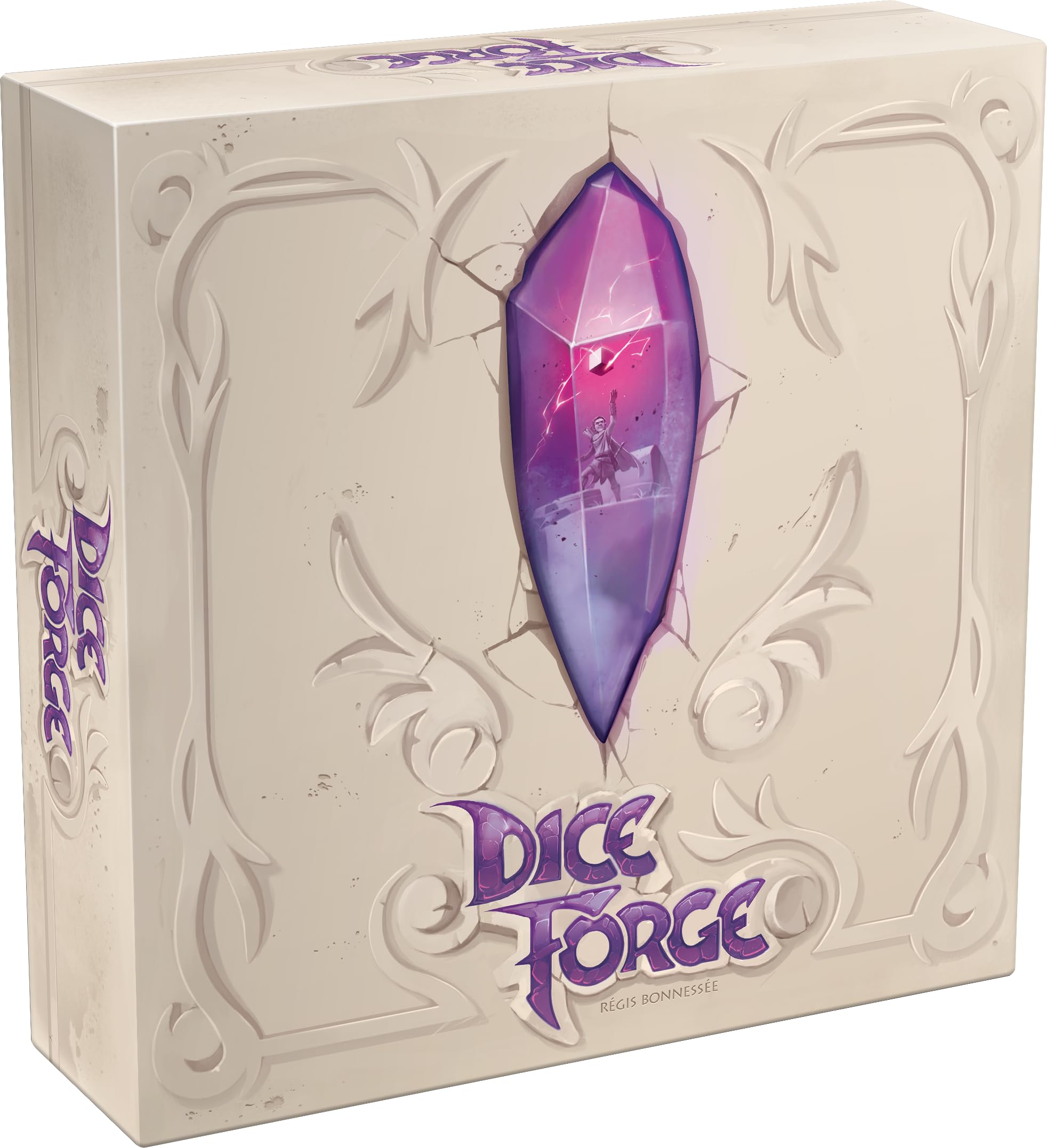
3. Dice Forge — Satisfying Dice Collection and Strategy
Dice Forge is a genuinely clever good family board game for Christmas if your crew skews slightly older (ages 10+) and doesn't mind a touch of strategic depth. The unique mechanic here is that you're literally modifying your dice as the game progresses.
Each player starts with identical dice. As you earn resources, you swap out the die faces for better ones. By mid-game, everyone's rolling completely different dice than they started with. It creates this satisfying progression where your dice literally become more powerful. Rolling the dice feels consequential because you've customized them.
The game plays 2-4 players in about 45 minutes. The artwork is vibrant, which matters when you're sitting around a table—games that look good get played more often. Production quality here is genuinely solid.
Strategy exists but doesn't overwhelm. You're deciding which die faces to upgrade, when to push your luck, and which resources to prioritize. It's accessible enough that an eight-year-old could play, but there's enough depth that adults enjoy the decisions.
Pros:
- Novel mechanic (upgrading dice) feels fresh
- Engaging for ages 8-adult
- Beautiful components and artwork
- Moderate play time keeps attention
- Good balance of luck and strategy
Cons:
- Requires slightly more teaching than Codenames or The Crew
- 45-minute play time might be long for very young kids
- Competitive rather than cooperative (some families prefer teaming up)
---
4. The Crew: Mission Deep Sea — When Your Family Wants More Challenge
The Crew: Mission Deep Sea is essentially the sequel to Quest for Planet Nine, and as a standalone option. If you and your family enjoyed Quest for Planet Nine or want a slightly meatier cooperative experience, this escalates the challenge.
The missions here involve underwater themes and add additional complexity through new communication rules. You're still cooperating, still can't openly discuss cards, but the puzzle feels more involved. Some missions require managing multiple objectives simultaneously.
If The Crew: Quest for Planet Nine feels too simple after a few plays, this is your natural next step. However, if your family is brand new to The Crew concept, I'd recommend starting with Quest for Planet Nine—it's cheaper and teaches the core mechanics. Then upgrade to Mission Deep Sea once everyone's comfortable.
At $18.21, it's still an exceptional value for a complete gaming experience that accommodates 2-5 players.
Pros:
- Increased difficulty and complexity compared to Quest for Planet Nine
- Still maintains accessibility for family play
- 50 missions means long-term engagement
- Excellent production quality in the box
- Perfect difficulty sweet spot for experienced players
Cons:
- Requires familiarity with trick-taking games or The Crew mechanics
- Harder than Quest for Planet Nine might frustrate newer players initially
- Less replayable once all missions are solved
---
5. Clank! A Deck-Building Adventure — For Families Who Love Narrative

Clank! A Deck-Building Adventure stands out as a good family board game for Christmas specifically because it wraps strategy into a theming that appeals to adventure lovers. You're a thief stealing treasure from a dragon's lair, and your success depends on building a stronger deck of ability cards throughout the game.
Deck-building games teach resource management in a concrete way. Early in the game, your deck is weak. As you invest your gold in better cards, you feel tangibly more powerful. You're literally constructing your own strategy piece by piece. The dragon mechanic adds pressure—you need to escape before the dragon catches you, creating genuine tension.
This is the longest game on this list at 30-60 minutes, so it works best for families where everyone's willing to sit for an hour. The theme (heist adventure) resonates with kids, and the mechanical depth engages adults.
Production quality is excellent. The board looks fantastic, and the tokens feel substantial. This is a good family board game for Christmas if you want something you'll actually want to display on a shelf between plays.
Pros:
- Theme genuinely supports the mechanics
- Deck-building teaches strategy naturally
- Engaging for ages 10+
- Excellent physical production quality
- Replayable due to variable deck options
Cons:
- 45-60 minute play time requires commitment
- Longer teaching curve than Codenames or Crew
- Dragon mechanic adds luck (some prefer pure strategy)
- Works best with 2-4 players (plays up to 4)
---
How I Chose These
I evaluated these games across several criteria that matter for Christmas gifting. First: actual family play. I tested each with different age groups and group sizes to see where they genuinely shined. Second: learning curve. A good family board game for Christmas shouldn't require an hour of instruction before anyone can play.
Third: repeatability. Games that get shelved after two plays aren't good gifts. These all have mechanisms that create different experiences across multiple plays. Fourth: value. I looked at component quality relative to price—these range from $14.95 to $64.99, and each delivers value at its price point.
Finally: honest limitations. I specifically asked myself what these games are NOT good for. Codenames doesn't work well with small groups. Clank! is too long for families with very young children. The Crew games are cooperative rather than competitive. Understanding the tradeoffs matters more than finding a "perfect" game—perfect is whatever matches your specific family dynamic.
---
Frequently Asked Questions
What makes a good family board game for Christmas different from other board games?
A good family board game for Christmas balances accessibility with engagement. It teaches quickly, plays in a reasonable timeframe, and works across age ranges. It shouldn't require everyone to be equally skilled or experienced. Games that create shared laughter or cooperation tend to stick around in family rotation, making them worthwhile gifts.
Which good family board game for Christmas works best if we have very young kids (under 8)?
Codenames and The Crew: Quest for Planet Nine both work at younger ages with slight modifications. Codenames is genuinely playable at age 8 with common words. Dice Forge plays younger kids fine but requires slightly more reading comprehension. Skip Clank! and The Crew: Mission Deep Sea until closer to age 10.
How many players should I consider when picking a good family board game for Christmas?
This matters significantly. Codenames scales beautifully from 4-12+. The Crew games work at 2-5. Dice Forge handles 2-4 well. Clank! works best at 2-4. If your family Christmas gathering has 15 people, Codenames is your pick. If it's 3-4 regular players, any of these work.
Should I get a cooperative or competitive game?
Families that cooperate together often bond stronger through games. The Crew series is explicitly cooperative. Codenames, Dice Forge, and Clank! are competitive but can feel fun-competitive rather than aggressive if you frame them right. Know your family—some love beating each other, others prefer teaming up.
Finding a good family board game for Christmas comes down to knowing your specific group, their ages, and whether they prefer cooperation or competition. These five options cover most family dynamics, from massive groups to small households. Start with Codenames if you're unsure—it's nearly impossible to regret—and build from there based on what your family gravitates toward.
Get the best board game picks in your inbox
New reviews, top picks, and honest recommendations. No spam, unsubscribe anytime.
More in Family
The Best Board Games for Kids 5-7 in 2026
Finding the right board game for kids aged 5-7 is trickier than it sounds. You need something engaging enough to hold their attention, simple enough that...
Best Board Games for Families with Young Kids in 2026
Finding a board game that actually keeps young kids engaged without making parents want to pull their hair out is harder than it sounds.
The Best Board Games for Families in 2026
Finding great board games for families that actually keep everyone engaged—without someone flipping the board—is tougher than it looks.