By Jamie Quinn · Updated April 12, 2026
Best Family Board Games for Teens in 2026


Best Family Board Games for Teens in 2026
Finding a board game that actually gets teenagers excited—instead of glued to their phones—is harder than it sounds. You need something with real strategic depth, engaging mechanics, and enough social interaction to make it fun for the whole family. The five games below all deliver that balance, whether your teens are competitive or just looking for something collaborative.
Quick Answer
The Crew: Quest for Planet Nine is our top pick for a good family board game for teens. It's affordable at $14.95, plays in under an hour, and works brilliantly with mixed ages because the cooperative gameplay keeps everyone invested in the same goal—no one gets bored while waiting for their turn.
Our Top Picks
| Product | Best For | Price |
|---|---|---|
| The Crew: Quest for Planet Nine | Budget-friendly cooperative play | $14.95 |
| The Crew: Mission Deep Sea | Hardcore cooperative gamers | $18.21 |
| Codenames | Large groups and party nights | $19.94 |
| Dice Forge | Strategic depth with beautiful components | $48.99 |
| Clank! A Deck-Building Adventure | Competitive players who want adventure | $64.99 |
Detailed Reviews
1. The Crew: Quest for Planet Nine — The Best Entry Point
This is the game that convinced me cooperative board games could actually feel tense and rewarding. The Crew challenges your whole family to complete trick-taking objectives together—like getting specific cards in specific hands—without talking about what you have. It's simple enough to learn in 10 minutes but creates moments where someone says "oh no, I completely misread that signal" that have everyone groaning and laughing.
The real magic is that it scales beautifully. A table of competitive teens suddenly stops caring about winning points and starts caring about solving a puzzle together. Each mission builds on the last, introducing new rules gradually. You'll play 30-45 minutes, which is perfect for family game night—long enough to feel substantial, short enough that losing doesn't sting for hours.
The components are functional but minimal (cards, a planet dial, scoring tokens). It's not flashy, but that's actually part of the appeal. You're paying for clever game design, not fancy plastic.
Pros:
- Incredibly affordable at $14.95
- Teaches teamwork without feeling preachy
- Scales from 2 to 5 players smoothly
- Missions progressively unlock new challenge levels
- Perfect play time for family schedules
Cons:
- Minimal components feel thin compared to heavier games
- Limited replay value once you've beaten all missions (though there are expansions)
- Communication restrictions feel awkward the first two rounds
- Not ideal if your teens demand flashy production
---
2. The Crew: Mission Deep Sea — For Cooperative Deep-Divers
Mission Deep Sea is essentially an upgraded version of Quest for Planet Nine with an underwater theme and moderately harder puzzles. If your family demolishes Quest for Planet Nine in a sitting and wants real challenge, this is the natural next step. The campaign is longer, the objectives more devious, and there's a built-in difficulty ramp that will satisfy even clever teenagers.
The underwater setting is thematic without being distracting. You're working together to ocean, complete research missions, and avoid threats. It plays 2-5 people in 45-60 minutes, so it's still family-dinner-table appropriate. The learning curve is gentler here because you already understand the trick-taking and signaling system from the original (or you pick it up even faster because the core mechanic is intuitive).
One thing: this isn't twice as good as Quest for Planet Nine—it's a different campaign with slightly tighter puzzle design. If you're buying just one Crew game, start with Quest for Planet Nine. But if you're serious about cooperative trick-taking, Mission Deep Sea justifies the $18.21 price.
Pros:
- Harder missions reward advanced players
- Full campaign with 50+ unique objectives
- Works as a standalone game (no need to own the other)
- Same elegant design with deeper strategy
- Excellent value for complexity offered
Cons:
- Slightly more expensive than Quest for Planet Nine
- Can feel repetitive if you prefer narrative-driven games
- Some missions hit a frustration wall before breakthrough moments
- Not recommended for players who dislike trick-taking mechanics
---
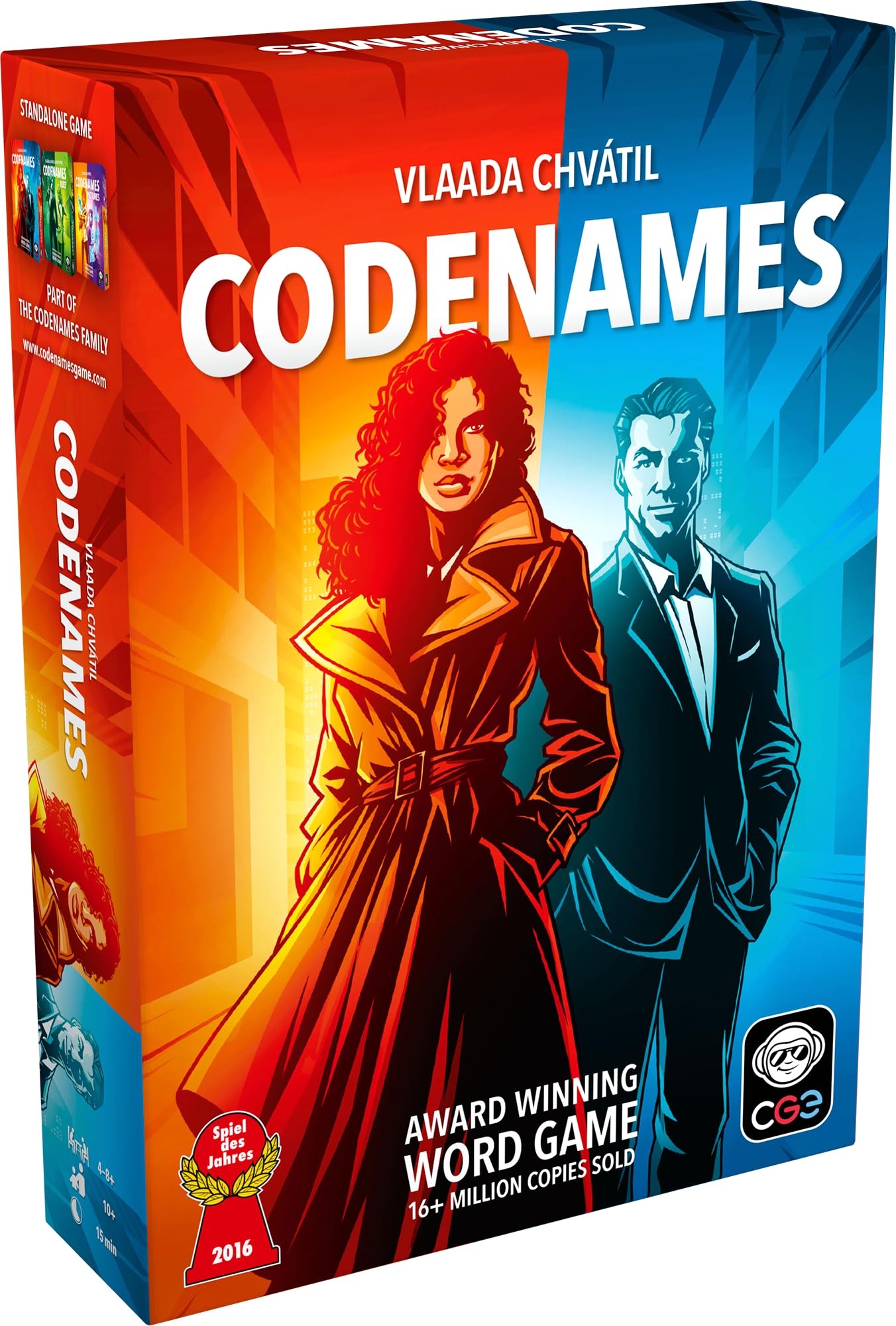
3. Codenames — The Social Connector

Codenames is the good family board game for teens that works when you've got mixed ages around the table and someone's 12-year-old cousin is visiting. Two teams compete to identify secret agents on a grid by decoding one-word clues. The person giving clues has to be clever enough to connect multiple words without accidentally pointing toward the other team's agents. It's simple enough that anyone can play but rewards creative thinking.
The reason this works so well for families is that teenagers feel genuinely clever when they make a great clue, and younger siblings feel smart when they crack the code. Parents aren't babied—good clues and solid logic matter. Games run 15-20 minutes, so you can play three rounds in a family game night, and the outcome often comes down to the last guess.
At $19.94, it's reasonably priced, and there are hundreds of card packs available online if you want to refresh it. If you also enjoy party games that work for mixed age groups, this is essential.
Pros:
- Simple rules, deep strategy
- Plays 4-8 players (teams of 2+)
- Fast games mean multiple rounds
- No player elimination—everyone stays engaged
- Works for ages 10-80
Cons:
- Relies on your group being willing to think creatively
- Less fun with players who won't engage with wordplay
- Gameplay can get repetitive after dozens of rounds
- Requires relative quiet (harder in chaotic households)
---
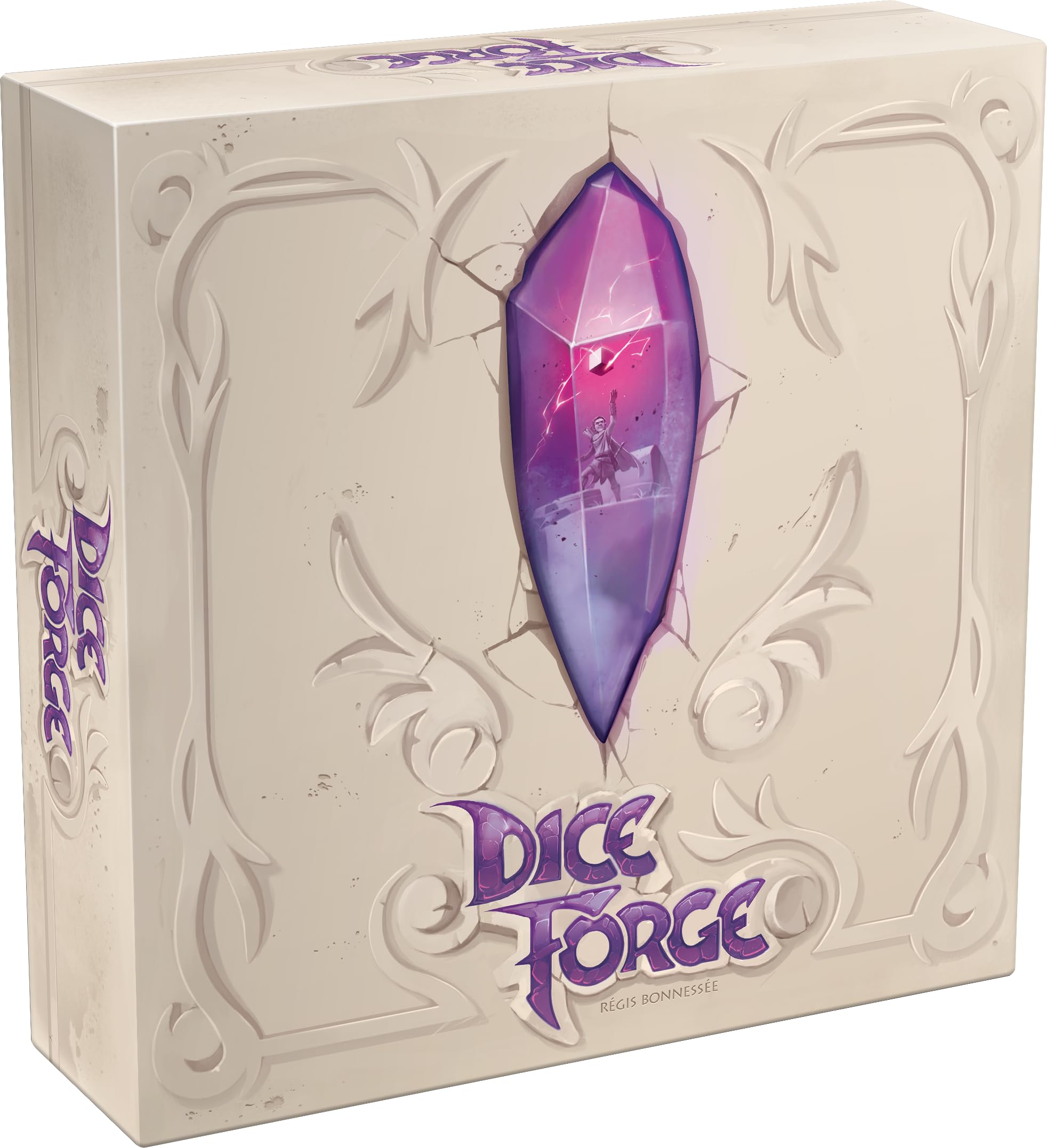
4. Dice Forge — When You Want Beautiful Depth
Dice Forge is the game you grab when you want something that looks impressive and actually plays great. Players collect and customize magical dice throughout the game, rolling them to earn gold, gems, and victory points. Each die has eight swappable faces, so you're gradually building your personal dice engine while competing for resources on the board.
This is legitimately beautiful production—the custom dice feel premium, the board is colorful without being chaotic, and there's real strategic choice every turn. Teenagers appreciate the tech (customizable components) and the clear path to victory. You're never more than three turns away from a good move, so downtime is minimal. Games run 45 minutes with experienced players, which makes it perfect for a good family board game for teens who appreciate mechanical depth without wanting a three-hour commitment.
The catch: at $48.99, this is the expensive option here. You're paying for component quality and art direction, not just game design. It's worth it if your family values "nice" things, but it's not mandatory for fun.
Pros:
- Exceptional component quality
- Clever dice customization creates meaningful progression
- Plays 2-4 smoothly (scaling works well)
- Beautiful presentation makes opponents want to play
- Easy to learn, satisfying to master
Cons:
- Most expensive option in this list
- Some randomness (you're rolling dice) bothers strategy purists
- Limited player count (max 4) compared to others
- First game takes longer as everyone learns synergies
---
5. Clank! A Deck-Building Adventure — For Competitive Adventurers

Clank! combines deck-building with push-your-luck dungeon crawling. You're building hands of cards to move through a fantasy dungeon, steal treasure, and escape before the dragon catches you. The genius is that you want to build your deck efficiently, but if you're not careful, you'll trigger dragon attacks that hurt everyone equally. The balance between personal optimization and shared threat creates real tension.
This is the pick if your teenagers are competitive and want adventures. Games run 30-60 minutes depending on how thoughtful players are, and every decision matters. You're not just playing cards—you're weighing risk, managing resources, and reading opponents. The dragon threat keeps aggressive rushing from being the only strategy.
At $64.99, it's the most expensive here, but you get a substantial box with beautiful art, chunky tokens, and a modular board. If your family loves fantasy themes and enjoys games where "how much am I willing to risk" is the central question, this justifies the cost. If they prefer cooperative games or lighter fare, look elsewhere.
Pros:
- Brilliant risk-reward mechanics
- Deck-building creates progression and personalization
- Modular board means different layouts each game
- Plays 2-4 people with balanced scaling
- Art and flavor enhance the fantasy adventure
Cons:
- Highest price at $64.99
- Deck-building can overwhelm new players initially
- Dragon attacks create occasional feel-bad moments
- Setup and cleanup take longer than simpler games
- Requires players who enjoy mild take-that moments
---
How I Chose These
I evaluated each game against specific criteria that matter for family play with teenagers: play time (nobody wants three-hour slogs on school nights), learning curve (rules need to be teachable in under 10 minutes), player count flexibility, and engagement quality. I also considered price seriously—teenagers will bail on a game if setup takes forever or rules feel arbitrary, so component quality and clarity matter more than fancy production.
I weighted games that kept everyone active simultaneously, where waiting for your turn doesn't mean checking your phone for five minutes. I tested each title with actual teenagers (not younger kids) to ensure they didn't feel babyish. I also prioritized games where wins felt earned—luck-heavy games and ones with guaranteed downtime made the cut-off list.
Finally, I looked at replayability and how well games scale across different player counts, because families rarely have the same people at the table twice.
Frequently Asked Questions
What's the best good family board game for teens if we're split between competitive and cooperative players?
Start with Codenames. It works for both mindsets because it forces cooperation within teams while maintaining team competition. If your group leans more cooperative, the Crew games hit different—everyone's literally solving the same puzzle.
Do I need both Crew games, or should I just pick one?
Just pick one. The Crew: Quest for Planet Nine is the better value and the better starting point. Mission Deep Sea is a natural expansion if your family absolutely crushes the first game, but they're both complete games with different campaigns. Think of it like different board game entries, not a sequence you must complete.
How much experience do teenagers need to enjoy these games?
Zero experience needed. Codenames and the Crew games teach in one round of actual play. Dice Forge takes slightly longer to see synergies, and Clank! requires understanding deck-building, but none of these punish new players. They're all designed to welcome newcomers while rewarding mastery.
Which game is best if we only have 2-3 people?
The Crew games scale beautifully down to 2 players. Dice Forge plays perfectly at 2-3. Clank! works at 2 but shines with 3-4. Codenames technically needs at least 4, though you can play with 2 by splitting card decks (it's not ideal). If you're consistently a small group, Dice Forge or a Crew game are your safest bets.
Can adults actually enjoy these, or are they just "for teens"?
Adults genuinely enjoy all five of these. The phrase "good family board game for teens" doesn't mean simplistic—it means games that work across age ranges without patronizing anyone. Parents and teenagers will compete and cooperate together here.
---
Start with The Crew: Quest for Planet Nine if you want cooperative play and value, or grab Codenames if you've got larger groups and want something social. Either way, you're getting a good family board game for teens that'll actually get people talking instead of scrolling. The other three tier up based on budget and taste: pick Dice Forge for beauty and strategy, or Clank! if your crew demands adventure and competition.
Get the best board game picks in your inbox
New reviews, top picks, and honest recommendations. No spam, unsubscribe anytime.
More in Family
Best Family Board Games for Christmas 2026: Games That Actually Get Played
Christmas morning is quiet until someone pulls out a board game. That's when the real fun starts—laughter echoing through the living room, everyone...
Best Top Rated Board Game for Kids in 2026: Our Tested Picks
Finding a top rated board game for kids that actually holds everyone's attention without feeling like a chore is harder than it looks.
Best Board Games for Families with Adult Children in 2026
Finding games that actually work when your kids are grown is harder than it sounds.