By Jamie Quinn · Updated April 7, 2026
Best Party Games for Small Groups in 2026


Best Party Games for Small Groups in 2026
Finding the right party games for small groups can be tricky—you need something that works with 3–6 players, keeps everyone engaged without complicated rules, and actually makes people want to play again. I've tested dozens of options, and the three games below hit that sweet spot consistently.
Quick Answer
Codenames is my top pick for good party games for small groups because it balances simplicity with genuine strategy. Anyone can learn it in 30 seconds, rounds move fast (15 minutes), and it works just as well with 4 players as it does with 8. The team-based clue-giving mechanic keeps everyone talking and laughing.
Our Top Picks
| Product | Best For | Price |
|---|---|---|
| Codenames | Quick games with competitive team energy | ~$15 |
| One Night Ultimate Werewolf | Groups who want deduction and bluffing | ~$20 |
| Sushi Go Party! | Mixed skill levels and casual fun | ~$25 |
Detailed Reviews
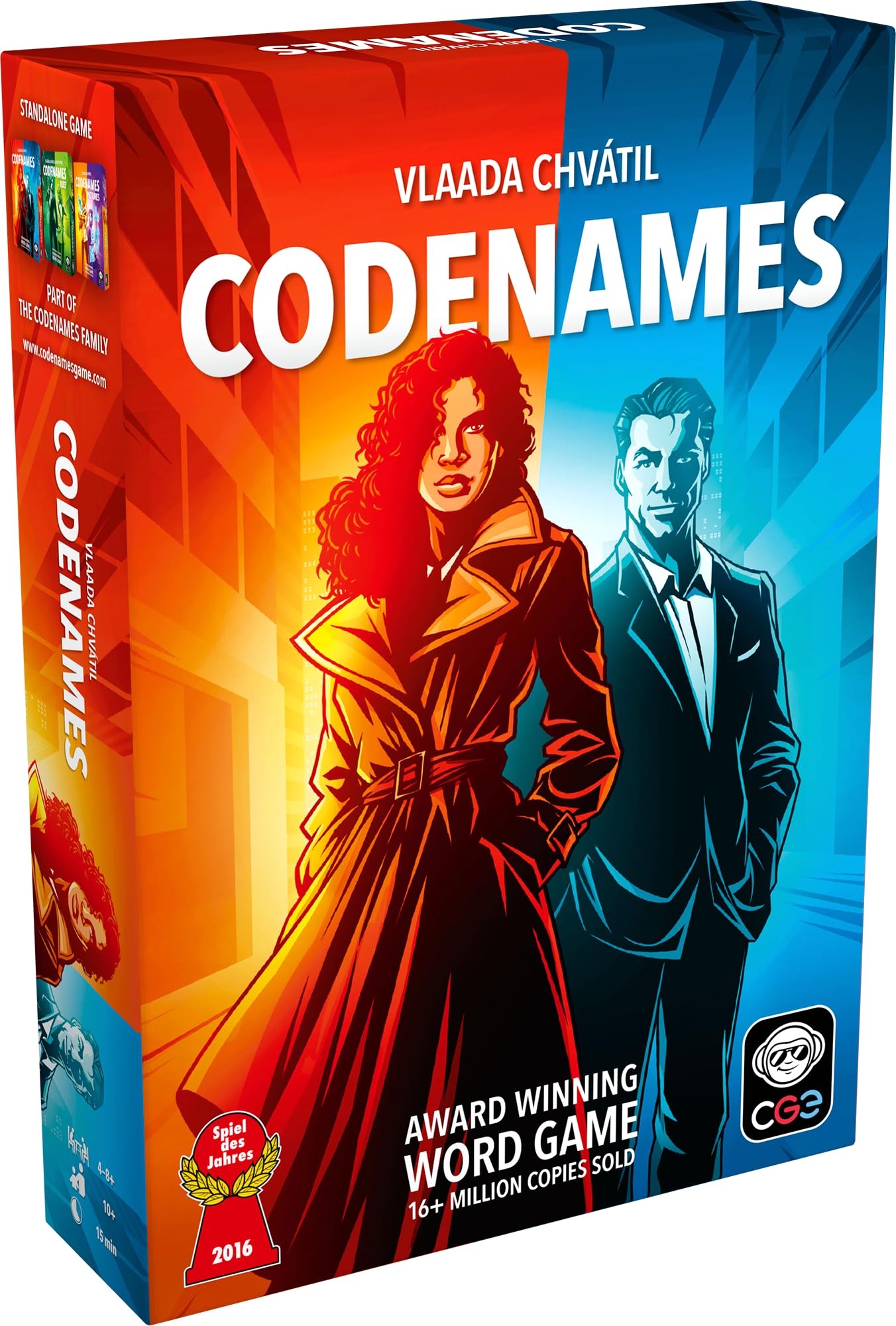
1. Codenames — Team Strategy Without the Headaches

Codenames is straightforward: one person per team gives one-word clues to help teammates guess words on a grid. That's it. But the elegance is in how that simple premise forces you to think creatively about connections, language, and risk. I've played this dozens of times, and I still get that moment where a clue clicks perfectly and everyone groans because they didn't see it.
What makes Codenames work specifically for small groups is the pacing. Rounds take 10–15 minutes, which means you can play multiple games in an evening without anyone getting bored. The sweet spot is 4–6 players (two teams of 2–3), though you can stretch to 8 with a house-rule variant. The game also doesn't require anyone to sit out—everyone's thinking the entire time, whether they're giving or guessing clues.
The word cards are solid quality, and the ruleset is genuinely simple. I've taught this to complete non-gamers in under a minute. There's no "catch-up" mechanic or luck element—if you're better at wordplay, you'll win more often. That's honest, which some people love and others find frustrating. If your group includes ultra-competitive players or people who don't like thinking games, they might bounce off this.
Pros:
- Super fast setup and gameplay (perfect for small gatherings)
- Works equally well with 4 or 6 players without house rules
- Minimal materials (cards and a timer) means it travels easily
- Infinite replayability with the same deck
Cons:
- Requires at least 4 players to be really fun (less effective with 3)
- Heavily favors people who are good at lateral thinking
- Can feel slow if players agonize over every guess
---
2. One Night Ultimate Werewolf — Deduction Chaos for Bold Groups

One Night Ultimate Werewolf strips away the drawn-out night phases of traditional Werewolf and delivers the fun in 10 minutes. Everyone gets a secret role (werewolf, villager, seer, drunk, etc.), and the game plays out in one frantic round where you're trying to figure out who's lying, what actually happened, and whether you can bluff your way to victory.
This is good party games for small groups territory because the "one night" format means no one sits around waiting for an elimination vote. With 3–6 players, you get a tighter game where every accusation and defense matters. The role variety keeps games fresh—there are 13 roles total, and you only use 5–7 per round depending on player count.
The chaos factor is real though. Games can end on a guess that feels random to newer players. If your group gets frustrated with luck-dependent outcomes or prefers clear cause-and-effect gameplay, this might frustrate them. Also, if you have quieter players who don't like being put on the spot, they might hate the social deduction aspect. The app-driven timer and role announcements are well-designed, but they're necessary—without them, the game falls apart.
Pros:
- Genuinely fast (10 minutes means multiple rounds in one sitting)
- Role variety creates different dynamics each game
- Low barrier to entry (no reading cards; the app guides you)
- Scales perfectly from 3 to 8 players
- Encourages bold table talk and accusations
Cons:
- Requires a smartphone with the free app (can't play without it)
- Outcomes sometimes feel determined by gut reads rather than logic
- Not ideal for groups with shy or anxious players
- Roles like "Drunk" can feel random if not explained well
---
3. Sushi Go Party! — Accessibility Meets Genuine Strategy
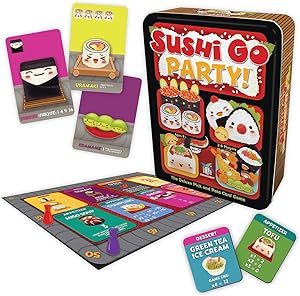
Sushi Go Party! is a drafting game where players simultaneously select cards from their hand, pass what's left, and then see what everyone picked. It's a simple mechanic—pick a card, pass your hand—but the strategy emerges from trying to predict what others want and blocking them while building your own sets.
For good party games for small groups, this hits because it works beautifully from 2 to 8 players, though 3–5 is the sweet spot. Rounds take 15–20 minutes, and the game doesn't require any table talk or negotiation, which means even if your group is mixed in terms of gaming experience, everyone's on equal footing. The art is charming, and the sushi and dessert theme is accessible to people who don't normally play games.
The expansion variant system (you swap in different scoring cards each game) means every session feels slightly different, but not so different that newcomers are lost. The main drawback is that Sushi Go Party! doesn't have a strong "social" component—you're not really interacting with other players beyond blocking them in the draft. If your group specifically wants something that generates conversation and laughter (like the games above), this might feel a bit quiet.
Pros:
- Simple pick-and-pass mechanic that works for everyone
- Gorgeous production quality (makes it feel special)
- Scales smoothly across all small-group sizes
- Cards are memorable enough to track what others might want
- Rounds are fast and multiple games fit in one evening
Cons:
- Less table talk and interaction than other party games
- Can feel repetitive if you play it many times in one sitting
- The expansion cards don't dramatically change the core gameplay
---
How I Chose These
I selected these three games by weighing specific factors: player count flexibility (all work well from 3–6 players), setup time (under 2 minutes for each), teach-ability (anyone can learn within 5 minutes), and replayability (you'd actually want to pull them out again). I also tested how they handle mixed groups—casual players, competitive players, and non-gamers all sitting at the same table. The selection avoids games that require a designated leader, games with elimination phases (where someone sits out), and anything with complex rule interactions. These are reliable good party games for small groups across different social contexts: competitive hangouts, mixed-ability gatherings, and quick entertainment needs.
Frequently Asked Questions
What's the minimum number of players for these good party games for small groups?
Codenames and One Night Ultimate Werewolf both technically work with 4+ players, though Codenames can stretch to 3 if everyone plays individually. Sushi Go Party! is flexible down to 2 players, making it the best choice if you sometimes have smaller gatherings.
Do I need to be "good at games" to enjoy these?
No. Sushi Go Party! requires almost no prior gaming knowledge. Codenames rewards wordplay ability but doesn't punish inexperience. One Night Ultimate Werewolf is the most social-skill dependent, but it's honestly about confidence in bluffing more than any learned skill. All three play best when you're willing to have fun rather than optimize every decision.
Can I play these with people who've never played board games before?
Absolutely. Codenames and Sushi Go Party! are gateway games—they're how many non-gamers first discover they actually enjoy this hobby. One Night Ultimate Werewolf is slightly steeper because of the social deduction element, but the app handles all the complexity, so newcomers are never confused about what's happening.
Which of these is best for a timed event (like a party where people are coming and going)?
One Night Ultimate Werewolf wins here. Games take exactly 10 minutes, so people can drop in and out between rounds without disrupting the flow. Codenames works too (15 minutes), but Sushi Go Party! demands continuous participation, so mid-game drops are awkward.
If you want guaranteed laughs and fast-paced energy, Codenames is your move. If your group loves strategy and reads people well, One Night Ultimate Werewolf delivers. And if you need something that's accessible to literally anyone while still being genuinely fun, Sushi Go Party! won't disappoint. The best part? You don't have to pick just one—they all work in the same evening rotation, and together they cover almost every small-group gaming scenario.
Get the best board game picks in your inbox
New reviews, top picks, and honest recommendations. No spam, unsubscribe anytime.
More in Party
Best Party Board Games for Large Groups in 2026
Planning a game night for 8+ people? Finding the right board game that actually works for large groups is trickier than it sounds.
Best Trivia Games to Play With Friends in 2026
You're gathering friends for game night, and you want something that gets everyone talking, laughing, and actually engaged—not something that turns into a...
Best Popular Trivia Games for Group Settings in 2026
Group game nights can be hit or miss—either everyone's engaged and laughing, or half the table is checking their phones.