By Jamie Quinn · Updated April 17, 2026
The 5 Best Popular Party Board Games for 2026: Games That Actually Get People Talking

The 5 Best Popular Party Board Games for 2026: Games That Actually Get People Talking
There's something magic about a room full of people gathered around a table, laughing so hard they can barely speak. The right popular party board games can create those moments—the kind where everyone forgets about their phones and just... plays. I've tested dozens of games, and I keep coming back to the same five because they nail the balance between accessibility and genuine fun.
Quick Answer
Codenames is our top pick for most groups. It works with 4-8 players, takes about 15 minutes per round, and doesn't require any game knowledge—just the ability to think creatively and make clever connections. It's the rare game that makes everyone feel smart and laugh at the same time.
Our Top Picks
| Product | Best For | Price |
|---|---|---|
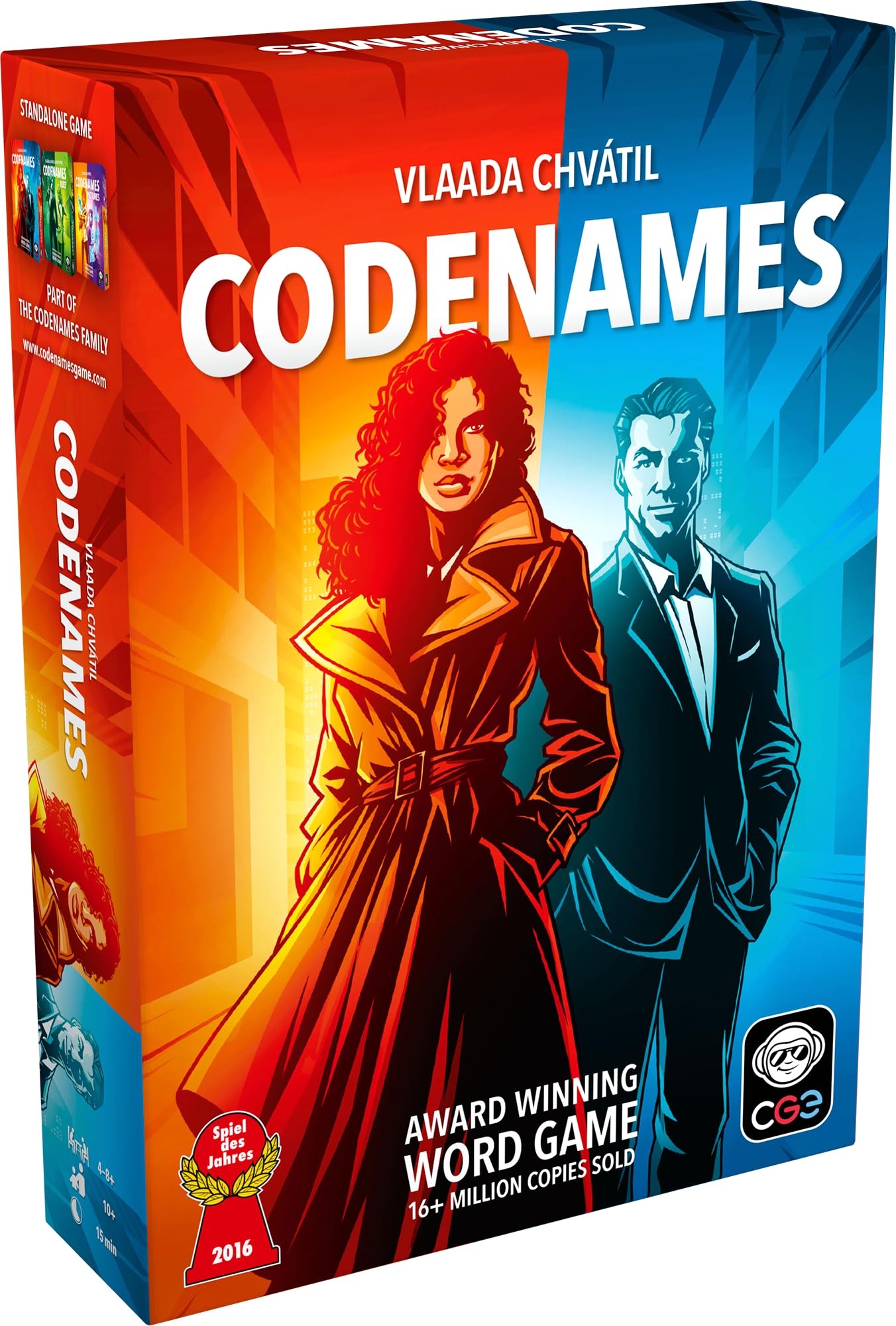
| Codenames | Competitive teams who love word puzzles | ~$20 |
| Deception: Murder in Hong Kong | Groups who want hidden roles and social deduction | ~$30 |
| One Night Ultimate Werewolf | Quick rounds and paranoid fun | ~$15 |
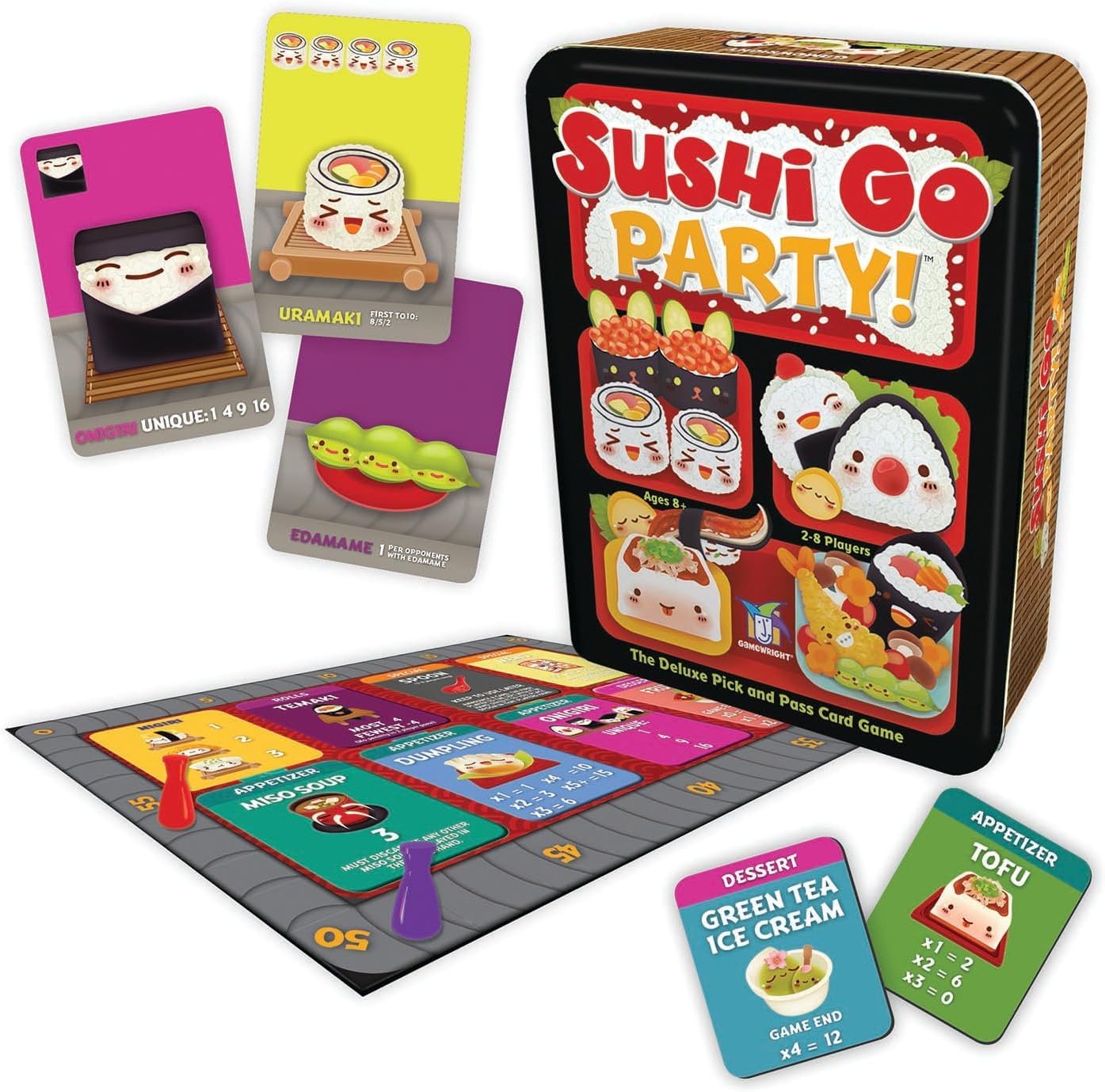
| Sushi Go Party! — | Families wanting strategy with lighter gameplay | ~$25 |
| Telestrations | Hilarious drawing and guessing moments | ~$20 |
Detailed Reviews
1. Codenames — The Thinking Person's Party Game
Codenames works because it's genuinely clever without feeling like work. You're split into two teams, and one person (the spymaster) gives one-word clues to help their teammates identify secret agents on a 5x5 grid. The catch? You have to be specific enough that your team gets it, but vague enough that the other team doesn't accidentally guess your words first.
What makes this a standout among popular party board games is the elegance of the mechanics. There's no luck involved—just pure strategy and wordplay. I've watched people spend three minutes debating what their spymaster meant by "Disney" (was it a character? a movie? a theme park?), and those moments are comedy gold. The game scales beautifully from 2 to 8+ players, and experienced players can finish a round in 10 minutes while newer groups take 20-30. You can play multiple rounds in one sitting, which keeps the energy high.
The one trade-off: if your group has wildly different vocabulary levels or cultural references, the spymaster's clues might sail over some heads. Also, unlike many popular party board games, Codenames doesn't have a player elimination mechanic—if you're not on the team currently guessing, you're watching, not playing. That's fine for most groups, but some people prefer constant involvement.
Pros:
- Deceptively simple rules that teach in under two minutes
- Replayable infinitely because there are thousands of possible word combinations
- Works equally well with 2 people or 10—just adjust team sizes
Cons:
- Spymasters can accidentally give away information with their tone of voice
- Not great if players have vastly different knowledge bases
- Requires some downtime for the non-guessing team
---
2. Deception: Murder in Hong Kong — Social Deduction That Feels Like an Interrogation
This is the game where someone's lying, and you're trying to figure out who before an innocent person takes the fall. One player is the murderer, one is the forensic scientist (who knows who the killer is), and everyone else is a detective trying to solve the crime using limited clues and even more limited time—you only get 10 minutes total.
What separates Deception from other hidden-role games is the forensic scientist role. Instead of openly accusing people, the scientist arranges physical tokens on a board to hint at the murder weapon, location, and motive. You're decoding these symbols while simultaneously trying to read everyone's reactions and spot the killer. It's tense, compressed, and absolutely gripping.
Among popular party board games, this one creates the most memorable drama. I watched a group spend two minutes in dead silence because everyone was convinced the quiet guy in the corner was definitely the murderer (he wasn't). The game plays in about 15 minutes, which is perfect because people want to play again immediately.
The downside: it's heavier than Codenames in terms of setup and rule complexity. If your party includes people who don't like being accused or who get frustrated with games that involve deception, this won't be their speed. Also, it plays best with 5-6 people—with fewer players, the killer can be too easy to spot, and with more than 8, the discussion phase gets chaotic.
Pros:
- Innovative forensic scientist role prevents typical "accuse everyone" strategies
- Tension builds dramatically toward the final reveal
- Each game feels completely different despite the same basic premise
Cons:
- Needs 4+ players to work properly (best at 5-6)
- Takes a few rounds to fully understand the clue-giving system
- Can feel overwhelming for people unused to party games with criticism and suspicion
---
3. One Night Ultimate Werewolf — The Five-Minute Chaos Cycle
This game understands that sometimes you want maximum drama in minimum time. Everyone gets a hidden role (werewolf, villager, seer, drunk, etc.), and you have 90 seconds of day phase to figure out who the werewolves are. That's it. Then night falls, people potentially die, and you vote someone out. The whole thing takes 5 minutes.
Because rounds are so short, you can play 8-10 games in the time other popular party board games complete two rounds. This means failed strategies are forgotten quickly, and the fun never stalls. The role variety keeps things fresh—sometimes you're the village drunk swapping roles with someone else, sometimes you're the seer trying to subtly validate the village—and you have to adapt your approach every single game.
One Night Ultimate Werewolf is perfect when you want rapid-fire fun and your group has short attention spans or energy to burn. It works with groups of 3 to 10, though it really shines at 6-8 players where the chaos is maximum.
Where it falls short: because rounds are so quick, there's less time for big reveals and mind games compared to Deception. Some people find the short format stressful rather than fun. Also, the outcome often depends heavily on the roles people draw—if one team gets unusually good roles, the other side is fighting an uphill battle from the start, which can feel unfair.
Pros:
- Multiple games in one session keeps momentum alive
- Role variety means you're never playing the same strategy twice
- Quick rounds make it forgiving for people who dislike loss
Cons:
- Outcome heavily depends on role distribution
- Less time for elaborate bluffing and social gameplay
- Some players find the pace too frantic
---
4. Sushi Go Party! — The Strategic Option That's Still a Party Game
This is the game I recommend if your group wants to feel like they're playing something with actual strategic depth, but you don't want anything as heavy as a strategy board game. You're drafting sushi dishes from rotating hands of cards, trying to build the best meal while blocking your opponents from completing their sets. It sounds simple, and mechanically it is, but the decisions have real weight.
Unlike many popular party board games that rely on luck or social deduction, Sushi Go Party! is about reading what people are taking and anticipating what they'll pass you next. There's a satisfying "aha" moment when you realize your opponent was setting you up the whole time, or when your strategy to grab all the wasabi comes together. The game plays 2-8 people in about 30 minutes.
The party aspect comes from the modular modules—there are different versions of each round with different scoring rules, which means the optimal strategy changes. One round, nigiri scoring normally; the next round, it's worth double. This keeps experienced players from completely dominating newcomers.
The trade-off: this requires slightly more rules explanation than Codenames or Telestrations. If half your party is playing their first game ever, expect to spend 10 minutes getting everyone up to speed. Also, with 7-8 players, turns take a while because you're waiting for cards to cycle through everyone.
Pros:
- Legitimate strategy without heavy complexity
- Modular gameplay means each round feels different
- Scales well from 2 players to 8
- Plays faster than most games with this depth
Cons:
- Takes longer to teach than lighter party games
- 30 minutes can feel long if your group prefers quick rounds
- With 8+ players, downtime between turns increases
---
5. Telestrations — The Game Where Everyone Loses Their Mind Laughing
Telestrations is the one where you draw something based on a word whispered to you, then pass your drawing to the next person who has to guess what it is, then writes their guess and passes it to the next person who draws that guess, and so on around the circle. By the time the paper comes back to you, the original word has transformed into something hilariously unrecognizable.
This is the only game on this list where artistic skill is a complete non-factor. In fact, bad drawings are often funnier. I've watched someone draw what was clearly meant to be a "disco ball" but looked more like a hedgehog, and the entire table laughed so hard someone spit out their drink. The humor is almost guaranteed, which makes it the perfect choice for mixed groups where not everyone loves games.
Telestrations wins the category for pure accessibility among popular party board games. There are no strategies to learn, no hidden information to track, no need to follow complex rules. It's just drawing, guessing, and laughing at the disconnect between intention and reality. It plays 2-8 people in about 30 minutes, and because there's no elimination, everyone's engaged the entire time.
The one genuine limitation: it requires paper and markers, which the game provides, but if you're playing frequently, you'll run through those supplies. Also, if your group is very competitive and doesn't find humor in failure, this might feel pointless to them. And obviously, if people are sensitive about their drawing abilities, the public nature of sharing your work might create mild anxiety.
Pros:
- Zero rules complexity—anyone can play
- Guaranteed laughs because the humor is in the mistake
- Everyone plays simultaneously; no downtime
- Great icebreaker for mixed groups
Cons:
- Requires markers and pads (both get used up)
- Not for people who are self-conscious about drawing
- Less strategic or competitive appeal
---
How I Chose These
I selected these popular party board games based on three criteria: they had to work with groups of 4-8 people, they had to play in 30 minutes or less (so you can fit multiple games into one evening), and they had to be accessible enough that non-gamers could jump in without a 20-minute rules explanation. I also weighted replayability heavily—a great party game should be fun the 10th time you play it, not just the first.
I excluded games that require elimination (where players sit out), games with runaway leaders (where one person gets so far ahead the outcome is decided early), and games with excessive downtime. These mechanics kill party energy.
If you also enjoy playing with a partner, check out our two-player board games for options when you're looking for something just for you and one other person.
Frequently Asked Questions
What if I only have 3 people?
Codenames and Sushi Go Party! both work with 3 players. One Night Ultimate Werewolf technically works but feels underwhelming—the hidden role mechanic loses impact with so few people. Telestrations and Deception really need 4+ to shine.
Can these games work at a loud, chaotic party?
Yes, but Deception and One Night Ultimate Werewolf are better for that environment than Codenames (which requires concentration to remember word connections). Telestrations works great anywhere because it's non-verbal. If it's genuinely loud, save Sushi Go Party! for a quieter gathering since it requires some strategic thinking.
Which game is best for people who've never played board games before?
Telestrations by a mile. It has zero learning curve and doesn't feel like "playing a game"—it feels like a group activity. Codenames is a close second because the rules teach in 60 seconds.
Do I need to buy multiple games or will one be enough?
One game is enough to start, but if you're hosting regularly, having 2-3 creates variety. Most people rotate between Codenames and Telestrations because they're so different—one is competitive and mental, the other is collaborative and silly.
---
The best popular party board games share one quality: they get out of the way and let people interact. Whether you want sharp competitive play, hidden-role paranoia, quick chaos, strategic depth, or pure silly fun, one of these five will deliver. Start with Codenames if you're unsure—it's the safest bet for almost any group.
Get the best board game picks in your inbox
New reviews, top picks, and honest recommendations. No spam, unsubscribe anytime.