By Jamie Quinn · Updated March 24, 2026
The Best Social Deduction Party Games in 2026: Hidden Roles, Big Laughs, and Bluffing Wars



The Best Social Deduction Party Games in 2026: Hidden Roles, Big Laughs, and Bluffing Wars
Social deduction party games are where friendships go to be tested. You're sitting around a table trying to figure out who the werewolf is, or whether your buddy is lying about seeing that clue card, or if the spy just gave themselves away. These games thrive on accusation, defense, and the beautiful chaos of people trying to read each other's faces.
Quick Answer
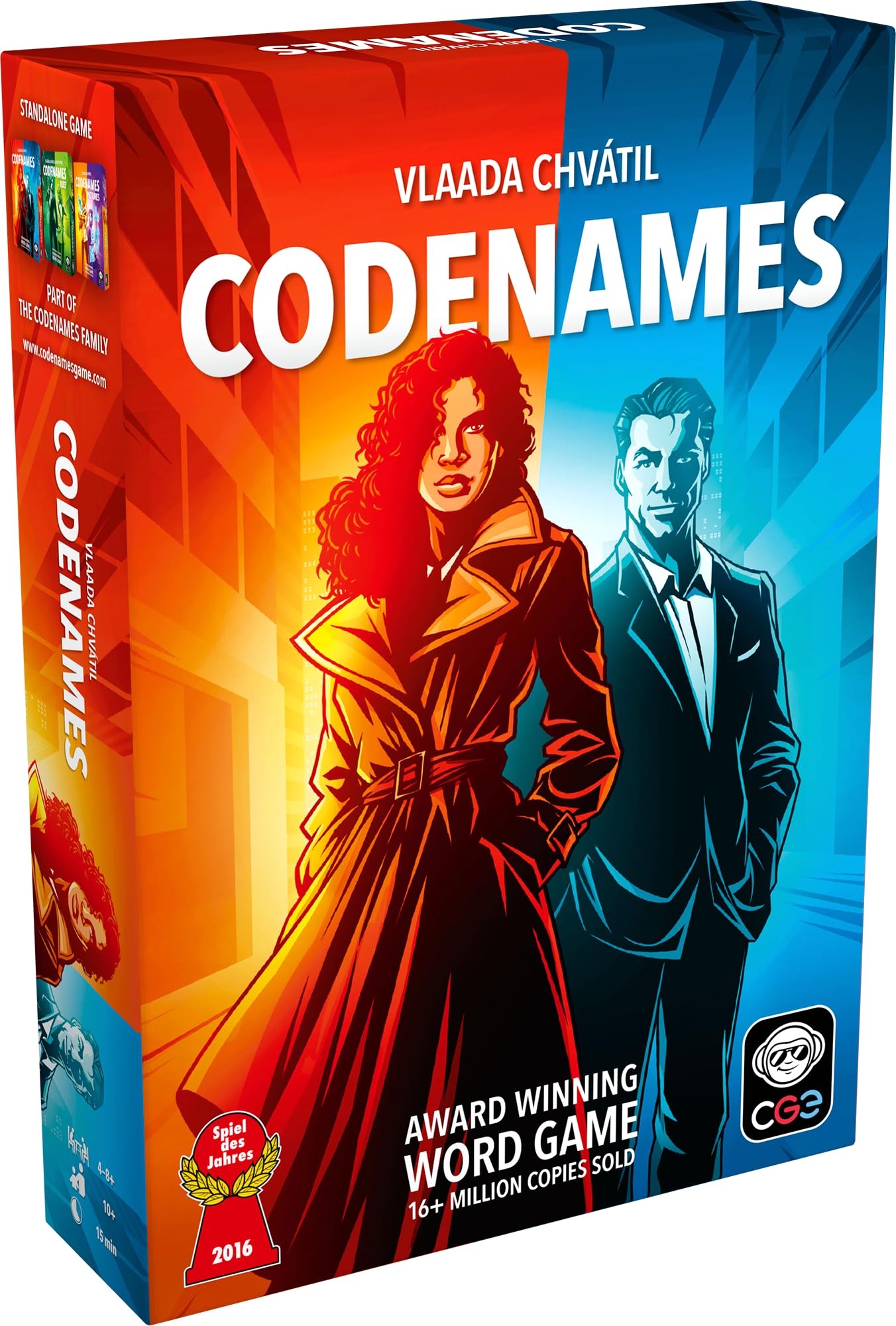
Codenames is the best social deduction party game for most groups because it strips away complexity while keeping the psychological tension intact. You're not fighting hidden roles - you're decoding cryptic one-word hints from your teammate while the other side watches for tells. It plays fast, works at any player count from 4 to 8+, and has zero learning curve.
Our Top Picks
| Product | Best For | Price |
|---|---|---|
| Codenames | Quick games and large groups | $19.94 |
| One Night Ultimate Werewolf | Hidden role chaos and fast replays | $19.82 |
| The Resistance | Intense bluffing and discussion | $24.76 |
| Deception: Murder in Hong Kong | Murder mystery deduction with a moderator | Check Amazon |
| Sushi Go Party! | Light deduction without heavy roles | $21.99 |
Detailed Reviews
1. Codenames - The Smart Party Favorite

Codenames isn't a hidden role game in the traditional sense, but it's absolutely a social deduction game because every round hinges on reading your partner's mind and spotting deception in your opponents' reactions. One person gives a one-word clue linked to multiple words on the board; their team has to guess which ones are theirs. The genius part? You're always watching the other team's clue-giver, trying to decode whether that vague hint was intentional misdirection or just a bad clue.
I've played this with groups ranging from four to fifteen people, and it scales perfectly. With larger groups, you can play team rounds where four people give clues in sequence. The base game has enough word combinations that you won't see repeats for months.
The real magic happens when you know your partner well enough to crack a clue that seems impossible. Or when you're absolutely certain someone on the other team is working against their own side. Codenames creates those moments naturally, without needing elaborate hidden role mechanics.
Pros:
- Teaches new players in under a minute
- Plays in 15–20 minutes, so you can run multiple rounds
- Works with any player count from 4 to 20
- Deceptively strategic - bad clues lose games
Cons:
- Less theatrical than hidden role games (no voting people out)
- Word quality varies slightly depending on the word set
- Can feel less dramatic if you're specifically seeking werewolf-style accusations
---
2. One Night Ultimate Werewolf - Rapid-Fire Hidden Chaos

One Night Ultimate Werewolf fixes the biggest problem with traditional Mafia games: dead players sitting out for twenty minutes. Everyone stays in the entire game. You get secret roles, a night phase where people close their eyes and act out their roles, then one chaotic voting round to figure out who the werewolves are.
Games last maybe ten minutes, which means you're not trapped in a conversation about whether someone's story checks out. You're just locked into rapid-fire accusation and defense. The roles are wild - the Insomniac knows they switched identities, the Doppelgänger becomes whoever they want, the Seer gets a peek at a card - so everyone's lying about something.
I especially appreciate that the moderator (who doesn't play) keeps things moving. No endless discussion spirals. The night phase animations on the app version are solid too, if your group wants digital assistance.
This is the best choice if you want social deduction party games that actually feel like a party game: quick, loud, and leaving room for a rematch before someone gets bored.
Pros:
- Ten-minute games with zero downtime
- Excellent role variety that creates different power dynamics each round
- Moderator-led, so less chance of disputes about who did what
- Great for groups that want multiple games in one session
Cons:
- Less strategy than games where discussion matters more
- Can feel random if you get unlucky role draws
- Moderator needs to stay engaged and call votes fairly
---
3. The Resistance - Pure Bluffing Endurance

The Resistance strips social deduction down to its skeleton: you have secret teams (Resistance vs. Spies), you're sending people on missions, and you have to figure out who's sabotaging you. No roles beyond that. No random events. Pure discussion and voting.
This is for groups that love heated debate. You'll spend 30–40 minutes arguing about why person A's voting pattern definitely proves they're a spy, while person A insists they're innocent. The Spies have to play it cool, occasionally voting the right way to avoid suspicion. The Resistance has to stay calm even when they're certain someone's lying.
The beauty is that social deduction party games like The Resistance reward genuine reads on people. If you know someone tends to over-explain their votes when lying, you're hunting for that tell every round. If someone stays silent, that silence becomes suspicious. It's exhausting in the best way.
I'd only recommend this for groups that actually enjoy long discussion rounds. If your crowd gets antsy without action, try One Night Ultimate Werewolf instead.
Pros:
- Creates intense, rewarding discussion
- Minimal randomness - the best social players win
- Extremely replayable across different groups
- Physical components are minimal and durable
Cons:
- Takes 30–45 minutes, which is long for a party game
- Requires 5+ players to really work (2 spies minimum, 3 ideally)
- Can stall if your group struggles with reading each other
- Not good with new players who don't know anyone
---
4. Deception: Murder in Hong Kong - Moderator-Led Mystery

Deception flips the script on social deduction party games by making one player the moderator (the forensic psychologist) who knows the killer's identity but can't speak. Instead, they communicate through gesture clues on a board, trying to help the innocent players identify the killer without the killer figuring out what's happening.
The killer is trying to do the exact same thing: blend in, maybe lead discussion toward innocent players, and avoid being exposed before the moderator successfully guides everyone to the truth.
Games last about 15 minutes, and the asymmetric information creates a unique flavor compared to Codenames or Werewolf variants. You're not voting people out. You're solving a locked-room mystery while one person silently guides you and one person silently misleads you.
The component quality is excellent - the clue tokens are satisfying to manipulate. My only reservation is that it requires a sharp moderator who can actually think like a detective, so it's less flexible with group dynamics.
Pros:
- Unique asymmetric structure feels fresh
- Fast gameplay with high replayability
- Beautiful components and board design
- Works with 4–12 players
Cons:
- Moderator needs to be engaged and knowledgeable
- Less discussion-based than other deduction games
- Can feel solvable (or unsolvable) depending on clue clarity
- Requires someone to sit out each round
---
5. Sushi Go Party! - Deduction Lite
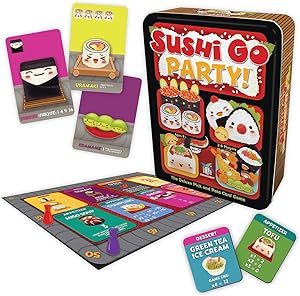
Sushi Go Party! isn't a hidden role game, but if you're looking for social deduction party games that don't center on accusations and lying, this scratches that itch. You're drafting sushi cards while trying to read what your neighbors are taking, block what they need, and anticipate the next person's strategy.
There's no hidden information beyond what cards are in other players' hands. But watching someone pointedly avoid taking the tempura you've been collecting, then spotting them grab two sets of nigiri instead - that's deduction. You're reading intent from card selection.
Games run 20–30 minutes and accommodate 2–8 players. The art is beautiful. The strategy is lighter than The Resistance but deeper than it first appears.
This works best if your group wants social elements without the confrontation of hidden role mechanics. You're competing, you're reading each other, but no one's accusing anyone of being a werewolf.
Pros:
- Beautiful production quality
- Plays quickly with any group size
- Less confrontational than hidden role games
- Plays great with mixed ages and experience levels
Cons:
- Not really a deduction game in the traditional sense
- Less dramatic than Codenames or Werewolf variants
- Card quality can show wear with heavy use
---
How I Chose These
I picked these specific social deduction party games based on what actually happens when you play them in mixed groups. The category is huge - it includes werewolf variants, push-your-luck games, and bluffing mechanics scattered across dozens of titles - so I focused on games that deliver distinct experiences.
Each pick handles different group sizes and time constraints differently. Codenames works with eight people at once. One Night Ultimate Werewolf rewards replays. The Resistance creates the most discussion. Deception offers something structurally different. Sushi Go Party! provides deduction without the confrontation.
I weighted replayability, how quickly new players grasp the rules, and whether the game actually creates memorable moments. Social deduction party games live or die on whether people leave the table talking about what just happened, so that mattered most.
---
Frequently Asked Questions
What's the difference between Codenames and other social deduction party games?
Codenames doesn't use hidden roles. Instead, deduction comes from watching how the other team reacts to clues and trying to read your partner's mind. It's less about lying and more about pattern recognition and inside jokes. Perfect if your group finds hidden role games exhausting.
Can I play social deduction party games with only four people?
Yes, though some work better than others. Codenames is excellent with four. One Night Ultimate Werewolf works but feels tighter. The Resistance technically plays with four (two spies, two resistance) but is better with five or more. Deception needs at least four.
Which social deduction party games work best with people who don't know each other well?
Codenames and Sushi Go Party! require less social risk. You're not accusing strangers of lying. One Night Ultimate Werewolf works if you're all new because the roles do the talking. The Resistance is rough with strangers - you need to actually read people, which takes time.
Do I need special cards or apps to play these?
Codenames, One Night Ultimate Werewolf, and The Resistance work with just what's in the box. Deception needs the board and tokens. Sushi Go Party! uses cards exclusively. An app helper for One Night Ultimate Werewolf is optional - the box timer works fine.
---
If you want games where tension builds from reading your friends' faces rather than rolling dice, these five social deduction party games are your best bets. Start with Codenames if your group is new to deduction games. Jump to One Night Ultimate Werewolf if you want rapid chaos. Pick The Resistance when you're ready for strategic discussion. Each delivers genuine moments where someone's read gets proven right or spectacularly wrong - and that's what makes social deduction worth playing.
Get the best board game picks in your inbox
New reviews, top picks, and honest recommendations. No spam, unsubscribe anytime.
More in Party
Best Party Board Games for Large Groups in 2026
Planning a game night for 8+ people? Finding the right board game that actually works for large groups is trickier than it sounds.
Best Trivia Games to Play With Friends in 2026
You're gathering friends for game night, and you want something that gets everyone talking, laughing, and actually engaged—not something that turns into a...
Best Popular Trivia Games for Group Settings in 2026
Group game nights can be hit or miss—either everyone's engaged and laughing, or half the table is checking their phones.