By Jamie Quinn · Updated April 11, 2026
Best Solo Board Games Ranked for 2026: Our Top 5 Picks


Best Solo Board Games Ranked for 2026: Our Top 5 Picks
Playing board games alone might sound like a contradiction, but some of the best strategic experiences happen when you're flying solo. Whether you're testing your decision-making against a challenging AI, managing multiple factions, or just wanting a deep game that doesn't require coordinating with other players, the solo board game ranking landscape has exploded with incredible options. I've spent considerable time with each of these picks, and they genuinely deliver on what makes solo gaming special: complete control, no downtime, and the freedom to play at your own pace.
Quick Answer
Spirit Island is the ultimate solo board game. You play as powerful spirits defending an island from colonial invaders, managing asymmetric powers while the game AI controls the invaders. It's deeply strategic, endlessly replayable, and creates genuine tension—you're not just solving a puzzle, you're making real tactical decisions against an opponent that feels alive.
Our Top Picks
| Product | Best For | Price |
|---|---|---|
| Spirit Island | Complex strategy and replayability | $58.12 |
| Mage Knight Board Game | Puzzle-like tactical challenges | $29.99 |
| Under Falling Skies | Quick, tense experiences | $56.07 |
| Marvel Champions: The Card Game | Superhero fans who love deck building | $55.99 |
| Robinson Crusoe: Adventures on the Cursed Island | Survival scenarios and storytelling | $54.55 |
Detailed Reviews
1. Spirit Island — Best for Strategic Depth
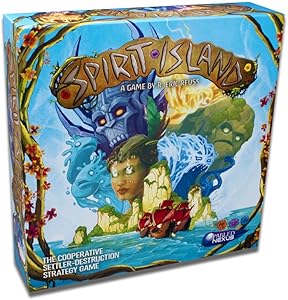
Spirit Island stands out in any solo board game ranking because it treats you as an opponent that matters. You embody nature spirits with wildly different abilities—one manipulates growth and decay, another commands the land itself, a third deals in fear and darkness. Each spirit plays completely differently, which means each game feels fresh even after dozens of sessions.
The genius is in how the game's invader AI works. Cards automatically trigger colonist placement, building, and advancement on a predictable schedule. You're not reacting to random rolls; you're anticipating what the invaders will do next turn and positioning your powers accordingly. I've found myself planning three turns ahead, realizing my setup fails, and having to completely rethink my strategy. That's the kind of mental engagement that keeps you coming back.
The learning curve is legitimate—your first game will probably feel overwhelming. But once you understand the core loop (spirits play powers, invaders follow their predetermined actions, you check victory conditions), everything clicks. At $58.12, it's a significant investment, but you'll easily get 50+ unique plays from it.
The main drawback? Setup takes 15 minutes and the rulebook needs careful study. This isn't a game you teach yourself in 20 minutes. Also, with five different spirits to choose from, picking which one to play becomes its own decision paralysis—though that's arguably part of the fun.
Pros:
- Asymmetric spirit powers create completely different gameplay experiences
- AI invaders feel like genuine opponents, not random puzzles
- Incredible replayability with 5 base spirits and endless expansion content
- Solo design is the primary experience, not an afterthought
Cons:
- Steep learning curve requires patient rule study
- 90+ minutes per game means significant time commitment
- Setup and teardown are lengthy
2. Mage Knight Board Game — Best for Puzzle Solvers

Mage Knight Board Game is a masterclass in solo game design. You play a powerful mage exploring a fantasy world, and every decision—how to move, which enemies to fight, when to rest—requires careful planning. The game uses a card hand system where you're constantly managing your spell cards, balancing attack power against movement or defense.
What makes it exceptional for solo play is that there's always an optimal sequence of actions. You can spend hours on a single turn if you want, because you're not holding up other players. This isn't a flaw; it's perfect for solo gamers who love optimization puzzles. Some of my most satisfying moments have come from executing a perfectly planned sequence of moves that felt impossible 10 minutes earlier.
At $29.99, it's also the most affordable option on this solo board game ranking. That said, you're getting a game with real substance—the production quality is solid, the components feel good, and the ruleset is tighter than games costing twice as much. The included scenarios scale difficulty, so you can work your way up from introductory games to brutal campaigns.
The catch? You need to be okay with math. Combat involves counting attack dice, armor values, and calculating damage multiple times per turn. Some people find this satisfying; others find it tedious. Also, there's no real "storyline" unfolding—you're optimizing resource management, not experiencing a narrative.
Pros:
- Best value for money at $29.99
- Excellent for players who love tactical optimization
- Difficulty scaling works well for skill progression
- Minimal randomness means you control your own destiny
Cons:
- Turns can run long if you're an optimizer
- Lots of arithmetic involved in combat resolution
- Limited narrative or thematic storytelling
- No dynamic AI opponent—obstacles are preset
3. Under Falling Skies — Best for Quick Sessions
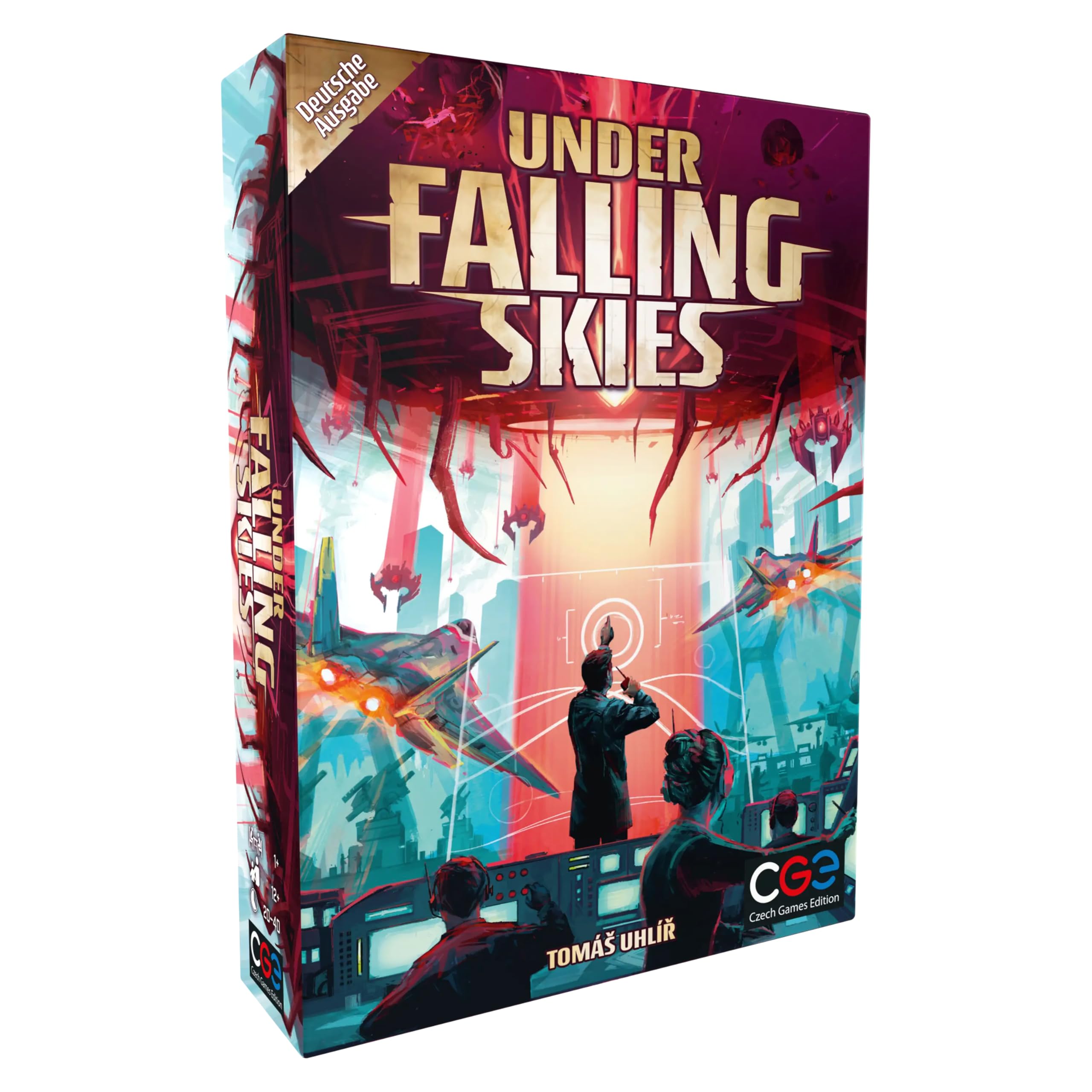
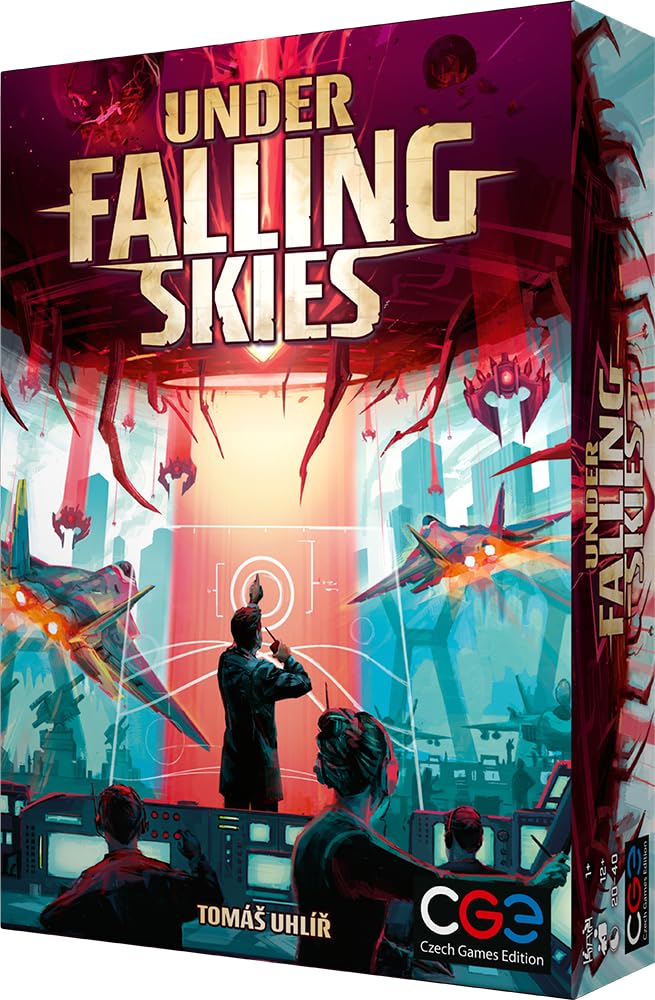
Under Falling Skies inverts the normal solo experience. Instead of controlling powerful heroes, you manage humanity's last defense against an alien invasion. You're deploying limited military resources against descending UFOs, and the pressure never lets up. Games run 20-30 minutes, making it perfect for when you want meaningful play without the marathon commitment.
The real hook is the dice allocation system. You roll dice each turn and assign them to tasks—sending fighters to intercept UFOs, repairing defenses, researching weapons. But there aren't enough good dice results for all your problems, so you're constantly making painful trade-offs. Do you push your luck by rerolling and risk losing actions entirely? Or accept mediocre results? These decisions create genuine tension despite the quick playtime.
At $56.07, it's reasonably priced for a game this polished. The board design is clean, the rule explanations are clear, and difficulty levels genuinely change the experience. Easy games feel tense; hard games feel impossible in the best way.
The limitation is that while the pressure is constant, the decisions become somewhat predictable after 10 plays. You'll know which dice combinations work and which don't. Some players love having that mastery; others want more variability. Also, at 20-30 minutes, there's less room for complex strategy—this is efficient, elegant design rather than deep tactics.
Pros:
- Perfect game length for work breaks or evenings
- Dice allocation creates meaningful trade-off decisions
- Multiple difficulty levels feel distinct
- Easy to teach and quick to set up
Cons:
- Decisions become routine with experience
- Limited strategic depth compared to longer games
- Minimal theme—could work with almost any setting
- Replayability is solid but not infinite
4. Marvel Champions: The Card Game — Best for Deck Building Fans
Marvel Champions: The Card Game lets you play as Iron Man, Captain America, Spider-Man, or a dozen other Marvel heroes battling supervillains. But this isn't a collectible card game—it's a cooperative experience where you build a deck specific to your hero, then use that deck to defeat a villain with their own deck and scheme. Solo play means you face the villain alone.
The deck building is the main event. You start with a basic hero deck and add cards that enhance your hero's identity. Spider-Man gets web-themed cards, Thor gets weapons and magic, Black Panther gets tech and animals. Learning which cards synergize with each hero is genuinely fun, and discovering powerful combinations feels rewarding.
Combat flows smoothly with minimal downtime between decisions. You play cards from your hand, generate resources, and attack the villain while managing their threats. The difficulty scales well—you can learn against basic villains before facing The Mandarin or Thanos. At $55.99, you're getting a complete game, though expansions exist if you want more heroes and villains.
The real issue is that Marvel Champions works fine solo, but it's designed for one-to-four players. Solo games can feel lonely compared to the communal energy of cooperative games with actual opponents. Also, some villain encounters feel unfair rather than challenging—occasionally the villain's draws are just better than your options allow. Finally, after 20 games with the same hero, you've usually found the optimal deck build, and subsequent games feel like executing a known solution rather than discovering something new.
Pros:
- Strong deck building with hero-specific card synergies
- Excellent thematic integration with Marvel characters
- Good difficulty scaling through villain selection
- Engaging card play without lengthy downtime
Cons:
- Designed for multiplayer—solo feels secondary
- Some villain matchups feel random rather than fair
- Once you solve a hero's deck, replayability dips
- Can feel lonely without other players
5. Robinson Crusoe: Adventures on the Cursed Island — Best for Narrative Campaigns
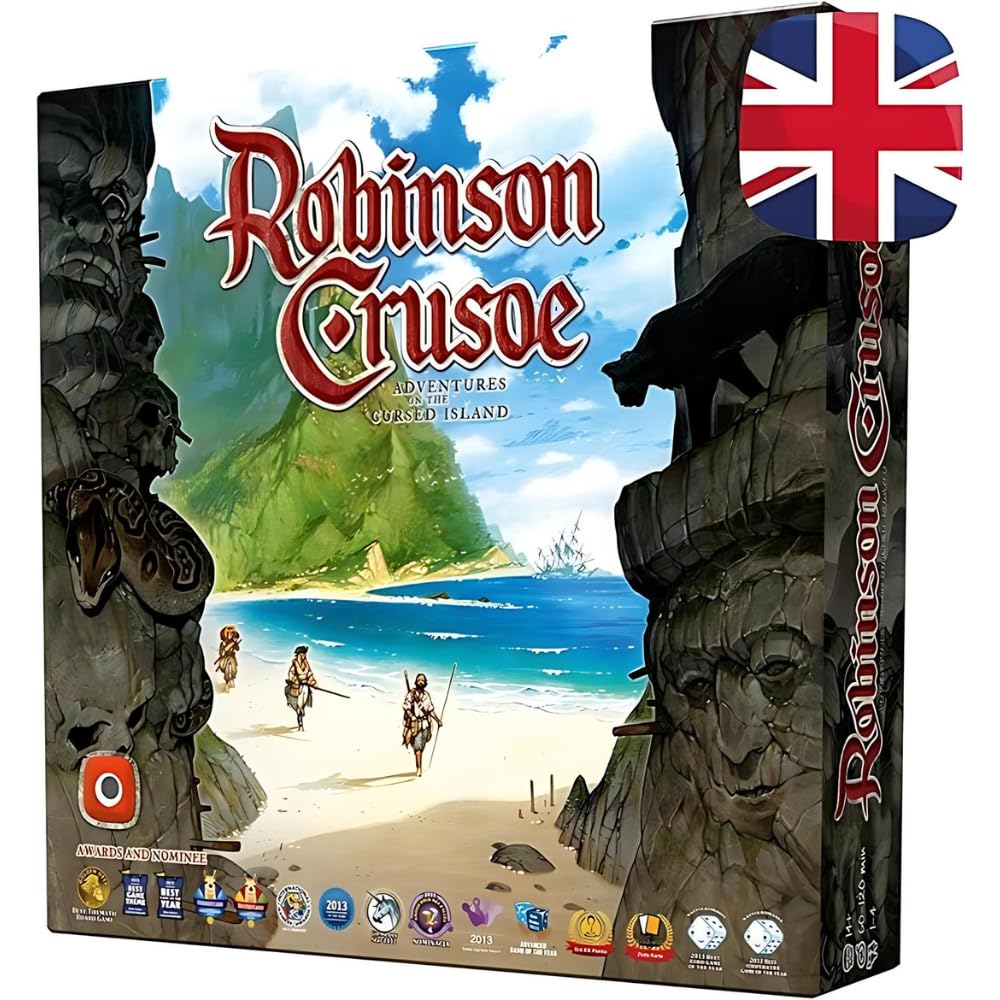
Robinson Crusoe: Adventures on the Cursed Island is survival simulator meets narrative campaign. You're stranded on an island, managing hunger, cold, and danger while completing objectives. The game's 10-scenario campaign creates an actual story arc—early scenarios teach mechanics while later ones introduce plot twists that recontextualize everything.
Each scenario plays differently. One game you're building shelter and hunting. The next you're escaping cultists or investigating ancient ruins. The core mechanics stay consistent, but the specific challenges shift dramatically. This variety is exactly what makes Robinson Crusoe stand out in any solo board game ranking that values narrative over pure optimization.
Resource management is brutal. You have limited actions each turn and too many urgent problems. Your character gets exhausted from work, needs food, and must constantly decide whether to push forward or rest. These constraints create emergent stories—you'll tell friends about the time you barely survived a storm by sacrificing your shelter for resources.
At $54.55, you're getting substantial content—10 scenarios, multiple character types, and genuine replayability. However, the campaign structure means this isn't as endlessly replayable as Spirit Island. Once you finish the 10-scenario story and understand the mechanics, subsequent plays are revisiting known content. Also, the rulebook is dense and some mechanics take time to internalize. The solo design is thorough, but it requires patience during your first game.
Pros:
- 10-scenario campaign with genuine narrative progression
- Excellent variety in scenario types and objectives
- Resource scarcity creates emergent, story-like gameplay
- Character variety affects playstyle and strategy
Cons:
- Complex rulebook with a steep learning curve
- Campaign-based structure limits long-term replayability
- Setup takes 15-20 minutes
- Some luck elements can feel punishing
How I Chose These
For a solo board game ranking to be genuinely useful, these games needed to excel at what solo play demands. First, I weighed whether the game was designed for solo from the start or whether solo felt tacked on. Spirit Island, Mage Knight, and Robinson Crusoe were built with solo as a primary experience. Marvel Champions and Under Falling Skies came from multiplayer roots but adapted exceptionally well.
Second, I considered longevity. Can you play this 50+ times and still discover something new? Or does it reveal all its secrets after 10 sessions? I preferred games that scale and offer multiple valid approaches rather than games with single optimal solutions—though for some players, optimization puzzles are exactly what they want.
Finally, I focused on games where solo play actually creates tension or meaningful decisions. Random AI doesn't count if it's just shuffling cards. Your decisions need to matter. Every pick here places you in genuine situations where multiple reasonable choices exist and the outcome depends on your skill and judgment.
Frequently Asked Questions
What's the best solo board game for beginners?
Under Falling Skies. It has the shortest learning curve, quickest playtime (20-30 minutes), and clearest rulebook. You'll understand what's happening immediately and can focus on strategy rather than remembering mechanics.
Which solo board game has the most replayability?
Spirit Island. With five unique spirits, 10+ different invader difficulties, and completely asymmetric powers, you could play 100 games and still encounter new strategic situations. The game doesn't reveal all its depth in your first 20 sessions.
Do I need any expansions for these games?
Not initially. Every game here is complete and excellent standalone. Expansions (especially for Spirit Island and Marvel Champions) are worthwhile if you fall in love with the base game, but they're entirely optional.
Which game takes the longest?
Spirit Island, at 60-90 minutes. Mage Knight can also run long if you're an optimizer. Under Falling Skies is fastest at 20-30 minutes. Robinson Crusoe typically hits 45-60 minutes depending on the scenario.
Are these games actually fun to play alone, or do they feel lonely?
These games create genuine engagement because you're solving problems, not just executing moves. Spirit Island and Robinson Crusoe especially feel like you're playing against something; Marvel Champions can feel a bit one-sided. The loneliness factor really depends on whether you find solo optimization enjoyable versus draining.
Final Thoughts
A great solo board game ranking comes down to what you want from your gaming. If you crave strategic depth and mastery, Spirit Island or Mage Knight deserve your attention. If you want narrative-driven experiences with emergent storytelling, Robinson Crusoe delivers. For superhero fans who love deck building, Marvel Champions offers reliable fun. And if your evenings are short and your patience for rules is limited, Under Falling Skies hits the perfect balance.
All five of these games take solo play seriously—they're not multiplayer games awkwardly hacked into solitaire mode. Pick one based on what sounds most appealing, and you'll have dozens of solid gaming sessions ahead of you.
Get the best board game picks in your inbox
New reviews, top picks, and honest recommendations. No spam, unsubscribe anytime.
More in Cooperative
Best Solo Board Games Ever in 2026: Our Top Picks for Playing Alone
Solo board gaming has exploded over the last few years, and if you've been thinking about diving into games you can play by yourself, you're in for a...
Best Solo Board Games with High Replayability in 2026
If you're looking for board games you can play alone without feeling like you're missing out on the experience, you've probably noticed that most games...
Best Compact Solo Board Game 2026: 5 Games That Actually Travel Well
Finding a great solo board game that doesn't require a huge table or an hour of setup is harder than you'd think.