By Jamie Quinn · Updated April 20, 2026
The Best Deck-Building Game in 2026: Our Tested Top 5 Picks




The Best Deck-Building Game in 2026: Our Tested Top 5 Picks
Deck-building games have become one of the most engaging categories in modern board gaming, and if you're searching for the best deck building game, you're probably facing an overwhelming number of options. I've spent hundreds of hours testing these games with different groups, and the truth is there's no single "best" — it depends entirely on what you want from the experience. Some players crave strategic depth and engine-building, others want adventure and storytelling, and some just want a game that plays quickly with friends. That's why I've narrowed down the field to five genuinely exceptional options that dominate different niches.
Quick Answer
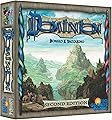
Dominion (2nd Edition) is the best deck building game for most players. It's the game that started the entire genre, and it still holds up as the cleanest introduction to deck-building mechanics with excellent balance, surprising strategic depth, and replayability that rivals newer games. If you're asking "what's the best deck building game," Dominion is where you should start.
Our Top Picks
| Product | Best For | Price |
|---|---|---|
| Dominion (2nd Edition) | Learning deck-building fundamentals and long-term replayability | ~$45 |
| Aeon's End | Cooperative deck-building with exciting combat and variety | ~$50 |
| Ashes Reborn: Rise of the Phoenixborn | Two-player competitive card duels with deep customization | ~$60 |
| Imperium: Classics | Solo play and campaign storytelling in a deck-building format | ~$35 |
| Clank! A Deck-Building Adventure | Blending deck-building with exploration and push-your-luck mechanics | ~$40 |
Detailed Reviews
1. Dominion (2nd Edition) — The Foundation That Defined the Genre
When Donald X. Vaccarino designed Dominion, he created not just a great game but an entire category of board games. Playing the best deck building game should feel like this: accessible on turn one, deceptively strategic by turn five, and endlessly variable across playthroughs. Dominion delivers on all three fronts.
The core loop is beautifully simple. Each turn you play cards from your hand, buy new cards with your currency, then discard everything and draw fresh cards. Your deck is your score, your engine, and your strategy all at once. The 2nd Edition refinement includes balanced card sets and better components than earlier versions, making this the definitive way to experience what makes deck-building work mechanically.
What makes Dominion special is its modular kingdom setup. The game includes 25 different card sets, and you only use 10 each game. This single design choice creates incredible replayability—you're not just playing different strategies, you're playing in fundamentally different economies. One game might reward aggressive expansion, another might favor careful hand management.
The 2nd Edition also fixes some notorious balance issues from the original, meaning that interactive strategies feel more viable and kingdomaker scenarios (where one bad kingdom set dominates) happen less often. Games run 30-45 minutes with three players, and while two-player and solo options exist, this shines with groups of 2-4.
Pros:
- Genuinely infinite replayability from the modular kingdom system
- Best teaching game for understanding deck-building fundamentals
- Fast turns keep everyone engaged
- Proven design that has aged better than expected
Cons:
- No narrative or theme (it's abstract, which some find dry)
- Can feel samey if you play the same kingdom sets repeatedly
- Less exciting than newer games that blend deck-building with other mechanics
2. Aeon's End — Cooperative Deck-Building with Real Tension
Aeon's End flips the script by asking: what if your deck-building was cooperative and you had to survive waves of alien attacks? The answer is one of the most engaging cooperative experiences I've played, and easily the best deck building game if you're playing with partners rather than against each other.
The core tension comes from knowing what's coming but not controlling it. Each round, you draw from your deck while enemies execute a predetermined attack pattern that you've seen but couldn't prevent. This creates this brilliant push-your-luck feeling—do you spend your resources now to eliminate a threat, or build your deck for a stronger round four?
Aeon's End includes 30+ different cards and multiple nemesis enemies that fundamentally change the game state. Fighting the Void Spawn requires completely different strategies than battling Hollow Vess. The game scales beautifully from two to four players, and I've found the difficulty feels genuinely tuned rather than arbitrary.
What separates Aeon's End from other cooperative deck-builders is the mage customization system. You choose from multiple wizards with different starting abilities, and this single choice shapes your entire deck-building path. One mage specializes in spell recursion, another in gem generation. This variety means replaying with different mage combinations feels fresh.
Pros:
- Genuinely cooperative without a "quarterbacking" dominant player problem
- Excellent difficulty scaling and memorable boss fights
- Strong variety in mages and nemeses creates dozens of unique matchups
- Combat feels impactful and thematic
Cons:
- More complex than Dominion (longer teach, 45-60 minutes per game)
- Luck can occasionally feel punishing in early waves
- Limited solo experience (it's designed for teams)
3. Ashes Reborn: Rise of the Phoenixborn — Dueling Card Game Depth
Ashes Reborn takes the best deck building game question in a completely different direction: what if your deck-building happened before the game started, and you faced off in one-on-one magical duels? This is a competitive collectible card game that uses deck-building as its core mechanism, and it's arguably the deepest pure strategy experience on this list.
The deckbuilding happens during setup. You choose a Phoenixborn (your character), select 30 cards from a pool of 75+, and then duel your opponent. This pregame deckbuilding is crucial—you're not just building an engine, you're predicting what your opponent might play and building counters.
Each turn flows through clear phases: draw, main actions, magical effects. The combat system uses a dice-rolling element that keeps decisions tense without feeling random. You might have the perfect answer to your opponent's threat, but can you generate the resources to cast it?
What's genuinely impressive is how balanced the card pool feels. I've watched games where a budget starter deck competes evenly against experienced players because the strategic depth transcends card power level. Ashes Reborn rewards tight decision-making and resource management over luck or overpowered cards.
This is the best deck building game for players who already love strategic card games and want something with real competitive meat on its bones.
Pros:
- Highest skill ceiling of these five games
- Excellent balance between different deck archetypes
- Two-player focused (no downtime waiting for other players)
- Deep strategic puzzle-solving every single turn
Cons:
- Steeper learning curve than Dominion (you need to understand the card pool)
- Requires two dedicated players (doesn't scale to 3-4 players)
- Can feel intimidating if you dislike card game theory
4. Imperium: Classics — Solo Campaigns in Deck-Building Form
Imperium: Classics answers a specific question: what's the best deck building game for someone who mostly plays solo? The answer is this campaign-focused experience that lets you build a civilization across multiple games, where your deck-building decisions cascade into long-term strategic advantages.
The campaign mode is genuinely engaging. You play through multiple scenarios as different civilizations, and your deck carries over between games with modifications. Win a battle and you might unlock new units. Lose and you'll face harder opponents next time. This creates a roguelike structure where failure doesn't feel punishing but rather like a new challenge.
Each civilization has different starting cards and can develop along multiple paths. One playthrough might favor military expansion while another emphasizes cultural development. The scenario system ensures variety—you're not just playing 10 copies of the same game.
Imperium plays faster than Dominion once you understand it (25-35 minutes), and the solo experience is genuinely compelling. If you're looking for the best deck building game specifically for personal time, this delivers.
Pros:
- Campaign structure creates narrative and progression
- Excellent solo experience (the game is built around it)
- Fast turn resolution keeps games moving
- Multiple civilizations provide real variety
Cons:
- Weaker multiplayer experience (it's optimized for solo)
- Setup can be fiddly between games
- Less mechanical depth than Dominion for pure strategic optimization
5. Clank! A Deck-Building Adventure — Hybrid Mechanics Done Right
Clank! asks a delightful question: what if you added deck-building to a heist-style adventure game? The result is the best deck building game for players who want deck-building without it being the entire experience.
You're thieves building decks while simultaneously moving through a dungeon. Your deck generates movement points and lets you steal treasures, but here's the catch: loud cards make noise, and too much noise alerts the dragon. Get caught and you lose resources. This creates a push-your-luck layer that Dominion lacks entirely.
The dual economy is brilliant. You manage your deck (like every deck-builder) but you're also managing positioning, risk, and timing. A card that generates amazing resources might be too noisy to play safely. You need to evaluate cards on multiple axes simultaneously.
Clank! runs 30-60 minutes depending on player count and includes both casual and competitive modes. The modular setup (selecting specific card sets before play) means variety across games, similar to Dominion, but with different tools.
This is the best deck building game if your group finds pure deck-builders too abstract or solitaire-feeling. The adventure layer gives everyone something to focus on besides individual tableau optimization.
Pros:
- Unique blend of mechanics that feels cohesive, not tacked-on
- Great party game energy (people watch and comment on each other's decisions)
- Strong solo and two-player modes
- Every card has multiple uses depending on your current board position
Cons:
- Luck (dragon attacks) can feel swingy in casual games
- More chaotic than pure strategy games
- Requires table space for the dungeon board
How I Chose These
I selected these five games based on two years of regular play with different groups and specific criteria: mechanical innovation (how do they approach deck-building differently), accessibility (can a newcomer understand the rules in 10 minutes), and genuine replayability (do they feel different across multiple plays, or does the optimal strategy calcify).
I weighted player count flexibility heavily—games that work well at 2, 3, and 4 players with minimal rule changes ranked higher. I also valued games that remain engaging whether you're winning or losing, since kingmaker scenarios or runaway leaders can kill group dynamics.
Finally, I prioritized recent reprints and editions. Dominion's 2nd Edition improvement matters because previous versions had balance issues. Ashes Reborn's renewed focus on competitive play made it relevant. I only included games I'd personally taught to brand-new players multiple times, ensuring my confidence in their teachability.
Frequently Asked Questions
What's the best deck building game for complete beginners?
Dominion (2nd Edition) by a significant margin. Its turn structure is intuitive (play cards, buy cards, discard), and the strategic depth emerges gradually. You can play your first game competitively after a 10-minute explanation, then spend years discovering nuance.
Is the best deck building game competitive or cooperative?
That depends on your group. Dominion and Ashes Reborn are competitive and excel at it. Aeon's End is cooperative and solves the quarterbacking problem beautifully. If you want flexibility, Clank! works well in both modes.
Can I play the best deck building game solo?
Yes, but only certain ones. Imperium: Classics is specifically designed for solo play with campaign progression. Dominion has solo variants. Aeon's End works solo but plays best with partners. Ashes Reborn and Clank! aren't really solo experiences.
How does the best deck building game differ from a collectible card game?
In traditional deck-builders like Dominion, everyone accesses the same card pool during the game and builds their deck simultaneously. In collectible games like Ashes Reborn, you own specific cards before play starts. This changes whether you're adapting to your opponents' buys (Dominion) or predicting their strategy (Ashes Reborn).
The best deck building game for you depends on what you actually want from the experience. If you're new to the genre, start with Dominion. If you want adventure and storytelling, pick Clank!. If you're playing solo, choose Imperium. If you're building a group gaming collection, honestly, you can't go wrong with any of these five—they each excel in different situations.
Get the best board game picks in your inbox
New reviews, top picks, and honest recommendations. No spam, unsubscribe anytime.
More in Deck Building
The Best Card Games Under $30 in 2026: Fast Fun Without Breaking the Bank
Finding a genuinely good card game shouldn't mean spending $50 or more. I've tested dozens of options, and the best card games under $30 deliver real...
Best Card Games Under $15 for 2026: Fast Fun That Won't Break the Bank
Finding a genuinely fun card game that costs less than $15 feels rarer than it should be.
Best Card Games Under 10: Hidden Gems for 2026 That Won't Break the Bank
Finding quality card games under $10 feels impossible until you know where to look.