By Jamie Quinn · Updated April 11, 2026
The Best Solo Board Games for 2026: Five Games That Won't Leave You Bored Playing Alone
Solo board gaming has become way more than a fallback for when friends can't show up. The genre has exploded with games specifically designed for one player, where the mechanics work perfectly well—or even better—without anyone else at the table. If you're looking for something that genuinely delivers a full gaming experience on your own, these five options will actually keep you engaged.
Quick Answer
Spirit Island is the best solo board game for most people. It delivers a rich, strategic experience where you're defending an island against colonizers, with deep decision-making every turn and nearly unlimited replayability. The mechanics are built for solo play, not adapted for it, and every game feels like a complete story.
Our Top Picks
| Product | Best For | Price |
|---|---|---|
| Spirit Island | Strategic depth and replayability | $58.12 |
| Mage Knight Board Game | Challenge and complex systems mastery | $149.95 |
| Robinson Crusoe: Adventures on the Cursed Island | Narrative adventure and survival tension | $54.55 |
| Under Falling Skies | Quick, punchy puzzle-solving | $56.07 |
| Marvel Champions: The Card Game | Deck-building with superhero IP | $55.99 |
Detailed Reviews
1. Spirit Island — Asymmetrical Strategy Perfected
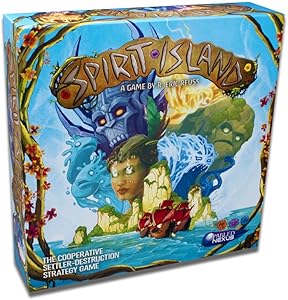
Spirit Island stands out because it treats solo play as the primary design concern, not an afterthought. You're playing as a spirit defending an island, managing your powers and growing stronger while the invading colonizers escalate their presence. Each turn involves deciding which powers to use, how to manage your energy, and where to focus your defense. The game's asymmetry means every spirit plays completely differently—you could play fifty times and never feel like you're repeating yourself.
The 40-60 minute playtime means this is meaty enough to feel substantial but not so long that a loss feels crushing. The difficulty scales properly too, with multiple difficulty levels that actually change how the game feels rather than just making numbers bigger. I've found that even on higher difficulties, you feel like your decisions matter and losses come from tough choices, not random chance.
One thing to know: this game has a learning curve. The rulebook isn't terrible, but the first few plays involve checking rules. After that though, it clicks. Also, the base game works solo right out of the box—no special solo mode needed—which is refreshing compared to games bolted onto multiplayer systems.
Pros:
- Completely different experience with each of 8+ spirits
- Difficulty scaling actually works and feels earned
- Thematic and mechanically tight
- No special solo mode—the game IS designed this way
Cons:
- Steep learning curve for first 2-3 games
- Box is large and somewhat awkward
- Can be punishing if you don't optimize well
---
2. Mage Knight Board Game — Maximum Complexity and Mastery

Mage Knight is basically the game you choose when you want to spend the next six months learning every detail. This isn't a casual pick—it's for people who genuinely enjoy mastering complex systems. You're a mage exploring a world, building card combinations, managing resources, and battling enemies through interlocking mechanics that create surprising interactions.
What makes this work solo is that there's absolutely no downtime. Every decision matters. You'll spend 90-120 minutes (or more in your first games) moving your mage, choosing spells, managing your hand, and solving tactical puzzles. The solo mode removes the competitive scoring aspect and focuses on pure exploration and survival, which actually makes it feel less stressful than multiplayer.
The card interaction system is genuinely clever. You're not just playing cards—you're discovering how they combo together in ways that feel organic. A spell card and an ability card create something neither does alone. This discovery process is what keeps experienced players coming back even after 50 plays.
The downside: this isn't something you play casually. Mage Knight demands your full attention and rewards deep thinking. If you're looking for something relaxing, this isn't it. Setup and cleanup also take real time.
Pros:
- Staggering depth and replayability
- Clever card combo system that rewards experimentation
- Every play teaches you something new
- Solo mode is mechanically elegant
Cons:
- Steep learning curve and rule complexity
- 90+ minutes even after you know the rules
- Setup and teardown are tedious
- Expensive relative to other solo games
---
3. Robinson Crusoe: Adventures on the Cursed Island — Survival Storytelling
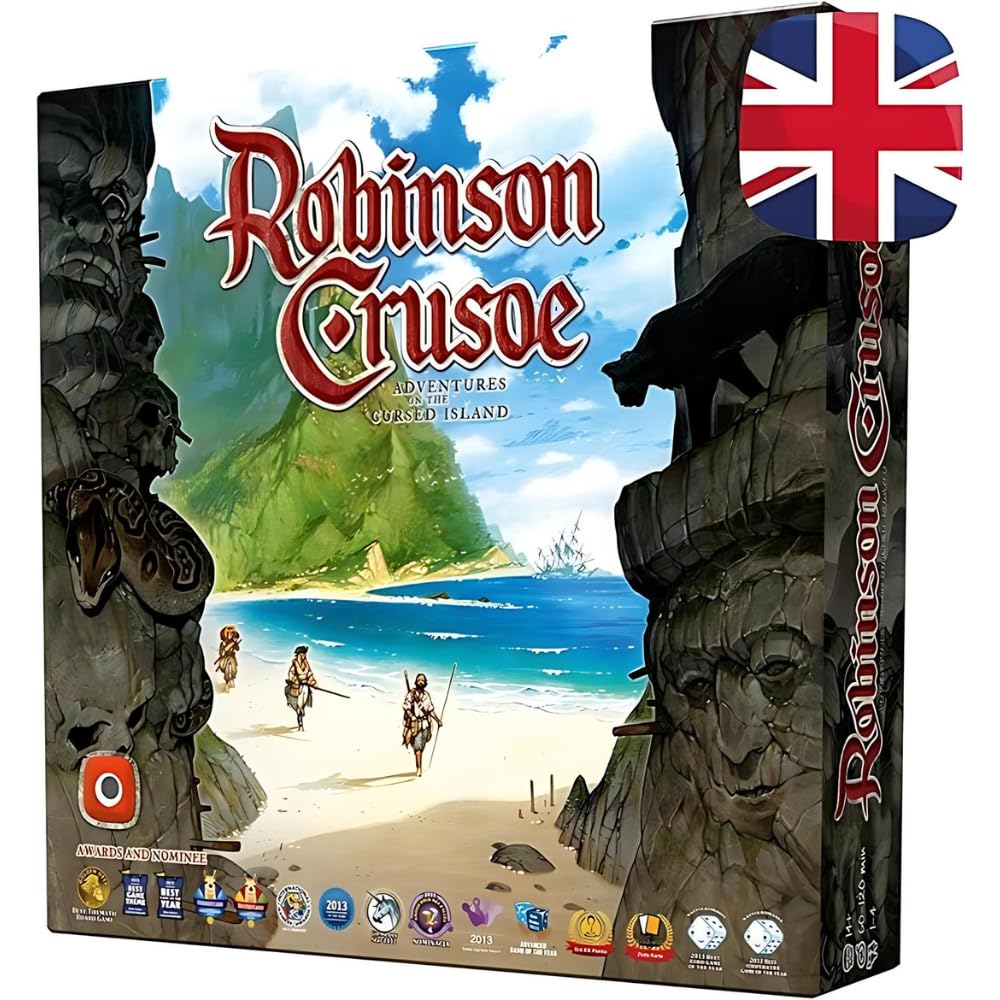
Robinson Crusoe uses cooperative board game mechanics where you're managing survival—building shelter, gathering food, exploring the island, and dealing with random encounters. Unlike some games where solo play feels like playing multiple characters simultaneously, Robinson Crusoe actually creates the feeling of being a single person struggling against the environment.
The modular scenario system means you're not just replaying the same game. You might be escaping the island, searching for treasure, or trying to survive on limited resources. Each scenario has its own flavor and win condition. The difficulty ramps naturally, and you can adjust it with different character selections and starting conditions.
What I appreciate most is how the theme actually affects gameplay. Hunger isn't just a number that goes down—it forces real trade-offs. Do you spend time gathering food, or do you explore for clues? Do you build shelter before it rains? These aren't arbitrary mechanics; they're survival decisions that feel meaningful.
The catch: Robinson Crusoe is demanding. Not just mechanically—strategically. You need to plan ahead and manage resources carefully or you'll fail quickly. It's less about learning systems and more about playing well. Also, some scenarios drag a bit or feel like you're doing busywork, though most hit the mark.
Pros:
- Strong thematic integration with mechanics
- Varied scenarios prevent repetition
- Solo play feels natural, not adapted
- Meaningful resource management decisions
Cons:
- High difficulty can feel punishing
- Some scenarios don't land as well as others
- Takes 60-90 minutes
- Rules can be unclear in spots
---
4. Under Falling Skies — Elegant Puzzle Design
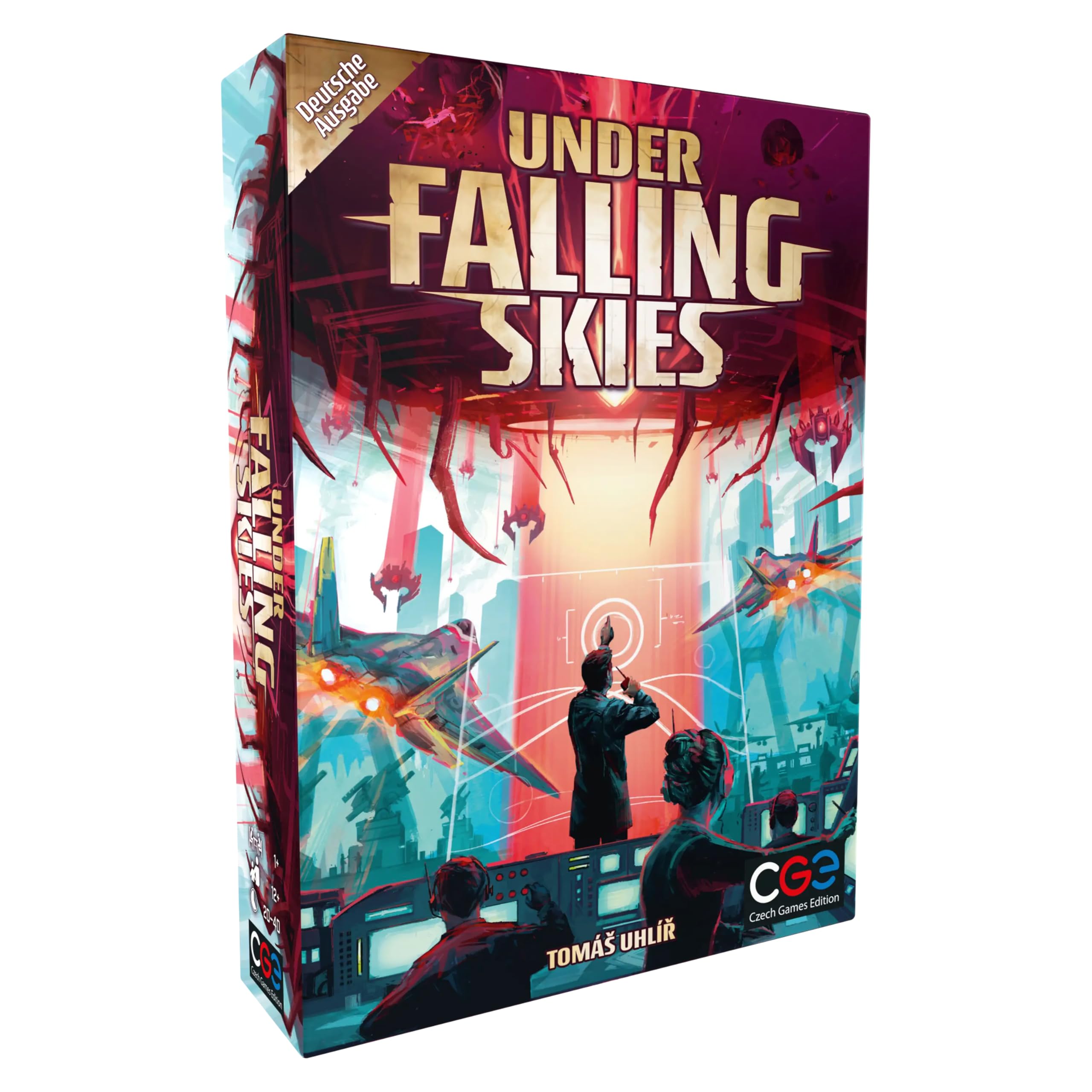
Under Falling Skies is what happens when you strip down a game to its core puzzle. You're defending Earth against aliens using dice placement and tower defense mechanics. Every turn you place dice on your bases to generate resources and defend against incoming attacks. As the game progresses, aliens advance closer, and you need to push them back or lose.
The genius is in the constraint. You only have a handful of dice each turn, and you need to accomplish multiple goals with them. Do you push aliens back, or do you generate resources for better tech? Do you defend your most vulnerable base or your most valuable one? These are real tactical problems that shift every turn based on random alien placement.
A typical game runs 30-45 minutes, which makes it perfect for a quick gaming session. The difficulty ramping works well—there are multiple scenarios that get progressively harder, so you feel like you're progressing. After you beat one, the next feels like a legitimate challenge, not just artificial number inflation.
This is more puzzle-y than narrative or strategic. Some people love that focused, puzzle-solving experience. Others find it a bit mechanical. Also, the game can end abruptly if you have bad luck or misplay early, which some find frustrating.
Pros:
- Tight, elegant design without unnecessary rules
- Perfect playtime for a quick session
- Effective difficulty scaling across scenarios
- Great dice-placement puzzle design
Cons:
- Less narrative or thematic depth than alternatives
- Can feel luck-dependent on bad turns
- Less replayability than deeper games
- Relatively short playtime (good or bad depending on preference)
---
5. Marvel Champions: The Card Game — Deck-Building with Heroes

Marvel Champions is a deck-building game where you're playing as a Marvel hero fighting supervillains. You build a deck, manage your resources, and defeat enemies before they defeat you. The solo experience removes the competitive multiplayer aspect and just focuses on you versus the villain.
What's appealing here is the character variety. Playing as Spider-Man feels genuinely different from playing as Captain Marvel. Each hero has a unique playstyle, and you can build decks in multiple ways with the same hero. The hobby of deck-building and optimization is part of the appeal—figuring out which cards work best together.
The villain variety also matters. Different villains have different attack patterns and mechanics, so you need to adapt your deck strategy. This creates natural replayability without feeling forced. One villain might reward aggressive play, while another requires defensive tech.
The thing to understand: Marvel Champions reaches its full potential with expansions. The base game is solid but not revolutionary. Once you add villain packs and hero packs, you unlock much more variety. The base game alone is still fun, but people typically end up buying more. That's not necessarily bad—it's a hobby game that rewards investment—but it's worth knowing.
Pros:
- Strong character differentiation between heroes
- Deck-building offers strategic depth
- Variety of villains keeps games different
- Good presentation and quality components
- Scales well with expansions
Cons:
- Base game alone has limited villain variety
- Becomes expensive as a complete hobby
- Some heroes feel less fun than others out of the box
- Playtime varies wildly depending on villain
---
How I Chose These
I looked for games where solo play was the design focus, not bolted on afterward. That eliminated a lot of otherwise good games that just tacked on a solo variant. I also weighted playtime—the best solo board game shouldn't demand three hours when you might want something quick—so variety in duration mattered. Replayability was crucial because playing the same game twice should feel different, not like you're following the same script. Finally, I focused on games where the mechanics actually create thematic experiences rather than just simulating multiplayer with dummy players. These five represent different approaches to solo gaming, so depending on what mood you're in, you'll have options.
Frequently Asked Questions
What's the best solo board game for someone new to board gaming?
Start with Under Falling Skies. It has simple rules, teaches quickly, and plays in 30-45 minutes. You'll understand what makes a good solo game without being overwhelmed. Once you're comfortable, move to Spirit Island for deeper strategy.
Can I play these games with other people too?
Yes, but it depends on the game. Spirit Island, Robinson Crusoe, and Marvel Champions all support multiplayer (though some are better than others). Mage Knight has multiplayer but it's honestly not as fun solo or with others—it's built for that competitive puzzle. Under Falling Skies is primarily solo (cooperative multiplayer exists but that's not the main mode).
Which game has the most replayability?Spirit Island by a significant margin. With 8+ spirits, each playing completely differently, plus difficulty modulation, you could easily play 100 times and discover new strategies. Mage Knight runs a close second if you love optimization puzzles.
Do I need to buy expansions for any of these?
Only Marvel Champions really pushes expansions as necessary. The base game is fine, but expansions significantly expand the experience. The others are complete standalone games from day one.
If you're serious about solo board gaming, Spirit Island is your safest bet—it's what makes people addicted to the hobby. But the best solo board game for you specifically depends on whether you want strategic depth, puzzle-solving, narrative adventure, or something quick between other activities. Having multiple options in your collection means you can match your mood to the right game.
Get the best board game picks in your inbox
New reviews, top picks, and honest recommendations. No spam, unsubscribe anytime.
More in Cooperative
Best Solo Board Games Ever in 2026: Our Top Picks for Playing Alone
Solo board gaming has exploded over the last few years, and if you've been thinking about diving into games you can play by yourself, you're in for a...
Best Solo Board Games with High Replayability in 2026
If you're looking for board games you can play alone without feeling like you're missing out on the experience, you've probably noticed that most games...
Best Compact Solo Board Game 2026: 5 Games That Actually Travel Well
Finding a great solo board game that doesn't require a huge table or an hour of setup is harder than you'd think.