By Jamie Quinn · Updated March 24, 2026
A Feast for Odin Review 2026: The Best Solo Worker Placement Game I Own
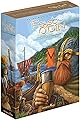
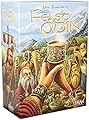
A Feast for Odin Review 2026: The Best Solo Worker Placement Game I Own
A Feast for Odin is Uwe Rosenberg's magnum opus. I know that's a bold claim when the man designed Agricola, Caverna, and Fields of Arle, but after dozens of solo plays and plenty of multiplayer sessions, this is the one I keep coming back to. It takes the worker placement he perfected in Agricola, mixes in the resource conversion of Le Havre, and layers on the polyomino puzzle of Patchwork - then wraps it all in a rustic Viking theme that somehow holds the whole thing together.
At $91 for the base game, it's not cheap. But this is also one of the most content-dense boxes in board gaming. You're getting 60+ different actions, multiple exploration boards, livestock management, tile puzzles, and enough strategic depth to keep you busy for years.
Quick Answer
A Feast for Odin is the best solo worker placement game you can buy right now. The beat-your-own-score format sounds dry on paper, but the interlocking puzzle systems - inventory tile management, worker placement decisions, and specialization paths - create different experiences every game. Get the base game, play it once, then add The Norwegians expansion for every game after that.

At a Glance
| Detail | Base Game | With Norwegians Expansion |
|---|---|---|
| Players | 1-2 (box says 1-4) | 1-2 (box says 1-4) |
| Play Time | 30-120 min | 30-120 min |
| BGG Weight | 3.85 / 5 | 3.85 / 5 |
| Price | ~$91 | ~$43 (expansion) |
| Rating | 4.7★ (566 reviews) | 4.8★ (283 reviews) |
Why This Game Stands Out
The Interlocking Puzzle System
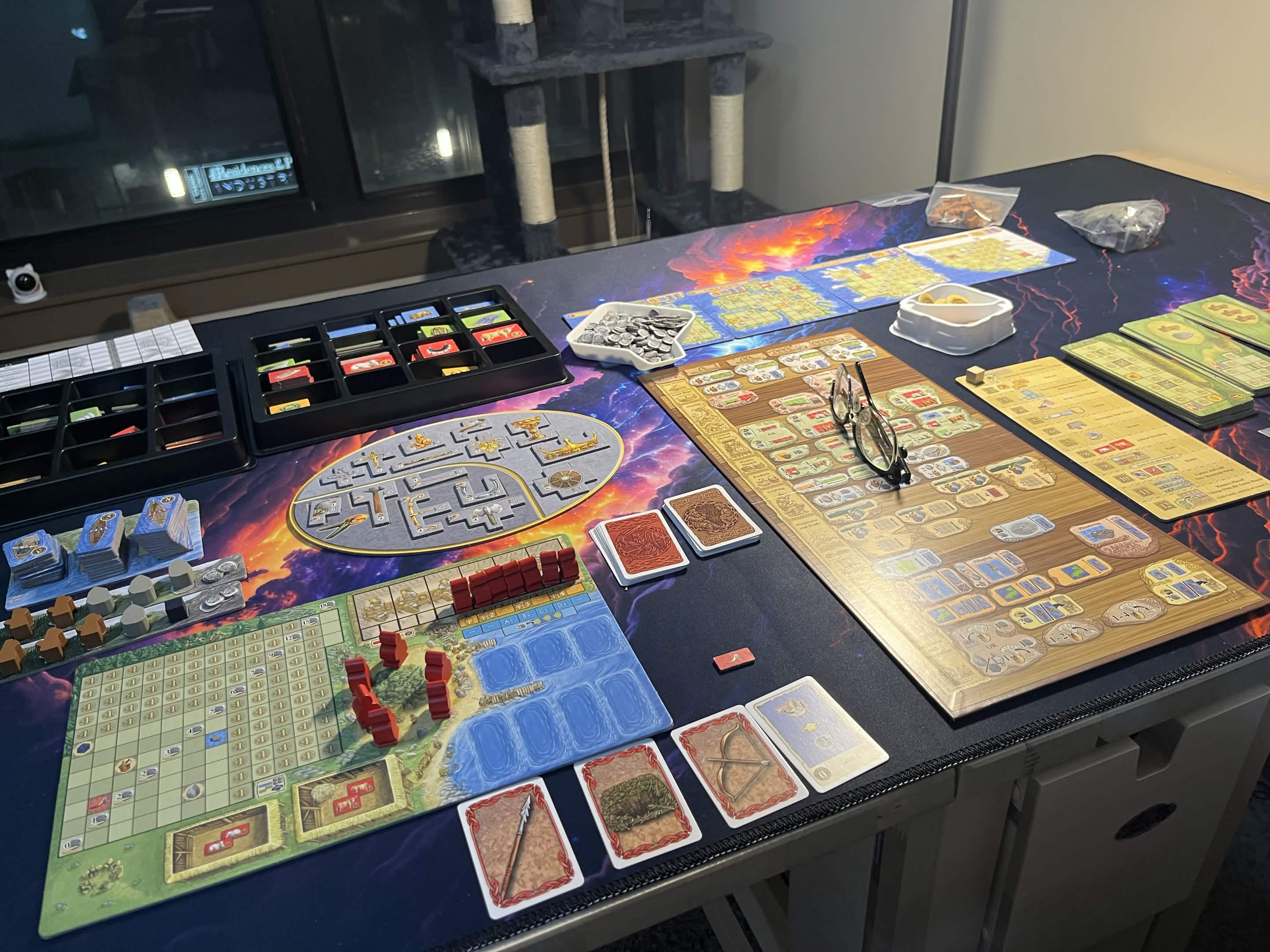
Most worker placement games give you a list of actions and you pick the best one available. A Feast for Odin does something different. Every action feeds into at least two other systems, and the magic happens when you start tying those systems together.
You're placing workers to gather resources, but those resources are polyomino tiles of different shapes and values. Those tiles need to fit onto your home board (and eventually exploration boards), and how you fill those boards determines your income each round. Meanwhile, you're choosing which actions to specialize in - whaling, hunting, raiding, crafting, trading, mountain exploration - and each path opens up different tile shapes and scoring opportunities.
The result is that each game feels different. One session I went all-in on whaling and overseas exploration. The next, I focused on crafting and upgrading green tiles into blue ones through a chain of conversions. Both were viable. Both felt completely different. And after each game, I'm already thinking "what if I tried leaning into mountain strips next time?" or "I wonder if an early emigration strategy could work."
That pull - the "I need to try this next time" feeling - is what separates a great game from one that just sits on your shelf.
A Surprisingly Great Solo Experience
I'll be direct: A Feast for Odin is a beat-your-own-score solo game. There's no AI opponent, no automa deck, no simulated rival. You play, you score, you try to beat that score next time.
On paper that sounds boring. In practice, it works beautifully here, and that's because of how many viable strategies exist. You're not just trying to optimize one path - you're exploring a huge number of options where every game reveals new combinations and approaches. The solo mode uses two colors of workers that you rotate each round, with workers staying on action spaces for an extra turn to block yourself. It works really well and you end up blocking yourself in interesting ways.
The BGG solo community consistently ranks this as one of the top 10 solo games, and I agree. When I want a serious thinking session at the table by myself, this is what I reach for.
The Viking Theme Actually Works
Rosenberg's games are sometimes criticized for pasted-on themes, but A Feast for Odin gets it right. The whole game has a rustic, earthy vibe that fits the Viking settlement narrative. You're hunting, whaling, raiding, crafting goods, and expanding to new islands - and every action makes thematic sense. The artwork reinforces this with its muted, woodcut-inspired illustrations.
The feast mechanism is clever: at the end of each round, you need to feed your Vikings. But unlike Agricola's punishing harvest where you lose points for failing, here you're planning feasts that feel like natural extensions of your Viking lifestyle. It's still a constraint, but it doesn't feel like homework.
The Norwegians Expansion - Buy It (But Not Yet)

Here's my specific recommendation: play your first game with just the base game, then add The Norwegians expansion for game two and every game after.
The expansion costs about $43 and earns every penny. Here's what it adds:
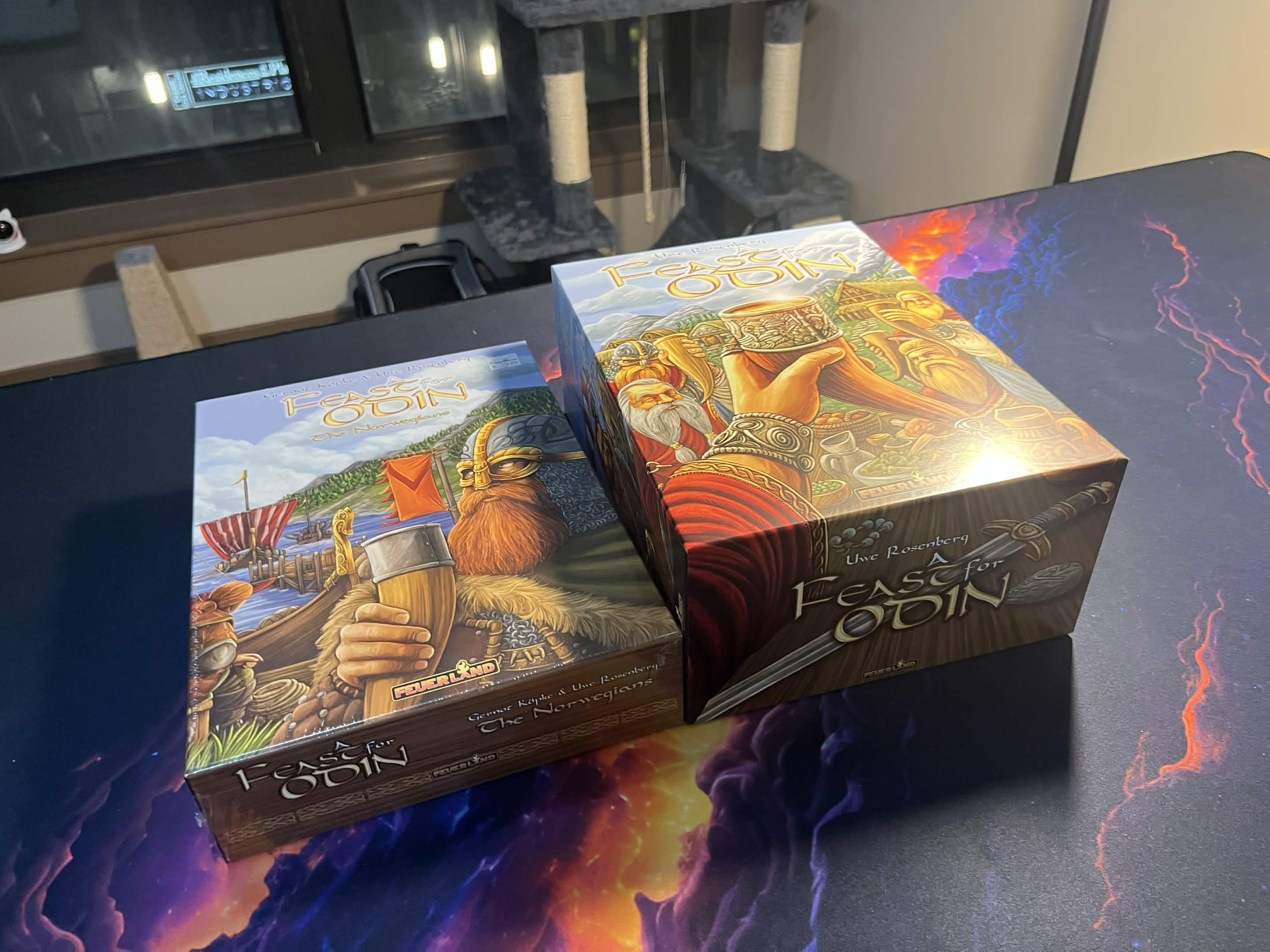
Modular action board. The original action board is one giant fixed sheet. The Norwegians breaks it into strips that can be configured differently depending on player count. This is a pure quality-of-life upgrade - it means fewer dead actions at lower player counts and better balance across the board.
New exploration boards. Four new islands replace the originals, each with unique scoring opportunities and constraints. These add variety without adding complexity.
Rebalanced actions and tiles. The expansion quietly fixes a few balance issues from the base game. Some actions that were too strong get toned down, and new tile types fill gaps in the upgrade path. The game just feels tighter with the expansion mixed in.
Organization trays for everything. Both the base game and expansion come with built-in organization trays, which is a huge help given how many pieces this game has. Setup and teardown are much smoother than you'd expect for a game this size.
Meeple Mountain gave the expansion a perfect 5.0/5.0 score, and BGG reviewers consistently describe it as "Feast for Odin 2.0." The consensus is that once you add The Norwegians, you never go back. I agree - but you should still play your first game without it so you can appreciate what it changes.
Buy The Norwegians Expansion on Amazon
The Crazy Number of Actions
This deserves its own section because it's both the game's greatest strength and its biggest hurdle for new players.
A Feast for Odin has over 60 different action spaces. Sixty. On your first play, your action board will look like a wall of incomprehensible icons. You'll spend the first few rounds just reading what each space does, and you'll miss obvious combos because you didn't realize that action existed.
Here's the thing though - you don't need to understand all 60 actions on your first game. Focus on a few clusters that make sense to you (hunting and crafting, or trading and exploration) and ignore the rest. The game rewards specialization, so going deep on a handful of actions is a better strategy than trying to do everything anyway.
By your third or fourth play, the board will click. The icons become intuitive, the action clusters reveal themselves, and you'll start seeing multi-turn combos that weren't visible before. You will be confused at first, but the payoff is a game that keeps revealing new layers for dozens of plays.
Who Should Buy This
Buy it if you:
- Love heavy euro games and want one that's exceptional solo
- Enjoy puzzle-like optimization where you're always improving
- Want a game with absurd replayability - every single game can feel different, and I am not exaggerating
- Appreciate Rosenberg's design philosophy (if you love Agricola, Caverna, or Patchwork, this is where all of those ideas come together)
- Want a deep solo game that rewards repeated plays and never gets stale
Skip it if you:
- Don't enjoy games above a 3.5 BGG weight - this is firmly in "heavy game" territory at 3.85
- Need direct player interaction or conflict - this is a parallel optimization game, not a war game
- Have limited table space - the game has a massive footprint when fully set up
- Want something you can teach in 5 minutes - first game teach takes 20-30 minutes minimum
Pros and Cons
Pros:
- One of the best solo board game experiences available - the beat-your-own-score format works because strategy variety is enormous
- Interlocking systems create genuine "I need to try this next time" pull after every game
- The Norwegians expansion elevates an already great game into an all-timer
- So much game in one box - dozens of viable strategies mean this stays fresh for years
- Both base and expansion include organization trays that make setup manageable
- Rustic Viking theme actually fits the game instead of feeling pasted on
Cons:
- Rough first play - 60+ actions on the board is intimidating and your first game will be rough
- Rulebook is dense and not the best organized - expect to reference it frequently early on
- Price of entry is steep ($91 base + $43 expansion = $134 for the full experience)
- Large table footprint - you need a big table, especially when fully spread out
- Large setup time for what is mostly a solo puzzle (though the trays help a lot)
- The point salad criticism isn't entirely unfair, though the connected systems mitigate it
Frequently Asked Questions
Is A Feast for Odin good for solo play?
It's one of the best solo board games out there. The beat-your-own-score format works because the strategy space is so vast that you're exploring new approaches for dozens of plays. The two-color worker rotation creates real tension without adding complexity. If solo gaming is your primary use case, this is an excellent buy.
Should I get The Norwegians expansion right away?
Buy it when you order the base game so you have it ready, but play your first game without it. The base game is a complete experience and you'll appreciate what the expansion changes more if you've played vanilla first. From game two onward, always include the expansion - the modular action board and rebalanced tiles make the whole game feel tighter.
How long does a solo game take?
Plan for 90-120 minutes for your first solo game, including setup. Once you know the game, a solo play takes about 60-75 minutes. Setup and teardown add 10-15 minutes, but the built-in trays help significantly.
Is A Feast for Odin better than Agricola?
Different games for different moods. Agricola is tighter, meaner, and more punishing - you're constantly scraping by. Feast for Odin is expansive, generous, and rewards exploration. Agricola is the better competitive multiplayer game. Feast for Odin is the better solo game and the better "sandbox" experience. If you can only pick one, Feast for Odin offers more replay value per dollar.
Does it feel like a point salad?
It can, especially on your first play when you're just grabbing whatever seems good. But as you improve, the systems start clicking together - you're not just collecting points from random sources, you're building a specific engine where tile placement, worker allocation, and specialization all feed each other. The strategy depth is what saves it from feeling like arbitrary point collection.
How does it compare to Caverna?
Caverna gives you more freedom but less focus. Feast for Odin gives you even MORE freedom (60+ actions vs Caverna's 40+) but the polyomino tile puzzle adds a concrete, satisfying constraint that Caverna lacks. Most people who've played both extensively prefer Feast for Odin, and the solo mode is way better.
What's the ideal player count?
Solo or two players. At three to four players, downtime increases and the game can run 2+ hours. The game doesn't really change at higher counts - you're mostly playing your own puzzle - so the added wait time isn't worth it. This is the rare heavy euro that's best at one player.
Is the game hard to learn?
The rulebook is thick and the action board is intimidating. But the actual turn structure is simple: place workers, take action, done. The complexity comes from how many actions are available, not from complicated rules. Focus on a few action clusters your first game and expand from there. By game three, it clicks.
Get the best board game picks in your inbox
New reviews, top picks, and honest recommendations. No spam, unsubscribe anytime.
More in Strategy
The Best Engine Building Games of 2026: 5 Excellent Choices That Actually Deliver
Engine building games are genuinely addictive because they give you that satisfying progression feeling—you start with almost nothing, then gradually...
Best Euro Games for Kids in 2026: Top Picks for Family Game Night
Euro games—those elegant, strategy-focused board games from European designers—are perfect for kids who want more than dice-rolling luck.
The Best Strategy Board Games for 6 Players in 2026
Finding the right board game for exactly six players is trickier than it sounds. Too many games max out at four or five, forcing awkward house rules.