By Jamie Quinn · Updated March 24, 2026
The Best 2 Player Strategy Games in 2026: Honest Reviews & Recommendations


The Best 2 Player Strategy Games in 2026: Honest Reviews & Recommendations
If you're hunting for strategy games that actually work great with just two players, you know the struggle - most board games feel designed around four people, leaving the two-player experience flat or unbalanced. The games I'm reviewing here are different. They've been engineered from the ground up for head-to-head play, with mechanics that reward deep thinking and strategic positioning rather than luck.
Quick Answer
Brass: Birmingham is the best all-around choice for serious strategy players. It's a economic strategy game where you build networks and industries across 19th-century England, forcing you to plan multiple moves ahead while constantly reacting to your opponent's expansions. The two-player game is tight, competitive, and offers different strategies on each playthrough.
Our Top Picks
| Product | Best For | Price |
|---|---|---|
| Brass: Birmingham | Serious strategy fans wanting deep economic gameplay | ~$70 |
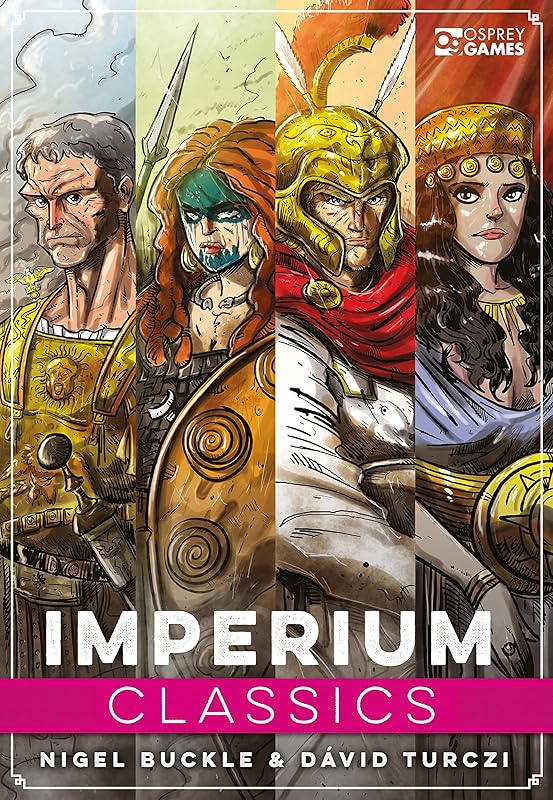
| Imperium: Classics | Players who want quick, accessible strategy without heavy rules | ~$45 |
| Undaunted: Normandy | Fans of historical themes and card-driven tactical combat | ~$50 |
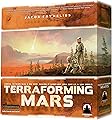
| Terraforming Mars | Engine-building enthusiasts who like asymmetric powers | $62.37 |
| Gaia Project | Hard sci-fi fans ready for complexity and long sessions | ~$80 |
Detailed Reviews
1. Brass: Birmingham - The Gold Standard for Economic Strategy

Brass: Birmingham stands out because it doesn't pretend to be something it's not. You're building industrial networks in the English Midlands, and every decision matters. The core mechanic is beautifully simple: play cards to build industries and networks, but when you do, you're also telling your opponent what resources you have and what you're planning. This forces constant mind games.
What makes it exceptional for two players is how tight the economy feels. With only two of you, every decision cascades. Build a coal mine, and your opponent knows they need to either block your rail network or secure their own. The game unfolds across two eras (Canal Age and Rail Age), and the transition between them creates this perfect moment where everything you built might suddenly become obsolete. I've watched players audibly groan when they realize their careful planning just got disrupted by a rule change.
The game teaches you to think three or four moves ahead, but also rewards opportunism. You can't just execute a master plan - you have to be ready to pivot when your opponent blocks your path. It takes about 60-90 minutes once you know the rules, which is long enough to feel meaty without overstaying its welcome.
Pros:
- Incredibly tight two-player balance with meaningful decisions every turn
- The Card-play system creates natural tension and mind games
- Two eras provide variety and force strategic shifts mid-game
- High replay value with different economic paths to victory
Cons:
- Rules overhead requires a solid tutorial or rulebook review before your first game
- The theme (19th-century economics) doesn't grab everyone
- Can feel a bit dry if you prefer games with more narrative or luck
2. Imperium: Classics - Strategy That Doesn't Require a PhD

Imperium: Classics is a deck-building game where you're building and managing a civilization across different eras. What I appreciate about this game is that it respects your time and brain cells. The ruleset is smaller than Brass, but the strategic options feel just as rich.
Each player gets a personal deck of cards representing their civilization's actions, and you gradually add cards to that deck as you progress. The genius is in how the game forces you to make real trade-offs. Do you add more military cards to dominate your opponent, or invest in economic growth? The problem is, if you're not doing both, you're vulnerable.
The two-player experience shines because there's no way to hide. Your opponent sees exactly what you're doing every turn. The game plays in about 45-60 minutes, which means you can get through a game without committing your entire evening. I find myself wanting multiple plays in a row, which is a good sign - it means the game scratches an itch without exhausting you.
Pros:
- Clean, intuitive rules that don't require constant reference materials
- Deck-building creates genuine strategic progression throughout the game
- Play time is perfect for weeknight sessions
- Excellent balance between player agency and interactive decision-making
Cons:
- Less crushing depth than some other strategy games on this list
- The civilization theme feels lighter than the mechanics might suggest
- Some players find the pacing slow if you're prone to analysis paralysis
3. Undaunted: Normandy - Where Tactics Meet Storytelling

Undaunted: Normandy is a deck-building, tactical combat game set during the Normandy landings in World War II. One player controls the American forces, the other controls the German defenders. This asymmetry is crucial - neither side has identical powers or goals, which makes the dynamic shift every game.
The card-driven system means your hand of cards determines what units you can deploy and where you can move them. You're never just executing a perfect strategy because you're limited by what cards you draw. But unlike pure luck-based games, your deck composition directly reflects your earlier choices, so smart building pays off. Each scenario plays out differently depending on the terrain and objectives, so even repeated matchups don't feel stale.
Playing this takes about 45 minutes per scenario. The game comes with a campaign of linked missions, and you can actually see the consequences of your victories or defeats carry forward. Losing a key unit in Mission 3 means it stays gone for Mission 4. This creates real tension and emotional stakes that pure one-off games don't quite achieve.
Pros:
- Asymmetric powers make each side feel distinct and interesting
- Card-driven system balances randomness with player agency perfectly
- Campaign structure adds narrative and consequence to decisions
- Intuitive rules with tactical depth hiding underneath
Cons:
- Works best if both players have read the rules (teaching this one takes effort)
- Some scenarios feel more balanced than others
- Might not appeal to players who want pure strategy without any theme
4. Terraforming Mars - Building a Planet Through Engine-Building
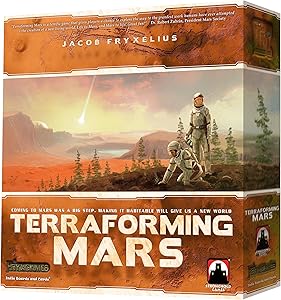
Price: $62.37
Terraforming Mars puts you in charge of a megacorporation tasked with making Mars habitable. You do this by playing cards representing different projects - solar collectors, greenhouses, mining colonies - and these cards generate ongoing production and resources. It's an engine-building game, meaning you're constructing increasingly powerful combinations of effects.
What works well for two players is that the board state is always visible. You can see exactly what your opponent is producing each round, what projects they've funded, and what they're setting up for next turn. This transparency makes for great counter-play opportunities. Your opponent is about to corner the market on oxygen production? You can either compete directly or pivot your strategy to dominate a different victory path.
The game gives you multiple routes to victory (oxygen production, temperature, oceans, specific tile placements), which means you're not fighting over the same goals. This is different from best 2 player strategy games like Brass where you're directly competing for the same resources. Here, you might both win, but one of you wins more, which feels different and sometimes more satisfying.
Play time runs 90-120 minutes, so this is a commitment. But if you like complex engines with lots of moving parts, this delivers.
Pros:
- Multiple paths to victory mean games don't feel samey
- Engine-building rewards planning and combinatorial thinking
- Asymmetric corporation powers create different playstyles
- Tons of replayability with the base game alone
Cons:
- 90+ minutes is a heavy time investment
- Card text can be dense and requires careful reading
- Player turns can drag if someone is prone to overthinking
5. Gaia Project - The Heavyweight Champion of Complexity

Gaia Project is a spatial strategy game set in a galactic empire. You're managing a faction with unique abilities, expanding across a hexagonal map, researching technologies, and building a civilization that spans space. This is one of the most complex games on this list, and I mean that as a compliment if strategy is your primary hobby.
The two-player experience is excellent because the map control elements matter. You can't just build wherever you want - you need to actually think about positioning, proximity to your opponent, and securing resources. The tech tree gives you multiple development paths (military, science, economy), and you're constantly making trade-offs about where to invest.
What's interesting is that each faction (you can choose from 10+) has wildly different abilities. One faction might specialize in long-distance expansion while another excels at terraforming. This asymmetry means the two-player dynamic shifts dramatically depending on what factions you're playing. A game with faction A versus faction B plays nothing like A versus C.
Fair warning: this game takes 120-150 minutes and requires genuine study before your first play. It's not a pick-up-and-play game. But if you're the type who finds joy in mastering complex systems, Gaia Project rewards that investment ten times over.
Pros:
- Exceptional depth with multiple viable strategies per faction
- Map control and spatial positioning matter significantly
- Each faction plays fundamentally differently
- Excellent balance across all factions means no optimal choice
Cons:
- Serious learning curve with lots of rules interactions
- Setup and cleanup take real time
- Not recommended unless strategy games are already your hobby
- Play time is substantial even for experienced players
How I Chose These
I evaluated these games using specific criteria that matter for two-player strategy experiences. First, I looked at whether the game was actually designed for two players or just happened to work with two. Games that feel like they're missing a player when you go down from four to two didn't make the cut.
Second, I considered replayability. A game is only worth your shelf space if it plays differently on subsequent sessions. All five of these games offer enough variability that your tenth play still feels distinct from your second.
Third, I looked at decision density - how many meaningful choices you make per round. Games where turns feel like they're on autopilot don't earn a spot here. Each of these forces you to actually think about your options.
Finally, I prioritized games where both players remain engaged throughout. If one player is clearly winning midway through, do they stay interested? These games maintain tension right until the end.
Frequently Asked Questions
What's the difference between these and other best 2 player strategy games?
These are all specifically engineered for two-player play, meaning the balance, pacing, and strategic options are optimized for head-to-head competition. Many popular strategy games work with two players but feel better with more. That's not the case here.
Which of these is best for someone new to strategy games?
Imperium: Classics is your entry point. It teaches you core strategy concepts without overwhelming you with rules. Brass: Birmingham is the next step once you're comfortable with resource management and forward planning.
Can I play these solo or with three players?
Most of these support other player counts, but I can't in good conscience recommend them for solo play (except maybe Undaunted: Normandy, which has a dedicated solo variant). For three players, Terraforming Mars and Gaia Project both work, but the two-player balance suffers slightly.
How long does it take to learn each game?
Imperium: Classics: 15 minutes. Undaunted: Normandy: 20-30 minutes. Brass: Birmingham: 30-45 minutes. Terraforming Mars: 30-40 minutes. Gaia Project: 60+ minutes (seriously, watch a tutorial video).
Are these games that end with a clear winner, or is it close?
All of them have decisive winners if both players are playing competently, but most games come down to relatively small point margins. You'll rarely see a game where one player dominates without a real comeback opportunity.
If you're serious about strategy gaming with a partner, start with Brass: Birmingham or Imperium: Classics depending on your complexity tolerance. Both are best 2 player strategy games that have earned their place through countless plays and consistent engagement. Check out two-player games for more options if you want to explore further.
Get the best board game picks in your inbox
New reviews, top picks, and honest recommendations. No spam, unsubscribe anytime.
More in Strategy
The Best Engine Building Games of 2026: 5 Excellent Choices That Actually Deliver
Engine building games are genuinely addictive because they give you that satisfying progression feeling—you start with almost nothing, then gradually...
Best Euro Games for Kids in 2026: Top Picks for Family Game Night
Euro games—those elegant, strategy-focused board games from European designers—are perfect for kids who want more than dice-rolling luck.
The Best Strategy Board Games for 6 Players in 2026
Finding the right board game for exactly six players is trickier than it sounds. Too many games max out at four or five, forcing awkward house rules.